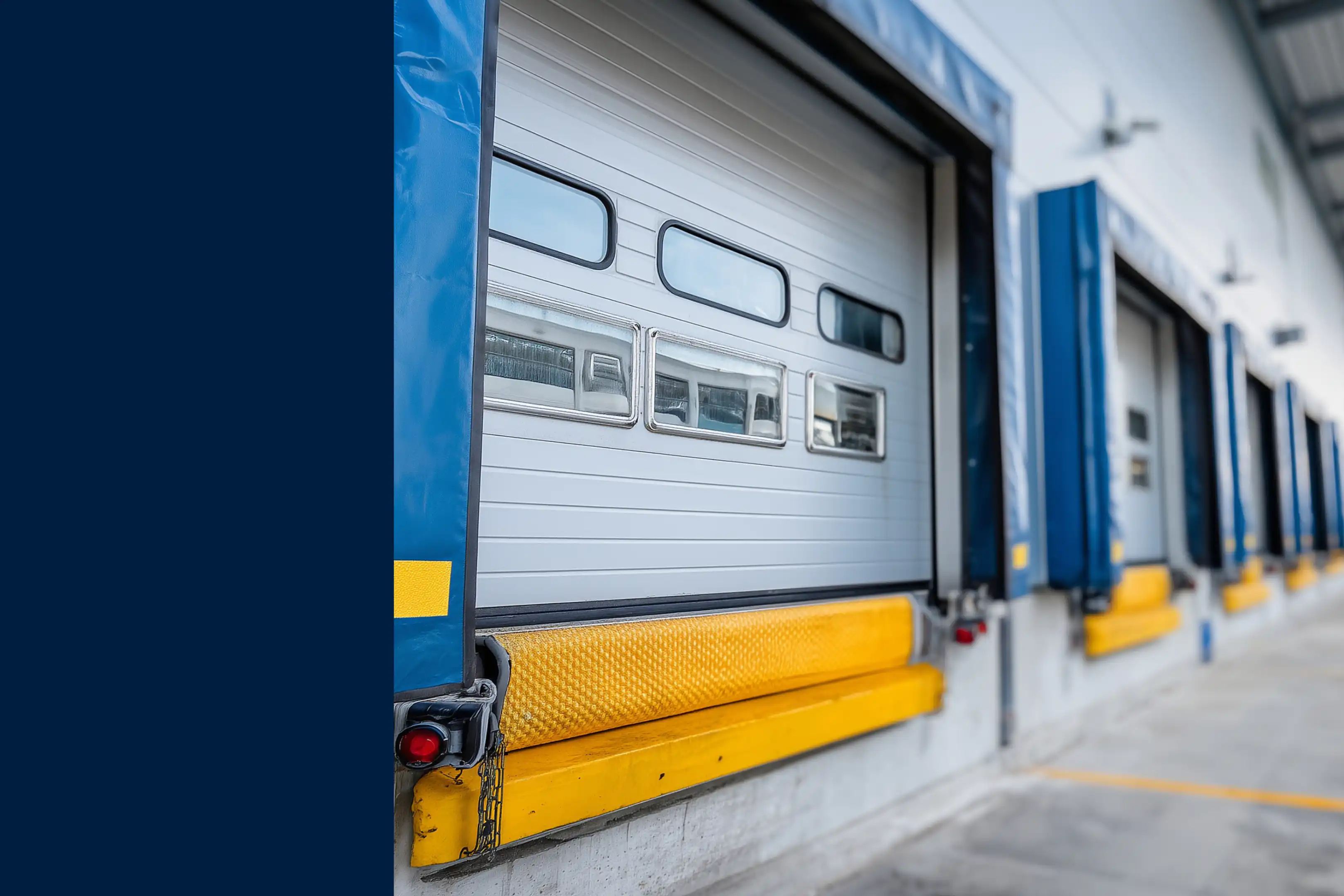
Many dock door problems start somewhere other than the door. Worn bumpers let trailers back in hard enough to crack a door jamb, and debris packed into a leveler pit keeps the deck from sitting flush, so the bottom seal never closes against it.
A dock door inspection checklist is a bay-by-bay check of the door, dock leveler, vehicle restraint system, seals, and safety devices, run as one loading dock inspection because a defect in one piece of dock equipment usually shows up as a problem in another. Checking the whole bay together points your team to the cause instead of the symptom, and each failed item becomes a work order with an owner.
The checklist below is built around the whole bay rather than the door alone, and it’s followed by how door failures spread, which OSHA requirements they trigger, and what an audit-ready inspection record includes.
Key takeaways
- A dock door is the gateway to the leveler, restraint, seals, and fall protection around it. Damage to the door often points to problems in the loading dock equipment behind it.
- Weather shifts your inspection priorities throughout the year. Ice on tracks, thermal binding, and water infiltration each call for different checks, so pair regular inspections with seasonal adjustments.
- No single OSHA standard covers dock doors, so your records need to show compliance with several. Digital checklists in a CMMS create an audit trail and turn every finding into a work order.
How to use this checklist
Customize for your facility
Start by matching the checklist to your dock layout, door types, and climate. Sectional, high-speed, and rolling steel doors each have different hardware and failure points, so remove items that don’t apply to your bays and add any your door manufacturer calls for.
Then adjust items and frequency for your site:
- Cold climates: Add checks for ice at the threshold and tracks, and for slick surfaces on the dock apron and leveler deck.
- Food, pharmaceutical, and cold-chain distribution centers: Give more weight to seal integrity, pest entry, and air infiltration at doors that open onto cold zones.
- High-traffic docks: Set inspection frequency by door cycles and traffic. A heavy-use dock door can cycle every hour around the clock, according to DASMA, so a door at your busiest bay may need checks far more often than one at a bay used twice a week.
- Mixed dock equipment: Add items for dock locks, portable ramps, and the pallet jacks your crews use to work the trailer bed if your bays rely on them.
Finally, tie the checklist to your written dock procedures, so a failed item triggers the same lockout tagout and reporting steps as the rest of your safety procedures.
Use a CMMS
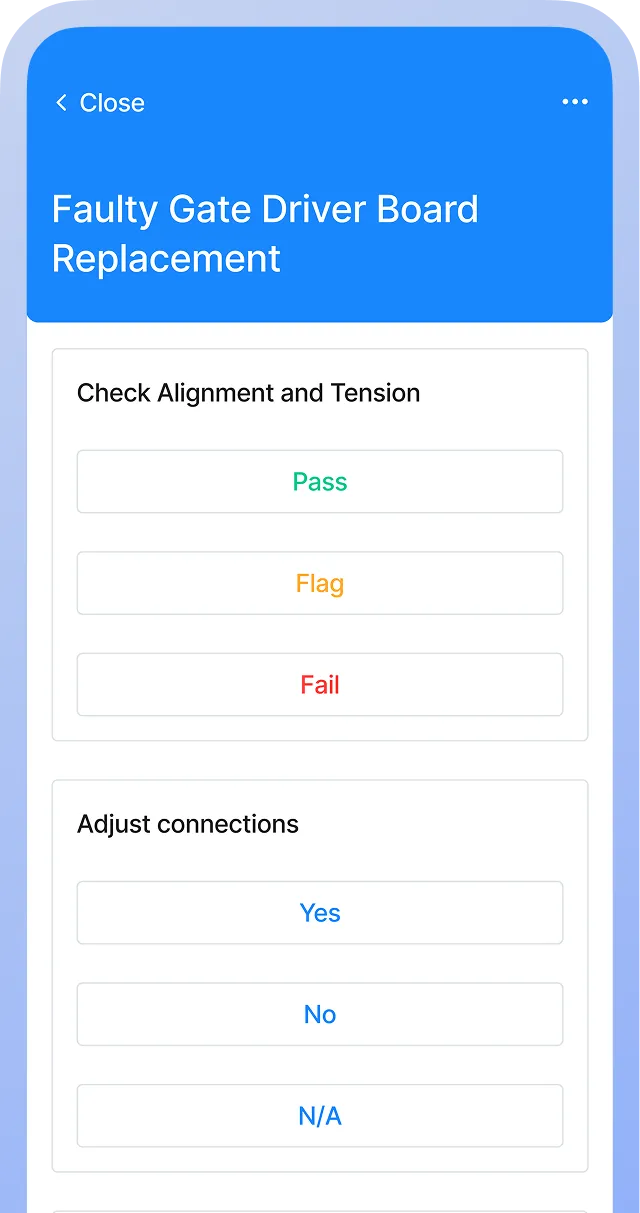
A paper checklist on a clipboard by the dock office tells you a door was inspected, but not what happened next. A computerized maintenance management system (CMMS) turns this checklist into a digital template your technicians complete on a phone or tablet at the bay. They can attach photos of a damaged panel or a leaking leveler hose, create a work order from any failed item, and schedule recurring dock inspections automatically.
Another advantage of using a CMMS is that you can see the repair history of each piece of equipment. Every submission builds a timestamped record by door number, so you can spot when the same bay keeps failing the same items. If door 7 has needed seal repairs three times since spring, that points to a root cause such as a misaligned track or a door that no longer seats evenly, and you can fix it once instead of patching the seal again. The same records give you a ready answer when a safety or compliance review asks what you inspected and what you did about it.


Dock door inspection checklist
Door panels and hardware
Springs, cables, and operator
Safety devices
Dock leveler and vehicle restraint
Seals, shelters, and weatherproofing
Electrical, controls, and lighting
Documentation and compliance
This checklist is to be used only by those with appropriate training, expertise, and professional judgment. You are solely responsible for reviewing this checklist to ensure that it meets all professional standards and legal requirements, as well as your needs and intent.
How dock door failures cascade into leveler, restraint, and fall protection hazards
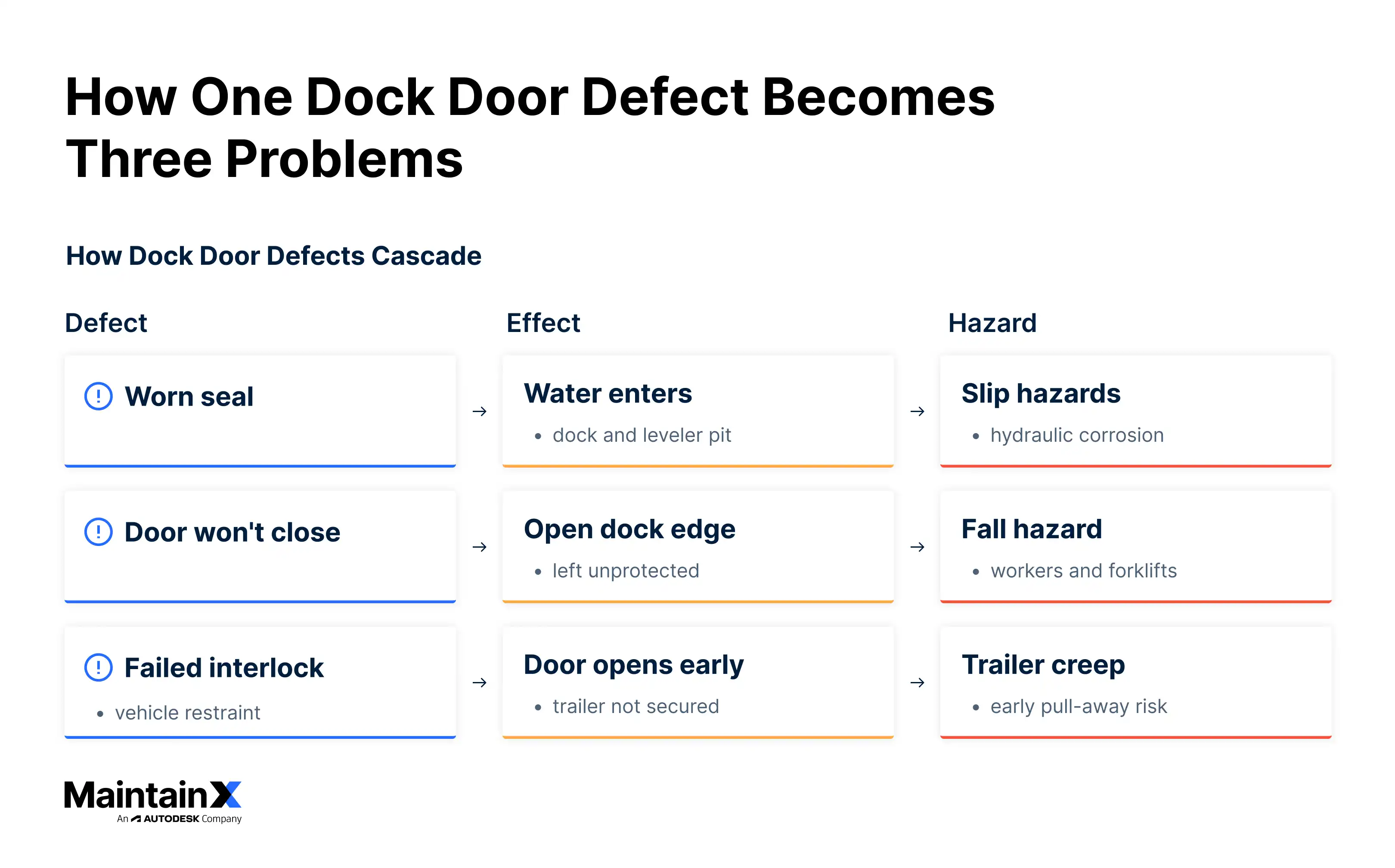
Dock door failures cascade because the door, seal, leveler, and restraint at each bay depend on each other to work. A track that’s no longer properly aligned changes how the door seats against the floor. A door that doesn’t seat leaves a gap under the bottom seal, and rain and snowmelt run through it into the leveler pit. Standing water in the pit and on the dock area corrodes the hydraulic cylinder and the lip hinge pivot points, and a few months later, the leveler starts to drift under load. One bent track has turned into costly repairs to the leveler and a structural integrity question about the deck your forklifts cross all day.
Your technicians can catch these problems by asking one question at every failed item: What else at this bay has this already affected? A few common chains:
- Torn dock shelters or weather seals: Water and ice on the leveler deck create slick surfaces at the exact spot where loaded forklifts cross from dock to trailer.
- Door that stops short of the floor: A limit switch that’s drifted can leave a door open just enough to fail the interlock check, so the restraint and communication systems stop matching what’s happening at the bay. Drivers and dock workers then rely on hand signals, which is how many dock accidents start.
- Damaged bay barrier or bottom panels: Open dock edges at an empty bay become a fall hazard for anyone walking the dock, not just a door repair.
This is why a dock inspection that treats each item as a separate pass or fail misses so much. A door can pass every line on its own and still not be in safe working order as part of the bay. Inspecting the door means inspecting the bay it protects. For the forklifts that cross that bay, use a dedicated forklift inspection checklist.
OSHA requirements triggered by common dock door deficiencies
A single dock door deficiency can put you out of compliance with several OSHA requirements at once, because OSHA regulates loading dock safety through general rules on walking-working surfaces, dockboards, and powered industrial trucks rather than one dock door standard.
Map each common deficiency to the rule it touches:
- Door open with no trailer, or a failed bay barrier: 1910.28(b)(1) requires fall protection, such as a guardrail system, on unprotected sides and edges four feet or more above a lower level. That includes open dock edges. The exception for the working side of a loading dock in 1910.28(b)(1)(iii) applies only while work is in process, to authorized and trained employees, and when the employer can show fall protection isn’t feasible.
- Failed vehicle restraint or missing wheel chocks: 1910.178(m)(7) requires brakes set and wheel blocks in place to prevent movement of trucks and trailers during loading and unloading operations, and 1910.178(k)(1) requires wheel chocks under the rear wheels when a forklift boards a highway truck. When the restraint fails, wheel chocks or another restraint method have to cover the gap against trailer creep and early trailer departure.
- Uncoupled trailer at the door: 1910.178(m)(7) notes that fixed jacks may be necessary to support a semitrailer that isn’t coupled to a tractor. Check the landing gear and use trailer stands where your procedure calls for them.
- Damaged leveler or dock plates: 1910.26 requires dockboards, including dock levelers and portable dock plates, to support the maximum intended load, and it requires measures such as wheel chocks to keep the transport vehicle from moving while employees are on the dockboard. 1910.28(b)(4) covers fall protection for employees on dockboards.
ANSI MH30.1 (dock leveling devices) and ANSI MH30.3 (vehicle restraining devices) set voluntary design, testing, and use requirements for dock levelers and truck restraints. Insurers, auditors, and equipment manufacturers often reference them, so use them alongside your manufacturer’s maintenance schedule.
Build a defensible dock door inspection record for OSHA audits
A defensible dock door inspection record shows three things: inspections at a consistent frequency, specific descriptions of what was found, and documented follow-through on every corrective action. If an incident at the dock leads to an OSHA inspection, a stack of checklists with every box ticked won’t show any of that.
Strong records connect findings to outcomes. “Door 4 damaged” doesn’t tell anyone what happened. “Door 4: bottom section dented, door stops 3 inches short of threshold, leveler pit checked for water, work order opened, panel replaced on 11/14” does. That entry shows the defect, the downstream check, and the repair date.
Photos of the defect before and after repair make each entry harder to dispute, and timestamped digital records show when each check actually happened. Keep your records for the period your safety, legal, and insurance teams set, and long enough to show trends across seasons, since many dock problems only repeat once a year.
Manage dock door maintenance with a CMMS
A CMMS keeps dock door maintenance connected to the leveler, restraint, seals, and fall protection at each bay. In MaintainX, you can set up each bay as a parent asset with its door, leveler, and restraint as sub-assets, so your team sees the whole bay’s maintenance history in one place instead of three separate records.
Digital procedures can also follow the cascade logic your technicians use. With conditional logic, a leveler pit moisture check can appear in the procedure only when the inspector fails the bottom seal, so the downstream problem gets caught on the same visit instead of surfacing months later as emergency repairs.
With MaintainX, you can also schedule seasonal checks, like ice checks in the winter or seal and weatherstripping checks before the rainy season. The same scheduling works across the rest of your building with a warehouse inspection checklist.
Want to see how your team could run dock door inspections in MaintainX? Book a tour to walk through digital checklists, linked dock assets, and automatic work orders for every bay.
Dock door inspection checklist FAQs
What should be included in a dock door inspection checklist?
A dock door inspection checklist should cover the door panels, tracks, springs, cables, operator, and safety devices, plus the dock leveler, vehicle restraint, bumpers, seals, and lighting at the same bay. Add fall protection controls, such as bay barriers, and housekeeping steps that remove debris from the deck and apron. Because a door defect often affects the equipment around it, inspect each bay as one system.
How often should loading dock doors be inspected?
Loading dock doors should be inspected on the schedule the door, leveler, and restraint manufacturers set for your equipment and usage. OSHA doesn’t set a dock door inspection interval, and DASMA directs owners to follow the door manufacturer’s maintenance guidelines.
What are the most common safety hazards found during dock door inspections?
The most common hazards found during dock door inspections are misaligned or damaged tracks, worn springs and cables, failed vehicle restraints, damaged leveler lips, open dock edges without barriers, and water pooling from failed seals.
Who is qualified to perform dock door inspections?
Trained maintenance technicians or facility staff can handle routine dock door inspections. Spring, cable, and operator repairs call for a qualified door technician, because torsion springs store enough energy to cause serious injuries if they’re released unexpectedly. Leveler hydraulics and restraint systems often need manufacturer-trained service.
How often do dock workers need refresher training?
OSHA doesn’t require annual refresher training for dock workers, but it does require retraining after specific events and a forklift operator evaluation at least every three years. Under 1910.178(l)(4), forklift operators need refresher training after an accident or near miss, unsafe operation, a failed evaluation, a new truck type, or a workplace change that affects safe operation, such as a new leveler or vehicle restraint system. 1910.30(c) requires fall protection retraining when equipment or conditions change or an employee shows they lack the needed skill. You can still set an annual refresher as company policy on top of those triggers, for example, before winter, when ice and slick surfaces change conditions at the dock.
This information is for informational purposes only and does not constitute compliance or legal advice. Use your professional judgment, and confirm the training requirements that apply to your operation with OSHA and your safety or legal team.
What is the difference between a dock leveler and a dock plate inspection?
A dock leveler inspection covers a permanent, adjustable platform, so it focuses on hydraulics, hinges, the lip, pit condition, and toe guards. A dock plate or dockboard inspection covers portable equipment, so it focuses on cracks, weld integrity, capacity markings, slip resistance, and how the plate is secured in place. OSHA 1910.26 applies to both.
How do you properly document a dock door inspection?
Record the date, inspector, door number, findings, and corrective actions for every dock door inspection, with photos of each defect. Link each finding to related components at the same bay, such as the leveler or seal. A CMMS stores timestamped checklists and work orders together, which gives you a defensible audit trail.

Marc Cousineau is the Senior Content Marketing Manager at MaintainX. Marc has over a decade of experience telling stories for technology brands, including more than five years writing about the maintenance and asset management industry.