At 6 a.m., your first-shift operator climbs onto a reach truck that has been weeping hydraulic fluid since last night. The second-shift operator mentioned it to a supervisor on the way out, but nobody logged it, so the truck was never tagged out and nobody on the new shift knows it should still be parked.
A pre-shift equipment inspection checklist prevents that kind of breakdown. It confirms each piece of equipment is ready for safe operation before it moves a load, and it turns the shift change into a documented handoff. Over time, those records show you which units keep failing and where to adjust your PM schedule.
Below is a pre-shift equipment inspection checklist you can customize for your forklifts, reach trucks, order pickers, and pallet jacks, plus guidance on what to do when an item fails.
Key takeaways
- A pre-shift inspection works best as a handoff between crews. Reviewing the prior shift's log and open defects keeps known problems from reaching the next operator.
- Findings only matter when they reach resolution. When every failed item becomes a work order, and maintenance clears units before they return to service, your team stops reporting the same defect shift after shift.
- Digital checklists in a CMMS create an audit trail and reveal repeat failures across forklifts, reach trucks, and pallet jacks, so your team can move from reactive repairs to preventive scheduling.
How to use this checklist
Customize for your facility
Start customizing this checklist with the equipment types on your floor. Counterbalance, reach, order picker, and pallet jack fleets each need different checks, so remove sections that don't apply.
Add items for attachment security, required safety gear, cold storage, or hazardous areas where your site conditions call for them. Align the list with OSHA requirements for powered industrial trucks and your manufacturer's guidance, and treat this template as a starting point rather than a finished form.
Revisit the checklist after incidents, equipment changes, or repeat defects to make sure it still fits your operation.
Use a CMMS
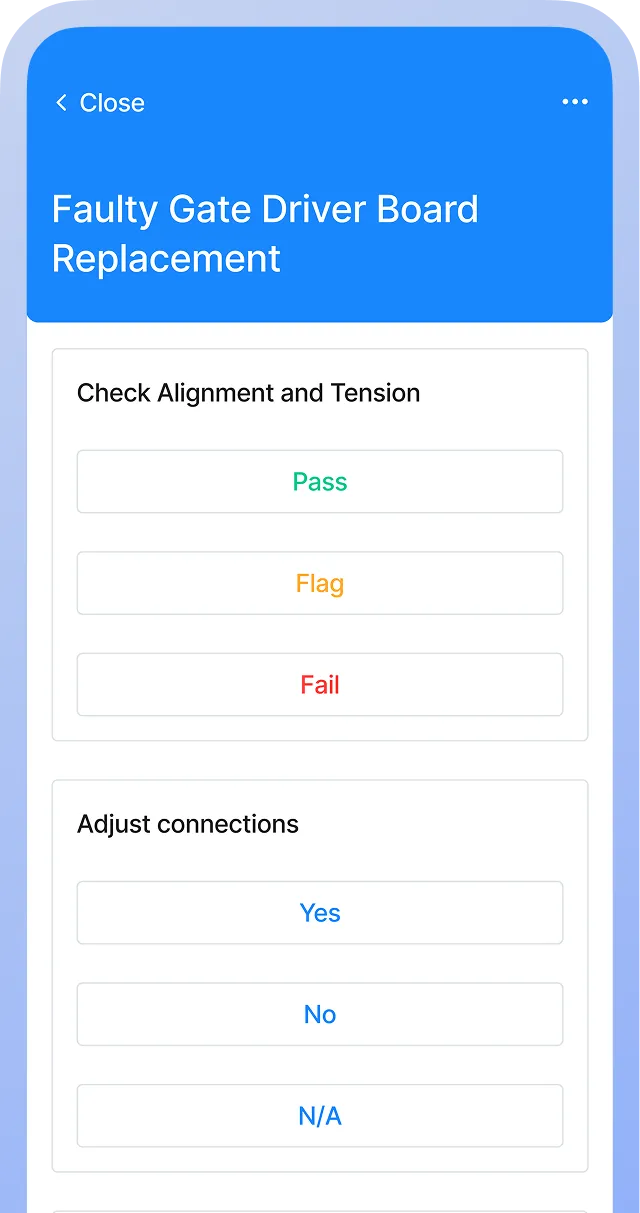
A paper checklist gets lost, and failed items can sit unreported until someone notices during the next walk around. A CMMS lets operators complete the daily inspection on a phone or tablet at the truck. A failed item triggers a work order automatically and notifies maintenance, and each submission creates a timestamped record by operator and unit ID. That audit trail helps you spot repeat defects and supports compliance reviews.


Pre-shift equipment inspection checklist
Shift handoff and defect review
Forks, mast, and carriage
Tires, fluids, and leaks
Power source
Operator compartment and safety equipment
Operational checks
Reach trucks, order pickers, and pallet jacks
Documentation and compliance
This checklist is to be used only by those with appropriate training, expertise, and professional judgment. You are solely responsible for reviewing this checklist to ensure that it meets all professional standards and legal requirements, as well as your needs and intent.
What to do when a pre-shift inspection finds a defect
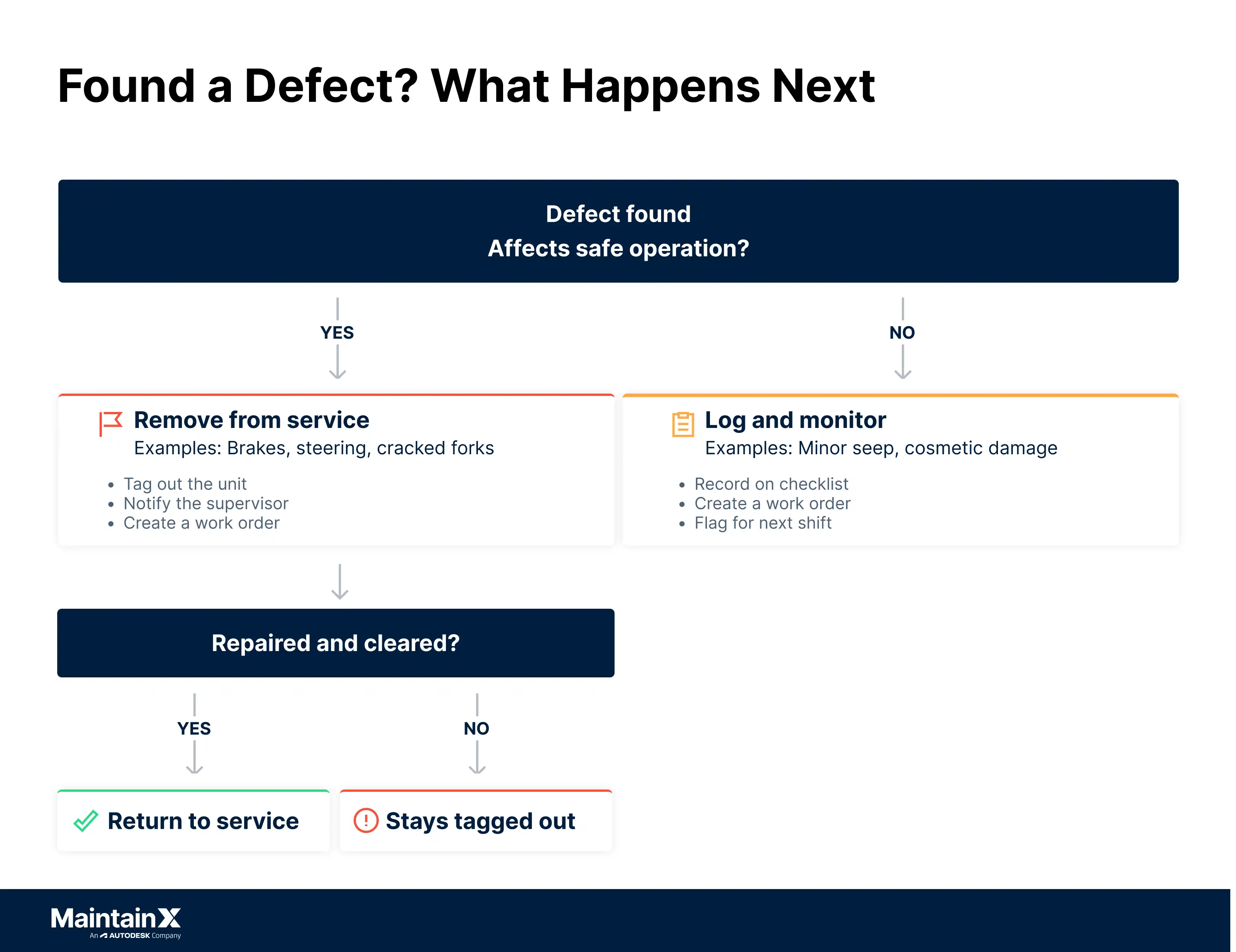
When a pre-shift inspection finds a defect, tag the truck out of service, notify a supervisor, and open a work order. That only works if your team has a clear accountability chain set up in advance. The operator who spots an unsafe condition handles the tag-out and notification. The work order gets a defined owner, priority, and timeline. A qualified technician completes the repair, and only a designated person clears the truck for return to service.
Without that structure, defects stall. Say an operator writes "brakes soft" on a counterbalance forklift's paper checklist, and the sheet goes into a binder at the end of the shift. The next two shifts write the same note, but no one opens a work order, because each operator assumes someone else already did. By the time a technician sees the truck, the worn brake linings have damaged the drums, turning a routine adjustment into an expensive repair and several days of unplanned downtime. Documented workflows keep every finding visible from discovery to resolution, so nothing depends on memory or on someone else following up.
How shift handoffs prevent duplicate defect reports
When outgoing operators don't share inspection findings, incoming crews flag the same issues again. Duplicate reports waste technician time and blur which defect is actually being worked.
Treat the pre-shift inspection as a communication bridge between shifts. If an outgoing operator documents sidewall damage on a counterbalance truck's pneumatic tire and that record is visible to the next shift, the incoming operator knows the issue is already in the repair queue. They can note whether the damage has worsened without opening a separate report.
Handoff visibility also closes a more dangerous gap. Crews sometimes put tagged-out equipment back into rotation because no one communicated the restriction. Shared, real-time inspection records remove that risk and help prevent accidents involving trucks that should still be out of service.
Adapt pre-shift checklists across warehouse equipment types
Forklifts get most of the attention, but your warehouse likely relies on a broader mix of equipment, each with distinct inspection needs.
- A reach truck working at height needs closer attention to mast chains and overhead guard integrity.
- Manual pallet jacks need wheel and handle checks that powered equipment doesn't.
- Dock levelers involve hydraulic systems and lip conditions that affect every trailer you load.
The same logic applies in your yard: a heavy equipment inspection checklist for a compact track loader adds items like track tension that a warehouse forklift inspection checklist never needs.
Rather than building one generic equipment inspection checklist, tailor items to each machine while keeping a consistent format. Operators move between trucks throughout a shift, and a familiar structure reduces skipped steps. Mark the critical items, such as brakes, steering, and safety interlocks, so operators know which failures mean the truck stays parked. A five-point check on a hand pallet jack looks very different from a 20-point forklift walkthrough, and coverage should match the real risk of each machine.
Warehouse inspections are easier with a CMMS
Paper inspection forms hold up for a while, but clipboards get lost, handwriting goes unread, and historical records sit in filing cabinets where no one reviews them.
MaintainX turns daily checks into searchable data. When an operator logs a failed item on a mobile device, it can automatically generate a work order, notify the right technician, and update the truck's asset history. Over weeks and months, those records reveal patterns. If the same reach truck logs a hydraulic leak every 30 days, that's a signal to adjust its preventive maintenance schedule rather than keep patching it.
The shift handoff improves too. Incoming operators pull up the latest inspection status on any truck before they start work, so every finding and its resolution status stays visible across shifts and teams.
Want to see how your team could run pre-shift inspections in MaintainX? Book a tour to walk through digital checklists, automatic work orders, and shift-to-shift defect tracking on your own fleet.
Pre-shift equipment inspection checklist FAQs
What are the OSHA requirements for forklift pre-shift inspections?
OSHA 1910.178(q)(7) requires examining powered industrial trucks before placing them in service, at least daily. If your trucks run around the clock, examine them after each shift. A truck with any condition that affects safe operation stays out of service until it's repaired. OSHA doesn't mandate a specific form, but written records make compliance easier to demonstrate.
This information is for informational purposes only and does not constitute compliance or legal advice. Use your professional judgment, and confirm the inspection requirements that apply to your operation with OSHA, your forklift manufacturer, and your safety or legal team.
How long should a pre-shift forklift inspection take?
Most forklift inspections take five to ten minutes, depending on the equipment and checklist length. Pallet jacks need less time. Rushing causes missed defects, so build the time into shift start rather than treating it as optional.
Who is responsible for conducting pre-shift forklift inspections?
The operator assigned to the equipment performs the inspection before use. Supervisors confirm completion, and maintenance reviews findings. Treating the inspection as a handoff also lets incoming operators read the outgoing shift's notes and spot unresolved issues.
What should you do if you find a defect during a pre-shift inspection?
Tag the equipment out of service if the defect affects safety, then notify the supervisor and maintenance right away. Log the finding as a work order, and require authorized sign-off before the equipment returns to service.
What's the difference between a pre-shift inspection and a periodic maintenance inspection?
A pre-shift inspection is a quick operator check for visible defects before each shift. Periodic maintenance is a scheduled, technician-led service covering deeper systems. Consistent daily records help technicians spot recurring failures and shift repairs toward prevention.

Marc Cousineau is the Senior Content Marketing Manager at MaintainX. Marc has over a decade of experience telling stories for technology brands, including more than five years writing about the maintenance and asset management industry.