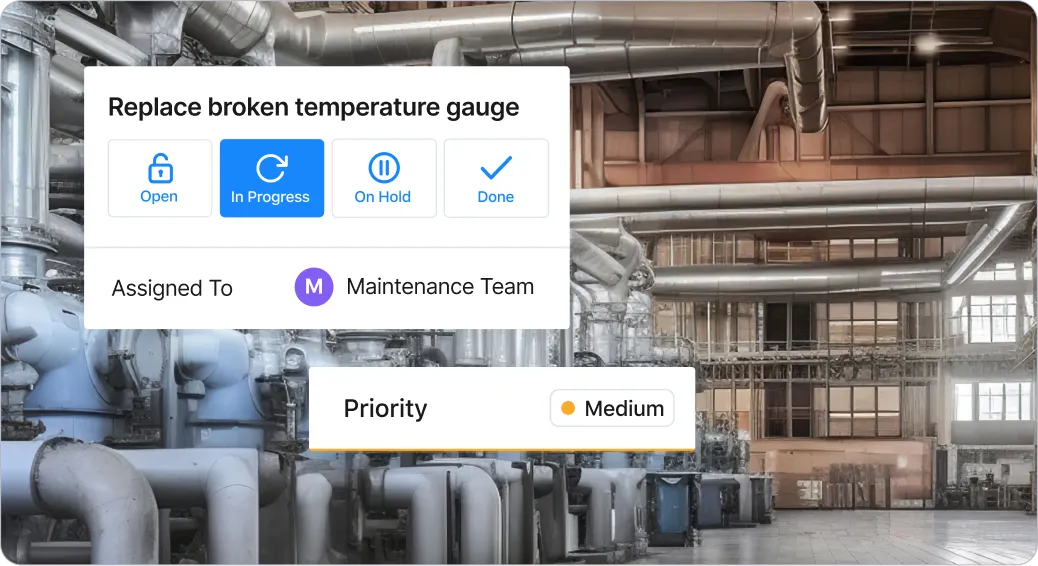
Stay ahead of breakdowns
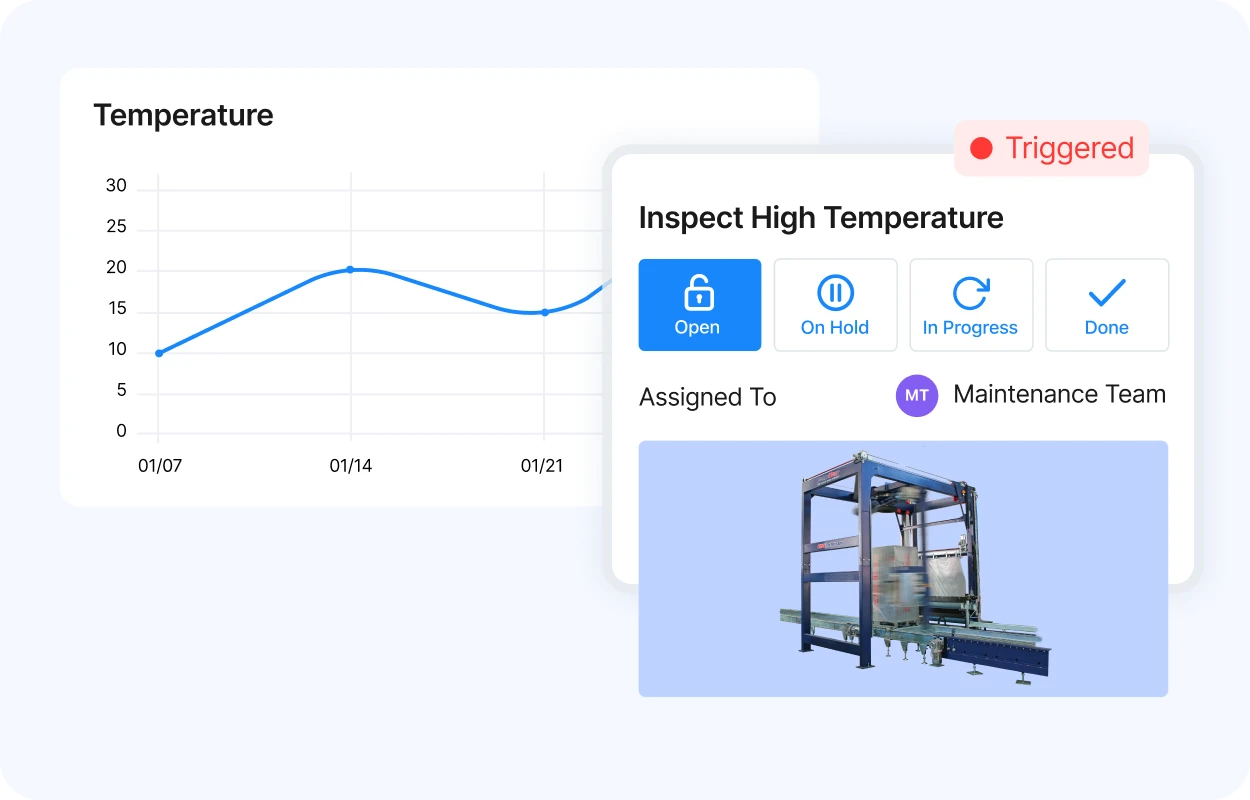
Prevent unexpected maintenance from affecting production capacity.
Elevate manufacturing, maximize budgets, stay ahead of competitors, and get ready for vehicle electrification by standardizing and centralizing your operations.
.webp)


%201.png)



.webp)




Prevent unexpected maintenance from affecting production capacity.
Make every dollar count in a competitive, price-sensitive landscape.
Standardize procedures, parts, and assets across locations.

With electric vehicles and their components ramping up, new equipment to manufacture them is needed. Rollout new assets with ease by using OEM-approved PM plans, manuals, and parts lists.

Manufacturing competition continues to grow locally and globally across EV, ICE, and core components. Add hours of production capacity by standardizing maintenance procedures and sharing them across all locations.

Easily view and share parts inventory across facilities to drive economies of scale. Perform cycle counts to track critical inventory levels, avoiding costly rush orders and extended downtime.

Attracting, training, and retaining your staff is critical, especially with a looming labor shortage. Arm your next generation of workers with an intuitive, easy-to-use, mobile platform that both technicians and managers will love.
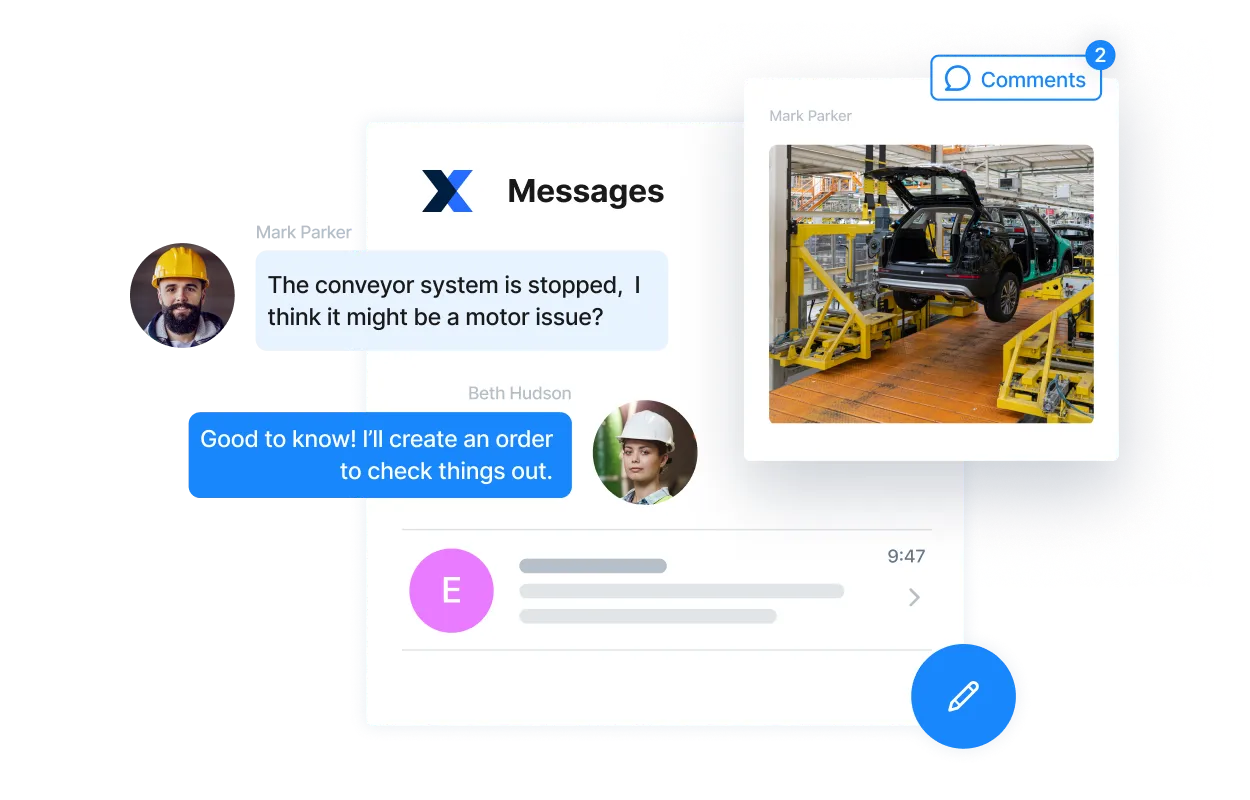
Monitor the impact of centralizing maintenance with built-in, actionable insights from all sites. Know at a glance how your assets and workforce are performing, the costs associated with them, and identify opportunities to improve.








Got a question? We’ve got answers. Need troubleshooting help? Check out our Support Center.
A computerized maintenance management system (CMMS) helps automotive manufacturers maintain vehicles, machinery, and facilities. By using automotive cmms software, manufacturers can improve their maintenance team’s efficiency, reduce downtime, lower costs, and enhance reliability and performance.
A CMMS for automotive manufacturers can reduce unplanned downtime by making it easy for teams to schedule regular preventive maintenance based on time, usage, or equipment conditions. This ultimately helps manufacturers address potential issues before they lead to shutdowns. In the same vein, this software streamlines work order creation and tracking to make sure maintenance is completed on time. Automotive maintenance software keeps detailed records on maintenance history, spare parts, and performance data, helping teams make data-driven decisions and prioritize maintenance tasks to prevent failures.
Automotive CMMS software can help OEMs strengthen partnerships with suppliers by giving them a clear, centralized view into the maintenance and performance of supplier-owned equipment. OEMs and suppliers can then use this shared maintenance data to collaborate on maintenance strategies and optimize the entire supply chain. By tracking key performance indicators (KPIs) such as overall equipment effectiveness (OEE), mean time between failures (MTBF), and mean time to repair (MTTR), a CMMS can help OEMs identify areas for improvement and optimize their maintenance strategies accordingly.
Maintenance software can also support condition-based and predictive maintenance strategies, which can help OEMs anticipate and prevent issues with supplier-owned equipment before they cause disruptions to the production line.
A few of the most important automotive maintenance software features include:
Parts inventory management capabilities that help teams track stock levels and automate reordering processes can minimize downtime and ensure timely repairs.
You might call maintenance software automotive manufacturing improvement software, as it helps automotive teams significantly improve operations with more efficient asset and work order management. It also gives teams a central repository for data and procedures, optimizes inventory management, and streamlines coordination between departments. These capabilities ultimately lead to less downtime, more productivity, lower maintenance costs, and better performance.
Advanced automotive CMMS software can integrate with condition monitoring sensors to empower predictive maintenance. Predictive maintenance analyzes real-time data and uses machine learning to forecast maintenance needs, helping teams avoid unplanned downtime and extend asset life. According to Deloitte, this level of insight allows companies to optimize resources and reduce breakdowns by up to 75%. This minimizes spending on both excessive preventive maintenance and expensive emergency repairs, leading to lower overall costs. Well-maintained machinery also contributes to higher-quality products and safer work environments.
Automotive manufacturers that complete preventive maintenance ultimately reduce their production costs by minimizing unplanned downtime, extending equipment lifespan, and optimizing labor and resource allocation. By proactively addressing potential issues and keeping equipment in top shape, preventive maintenance (and the automotive CMMS software that helps make preventive maintenance possible) helps manufacturers avoid costly repairs, reduce waste, and improve overall efficiency.
With mobile automotive maintenance software, technicians can access work orders, equipment histories, and spare parts information from anywhere on the plant floor. This saves time, as it means they no longer need to return to a central office or desktop computer. Technicians also receive instant notifications about equipment issues or breakdowns, which allows them to prioritize tasks based on urgency and quickly address problems before they escalate. They can also document completed work, capture photos, and record notes directly from the job site.
Before implementing automotive manufacturing maintenance software, leaders need to focus on developing clear goals, talking to key stakeholders on the frontline, and standardizing their processes and data. Comprehensive training and a pilot project can help facilitate a smooth rollout, while integration with your existing systems ensures that you retain a holistic view of operations. From there, you can refine and scale your new system by monitoring performance over time and fostering a culture of continuous improvement. Find more details on how to successfully implement a CMMS here.



.webp)