

Between heavy equipment moving through tight aisles, towering rack systems under constant load, and the ever-present pressure of OSHA compliance, the margin of error in warehouse safety is thin. A well-structured inspection program keeps facilities running safely and out of regulatory trouble.
This guide breaks down everything you need to inspect in your warehouse and includes a downloadable checklist that can be used on its own or with a CMMS.
Key takeaways
- Schedule inspections by frequency. Daily operator checks, monthly maintenance reviews, and quarterly system evaluations keep coverage consistent without overwhelming any single role.
- Not every deficiency merits the same response. Prioritize findings by severity, and define SOPs upfront so teams know what warrants immediate action versus a scheduled repair.
- Close the loop on every finding. An inspection that doesn't lead to a work order is just a record of problems. Connect findings to corrective actions, and track them to resolution.
How to use this checklist
Customize for your facility
Adapt this checklist based on your warehouse type, equipment fleet, and regulatory requirements. Distribution centers with extensive racking systems may require additional structural inspections, while food storage facilities need temperature monitoring and pest control measures.
Consider your building age, climate zone, and local fire codes when determining inspection frequency. Remove categories that don't apply and expand sections covering your critical systems.
Use a CMMS
Using a warehouse inspection checklist with a CMMS eliminates paper-based processes and creates automatic audit trails. With a CMMS, you can schedule recurring inspections, assign them to specific team members, and receive completion alerts in real time. Photos and notes attach directly to deficiency records, which simplifies follow-up tracking.


Warehouse inspection checklist
Building systems and infrastructure
Fire safety and emergency systems
Storage and racking systems
Material handling equipment
Loading docks and shipping areas
Walking and working surfaces
Hazardous materials and worker protection
Environmental and housekeeping
Security and access control
Signage and wayfinding
Documentation and compliance
This checklist is to be used only by those with appropriate training, expertise, and professional judgment. You are solely responsible for reviewing this checklist to ensure that it meets all professional standards and legal requirements, as well as your needs and intent.
What to inspect and when
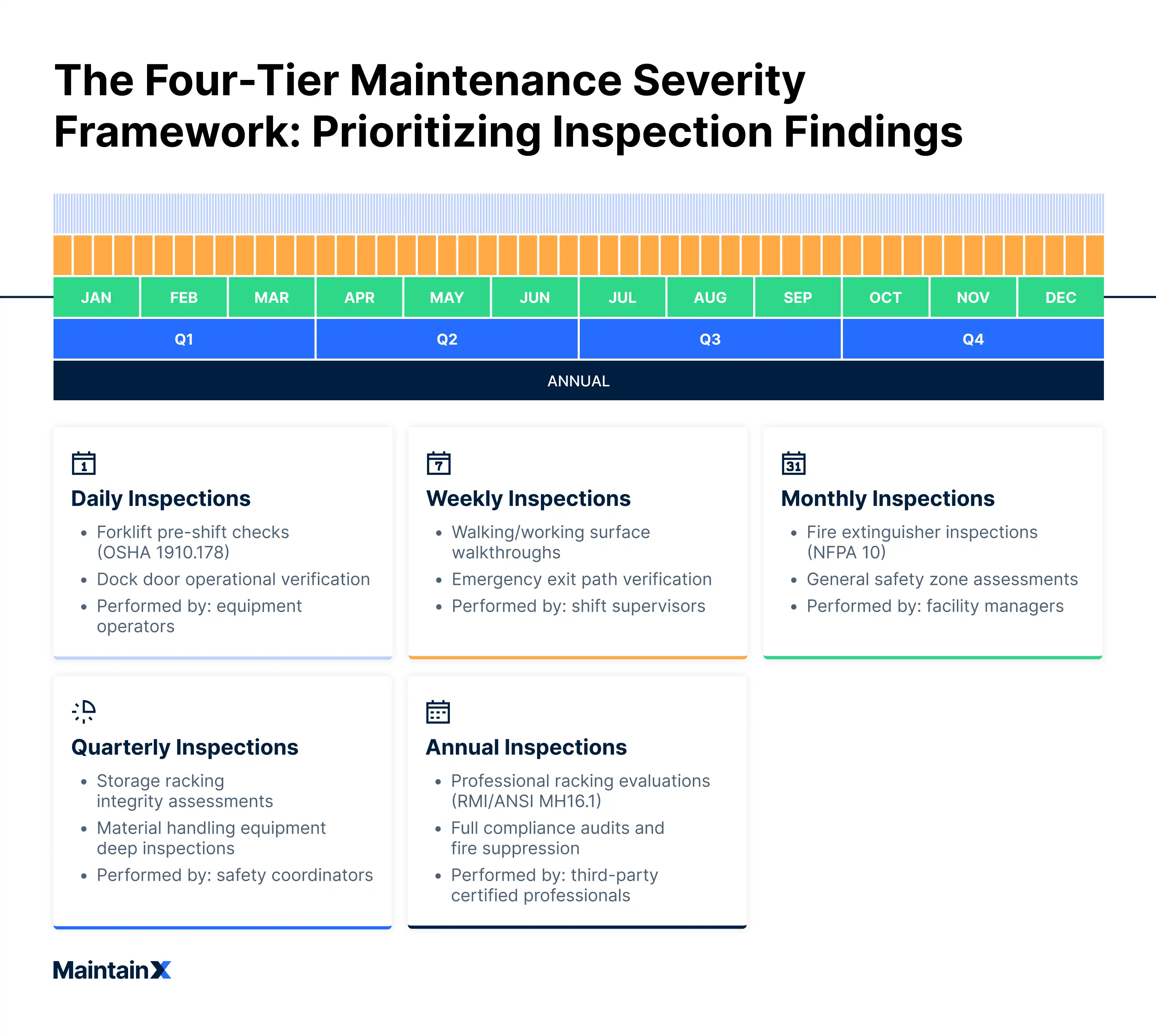
Not every warehouse inspection item needs daily attention from a licensed technician. Know what to prioritize and who to assign to each task to allocate resources effectively.
Equipment operators typically handle relevant daily checks: forklift condition, aisle obstructions, emergency exit access, and spill containment. These are fast visual sweeps that catch hazards before a shift begins.
Monthly and quarterly inspections fall to warehouse maintenance teams. Rack integrity, fire suppression systems, dock levelers, and electrical panels all need closer evaluation on a recurring cycle.
Annual inspections often require outside professionals. Sprinkler system testing, rack load capacity assessments, and electrical infrastructure reviews carry regulatory weight that demands certified expertise.
Assigning clear ownership at each frequency prevents duplicated effort and overlooked items. When everyone knows their scope, consistent inspections form the basis of a proactive, preventive maintenance program.
Why warehouse inspection programs fail
The most common reason inspection programs break down is that findings go nowhere.
A damaged rack gets flagged on a paper form, but no one creates a work order. A frayed dock seal appears in three consecutive monthly reports without repair. These gaps can carry real financial risk: OSHA inspectors typically look for documentation trails, and repeated unresolved findings are red flags that signal systemic neglect.
Treating every item with equal urgency is another frequent breakdown. When a burned-out parking lot light sits on the same list as a compromised fire door, teams lose confidence in the system's priorities.
Effective warehouse inspection programs define severity thresholds upfront. Some findings warrant immediate equipment removal from service, while others can wait for the next scheduled maintenance window. Unless you have a structured way of differentiating between the two, critical hazards will compete for attention alongside minor maintenance items.
Use a CMMS to close the loop between inspection findings and repairs
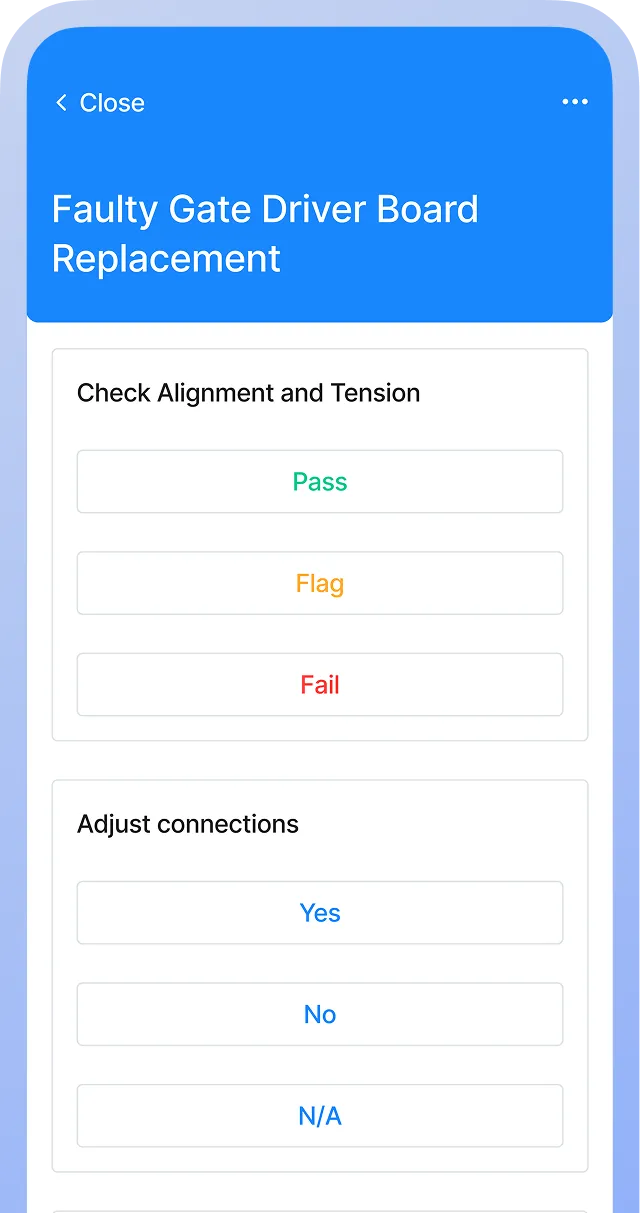
A CMMS turns paper checklists and inspections into tracked, assignable work. With MaintainX, when a technician flags a damaged pallet rack during a quarterly walkthrough, the finding generates a work order on the spot. The CMMS routes it to the right person and assigns a priority level, and it stays visible until someone closes it. That chain of custody is exactly what auditors and inspectors for OSHA guidelines want to see.
Book a demo to see how MaintainX helps with warehouse inspections and other preventive maintenance goals.
Warehouse inspection checklist FAQs
How often should warehouse safety inspections be conducted?
Regular inspections are essential for both risk management and regulatory compliance. Conducting regular inspections helps aid compliance with OSHA requirements and can improve efficiency in warehouse operations by identifying issues early and streamlining processes.
Operators check critical equipment daily. Maintenance teams typically inspect racking monthly and material handling systems quarterly. Annual professional evaluations cover structural and fire protection systems to meet OSHA requirements.
How do you conduct a warehouse inspection effectively?
Inspectors should focus on findings that have an actionable follow-up workflow. Document conditions with photos and severity ratings. Connect each issue to clear corrective pathways. Define who responds, what triggers equipment removal, such as equipment not working correctly, and how teams track resolution for compliance.
What are the most common warehouse inspection violations?
Common violations include blocked exits, damaged racking, improper forklift maintenance, inadequate training documentation, and missing safety equipment. OSHA standards for warehouses target material handling hazards and fall protection failures. Noncompliance with OSHA standards can lead to costly fines and increase the risk of injuries to employees.
What should be included in a warehouse racking inspection?
Inspections should assess the structural integrity of storage racks for bending, uprights for damage, anchors for secure mounting, and capacity placards for visibility. Proper inspection of storage racks helps prevent falling objects and related hazards. Check for impact damage from forklifts, overloading, and unauthorized modifications. Monthly inspections by maintenance teams catch issues before structural failure.
Who is responsible for warehouse inspections?
All workers play a role in maintaining a safe work environment and reporting hazards in the warehouse environment, though responsibility varies by inspection scope. Forklift operators are responsible for daily equipment checks. Maintenance teams handle monthly racking and quarterly systems reviews. Facility managers oversee annual professional evaluations and coordinate third-party inspections for fire protection and structural systems, which may involve a professional inspector.

The MaintainX team is made up of maintenance and manufacturing experts. They’re here to share industry knowledge, explain product features, and help workers get more done with MaintainX!




.webp)