

Keeping mini-splits running well isn't complicated, but it does require staying on top of a lot of moving parts, especially when you're managing units across multiple zones or buildings.
This checklist gives your team a consistent process for every inspection, with clear task ownership so operators handle what they can and certified technicians get called in when the work requires it. Use it as-is or adapt it to your facility's environment and load patterns.
Key takeaways
- Routine maintenance and biannual professional tune-ups are recommended to ensure optimal performance and avoid downtime
- Refrigerant documentation should be kept for a minimum of three years to ensure warranty coverage and audit readiness
- Using a CMMS can transform mini-split inspections from isolated tasks into evolving diagnostic records that reveal problems as they develop
How to use this checklist
Customize for your facility
Use this checklist as a baseline, and customize it to match your environment and load patterns. For instance, units in dusty warehouses or commercial kitchens typically require monthly filter service, while office settings can extend to quarterly intervals. Facilities exceeding the 100-pound refrigerant threshold under ASHRAE 15 should include enhanced leak monitoring.
You’ll also want to make sure you’ve aligned your inspection schedules with manufacturer recommendations and warranty requirements, particularly for newer installations.
Use a CMMS
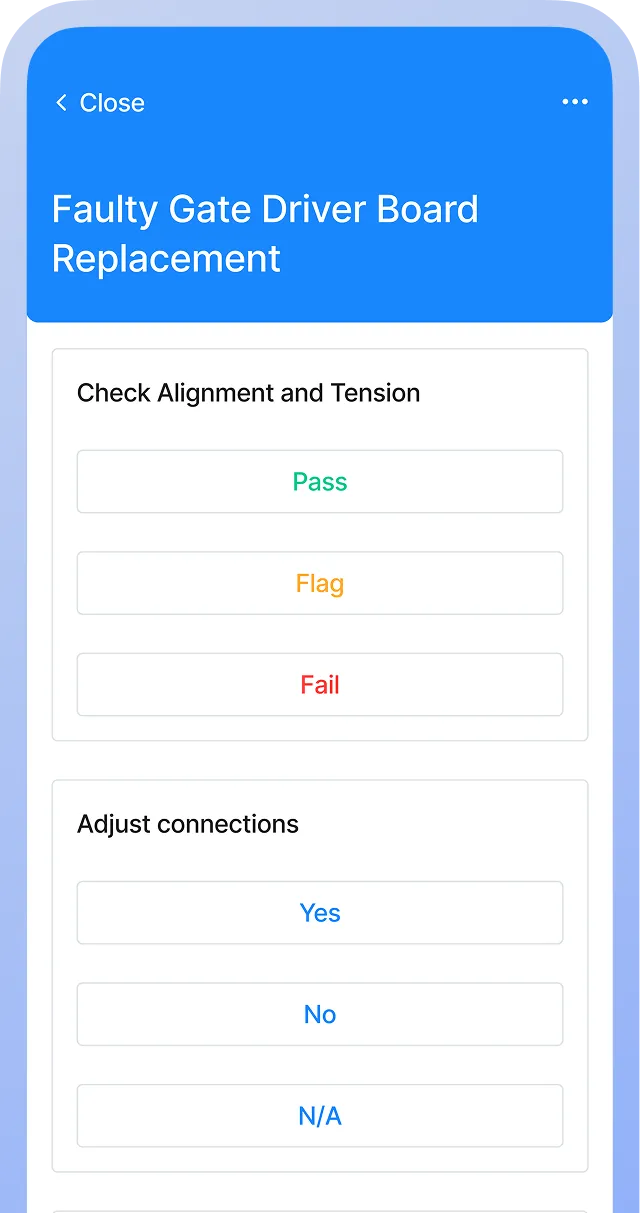
A computerized maintenance management system (CMMS) provides mobile access to digital checklists, enabling technicians to document findings at each unit in real time.
Uploading this checklist to a CMMS eliminates paper forms, automates scheduling across multiple mini-split units, and lets you generate work orders when defects are found. You can also record refrigerant quantities for EPA compliance, attach photos of coil condition or fault codes, and maintain a complete service history for warranty claims and regulatory audits.


Mini-split maintenance checklist
Filters and air quality
Indoor unit and evaporator
Outdoor unit and compressor
Refrigerant lines and connections
Condensate drainage system
Electrical components and wiring
Controls and system performance
Safety systems
Documentation and compliance
This checklist is to be used only by those with appropriate training, expertise, and professional judgment. You are solely responsible for reviewing this checklist to ensure that it meets all professional standards and legal requirements, as well as your needs and intent.
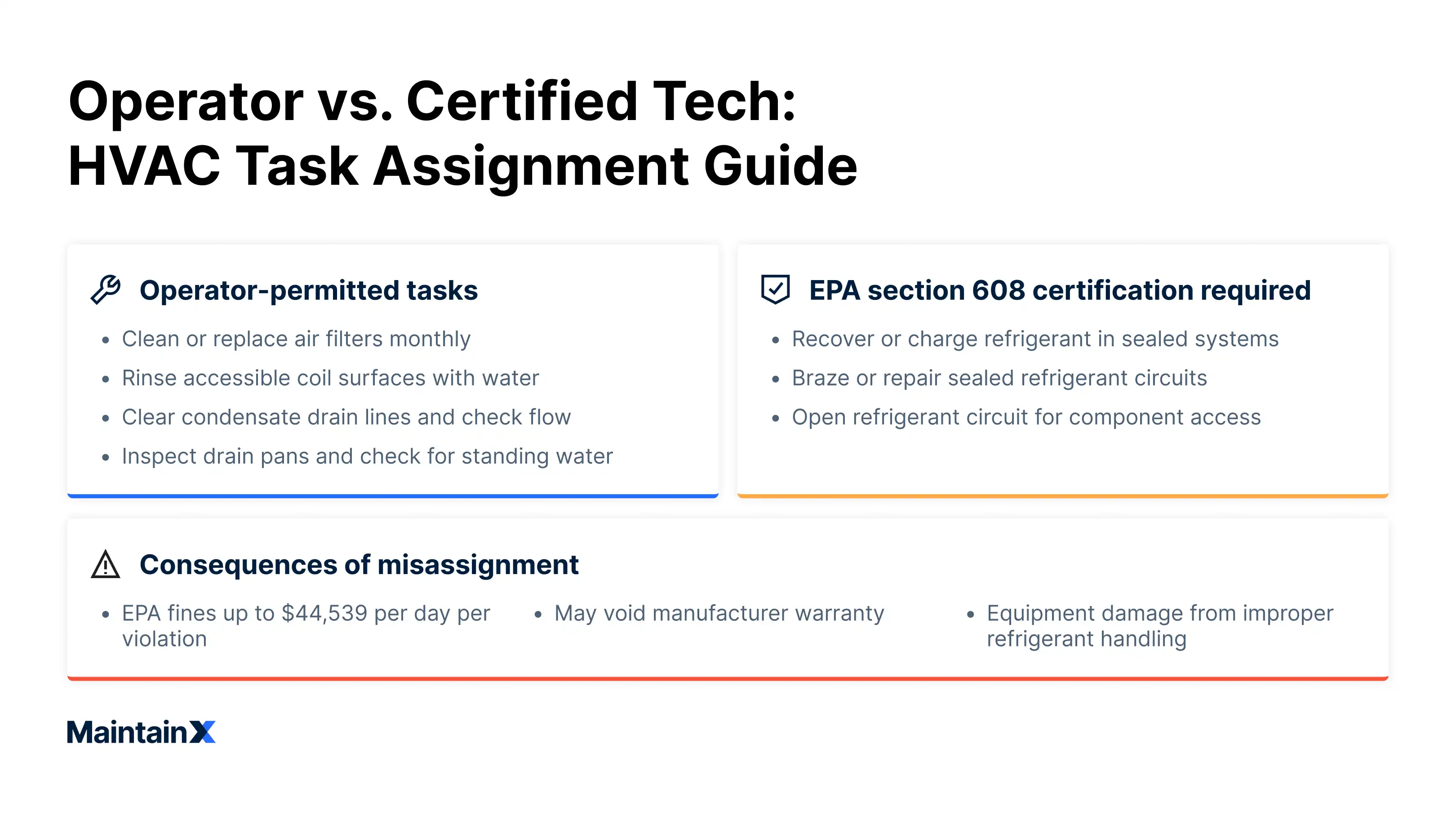
Operator vs. certified technician: Who does what?
Regular preventive maintenance is essential for keeping a ductless mini-split maintenance system in peak condition. But not all tasks can be handled in-house. Facility operators can handle routine items like cleaning filters, wiping down indoor units, clearing debris from outdoor condensers, and checking condensate drain lines.
Any task involving refrigerant recovery, leak testing, or recharging requires an EPA Section 608-certified technician. The same applies to electrical diagnostics, compressor evaluation, and circuit board troubleshooting.
A practical approach to designating responsibilities for these tasks is to color-code or tag checklist items by role. When an operator spots ice on coils or hears unusual compressor cycling, that finding should trigger an escalation to a certified tech rather than a DIY fix attempt. Defining who owns what up front protects your team, your equipment warranties, and your compliance standing.
EPA Section 608 compliance and documentation requirements
Mini-split systems use refrigerants regulated under the Clean Air Act. EPA Section 608 requires that only certified technicians can handle these substances, and that facilities should maintain records of all refrigerant additions, recoveries, and disposals.
For each service event, documentation should capture the unit ID, refrigerant type, amount added or recovered, technician certification number, and date. Facilities managing dozens of mini-splits across zones can lose track of this data quickly if records live in binders or spreadsheets.
Instead, build these fields directly into your digital inspection checklist so compliance documentation becomes routine. Technicians log the data as they go, not days later from memory. During an audit, having organized, timestamped service histories for every unit shows due diligence far more effectively than scrambling to reconstruct records after the fact.
Note: Regulatory standards change routinely. Be sure to check regulatory requirements before proceeding.
Tips for scheduling maintenance across multiple mini-split units
A single mini-split system is easy to maintain, but 20 units spread across different zones, floors, or buildings requires a scheduling strategy.
Many facilities teams group units by zone and rotate through them on staggered cycles. Monthly filter cleanings might cover Zone A in week one, Zone B in week two, and so on. Seasonal deep inspections then follow a similar rotation before cooling and heating peaks.
Consistent maintenance scheduling matters because mini-split systems lack the centralized ductwork that makes issues obvious in traditional HVAC systems. For instance, a failing unit in a back office can go unnoticed for weeks. Assigning each unit a unique identifier and tying it to a recurring maintenance schedule ensures nothing falls through the cracks. The goal is a repeatable maintenance program where every mini-split system gets attention at predictable intervals.
Commercial HVAC maintenance is easier with a CMMS
Managing a fleet of mini-splits with paper logs or shared spreadsheets works until you’ve missed inspections, lost refrigerant records, or assigned unclear tasks, leading to costly repairs or compliance gaps.
MaintainX brings structure to the maintenance process. With a CMMS, recurring work orders auto-generate on schedule. You can assign each checklist item by role, so operators see their tasks and certified technicians see theirs. Refrigerant logs, photos, and condition notes attach directly to the unit’s asset record.
See how MaintainX helps manage mini-split systems across your entire fleet with confidence. Book a tour today:
Mini split maintenance checklist FAQs
How often should mini-split filters be cleaned in commercial buildings?
Clean filters monthly in typical commercial environments, though high-traffic areas or facilities with airborne particulates may require biweekly cleaning. Facilities managing multiple units benefit from scheduling all zones on the same calendar to maintain consistency and documentation.
Can facility staff perform mini-split maintenance, or is professional service required?
Routine tasks like filter cleaning, coil surface inspection, and condensate drain checks are appropriate for facility staff as part of DIY maintenance. However, tasks like refrigerant work, electrical repairs, and system diagnostics typically require EPA Section 608-certified technicians. Clear task ownership prevents regulatory exposure and maintains warranty coverage.
How often do mini-splits need refrigerant recharging?
Properly functioning sealed mini-split systems don’t consume refrigerant and rarely need recharging. When they do, it’s usually because of a leak that requires professional diagnosis and repair by a certified technician.
What are the signs that a mini-split needs professional maintenance?
Ice on coils, unusual noises, weak airflow despite clean filters, water leaks, and error codes all indicate that a mini–split needs professional maintenance. Building these triggers into routine inspections helps facilities catch and address issues before they compound into failures requiring costly repairs or system downtime.
What OSHA and safety requirements apply to mini-split maintenance in commercial facilities?
EPA Section 608 certification governs refrigerant handling. Electrical work requires lockout/tagout and NFPA 70E compliance. Height safety protocols apply when accessing wall-mounted units. Facilities should document certifications and training to show regulatory compliance during audits.
Note: This is a general informational summary only and does not constitute legal, regulatory, or compliance advice. Consult a licensed professional or legal counsel to determine the specific obligations applicable to your jurisdiction and equipment.

The MaintainX team is made up of maintenance and manufacturing experts. They’re here to share industry knowledge, explain product features, and help workers get more done with MaintainX!


.webp)