
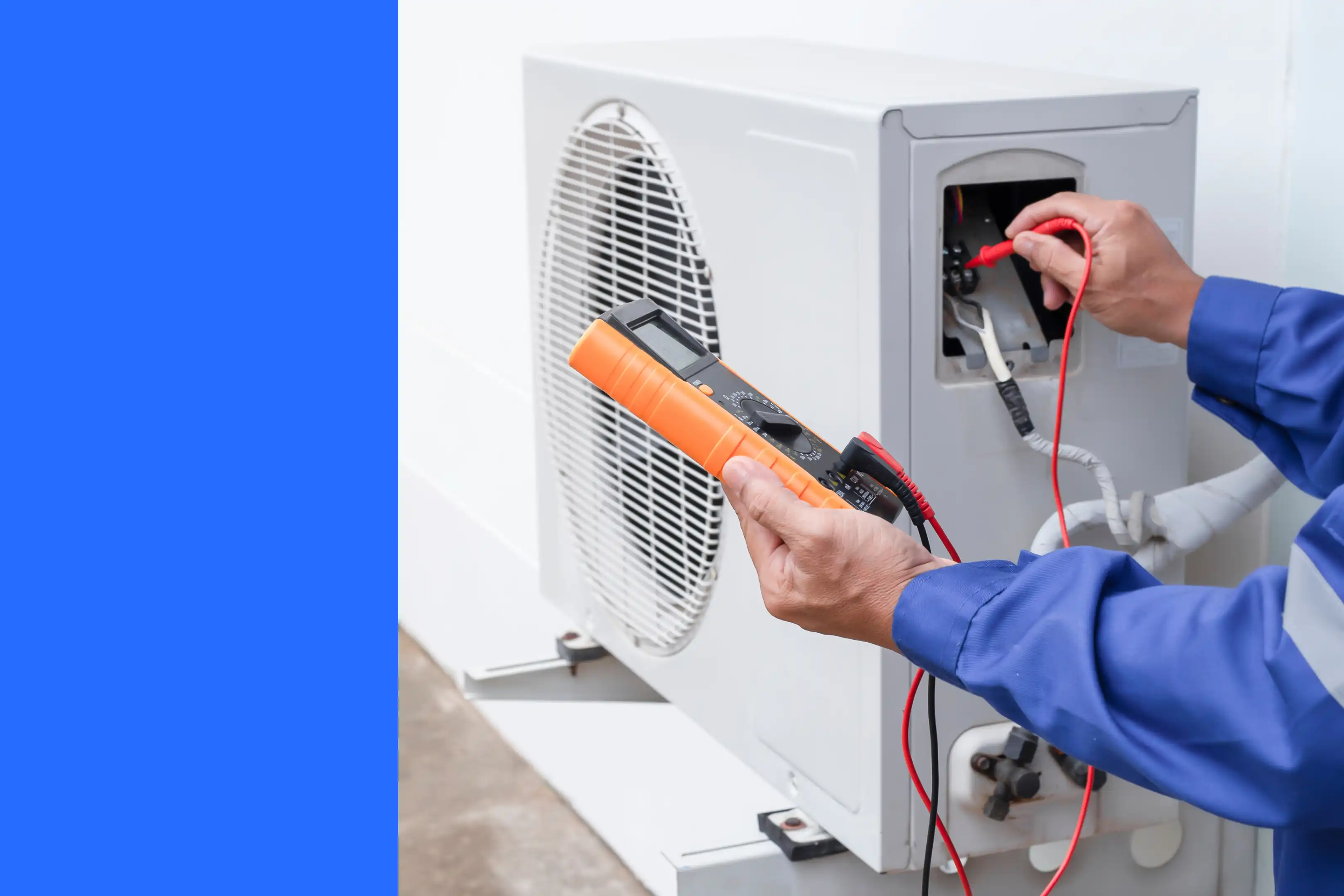
According to the U.S. Department of Energy, neglecting heat pump maintenance can increase energy consumption by 10–25%. In a commercial facility or multi-tenant property, that’s a significant material impact.
A structured, scalable maintenance plan is the first step to mitigating these risks. On this page, we provide a downloadable heat pump maintenance checklist as well as some useful tips for making sure nothing falls through the cracks across your entire unit portfolio.
Key takeaways
- Regular heat pump maintenance helps detect and address minor issues early, minimizing the risk of unexpected breakdowns and helping prevent costly repairs or replacement costs.
- Tracking static pressure drops, temperature differentials, and compressor amp draws across consecutive service visits can help you make informed capital planning decisions.
- Using a mobile-friendly CMMS makes it easy to document inspection records, work orders, technician IDs, and service dates.
How to use this checklist
Customize for your facility
Use this checklist as a template and add items specific to your zone systems, specialized controls, or backup heating configurations. Then, verify that maintenance intervals align with manufacturer warranties and EPA refrigerant-handling requirements under Section 608. These standards change over time, so be sure to check regulatory requirements before proceeding.
Finally, depending on your region, incorporate seasonal maintenance into your checklist, like clearing outdoor debris from the outdoor unit in spring. These adjustments will help to ensure optimal performance and prevent unexpected breakdowns.
Use a CMMS
To streamline your maintenance workflow, upload this checklist to a computerized maintenance management system (CMMS).
In a CMMS, you can schedule recurring inspections, assign tasks to certified technicians, and capture refrigerant data. Plus, you can attach photos of coil conditions, electrical readings, and equipment nameplates to work orders to help technicians troubleshoot and identify issues quickly.
A CMMS can also generate audit trails for EPA documentation and track performance trends to help you identify any wider system issues in need of attention.


Heat pump maintenance checklist
Indoor unit and air handler
Outdoor unit and compressor
Refrigerant system
Electrical and controls
Air distribution and filtration
Defrost and seasonal changeover
Safety systems and procedures
Documentation and compliance
This checklist is to be used only by those with appropriate training, expertise, and professional judgment. You are solely responsible for reviewing this checklist to ensure that it meets all professional standards and legal requirements, as well as your needs and intent.
Key metrics for tracking heat pump efficiency
Pass/fail inspections only catch problems after they've already caused damage. Quantitative performance data catches them while they're still developing, helping preserve your HVAC system's overall efficiency.
Effective heat pump maintenance programs typically track these metrics across inspection cycles:
- Coefficient of performance (COP): COP is the ratio of heating or cooling output to energy input. A declining COP can signal refrigerant loss, fouled coils, or compressor wear — and typically points to increased energy consumption.
- Temperature differential (supply vs. return): A consistent drop in temperature differential from baseline readings often indicates airflow restrictions or refrigerant charge issues, both of which reduce system efficiency and increase operating costs.
- Refrigerant superheat and subcooling: These values reveal charge accuracy more reliably than pressure readings alone.
- Filter pressure drop: Measured in inches of water column, a rising pressure drop between filter changes indicates accumulation rate and helps set replacement intervals based on actual conditions.
By tracking these metrics over time, teams can identify gradual efficiency losses and address them before they become major issues.
How routine coil and filter maintenance prevents compressor failure
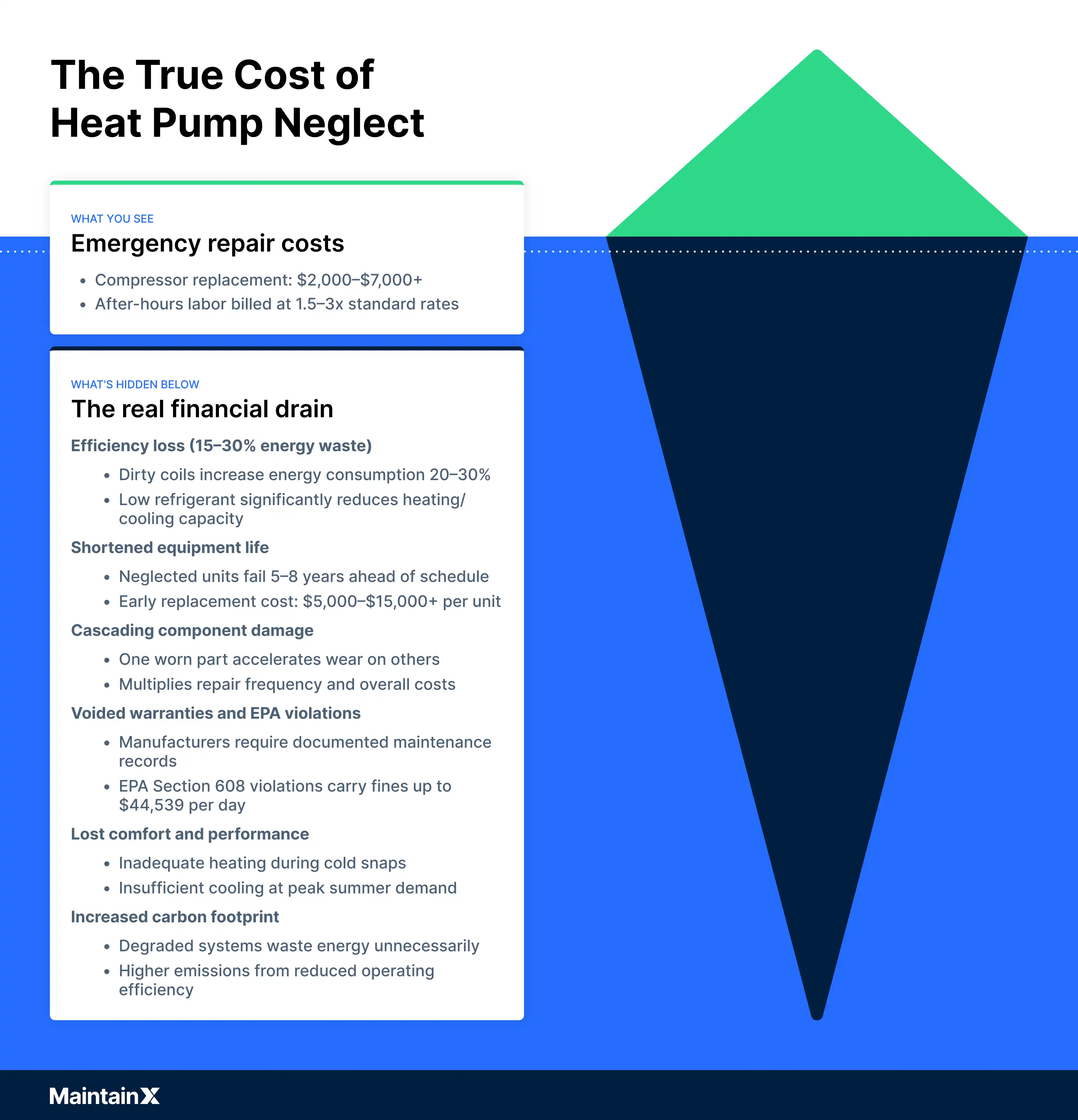
Compressor replacement is one of the most expensive heat pump repairs. Many compressor failures trace back to easily fixable issues, such as neglected coils and filters, rather than fundamental compressor defects.
The failure chain is straightforward: Dirty filters restrict airflow, which reduces heat transfer at the evaporator coil. The coil temperature drops, superheat decreases, and liquid refrigerant can reach the compressor suction line. Over time, liquid refrigerant entering the compressor causes liquid slugging, damaging internal components such as pistons, valves, and connecting rods. On the condenser side, fouled coils raise head pressure and force the compressor to work harder, increasing operating temperatures and accelerating wear.
Regular coil cleaning and filter replacement break this chain at its earliest, cheapest link. For facilities managing dozens of units, tracking filter pressure drop readings across cycles helps identify which units or environments demand shorter replacement intervals. A $15 filter change can prevent a $3,000 compressor replacement.
When to perform in-house maintenance vs. calling a certified HVAC technician
Many routine heat pump tasks fall well within an in-house team’s capabilities. Filter replacement, coil cleaning, condensate drain clearing, and electrical connection inspections are standard facility maintenance work.
However, refrigerant handling is the clear dividing line between in-house tasks and the work of a licensed HVAC technician. EPA Section 608 typically requires technicians to hold current certification before completing any task involving the sealed refrigerant circuit, including recovering, recycling, or adding refrigerant.
Other tasks worth outsourcing include compressor diagnostics, reversing valve troubleshooting, and any warranty-related service. Scroll or reciprocating compressor analysis requires specialized tools and training that most in-house teams don’t have.
The most practical approach is to task in-house teams with inspections and capturing performance data at regular intervals. When those readings show declining efficiency that coil cleaning and filter changes don’t resolve, it's time to bring in a specialist.
Coordinate heat pump maintenance with a CMMS
Managing heat pump maintenance across a portfolio of units with spreadsheets or paper logs often results in lost readings or refrigerant tracking falling out of compliance. Manual documentation often means that no one notices a unit’s performance trending downward until it fails.
MaintainX centralizes the entire maintenance process for improved visibility and record-keeping that support proactive, preventative maintenance. Each unit gets its own asset record with maintenance history, refrigerant logs, and quantitative readings that trend over time.
Standardized digital checklists in MaintainX also build accountability into every inspection. Technicians document what they found, not just that they showed up, helping to build an audit trail that can satisfy regulatory requirements for documentation.
See how MaintainX helps you move from limited visibility and high risks to a clear, streamlined workflow for heat pump maintenance. Book a tour today:
Heat pump maintenance checklist FAQs
What needs servicing on a heat pump?
Heat pumps require attention to refrigerant charge, electrical connections, coil cleanliness, airflow paths, and defrost controls. These components directly affect energy efficiency, so regular maintenance keeps the entire system running smoothly.
How often should heat pump maintenance be performed?
Inspect filters monthly, clean coils quarterly, and perform full system checks twice per year. Schedule these maintenance tasks before heating and cooling seasons. Facilities with heavy usage or harsh environments often increase frequency based on performance data trends rather than fixed schedules alone.
What are the EPA Section 608 compliance requirements for heat pump maintenance?
Technicians must hold EPA Section 608 certification to handle refrigerants, document all refrigerant additions or recoveries, repair leaks within mandated timeframes, and maintain service records for three years. Tracking these requirements in a CMMS can prevent violations during inspections or audits.
Note: This is a general informational summary only and does not constitute legal, regulatory, or compliance advice. Consult a licensed HVAC technician to determine the specific obligations applicable to your jurisdiction and equipment.
What is the 20-degree rule for heat pumps, and why does it matter for maintenance?
The 20-degree rule states that heat pumps maintain about a 20°F differential between supply and return air. Tracking this measurement during inspections reveals refrigerant charge issues, airflow restrictions, or compressor problems before they cause failures or efficiency losses.
What documentation should be maintained for heat pump service records?
Maintain refrigerant charge readings, temperature differentials, pressure measurements, and parts replacements. Quantitative records enable trending analysis across inspection cycles, support EPA compliance, and justify capital decisions when units show declining performance patterns.

The MaintainX team is made up of maintenance and manufacturing experts. They’re here to share industry knowledge, explain product features, and help workers get more done with MaintainX!



.webp)