
The cost of neglected or incomplete chiller maintenance can be substantial, ranging from high energy bills, to downtime, to expensive emergency repairs. A structured chiller maintenance checklist can help avoid these costs by streamlining preventive maintenance and extending equipment life.
This guide is designed to help you capture verified evidence of each routine yet critical chiller maintenance task. We’ve created the checklist based on EPA refrigerant regulations, ASHRAE efficiency standards, and OSHA safety requirements. However, be sure to check current regulatory requirements before proceeding.
Key takeaways
- Gaps in refrigerant leak logs can trigger penalties even when physical compliance exists, while complete inspection documentation can protect facilities during audits and investigations.
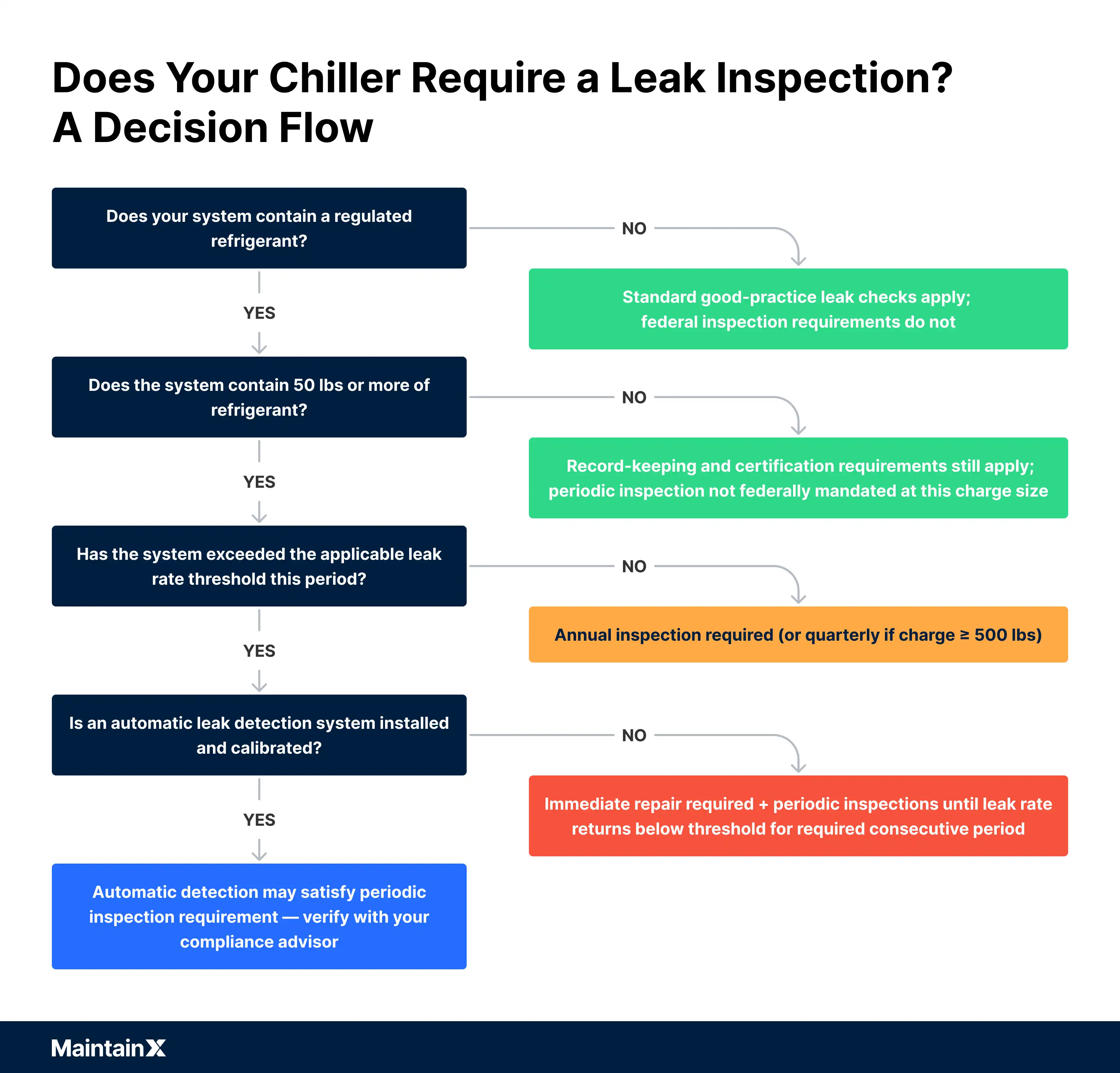
- Systems with 50+ pounds of refrigerant require annual leak inspections, while 500+ pound systems need quarterly checks.
- Tracking operating pressures and refrigerant additions enables leak rate calculation before hitting the 10% threshold that mandates repairs.
- A CMMS creates audit-ready, timestamped records of refrigerant inspections and operating logs.
How to use this checklist
Customize for your facility
This checklist is a template based on general best practices for chiller maintenance. Adapt inspection frequencies based on chiller tonnage, operating hours, and criticality. High-demand facilities should inspect compressor systems weekly rather than monthly to ensure maintenance keeps up with equipment usage.
You should also modify refrigerant documentation items to match your specific refrigerant type and EPA record-keeping requirements. Add manufacturer-specific checks for specialty equipment like magnetic bearing compressors. Adjust water treatment parameters based on local water quality and cooling tower design.
Use a CMMS
A computerized maintenance management system (CMMS) helps standardize and track chiller maintenance inspections over time. Upload this checklist to the CMMS to reduce documentation errors and ensure Section 608 records meet retention requirements.
With a CMMS, automated work orders trigger scheduled inspections based on chiller runtime hours. Mobile access to the system enables technicians to log temperatures and pressures directly from the floor, creating reliable audit trails for regulatory inspections.


Chiller maintenance checklist
Compressor system
Condenser and heat rejection
Evaporator and heat exchange
Refrigerant circuit and charge
Controls, sensors, and electrical
Water treatment and flow
Safety devices and emergency systems
Documentation and compliance
This checklist is to be used only by those with appropriate training, expertise, and professional judgment. You are solely responsible for reviewing this checklist to ensure that it meets all professional standards and legal requirements, as well as your needs and intent.
Air-cooled vs. water-cooled vs. absorption chiller systems: How to maintain each
Each chiller type demands a distinct maintenance approach. Air-cooled units rely on condenser coil cleanliness for heat rejection, so fin inspection and cleaning are the most important routine tasks. Water-cooled systems require regular checks for condenser water quality, tube fouling, and cooling tower coordination. Absorption chillers require attention to solution concentration, crystallization risk, and purge system performance.
EPA Section 608 leak rate thresholds vary by refrigerant charge size, meaning a large water-cooled centrifugal chiller with 500+ pounds of refrigerant requires quarterly checks, while a smaller air-cooled unit with 50+ pounds of refrigerant needs annual leak inspection.
Matching inspection and maintenance tasks to the specific cooling system type helps teams avoid both mechanical failures and regulatory gaps that a generic checklist would miss.
How to calculate and document EPA Section 608 leak rates
EPA Section 608 sets specific leak rate thresholds for commercial refrigeration and comfort cooling equipment. For comfort cooling chillers, the trigger is 10% annually. Exceeding that threshold starts a 30-day repair clock.
The calculation itself is straightforward: Divide the total refrigerant added over 12 months by the system's full charge, then multiply by 100. The harder part is maintaining the records that prove compliance. For every refrigerant addition, document the date, technician name, amount added, and running total against the full charge.
However, it’s not enough that the work is completed on time. Record-keeping is nearly as important as equipment maintenance because inspectors treat documentation gaps the same as violations, even when actual leak rates fall within limits.
Note: This overview is for informational purposes only and does not constitute legal or regulatory advice. Consult the current EPA Section 608 regulations, applicable state requirements, and a certified refrigeration professional to ensure your specific equipment and practices meet all compliance obligations.
Lockout/tagout and refrigerant-specific PPE requirements
Chiller maintenance involves high-voltage electrical systems, pressurized refrigerant circuits, and rotating machinery. Each chiller should have a machine-specific energy control procedure that identifies all isolation points, including electrical disconnects, refrigerant valves, and chilled water shutoffs.
Refrigerant handling adds PPE requirements beyond standard safety gear. Technicians working with refrigerants typically need chemical splash goggles, insulated cryogenic gloves, and ventilation per ASHRAE 15 or respiratory protection in enclosed mechanical rooms. Refrigerant contact with skin or eyes can cause frostbite-like injuries.
Documenting that lockout/tagout procedures were followed and that PPE was worn protects both workers and the organization. During an OSHA investigation, missing safety records often carry penalties comparable to the hazard itself.
Track industrial chiller maintenance with a CMMS
Maintaining compliance with the EPA’s refrigerant standards requires substantial documentation, including refrigerant logs, leak rate calculations, safety procedure records, and inspection histories. Spreadsheets and filing cabinets can technically hold this information, but retrieving and reconciling it under audit pressure is a different story.
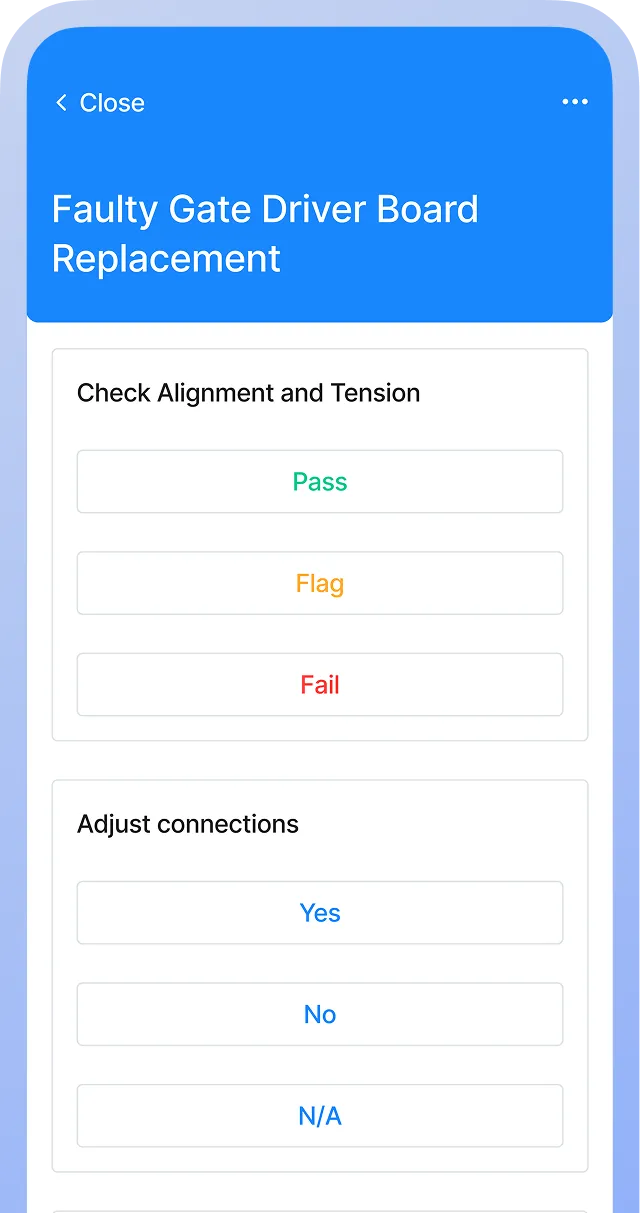
MaintainX centralizes inspection records in one searchable location. Technicians can log refrigerant additions at the unit, attach inspection photos, and complete lockout/tagout verification steps directly within work orders for easy, centralized access and long-term record retention. Automated inspection scheduling helps teams stay ahead of time-sensitive tasks like annual leak rate reviews or condenser tube inspections.
Then, during audits and incident investigations, MaintainX provides a single source of truth by showing each chiller maintenance task that was completed. When an EPA inspector or insurance adjuster asks for three years of refrigerant tracking data, teams can pull verified digital records in minutes instead of days.
Book a tour to see how MaintainX streamlines inspections and turns documentation from a burden into a safeguard.
Chiller maintenance checklist FAQs
What does a complete chiller maintenance program include?
A complete maintenance program covers refrigerant management, mechanical inspections, safety system verification, and documentation retention. Tasks vary by chiller type (air-cooled, water-cooled, or absorption), and EPA compliance requirements shift based on refrigerant charge size.
How often should chillers be serviced and inspected?
Chillers should receive service at regular intervals, with each inspection frequency having different focus areas:
- Daily checks cover operating pressures and temperatures
- Weekly tasks include water treatment and cooling tower inspections
- Monthly inspections verify refrigerant levels and safety interlocks
- Annual servicing addresses compressor oil, heat exchangers, and EPA-mandated leak detection
What safety certifications are required to perform chiller maintenance?
Technicians need EPA Section 608 certification for refrigerant handling, with Universal certification covering all types and charge sizes. Employers typically require OSHA training in confined space entry, electrical safety, and lockout/tagout for mechanical work.
Note: This is a general informational summary only and does not constitute legal, regulatory, or compliance advice. Consult a licensed chiller inspector, qualified maintenance contractor, or legal counsel to determine the specific obligations applicable to your jurisdiction and equipment.
What are the most critical components to inspect during chiller maintenance?
Refrigerant levels and leak detection prevent EPA violations. Compressor oil quality affects reliability. Condenser and evaporator cleanliness impacts efficiency and ASHRAE compliance. Safety controls and interlocks (pressure relief valves, flow switches, and temperature cutouts) prevent catastrophic failures and OSHA citations.
What records should be maintained for chiller maintenance compliance?
Refrigerant logs showing charge amounts, leak rates, and repairs can protect against EPA fines. Maintenance records document inspections and corrective actions. Safety test logs verify interlock function. Most facilities retain records for three to five years for regulatory and insurance purposes.
Note: This is a general informational summary only and does not constitute legal, regulatory, or compliance advice. Consult a licensed chiller inspector, qualified maintenance contractor, or legal counsel to determine the specific obligations applicable to your jurisdiction and equipment.

The MaintainX team is made up of maintenance and manufacturing experts. They’re here to share industry knowledge, explain product features, and help workers get more done with MaintainX!

.webp)