
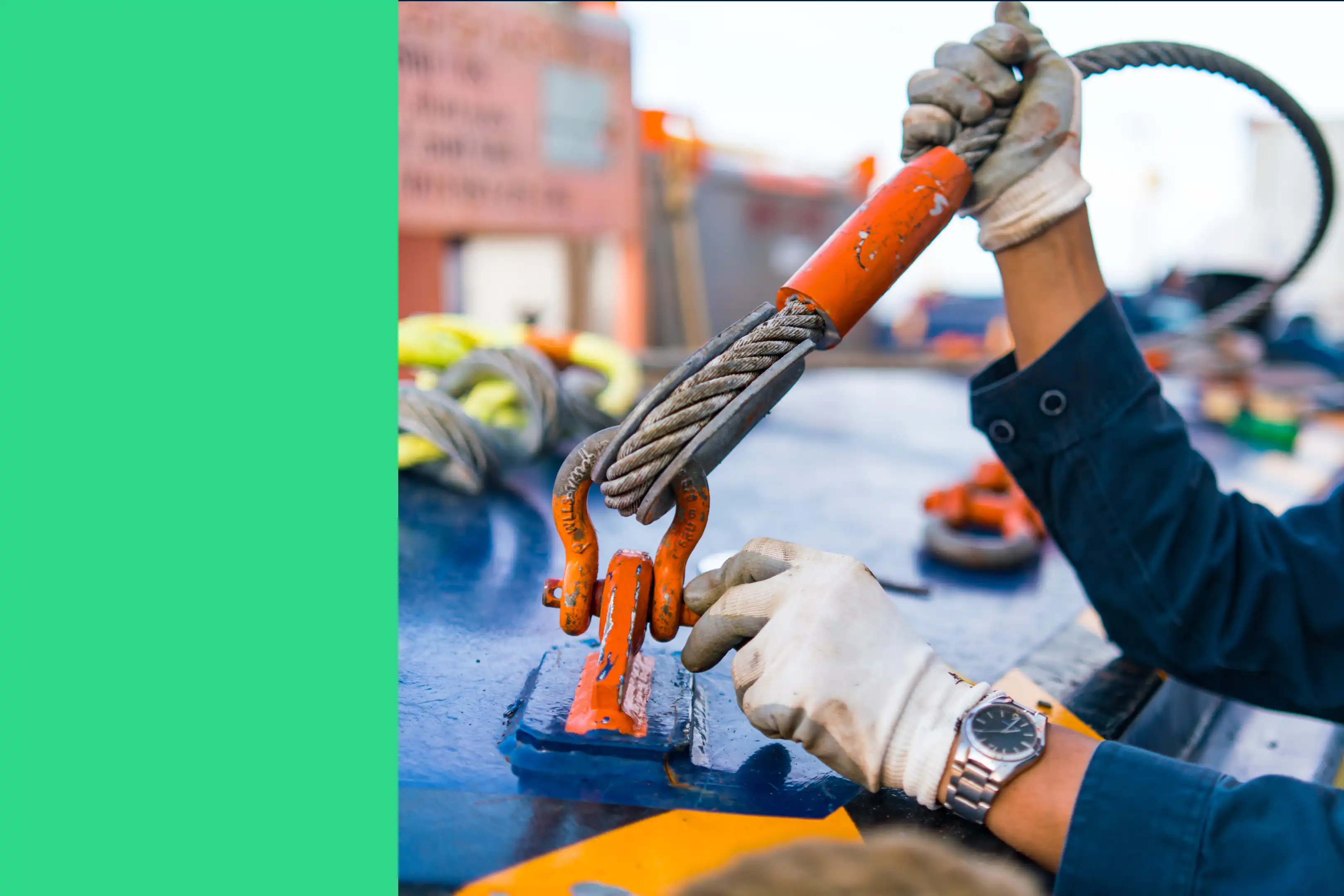
Rigging inspection checklists prevent blind spots and create an effective system for corrective action.
This guide covers everything from daily visual checks through periodic documented exams, with equipment-specific criteria, measurable rejection thresholds, and a post-inspection workflow for pulling defective gear from service.
We’ve also included a downloadable rigging inspection checklist based around OSHA’s tiered requirements. However, compliance and safety best practices change routinely. Be sure to check current guidelines.
Key takeaways
- Daily visual checks are different from documented inspections by qualified persons; each inspection tier catches different failure modes at different stages.
- Use measurable equipment rejection criteria to help inspectors to make confident removal decisions and ensure the safety and compliance of rigging equipment.
- Digitizing checklists in a computerized maintenance management system (CMMS) creates audit trails that track rigging defects through to resolution, closing the loops that paper systems leave open.
How to use this checklist
Customize for your facility
This rigging inspection checklist is a template that can be tailored for different industries and job sites. Facilities with overhead cranes often prioritize wire rope slings, while operations relying on synthetic slings and shackles adjust accordingly.
Inspection frequency depends on service severity: Critical lifts or heavy-duty operations require more frequent checks than occasional use. Consult OSHA 1926.251 and ASME B30.9 requirements to make sure you’re compliant with industry standards and regulations.
Use a CMMS
Upload this checklist to a CMMS to streamline the inspection process and create permanent audit trails that can simplify OSHA compliance.
With a mobile-friendly CMMS, you can schedule recurring inspections based on service classification, automatically route defects to maintenance teams, and attach photos of damage directly to inspection records. Competent person certifications, proof test documentation, and defect history stay accessible in one system. Digital tagging eliminates manual paperwork and reduces the risk of using defective rigging. Secure digital records help maintain compliance and enhance the safety culture by maintaining accurate inspection documentation.
Taken together, these capabilities let users inspect, document, and respond to hazards more efficiently and effectively.


Rigging inspection checklist
Pre-inspection preparation
Wire rope sling inspection
Alloy steel chain sling inspection
Synthetic sling inspection
Rigging hardware inspection
Below-the-hook lifting devices
Defect disposition and corrective action
Documentation and compliance
This checklist is to be used only by those with appropriate training, expertise, and professional judgment. You are solely responsible for reviewing this checklist to ensure that it meets all professional standards and legal requirements, as well as your needs and intent.
Daily vs. periodic inspections: How often must rigging equipment be inspected?
OSHA requirements typically draw a line between daily or pre-shift inspections by a competent person, and periodic inspections by a qualified person. Each has different inspection frequencies, qualifications, and documentation expectations.
OSHA defines a competent person as someone who is able to identify existing or predictable hazards, and perform daily (or pre-use) visual checks before each shift. These focus on obvious damage such as kinks, crushing, broken wires, distorted hooks, and missing safety latches.
Periodic inspections go deeper. A qualified person, who has a recognized degree, certificate, or extensive experience and an ability to solve problems at the worksite, examines equipment at scheduled intervals based on service severity, frequency of use, and environmental exposure. These inspections need documentation, including the date, inspector identity, and equipment condition.
Rejection criteria by equipment type: When rigging must be removed from service
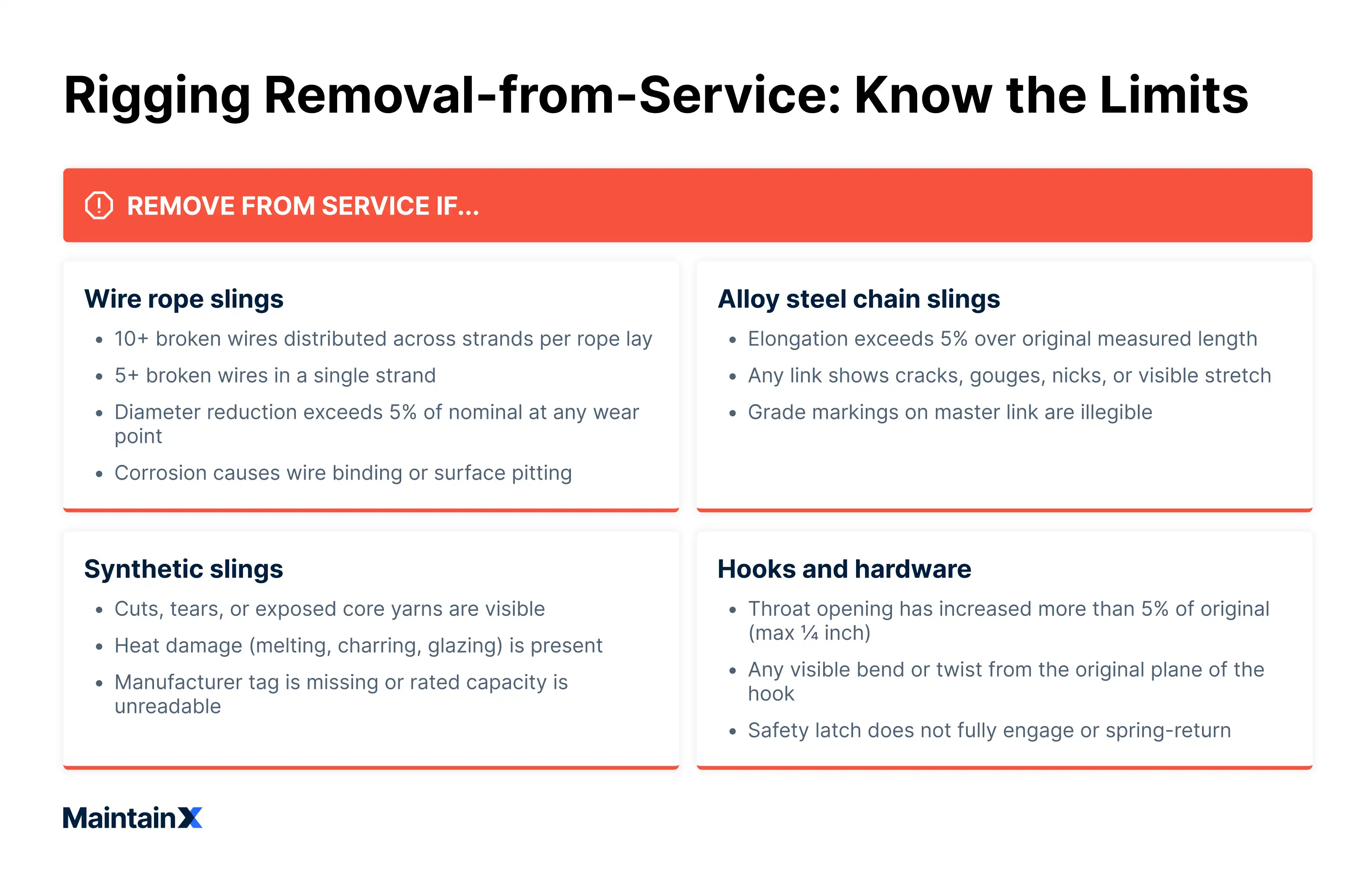
Each rigging type fails differently, so a single “check for damage” instruction leaves inspectors guessing. Specific rejection thresholds help frontline teams make confident go/no-go calls.
For wire rope slings, look for 10 or more randomly broken wires in one rope lay, or five broken wires in one strand. Any evidence of heat damage or end-fitting slippage also warrants removal. Chain slings come out of service when any link shows stretching, cracks, or excessive wear beyond the manufacturer’s limits.
Synthetic web slings have their own failure modes: acid or caustic burns, melting, snags that expose core yarns, or damaged stitching in load-bearing splices. Shackles, hooks, and other hardware require removal when throat openings exceed 15% of the original dimension or when the latch is missing or deformed.
How to structure a rigging inspection program
The strength of a rigging inspection program goes beyond the inspection itself. It covers who inspects, how defects get handled, and what happens to equipment between discovery and resolution.
A well-organized process and clear accountability are essential elements of an effective rigging inspection program. Here’s how to set one up:
- Define roles clearly. Competent persons handle daily checks; qualified persons own periodic inspections. Training records should reflect both designations.
- Build a quarantine workflow. When an inspector flags a defect, that piece of rigging needs a physical tag-out and a tracked path to either repair, downgrade, or disposal.
- Log every aspect of inspection. Documentation ties everything together. Each periodic inspection record should capture the equipment ID, inspection date, findings, and the inspector’s name. Over time, these records reveal wear trends that inform replacement schedules before failures happen on the job.
Instead of a one-time check that leads nowhere, the goal is a closed loop that verifies equipment fitness and ensures technicians take appropriate next steps.
Inspections are easier with a CMMS
Paper-based rigging logs tend to get lost, filed inconsistently, or completed after the fact. A CMMS moves the entire inspection workflow into a single digital system where nothing falls through the cracks.
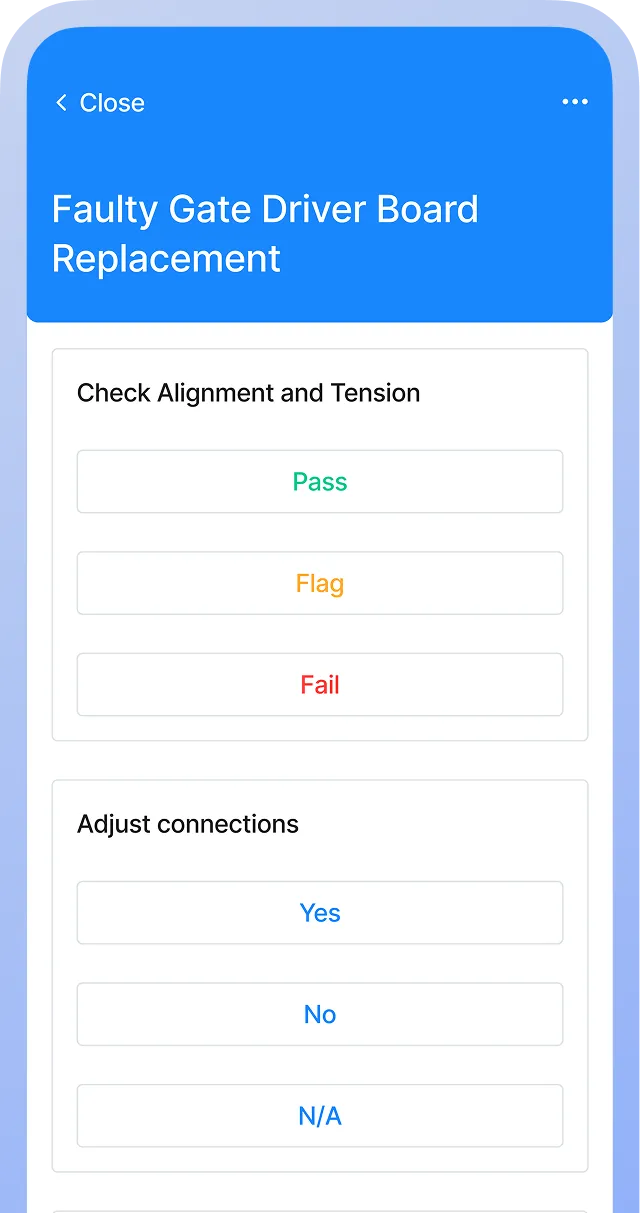
With MaintainX, maintenance leads can build separate checklists for daily and periodic inspections, each assigned to the right personnel at the right frequency. When an inspector flags a defect, the platform can trigger a corrective work order on the spot, complete with photos, severity notes, and equipment ID. The platform then tracks that defective sling from quarantine through disposition.
See how MaintainX delivers less downtime and fewer audit surprises. Book a tour today.
Rigging inspection checklist FAQs
What are the four main things to inspect on rigging equipment?
Focus on load-bearing surfaces, wear patterns, deformation, and identification markings.
Inspect all tools and gear, including chains, slings, cables, and hooks, for any damage that makes them unsafe for use. Wire rope requires checking for broken wires, kinks, and corrosion. Chain slings need inspection for wear, gouges, and stretch. Synthetic slings require checks for cuts, burns, and UV damage.
How often does OSHA require rigging equipment to be inspected?
OSHA typically mandates two inspection tiers: daily visual checks by a competent person before each use, and periodic documented inspections by a qualified person at intervals determined by service frequency and conditions. Monthly intervals work for frequent-use rigging.
What defects require immediate removal of rigging equipment from service?
Remove rigging immediately if it fails inspection, such as when wire rope shows 10 broken wires in one lay or hooks open 15% beyond original throat. Chain slings with wear exceeding 15% of original diameter, cracks, or gouging must be quarantined. Any heat damage or chemical burns warrant removal.
Additionally, equipment that is wrong for the intended lift should also be removed from service to prevent incidents caused by improper selection or use.
Who is qualified to perform rigging inspections?
Daily visual inspections require a competent person: someone with the training to recognize hazards. Periodic documented inspections need a qualified person with demonstrated knowledge of load ratings, rejection criteria, and equipment-specific failure modes. Many facilities certify riggers through NCCCO or manufacturer programs.
What is the 10-foot rule in rigging operations?
Maintain a minimum 10-foot clearance between rigging equipment and energized power lines under 50kV. Higher voltages require greater distances: Add four inches per kilovolt above 50kV. Contact with overhead lines causes most rigging fatalities, making clearance verification essential before every lift.
How do you document and maintain rigging inspection records?
Maintain accurate records by completing all required inspection fields to ensure compliance with safety standards and regulations, ideally in a digital platform. Periodic inspections should have written records showing equipment ID, inspection date, inspector name, and defects found. Tag each piece with the next inspection due date.
Most facilities track periodic inspections in a CMMS, maintaining ongoing documentation for regulatory adherence.

The MaintainX team is made up of maintenance and manufacturing experts. They’re here to share industry knowledge, explain product features, and help workers get more done with MaintainX!

.webp)