
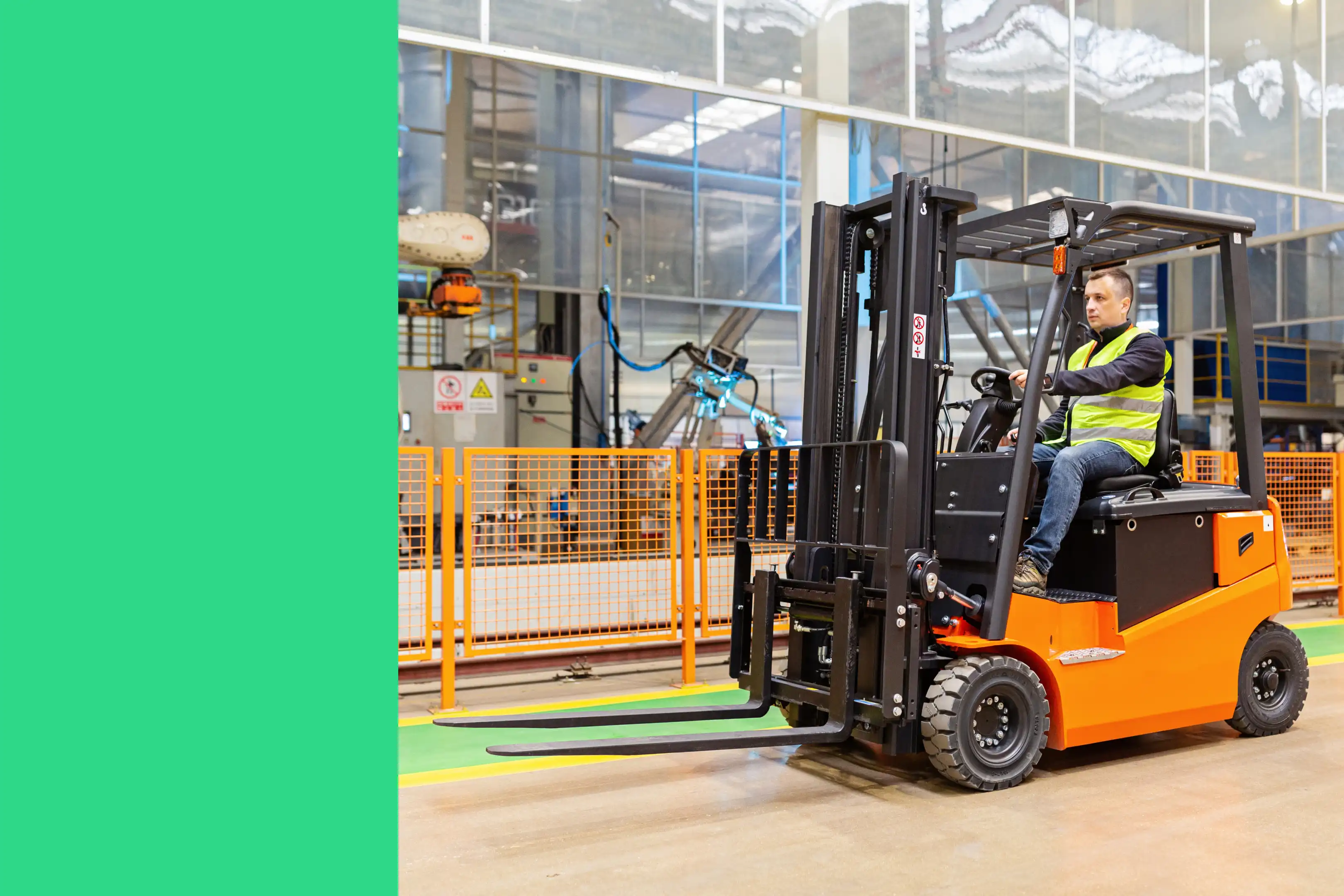
A structured forklift maintenance checklist turns daily operator inspections into a reliable early-warning system, creating condition data that allows for smarter preventive maintenance scheduling and repair vs replace decisions across your entire fleet.
In this article, you’ll find a downloadable forklift maintenance checklist that can be customized to your fleet. Use it on its own or with a CMMS to assign follow-up actions and track inspection trends over time.
Key takeaways
- Daily operator checks are more valuable when patterns emerge across multiple inspections. A hydraulic seepage note repeated three times signals the need for proactive seal replacement, not just continued documentation.
- Completing digital checklists in a CMMS transforms maintenance records from compliance artifacts into trend data that reveals degradation patterns and informs repair vs replace decisions before failures occur.
- Generic 250-hour PM intervals often miss the mark in real-world conditions. Dusty warehouses and multi-shift operations typically require more frequent service than manufacturer baselines suggest.
How to use this checklist
Customize for your facility
Adjust maintenance frequencies based on your operating environment and usage patterns. Facilities running multiple shifts or operating in environments that are dusty, corrosive, or have extreme temperatures typically require increased inspection frequencies. LP-specific and electric-specific sections apply only to relevant power types.
OSHA requires daily pre-shift inspections for all industrial trucks, with more detailed preventive maintenance aligned to manufacturer recommendations and actual operating conditions. You’ll also want to review manufacturer specifications for your forklift models, as recommendations vary by make and capacity and may impact warranty guidelines.
Before starting any inspection or maintenance task, review and follow all relevant safety procedures for your facility. This includes wearing appropriate personal protective equipment (PPE) such as safety glasses, gloves, steel-toed boots, and high-visibility clothing as required. Ensure the forklift is powered down, the parking brake is engaged, and the forks are lowered to the ground before performing any hands-on checks.
Use a CMMS
A computerized maintenance management system (CMMS) turns paper checklists into digital workflows with automated fleet maintenance and compliance tracking. Technicians complete inspections on a mobile device, capturing photos and flagging issues in real time. This creates an audit trail that can help simplify OSHA compliance. A CMMS can also schedule recurring preventive maintenance based on hours or calendar intervals, and track fluid analysis patterns that indicate developing problems.


Forklift maintenance checklist
Daily maintenance
Weekly maintenance
Monthly maintenance
Quarterly maintenance
Annual maintenance
LP-specific maintenance
Electric-specific maintenance
Documentation requirements
This checklist is to be used only by those with appropriate training, expertise, and professional judgment. You are solely responsible for reviewing this checklist to ensure that it meets all professional standards and legal requirements, as well as your needs and intent.
From work request to work order: Close the inspection-to-repair loop
A daily inspection only creates value when it triggers action. Too often, operators flag issues on paper forms that sit in a clipboard until someone reviews them hours or days later. By then, a small hydraulic leak can turn into a cylinder replacement.
Effective teams treat operators as frontline intelligence. When an operator notes a soft brake pedal or unusual mast drift, that observation should flow directly into a work order with priority, location, and context attached.
A CMMS can really drive value across your fleet by automating follow-up actions. The pattern matters more than the single report: Three operators noting the same steering hesitation over two weeks tells a different story than one isolated comment. Tracking these trends transforms routine inspections into an early warning system that catches failures before they escalate.
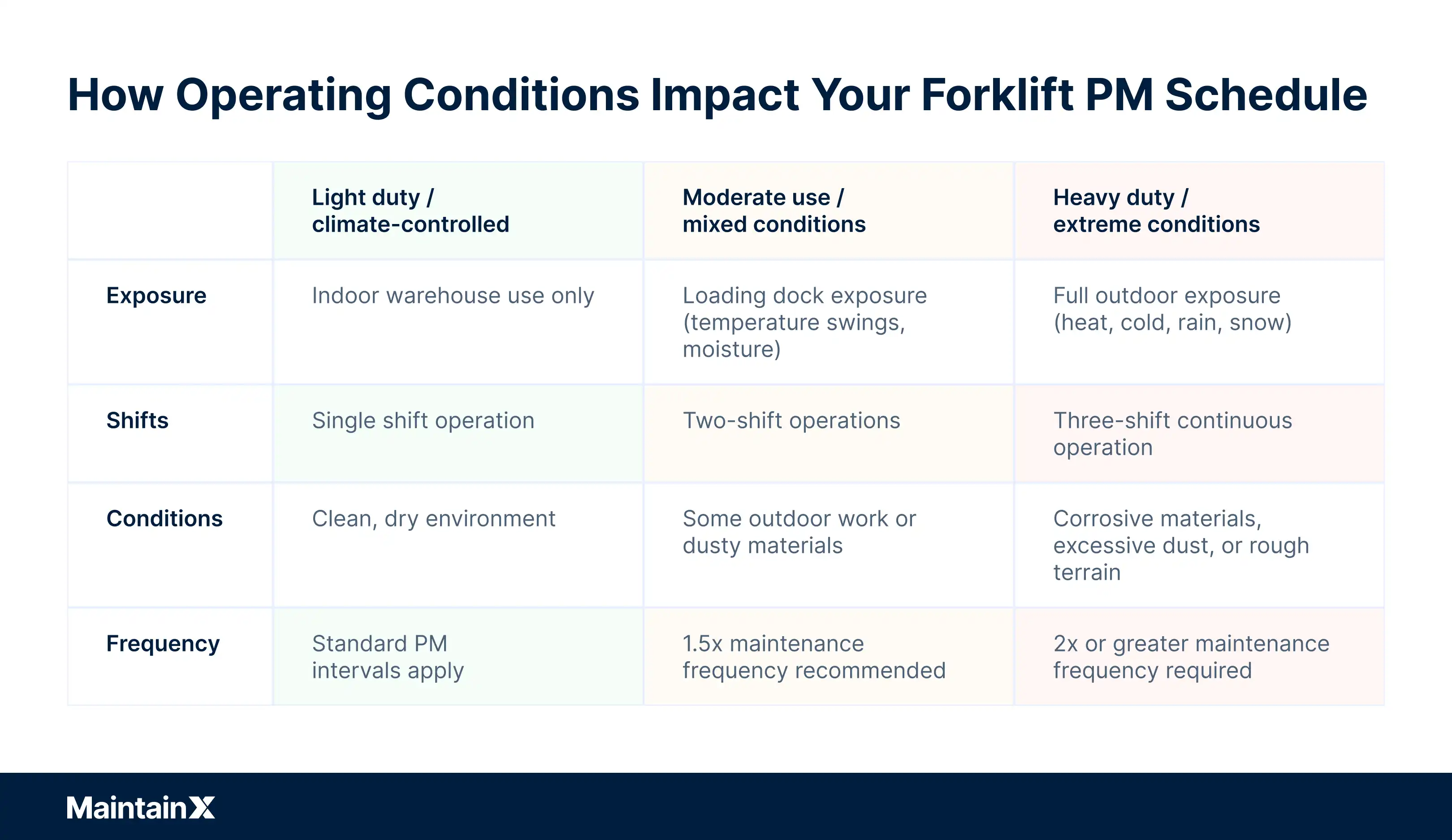
How operating conditions impact your forklift PM schedule
Manufacturer PM intervals assume average conditions, but most facilities don't operate in average conditions.
A forklift running two shifts in a refrigerated warehouse faces different stress than one working a single shift in a climate-controlled distribution center. Cold temperatures thicken hydraulic fluid and strain batteries. Dusty environments clog filters faster. Multi-shift operations accelerate wear timelines.
Fleet managers typically start with the manufacturer's baseline and adjust from there. High-dust environments might call for air filter checks every 100 hours instead of 250. Extreme temperature swings often warrant more frequent fluid inspections.
The best guide is your own data. Historical maintenance records reveal where failures cluster relative to standard service intervals. If tire replacements consistently happen well before scheduled inspections, the interval needs tightening. Let your operating reality shape the schedule, not the other way around.
Fleet-level maintenance strategies for multiple forklift units
Fleet-level thinking shifts maintenance focus from individual units to patterns across the group. When the same component fails across multiple units at similar hours, that's a systemic signal worth investigating. It could point to an environmental factor, operator habit, or supplier quality issue.
Staggering PM schedules helps maintain availability. Pulling the entire fleet for service on the same day creates operational bottlenecks. Spreading intervals across the calendar keeps enough units running at all times.
Documentation helps you make decisions at the fleet level. Your repair history can reveal which machines cost more to maintain than replace. A CMMS provides additional visibility into cost-per-unit trends, helping prioritize capital spending where it matters most.
Maintain your fleet with less stress
Forklift maintenance doesn't have to mean chasing paper forms, decoding handwritten notes, or wondering which unit is overdue for service. The right CMMS puts inspection data, work orders, and maintenance history in one place where everyone can act on it.
MaintainX helps teams digitize forklift checklists and inspections, automatically route flagged issues into work orders, and build a searchable maintenance history for every unit in the fleet. Operators complete checks on mobile devices, and managers get real-time status updates across all equipment.
Spend less time tracking down information and more time preventing breakdowns. Book a tour today.
Forklift maintenance checklist FAQs
How often should you perform forklift maintenance?
Daily inspections should happen before each shift. Preventive maintenance, following manufacturer-recommended service intervals, typically occurs every 250 operating hours. Maintenance should be performed at regular intervals as specified in your forklift maintenance schedule. Adjust these intervals based on your conditions. High-dust environments or multi-shift operations often require more frequent service.
Who is responsible for forklift maintenance and inspections?
Forklift operators are responsible for performing daily pre-shift inspections to ensure the equipment is safe to use. A qualified technician with the necessary expertise should handle all preventive maintenance. This division of responsibility works best when operators function as frontline intelligence, reporting patterns and anomalies that help technicians prevent failures. Proper training for both forklift operators and qualified technicians is essential to ensure safe and effective forklift maintenance.
Do I need to document forklift inspections and maintenance?
Yes. OSHA typically requires written records of all inspections and maintenance activities. In addition to these records, maintaining a detailed service history is essential to tracking recurring issues, identifying maintenance needs, and informing future maintenance decisions. Beyond compliance, these records become strategic decision assets that reveal failure patterns, inform repair-vs-replace decisions, and help improve your fleet’s lifecycle management.
It's important to stay current with OSHA guidelines and any other applicable federal, state, or local regulatory requirements, as compliance standards can be updated over time.
What's the difference between daily inspections and preventive maintenance for forklifts?
Daily inspections are quick, operator-performed safety checks before each shift. These inspections require operators to inspect safety equipment, seat belts, overhead guards, parking brakes, service brakes, backup alarms, visible damage, and tire wear, and ensure all components are functioning correctly.
Daily checks also include verifying fluid levels such as engine oil, hydraulic fluid, hydraulic oil, and coolant hoses, as well as checking battery connections and the electrical system, especially for electric forklifts.
Preventive maintenance involves deeper, scheduled service by certified technicians, including inspection of the hydraulic system and cooling system, and ensuring the forklift operates safely.
For internal combustion forklifts, preventive maintenance includes inspecting the engine, fuel system, spark plugs, exhaust system, and cooling system.
Both daily and scheduled maintenance should include reviewing the operator manual and maintenance checklist to ensure all equipment is working properly and to identify minor problems before they become major repairs.

The MaintainX team is made up of maintenance and manufacturing experts. They’re here to share industry knowledge, explain product features, and help workers get more done with MaintainX!

.webp)