
Water quality drives every aspect of evaporative cooler performance, from cooling efficiency to Legionella risk. A structured swamp cooler maintenance checklist, organized by frequency, helps maintenance teams stay ahead of mineral buildup, biological growth, and IAQ concerns across an entire cooler fleet.
This article includes a downloadable checklist for swamp cooler maintenance technicians that can help streamline and systematize routine checks and improve system performance.
Key takeaways
- Water quality drives most evaporative cooler failures and health risks. Biofilm in the water reservoir creates a pathogen habitat, while contaminated pads push mold directly into occupied spaces. This is a health issue, not just a cooling performance concern.
- Dormant coolers accumulate stagnant water conditions over winter that demand treatment before the unit pushes cooled air into occupied spaces again.
- Regular water monitoring reveals biological growth before it becomes a health risk. Digital checklists in a computerized maintenance management system (CMMS) help facilities track treatment protocols and meet ASHRAE 188 documentation requirements across multiple units.
How to use this checklist
Customize for your facility
Adapt inspection frequency based on your climate and water quality. Facilities in high-mineral areas typically inspect water systems more frequently to prevent scaling and protect fan belt and motor life.
Consider your cooling load and operating hours when scheduling seasonal preparation tasks. Include any local health department requirements for water management plans, particularly in facilities where Legionella control matters. Adjust the checklist to match your specific equipment model and manufacturer recommendations for pads, water treatment chemistry, and motor specifications.
Use a CMMS
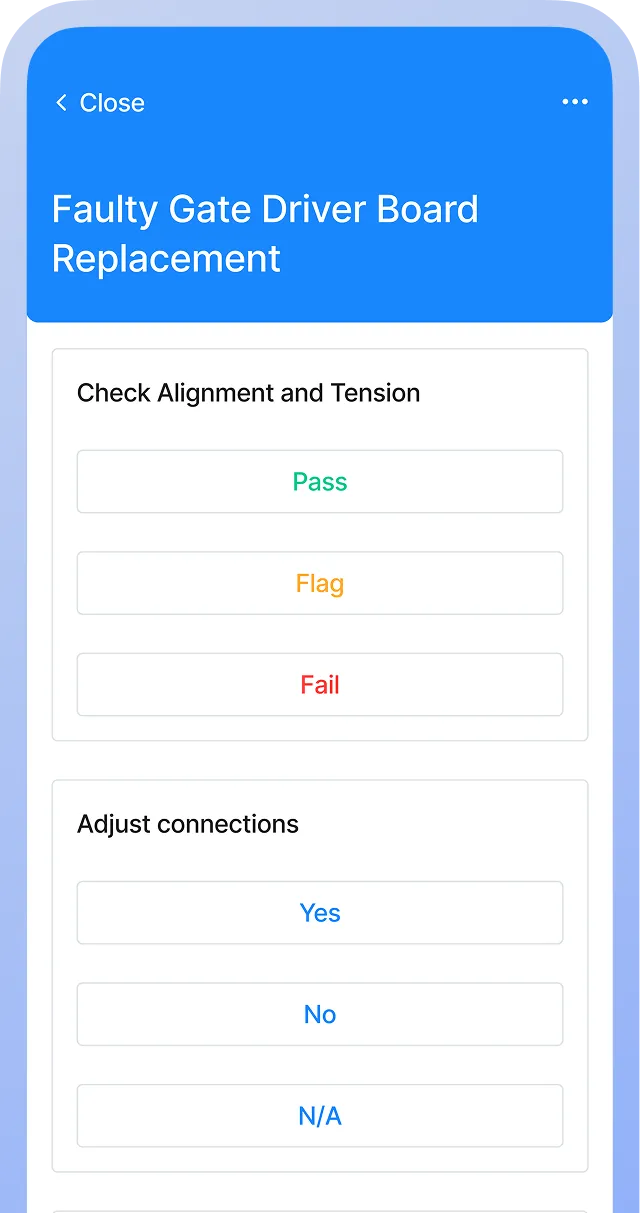
A digital checklist helps schedule seasonal transitions automatically and tracks water treatment applications with timestamps. With a CMMS, your team can capture photos of mineral deposits or pad condition, creating visual records for trend analysis. Automated reminders help facilities prepare units before cooling season begins and complete winterization before freeze risk arrives, preventing costly repairs from missed seasonal tasks.


Swamp cooler maintenance checklist
Water quality and treatment
Water supply and pump
Cooling pads and media
Motor, belt, and bearings
Housing and air distribution
Controls and electrical
Seasonal preparation
Documentation and compliance
This checklist is to be used only by those with appropriate training, expertise, and professional judgment. You are solely responsible for reviewing this checklist to ensure that it meets all professional standards and legal requirements, as well as your needs and intent.
Water quality management protocols for evaporative coolers
Water quality drives nearly every aspect of swamp cooler reliability. Mineral buildup, biofilm growth, and stagnant water create cascading problems that affect equipment performance, lifespan, and indoor air quality.
Effective water management typically involves three pillars: bleed-off control, chemical treatment, and regular testing. Bleed-off valves discharge a portion of recirculated water to prevent mineral concentration from climbing too high. Water treatment tablets or dosing systems help control biological growth in the sump and distribution lines.
For facilities managing multiple units, consistent water testing schedules matter. Conductivity readings indicate mineral concentration, while dipslide tests reveal bacterial levels. ASHRAE 188 provides a framework for water management plans that address Legionella risk specifically in evaporative systems.
Documenting water quality readings at each service interval creates a trend baseline that helps teams spot deterioration before it becomes a health or compliance concern.
This content is for informational purposes only and does not constitute legal or compliance advice. Always consult the applicable regulations and a qualified professional to confirm your facility meets current requirements.
Common issues and root causes
Most swamp cooler breakdowns trace back to water-related neglect rather than mechanical wear. Recognizing these failure patterns helps maintenance teams prioritize the right tasks and reduce airflow loss before it turns into a bigger repair.
Scale accumulation on pads and in distribution troughs is the most frequent issue. Hard water deposits restrict airflow and reduce evaporative surface area, forcing motors to work harder for less cooling output, and clogged bleed-off lines only accelerate the cycle.
Pump failures tell a similar story, though the path there looks a little different. Sediment builds up in the sump basin and works its way into impellers and intake screens, leaving some pads soaked and others running dry. Add a coating of biofilm to those same surfaces, and the pump has to fight both debris and buildup at once.
Bearing failures in blower motors typically result from excess humidity reaching unsealed housings, while float arm and float valve malfunctions cause overflow or dry-run conditions. Across a fleet of coolers, these failures compound quickly when service intervals lack standardization.
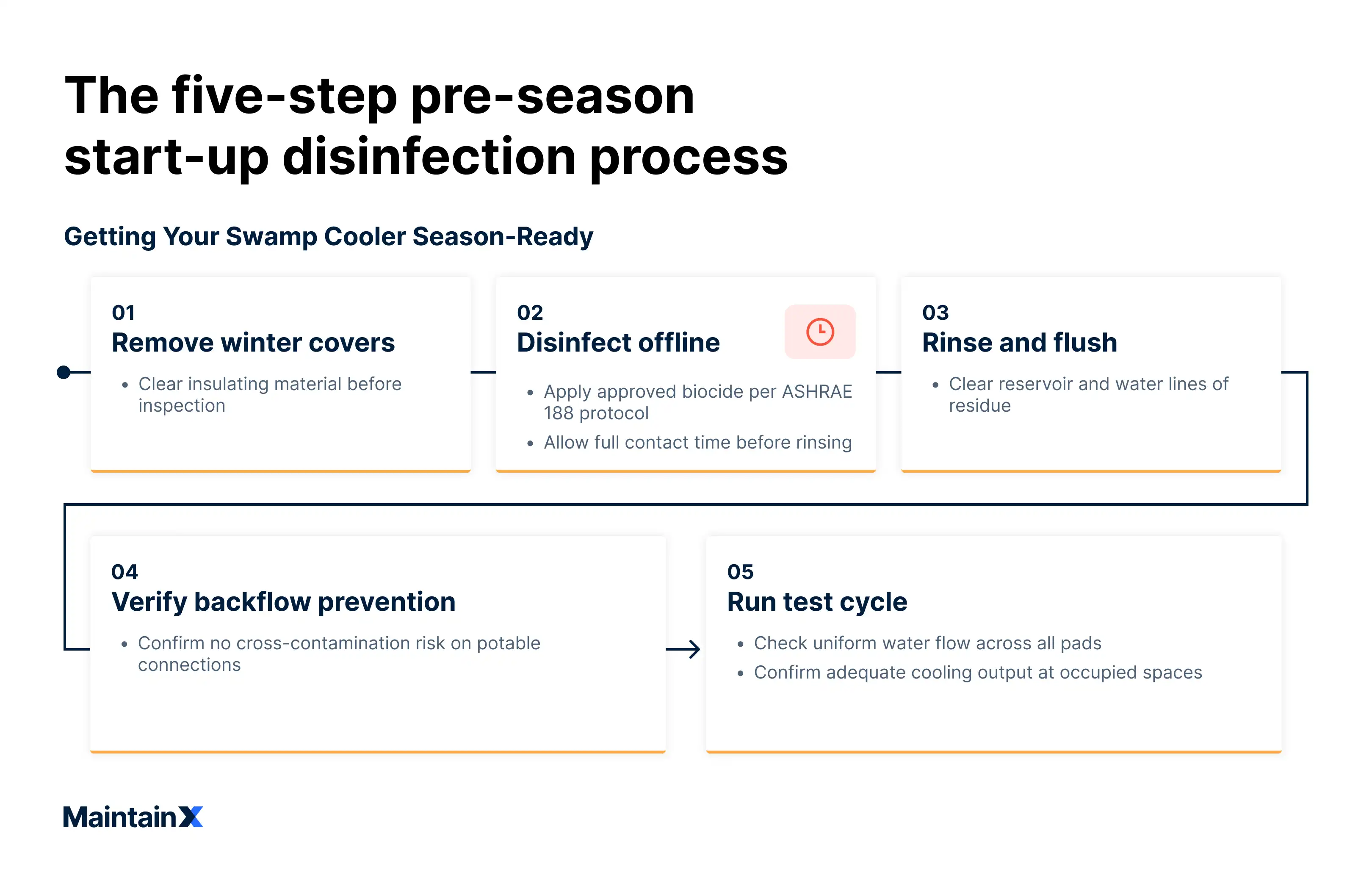
Pre-season start-up disinfection and verification procedures
After months of dormancy, evaporative coolers can harbor stagnant water residue, mold, and bacterial colonies. A thorough start-up disinfection protocol addresses these risks before the unit pushes air into occupied spaces.
Facility teams generally begin by draining and physically cleaning the sump basin, removing sediment and visible biofilm. A disinfectant solution then circulates through the pump, distribution lines, and pads for a contact period aligned with the product's specifications. Replace any pads that show discoloration, odor, or degraded media.
Verification steps matter just as much as the cleaning itself. Running the unit and checking for unusual odors, confirming even water distribution across pads, and testing airflow output all confirm that the cooler is ready for service. For commercial facilities, the CDC recommends documenting each disinfection event to support Legionella risk management plans.
How a CMMS simplifies swamp cooler maintenance
Managing swamp cooler maintenance across multiple units and locations introduces real coordination challenges. Missed service intervals on even one unit can create water quality risks that affect facility occupant health.
MaintainX helps teams standardize recurring task schedules, whether weekly water quality checks, monthly pad inspections, or seasonal start-up disinfections. Each completed checklist becomes a timestamped record tied to a specific asset, building an audit trail that supports ASHRAE 188 and CDC documentation expectations.
Book a tour and see how it works:
Swamp cooler maintenance checklist FAQs
What maintenance does a swamp cooler need throughout the cooling season?
Commercial swamp coolers require weekly water quality checks, monthly pad inspections, and quarterly bleed line testing. Water treatment drives most maintenance needs. Mineral buildup accelerates pad degradation and creates biofilm risk. Facilities typically schedule systematic inspections rather than reactive service calls.
How often should swamp cooler pads be changed, and what are the signs they need replacement?
Replace pads annually in hard water areas, every two years in soft water regions. Mineral crusting, torn material, persistent odors, and reduced airflow signal immediate replacement needs. Poor water treatment shortens replacement intervals significantly.
What are the Legionella control requirements for commercial swamp cooler maintenance under ASHRAE 188?
ASHRAE 188 requires a water management program documenting control measures, routine testing, and corrective actions. Facilities must monitor water treatment, maintain bleed rates, and document maintenance activities to support compliance.
Can you run vinegar through a swamp cooler to clean it, and is this safe for commercial facilities?
Vinegar dissolves light mineral deposits effectively but lacks the biocidal properties commercial facilities need. Professional water treatment programs address both scale and biological growth while meeting health department requirements. Most commercial operations use EPA-registered products with proper documentation.
How do you properly winterize a swamp cooler to prevent damage and ensure compliance with building codes?
Drain the system completely, clean all components, disconnect the water supply, and protect against freezing. Document winterization dates for warranty compliance and liability protection. Some jurisdictions require seasonal disconnection from water systems. Verify local codes before shutdown.
What is the average lifespan of a commercial swamp cooler, and what factors affect longevity?
Commercial units typically last 15–20 years with proper maintenance. Hard water without treatment shortens lifespan to 8–12 years through corrosion and mineral damage. Consistent maintenance and water treatment programs maximize equipment investment returns.
What safety precautions must facility managers follow when performing swamp cooler maintenance?
Lockout/tagout procedures prevent electrical hazards during service. Roof-mounted units require fall protection and proper access equipment. Water system work demands Legionella awareness and proper PPE, and multi-unit facilities benefit from standardized safety protocols.

The MaintainX team is made up of maintenance and manufacturing experts. They’re here to share industry knowledge, explain product features, and help workers get more done with MaintainX!



.webp)