
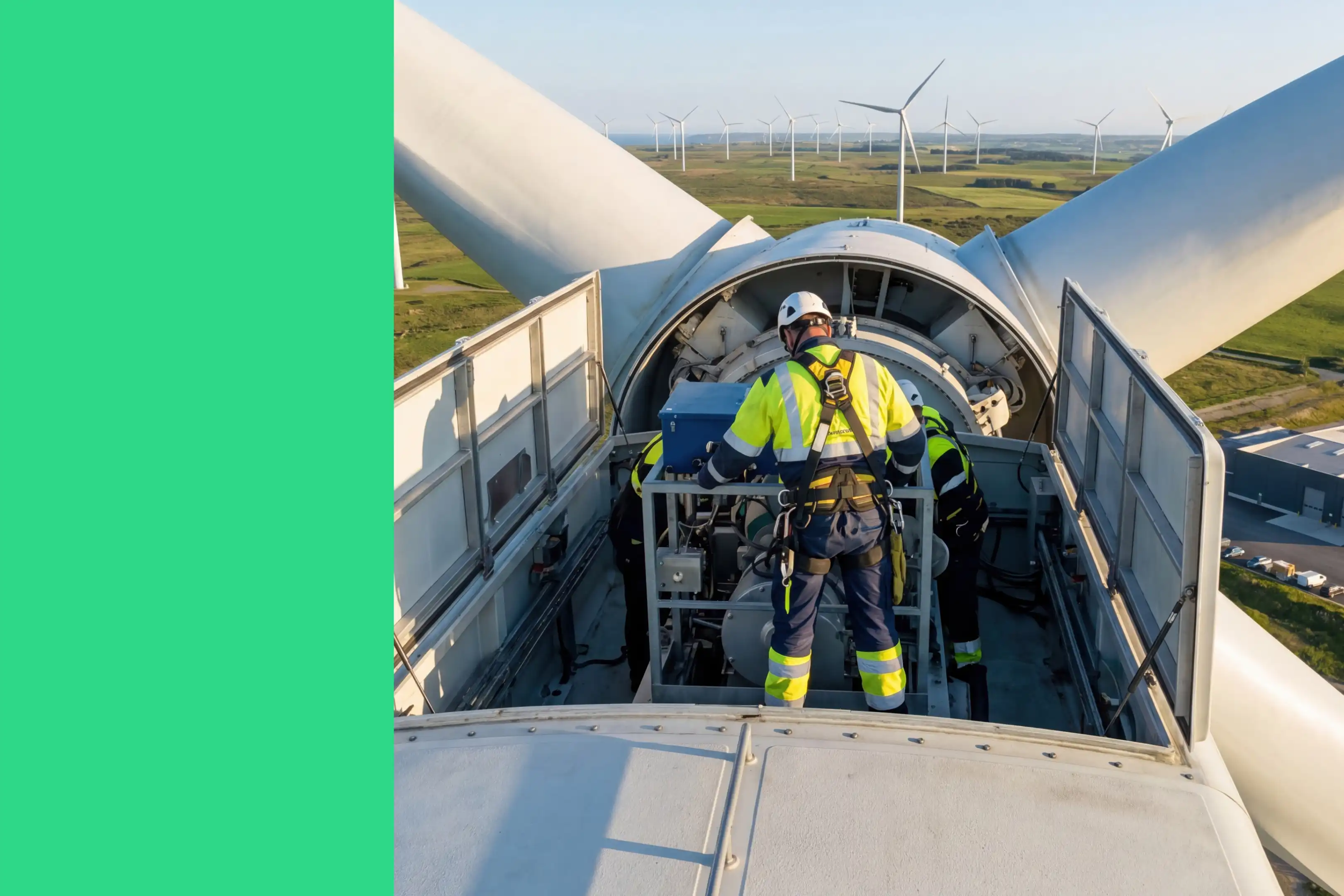
Every tower climb is a costly, potentially dangerous event; preparation is key to minimizing risk. A wind turbine maintenance checklist organized around the access lifecycle, pre-ascent planning, in-nacelle inspections, and post-descent closeout helps technicians bundle the right maintenance tasks into each climb. That structure reduces unnecessary ascents while capturing the sensor data and field observations that drive smarter portfolio-wide decisions across your wind farms.
Key takeaways
- Organizing inspections around the tower-climb lifecycle rather than component categories reduces time at height and ensures technicians capture all essential tasks in a single zone sweep before repositioning.
- Distinguish maintenance activities by cadence: daily remote monitoring, semi-annual climbs, and post-event triggers. This allows teams to bundle inspections efficiently and avoid unnecessary tower access.
- Managing wind turbine maintenance checklists in a computerized maintenance management system (CMMS) transforms individual turbine findings into fleet-level intelligence, helping managers prioritize which turbines to climb next and bundle necessary repairs with scheduled visits.
How to use this checklist
Customize for your facility
Wind turbine models vary in size, manufacturer specifications, and site conditions, and both horizontal-axis and vertical-axis wind turbines carry their own maintenance considerations. Adjust the checklist based on manufacturer recommendations, environmental factors like salt exposure or extreme temperatures, and warranty requirements.
Consider adding site-specific items like access road conditions or substation inspections. Regulatory requirements differ by jurisdiction, so align your checklist with local electrical codes, fall protection standards, and aviation marking rules, and treat industry standards as a floor rather than a ceiling for your safety protocols.
Use a CMMS
Digitizing this checklist in a CMMS helps coordinate tower climbs more efficiently. Schedule inspections based on operating hours or calendar intervals, bundle multiple maintenance tasks into single climbs, and route work orders to certified technicians. Digital forms let your team capture photos of blade damage or oil contamination at the nacelle, creating time-stamped records for warranty claims and compliance audits.
A CMMS also allows you to track fault patterns across your fleet, which helps spot common wind turbine problems before they escalate into major component failures.


Wind turbine maintenance checklist
Pre-ascent safety and preparation
Energy isolation and lockout/tagout
Tower and climbing systems
Nacelle and drivetrain
Rotor, blades, and pitch system
Electrical systems and controls
Foundation and external structure
Documentation and compliance
This checklist is to be used only by those with appropriate training, expertise, and professional judgment. You are solely responsible for reviewing this checklist to ensure that it meets all professional standards and legal requirements, as well as your needs and intent.
Pre-climb go/no-go decision criteria: ensuring safety during common maintenance tasks
Every tower ascent carries inherent risk. Structured go/no-go criteria act as sequential safety gates, each one requiring a clear "pass" before technicians proceed. This structure is one of the most effective safety protocols for reducing incidents tied to wind turbine operation.
Weather thresholds typically form the first gate. Wind speeds above 35–40 mph, lightning within a defined radius, and icing conditions all warrant a hard stop. Strong winds in particular tend to push crews toward more frequent inspections of anchor points and rigging before any climb proceeds. The second gate covers personnel readiness: valid certifications, rescue training currency, medical fitness, and crew rest requirements.
Equipment inspection follows. Fall arrest systems, climb assists, and emergency descent devices each need verification before leaving the ground. The final gate confirms site-specific hazards like high-voltage lockout status and wildlife nesting alerts.
These criteria work best when they're non-negotiable. A single failed gate pauses the climb. This binary structure removes pressure on technicians to make subjective judgment calls at the base of a 300-foot tower, and it typically aligns with the safety standards set by regulatory bodies and equipment manufacturers alike.
This content is for informational purposes only and does not constitute safety or compliance advice. Always consult the applicable regulations and a qualified professional to confirm your facility meets current requirements.
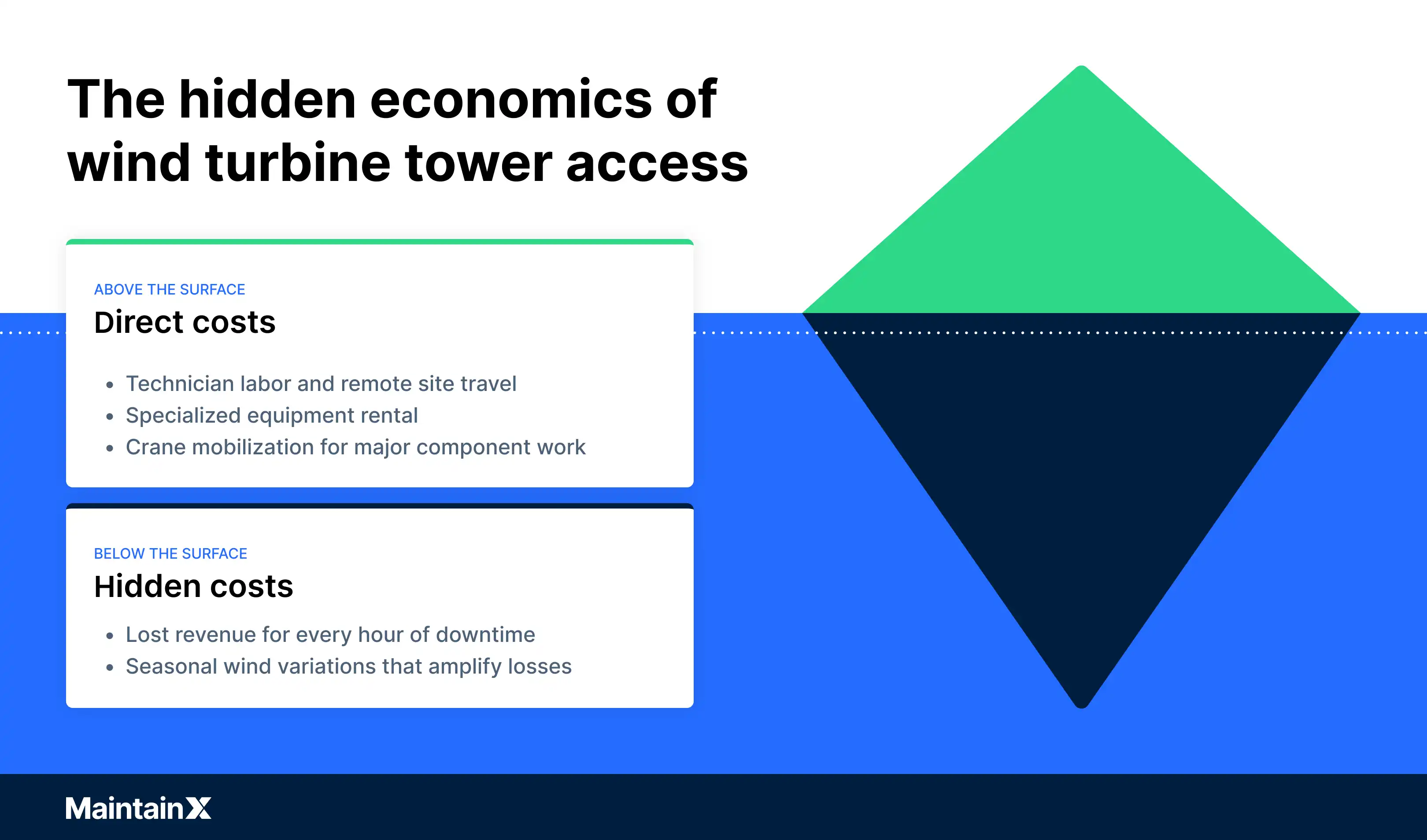
The hidden economics of wind turbine tower access
The cost of a tower climb extends well beyond the labor hours spent in the nacelle. Mobilization, specialized equipment transport, crane rental for component swaps, and production losses during downtime all factor into the true cost of each access event, and unplanned climbs tend to compound these costs into genuinely costly repairs.
This reality makes climb bundling an important part of maintenance scheduling. Experienced teams group inspections, filter changes, fluid sampling, and torque checks into a single visit rather than scheduling separate trips for each maintenance task. One well-planned ascent can replace three reactive ones, which matters most on wind farms where every turbine represents meaningful energy production.
Remote monitoring adds another economic layer. Vibration monitoring, oil particle counters, and SCADA trend data help teams distinguish which alarms genuinely require physical inspection from those manageable through remote adjustments to control systems. Fewer unnecessary climbs mean lower O&M costs per megawatt-hour of power generation and less wear on technician teams across a fleet.
Common planning mistakes that force repeat tower ascents
Repeat climbs often trace back to preventable planning gaps. Technicians frequently arrive at the nacelle without the right parts. When pre-climb reviews skip historical deficiency logs, they discover problems they can't fix on that visit, turning what should have been routine inspections into a second trip up the tower.
Treating every turbine identically creates similar waste. A 10-year-old gearbox and a recently overhauled one don't need the same inspection scope. Failing to tailor climb agendas by asset condition leads to wasted time on some turbines and missed issues on others, and it often means more maintenance overall across the fleet than a condition-based approach would require.
Poor post-descent documentation creates a subtler problem. Vague entries like "gearbox sounds normal" give the next crew nothing to compare against. Specific observations, such as fluid color, vibration readings, and bolt torque values, build the baseline that prevents unnecessary return trips and supports the kind of continuous improvement that keeps maintenance operations running efficiently over time.
Why a CMMS makes wind turbine maintenance scheduling easier
MaintainX lets digital wind turbine maintenance checklists travel with technicians up the tower on mobile devices, capturing photos, measurements, and deficiency flags in real time. That information syncs immediately, giving supervisors visibility into active maintenance work without waiting for post-shift reports.
Across a fleet, these records reveal patterns that would otherwise stay buried in separate paper logs. Recurring gearbox oil contamination at specific sites might point to environmental factors like operating conditions or temperature levels. Consistent blade erosion on turbines facing prevailing weather could shift inspection frequency for that subset, and MaintainX makes those patterns visible instead of leaving them scattered across individual technician notebooks.
Book a tour to see MaintainX in action.
Wind turbine maintenance checklist FAQs
How often should wind turbines be inspected and maintained?
Most facilities monitor turbines remotely on a daily basis and schedule physical tower climbs semi-annually or annually, depending on manufacturer recommendations. Post-event inspections follow severe weather, alarm conditions, or performance anomalies. Bundling tasks by access event reduces unnecessary climbs while maintaining safety and reliability.
What are the most critical components that require regular maintenance on a wind turbine?
Gearbox oil quality, brake system function, and blade condition typically drive maintenance priorities across most turbine models. Yaw and pitch systems require frequent inspections due to their safety implications and cyclic loading. Bolted connections throughout the tower and nacelle need regular torque verification to prevent structural failures.
What safety certifications and training are required for wind turbine maintenance personnel?
Technicians typically need fall protection certification, confined space entry training, and electrical safety qualifications before working at height. GWO Basic Safety Training covers rescue, fire awareness, and first aid fundamentals. Authorized personnel also complete LOTO training and high-voltage electrical certifications before performing any energized work.
How do you perform a complete lockout/tagout procedure on a wind turbine?
Isolate all energy sources, including the electrical grid connection, hydraulic systems, and stored mechanical energy in the braking system. Apply locks at each disconnect point and verify a zero-energy state before allowing tower access. Document every isolation point and maintain positive control throughout the maintenance work.
What lubrication schedule should be followed for wind turbine components?
Gearboxes typically need oil analysis every six months, with replacement intervals varying by manufacturer specifications and operating conditions. Yaw and pitch bearings usually require greasing during annual climbs. Main bearing inspection intervals depend more on condition monitoring data and sensor data trends than on fixed calendar schedules alone.
What are the key differences between onshore and offshore wind turbine maintenance requirements?
Offshore sites typically require vessel transfers and strict weather windows, often limiting access to summer months when conditions allow safe transit. Corrosion protection also demands more frequent attention in marine environments. Technicians often stay on-site for extended campaigns rather than daily visits, requiring different logistics and spare parts staging.
How do you document and track wind turbine maintenance for compliance and warranty purposes?
Record all inspection findings, measurements, and corrective actions with timestamped photos and technician signatures. Track deficiency trends across your fleet to identify systemic issues before they cause costly repairs. Complete documentation supports warranty claims and helps you prioritize which turbines need climbing next.

The MaintainX team is made up of maintenance and manufacturing experts. They’re here to share industry knowledge, explain product features, and help workers get more done with MaintainX!





.webp)