
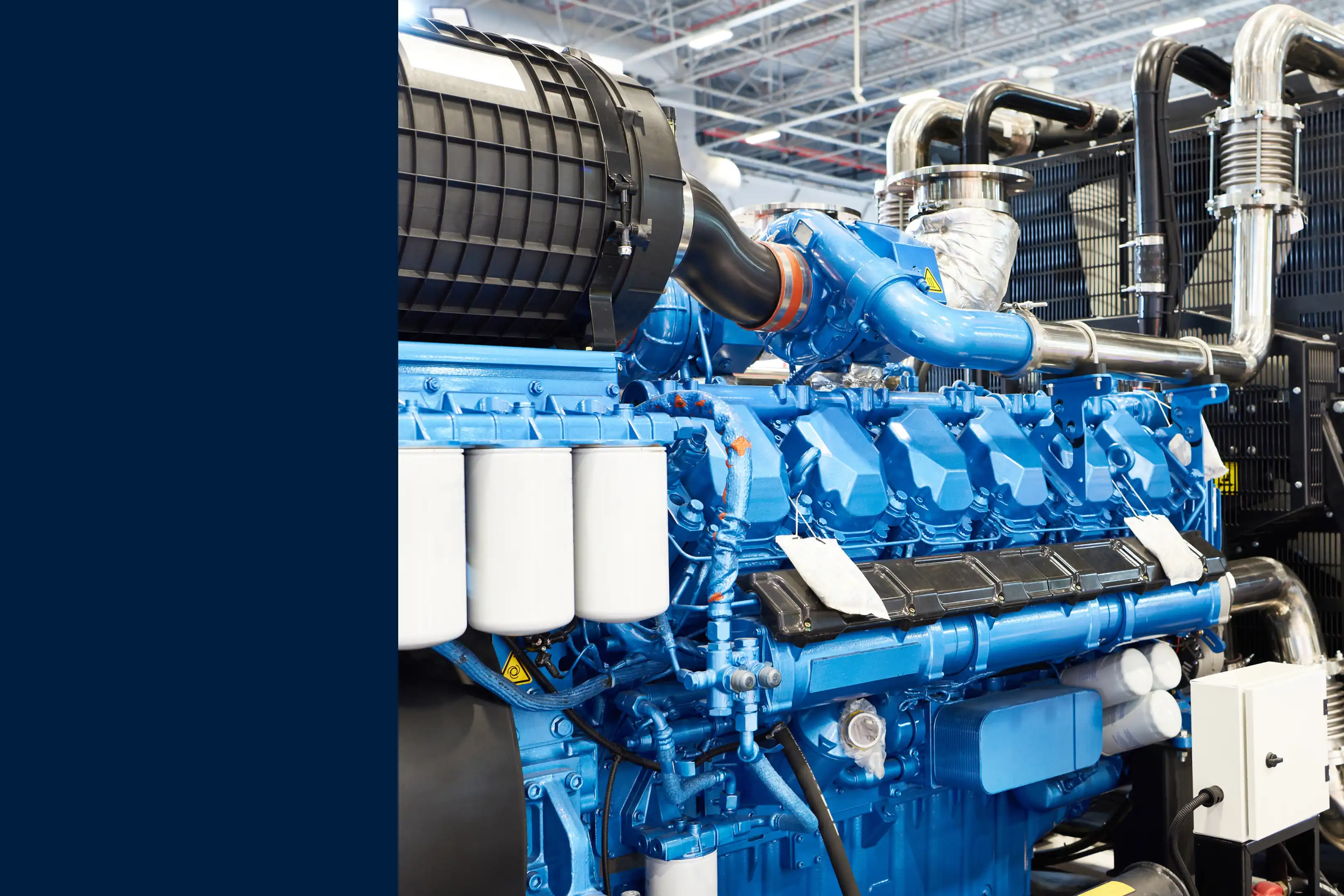
Generator failures rarely happen without warning. A slight hesitation during startup or an unusual vibration during operation gets dismissed as minor, until it cascades into a problem that requires emergency remediation.
A structured generator inspection checklist is a key part of ongoing preventive maintenance that helps catch potential issues before they turn into expensive repairs. In this article, you'll find monthly, quarterly, and annual generator inspection checklists that can be customized to your facility.
Key takeaways
- Regular inspections can catch early warning signs of generator failures before cascade effects compound.
- Inspection frequency based solely on compliance minimums often misses how operating conditions affect degradation rates. Generators under heavy cycling or extreme temperatures typically benefit from more frequent visual checks.
- Tracking inspection findings in a CMMS reveals performance trends that paper checklists miss, helping teams distinguish normal wear from accelerating deterioration.
How to use this comprehensive checklist
Customize for your facility
Generator inspection requirements vary by application and regulatory framework. As you use our checklists, remove items that don’t apply, and add items where necessary.
For example, healthcare facilities following NFPA 110 Level 1 need more rigorous testing schedules than commercial backup systems. You’ll also want to adjust inspection frequencies based on generator age, fuel type, runtime hours, make/model, and environmental conditions. Cross-reference with an OEM manual if available.
Use a CMMS
Using this generator inspection checklists with a computerized maintenance management system (CMMS) creates an automatic documentation trail that’s essential for regulatory compliance.
A CMMS can also capture timestamps, gauge readings, and photos that auditors require during inspections. This proves particularly valuable for healthcare and data center facilities with strict record retention requirements.


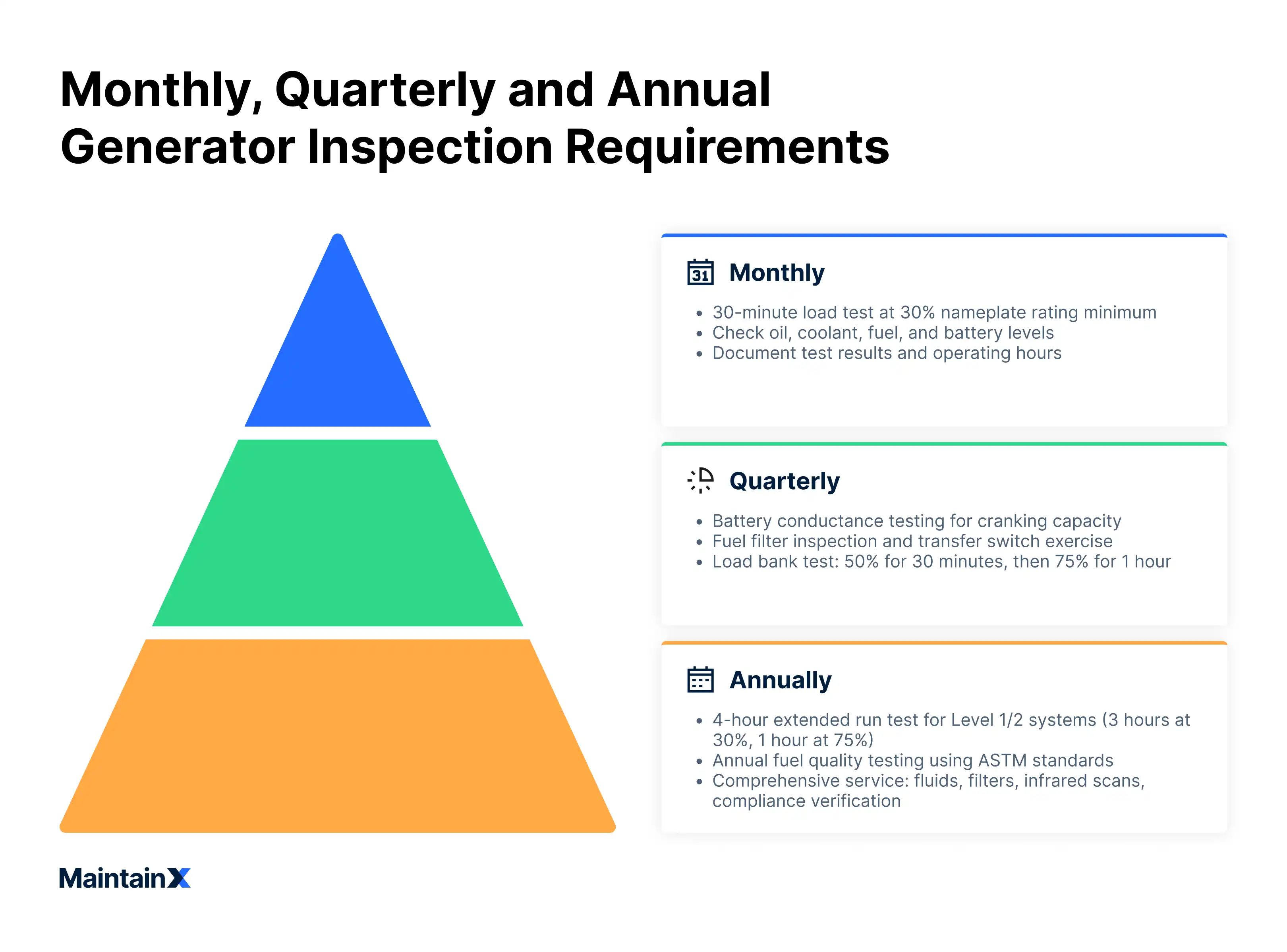
Monthly generator inspection checklist
Engine and mechanical systems
Fuel system
Electrical and starting systems
Cooling and exhaust systems
Enclosure and environment
Monthly load testing
Monthly documentation
Quarterly generator inspection checklist
Engine and mechanical systems
Fuel system
Electrical and starting systems
Transfer switches and controls
Cooling and lubrication systems
Quarterly load testing
Quarterly documentation
Annual generator inspection checklist
Engine and mechanical systems
Electrical systems
Transfer switches and controls
Enclosure and environment
Annual load testing
Annual documentation and compliance
This checklist is to be used only by those with appropriate training, expertise, and professional judgment. You are solely responsible for reviewing this checklist to ensure that it meets all professional standards and legal requirements, as well as your needs and intent.
How to prioritize corrective work on generators
Prioritize inspection findings by their potential to cause immediate failure. Address fuel system leaks, battery terminal corrosion, and coolant level drops immediately, as they typically indicate problems already in progress. Components that can fail catastrophically, such as cracked radiator hoses and fouled fuel filters, take priority over those that degrade predictably. Focus most on parts where deterioration accelerates once it starts. Schedule minor issues like slight belt wear as routine maintenance.
Finally, adjust your priorities based on operating conditions. High-humidity environments necessitate more frequent corrosion checks. Infrequently started units require closer monitoring of batteries and fuel systems. As much as a generator inspection checklist is helpful for ensuring nothing gets missed, always tailor your inspection emphasis to your facility's specific risk profile.
Simplify generator inspections with a mobile CMMS
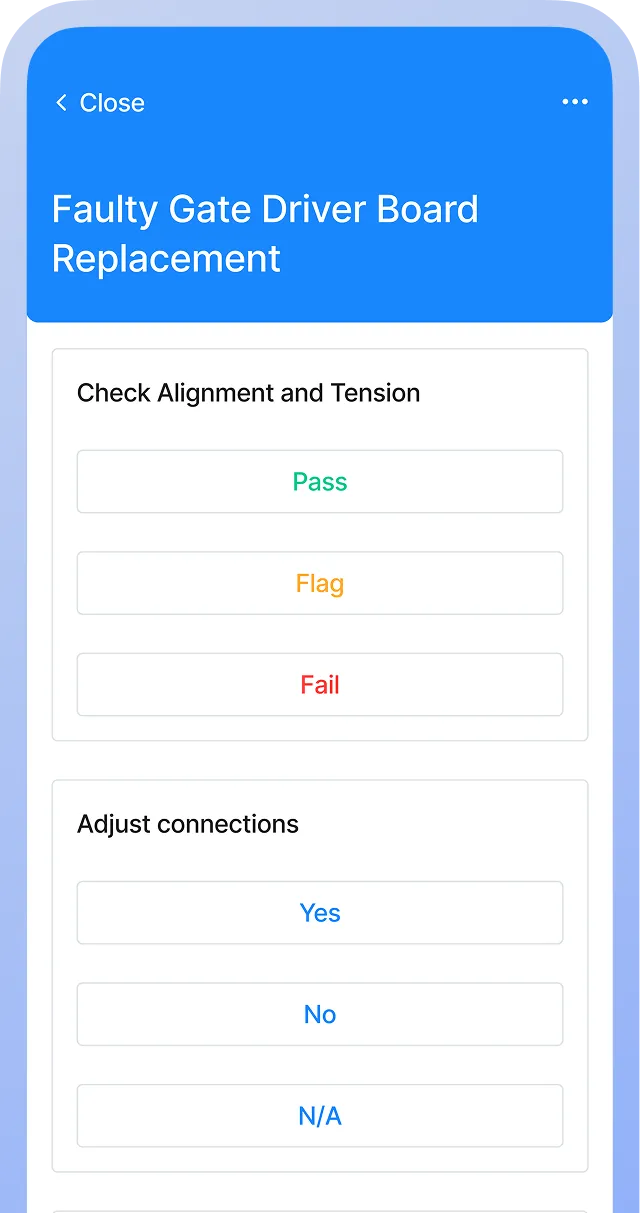
Paper-based inspection logs often sit in binders until someone needs them—usually after a failure. A mobile CMMS replaces disconnected paperwork with a centralized, digital system that houses work orders, inspection checklists, asset histories, and relevant safety procedures in one place.
Because this information is accessible in the field, technicians can review assigned work, follow standardized inspection steps, reference prior service history, and document findings directly from a mobile device.
Digital reporting also makes it easier to capture accurate, real-time data. Technicians can log readings, add notes, and attach photos on the spot, creating clear documentation of asset condition over time. Patterns and recurring issues become easier to spot, helping teams prioritize follow-up work before minor concerns escalate.
By connecting inspections directly to work order workflows, a mobile CMMS helps ensure observations made in the field can be reviewed and addressed efficiently—closing the gap between identifying an issue and taking corrective action.
Start the shift to proactive maintenance
Digital checklists and inspections are vital sources of operational intelligence. Using a CMMS like MaintainX helps connect the dots between battery voltage trends, coolant temperature patterns, and fuel system findings to flag equipment heading toward failure.
See how we can help before the next outage puts your team to the test:
Generator Inspection Checklist FAQs
How often should I inspect my backup generator?
Backup generator inspections should be performed according to a regular schedule, with the frequency depending on the importance of the generator's job. Don’t let maintenance tasks slip through the cracks, as this can lead to overlooked issues and unexpected failures.
Monthly visual checks and operational tests are standard. Run generators under load quarterly to verify performance. Annual inspections should include full load bank testing and complete system evaluation. Adjust frequency based on age, importance, and recent reliability issues.
What are the most important items to check during a generator inspection?
Focus on fuel system integrity, battery condition, and coolant levels. Checking fluid levels, oil, and filters is essential—keeping fluids topped off is a basic yet vital part of generator maintenance to prevent overheating and engine damage.
Battery inspection is equally crucial, as a weak battery can prevent the generator from starting during an outage. Coolant levels, belts, and spark plugs are all frequent failure points. Look for fluid leaks, corrosion, exhaust issues, and other wear and tear.
Do I need different inspection procedures for natural gas vs. diesel generators?
Yes, fuel systems differ significantly. Diesel generators need fuel quality checks and filter inspections. Natural gas units require gas train inspection and pressure verification. Refer to OEM maintenance guidelines for further details.
How can I integrate generator inspections into my CMMS?
Use the checklists on this page to build inspection templates for each frequency: monthly, quarterly, and annually. Set automated scheduling tied to runtime hours or calendar intervals, and link findings directly to work orders so problems flagged during inspection trigger immediate follow-up.

The MaintainX team is made up of maintenance and manufacturing experts. They’re here to share industry knowledge, explain product features, and help workers get more done with MaintainX!


.webp)