
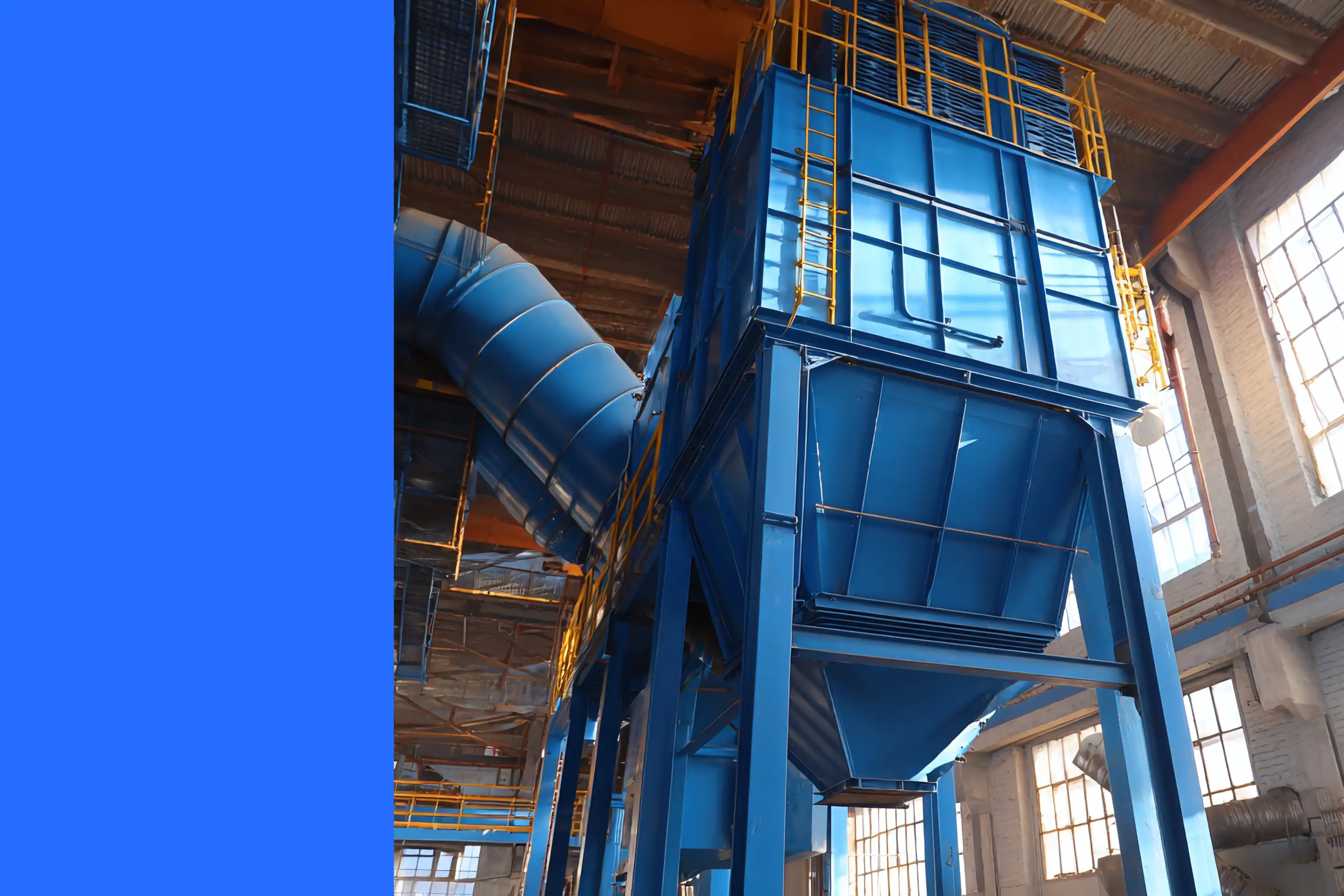
A dust collector maintenance checklist is a hazard management tool first and an equipment care routine second. Skip an inspection, and you've opened the door to a specific failure mode: filter blinding, spark ignition, and fugitive dust emissions can easily escalate into a combustible dust incident.
This guide walks through what each task in your dust collection system actually protects against: your equipment, your compliance standing, the clean air you're required to maintain, and, most importantly, the people you're responsible for protecting.
Key takeaways
- Dust collector maintenance is explosion hazard management. Rising differential pressure, failed pulse valves, and accumulated hopper dust create ignition conditions that can trigger a deflagration, which is exactly why daily and weekly inspections are safety-critical.
- Maintenance gaps can quickly cascade into a facility-wide worker exposure violation or process safety incidents. An unbonded duct section, a bypassed filter, or an obstructed explosion vent is all it takes.
- A digital checklist gives you the audit-ready documentation trail inspectors expect, automatically time-stamping differential pressure logs, filter replacements, and explosion protection tests to show continuous compliance.
How to use this checklist
Customize for your facility
Think of this checklist as a template that can be adjusted based on your inspection frequencies, dust combustibility rating, and NFPA 660 requirements for your hazard classification.
If your facility handles highly combustible materials, you'll likely need to inspect explosion protection systems more often than a facility running a general dust collection system. Add process-specific inspection points for specialized equipment like cement silos or woodworking systems, align your maintenance schedule with air emission permit monitoring requirements, and factor in your operating hours when scheduling any task that requires a shutdown.
Use a CMMS
A digital checklist built into a computerized maintenance management system (CMMS) creates time-stamped records that support OSHA and EPA compliance audits, so you're not scrambling for paperwork when an inspector shows up. Photo documentation lets you track filter media condition over time, and task assignment features make sure qualified personnel handle explosion protection system work specifically.
Centralizing this history also supports Dust Hazard Analysis revalidation and Management of Change documentation, keeping your ongoing maintenance program audit-ready.


Dust collector maintenance checklist
Filter system and media
Fan and blower assembly
Collection hopper and discharge
Pulse cleaning system
Ductwork and airflow
Electrical and grounding
Explosion protection systems
Documentation and compliance
This checklist is to be used only by those with appropriate training, expertise, and professional judgment. You are solely responsible for reviewing this checklist to ensure that it meets all professional standards and legal requirements, as well as your needs and intent.
How NFPA 660 changes your dust collector maintenance program
NFPA recently consolidated six legacy combustible dust standards, including NFPA 652, 654, and 61, into a single document: NFPA 660. For your maintenance team, that means inspection requirements, deflagration venting criteria, and housekeeping expectations typically fall under one framework instead of several overlapping ones.
If you've been referencing the older standards, expect updated language around explosion protection system inspections and maintenance intervals, along with greater emphasis on documented management-of-change procedures whenever you modify collector components or ductwork.
If your program still reflects legacy standards, that gap can create compliance blind spots you don't discover until an audit. It's worth reviewing your current maintenance program against NFPA 660 to see where your inspection frequencies, documentation practices, or safety device checks may need an update. Many insurance carriers and AHJs (Authorities Having Jurisdiction) have already started referencing NFPA 660 during facility audits, so getting ahead of it protects both your compliance standing and your people.
This content is for informational purposes only and does not constitute legal or compliance advice. Always consult the applicable regulations and a qualified professional to confirm your facility meets current requirements.
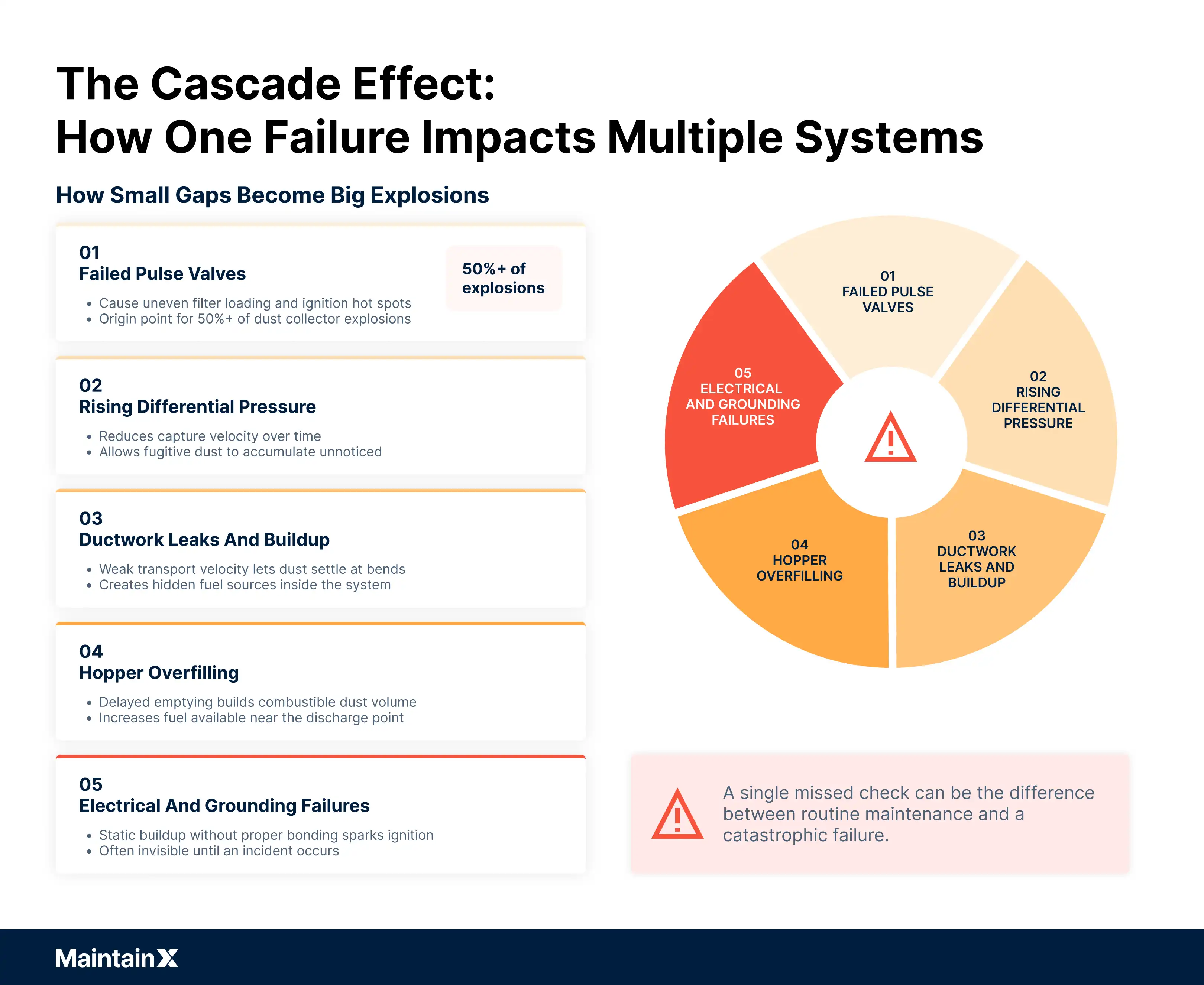
Five ways dust collector maintenance failures cause explosions
Dust collector explosions rarely come out of nowhere. They follow predictable failure chains, which is exactly why a maintenance checklist exists: to break the chain before it reaches its final link.
- Worn or damaged filter bags let fine dust migrate past the collector and build up in ductwork, creating secondary explosion fuel.
- Failed spark detection or suppression systems let an ignition source reach concentrated dust clouds inside the collector.
- Blocked or corroded explosion vents prevent pressure relief during a deflagration, turning a contained event into structural failure.
- Leaking airlocks and rotary valves let flames propagate back into upstream process equipment.
- Dust accumulation on external surfaces fuels secondary explosions that spread beyond the collector itself.
Each failure mode traces back to one missed or skipped inspection task. A strong maintenance checklist treats every item as a link in the chain that keeps your entire dust collection system, and the people working around it, safe.
Pre-startup safety checks after dust collector maintenance
Bringing a dust collector back online after maintenance introduces its own hazards. A loose hose clamp, an unseated gasket, or a disconnected grounding strap can each set up conditions for a combustible dust event the moment you restart the system.
Your pre-startup safety review (PSSR) should cover a few key areas: confirming every explosion protection device is reconnected and functional, verifying grounding and bonding continuity, and checking that access doors and inspection ports seal without gaps. It's also worth confirming no tools, rags, or debris got left inside the collector housing before you power it back up.
OSHA's Combustible Dust National Emphasis Program (NEP) typically looks for evidence that facilities conduct PSSRs after maintenance work. Time-stamped records showing who performed the review, what they checked, and when the system returned to operation give you the documentation trail inspectors ask for.
Digitize routine dust collector maintenance with a CMMS
Paper-based dust collector logs cause a specific problem during an audit. During an OSHA Combustible Dust NEP inspection, investigators typically ask for time-stamped proof that safety-critical tasks were completed on schedule, and handwritten logs with missing dates or illegible entries weaken that evidence fast.
MaintainX turns every checklist task into a traceable, auditable record. Your technicians log inspections with photos, timestamps, and digital signatures right from their phones, so nothing gets lost between the floor and the file cabinet. Automated scheduling keeps filter inspections, explosion vent checks, and spark detection tests running at the correct intervals, and remote monitoring means you can check on system performance without walking the floor every time.
That data does more than build an audit trail. When a pressure drop reading trends upward over several inspection cycles, the pattern becomes visible before a filter failure leads to dust migration or an emissions violation. Catching that signal early and using it to optimize performance instead of just reacting to failures is where hazard management programs gain the most ground. MaintainX gives your team the visibility to make that shift.
Dust collector maintenance checklist FAQs
What are the OSHA and NFPA requirements for dust collector maintenance?
OSHA's Combustible Dust NEP typically requires hazard assessments, housekeeping programs, and documented inspections. NFPA 660, which recently consolidated the legacy combustible dust standards, calls for regular filter inspections, explosion protection system checks, and preventive maintenance records that show ongoing hazard control.
How often should dust collector filters be inspected and replaced?
Weekly filter inspections catch damage and pressure issues early. Replace filters when pressure drop exceeds manufacturer specs, typically every three to six months in heavy dust environments, or annually in lighter applications. Don't rely on calendar intervals alone; let your differential pressure readings guide the decision.
What are the warning signs that a dust collector may pose an explosion risk?
Watch for rising pressure differentials, visible dust accumulation inside the collector, spark detection alarms, overheating motors, and filter damage. Any hot work nearby or combustible dust layers exceeding 1/32 inch, calls for immediate evaluation.
Why is my dust collector losing suction, and how do I diagnose the problem?
Start with the pressure gauges when suction drops. Common causes include clogged filters, damaged ductwork, full collection bins, worn fan belts, or incorrect damper settings. Rule out filter and bin issues before you start troubleshooting fan performance.
What maintenance records are required for dust collector compliance?
OSHA inspectors typically ask for time-stamped inspection logs, filter replacement records, pressure differential trends, housekeeping documentation, and proof of corrective action. Each completed checklist task should generate evidence showing when a hazard was identified and fixed.
How much does dust collector maintenance typically cost annually?
Most facilities budget $2,000 to $8,000 annually per collector for filters, inspections, and parts. Costs vary based on dust type, production volume, filter technology, and whether you're preventing failures or reacting to them.
What factors determine the right dust collector maintenance schedule for my facility?
Dust combustibility, particle size, production volume, operating hours, and regulatory requirements all factor in. Facilities handling metal dust typically inspect more frequently than wood or pharma operations, given the higher deflagration risk and OSHA scrutiny.

The MaintainX team is made up of maintenance and manufacturing experts. They’re here to share industry knowledge, explain product features, and help workers get more done with MaintainX!





.webp)