
An HVAC maintenance checklist gives you a repeatable way to inspect, document, and act before small issues, such as refrigerant leaks or clogged filters, turn into unplanned downtime. Keeping consistent records also helps support EPA and other compliance requirements while protecting warranties and revealing asset performance trends across your equipment portfolio.
In this article, you’ll find a series of customizable HVAC maintenance checklists you can adapt to your facility and inspection frequency. Use them on their own or import them into a computerized maintenance management system (CMMS) to keep inspections consistent and easy to track.
Key takeaways
- Link each maintenance task to a failure mode. Regular belt, vibration, and drain-pan checks can head off bearing failures, condensate spills, and mold.
- Good records pay back later. Keeping detailed inspection logs helps you spot repeat issues across seasonal cycles.
- Consistency beats reactive troubleshooting. Prioritize preventive maintenance to avoid downtime and emergency repair costs.
- Use a CMMS to convert HVAC maintenance checklists into standardized workflows that enable technicians to automatically generate follow-up tasks.
How to use this checklist
Customize for your facility
On this page, you’ll find a general HVAC maintenance checklist, as well as annual, quarterly/seasonal, and monthly variations. Treat them as a baseline, then adjust according to your building, equipment mix, and operating profile.
For example, if you are maintaining rooftop units, you might have different procedures than if you’re inspecting HVAC assets in a chilled-water plant. Adjust frequencies by run hours, climate, and critical areas like server rooms or kitchens. Start with OEM guidance, then align PM scope to ASHRAE 180 requirements (and any other relevant regulatory compliance standards) where it fits.
Use a CMMS
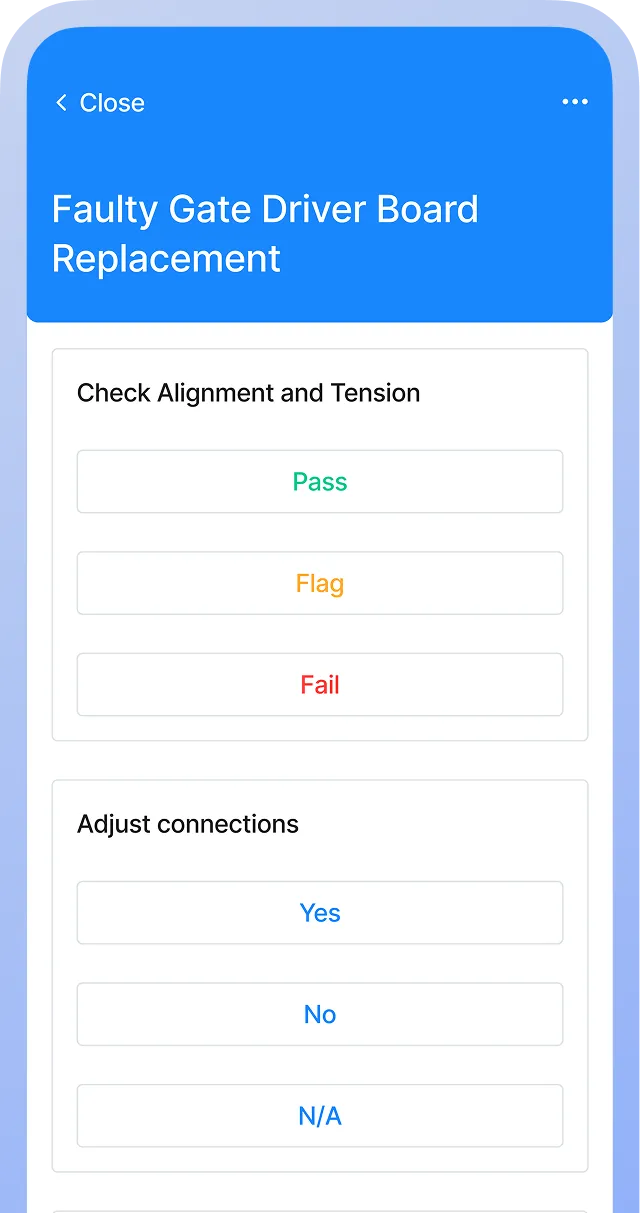
A CMMS helps you turn an HVAC maintenance checklist into repeatable work and consistent records. Users can capture readings, photograph areas of concern, and trigger follow-up work orders when necessary. Using a CMMS also creates an audit trail for mission-critical HVAC maintenance items.
HVAC maintenance checklist
Air handling and ventilation
Filtration and air quality
Cooling systems
Cooling towers and water treatment
Combustion and heating systems
Boilers and hydronic systems
Controls and automation
Refrigerant and safety
Preventive maintenance
Performance and documentation
This checklist is to be used only by those with appropriate training, expertise, and professional judgment. You are solely responsible for reviewing this checklist to ensure that it meets all professional standards and legal requirements, as well as your needs and intent.
How to create an effective HVAC maintenance schedule
The right maintenance frequency depends on how hard your equipment works, how often conditions change, and how clean or dirty your environment is.
Monthly tasks
Monthly HVAC maintenance should aim to catch issues before they cause disruptions. Inspect filters and condensate drains, check belts and pulleys for alignment and wear, listen for unusual motor sounds, and record basic measurements like air temperatures and electrical current to track equipment performance over time.
Quarterly tasks
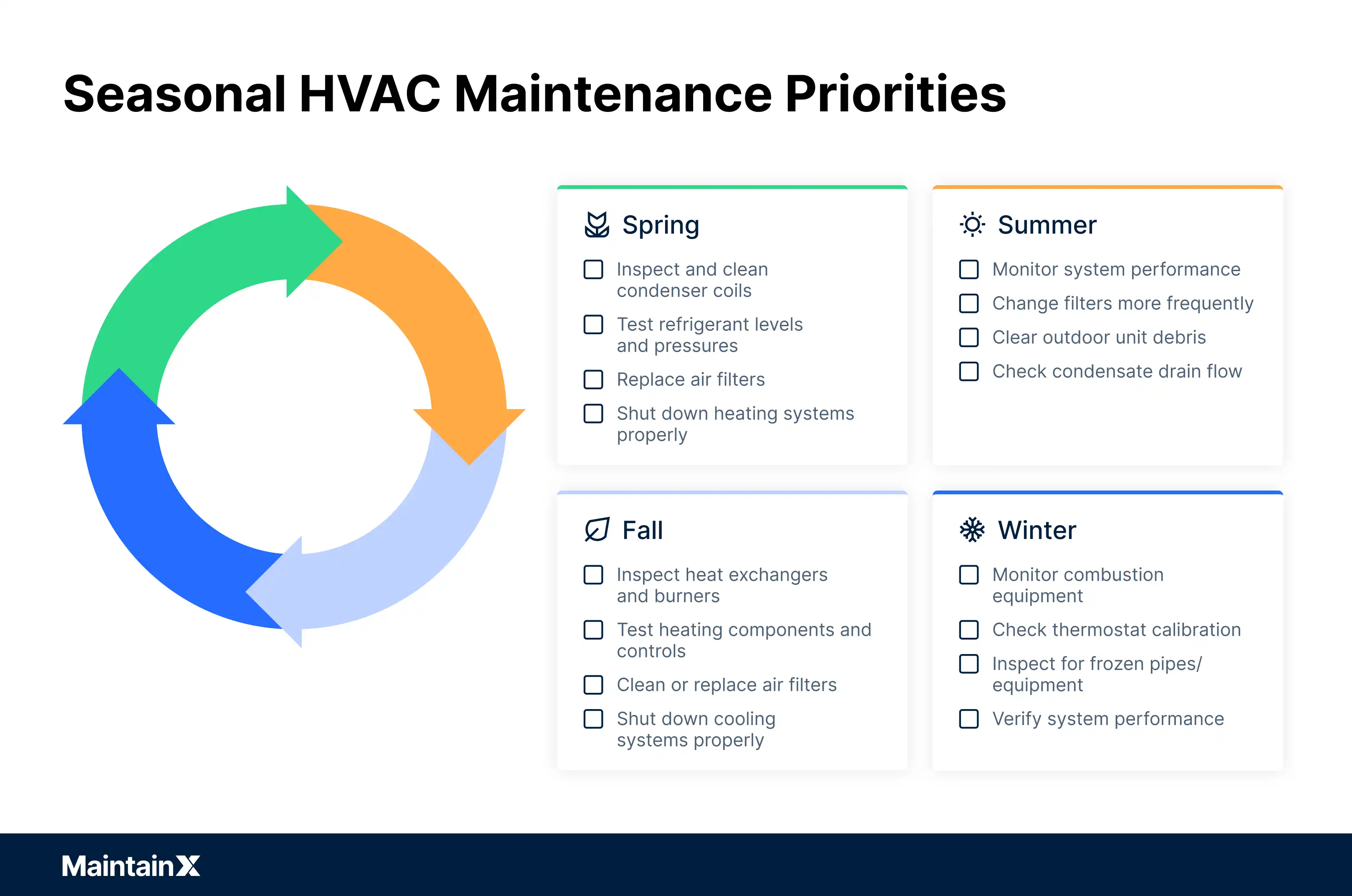
Quarterly HVAC maintenance should align with seasonal priorities, like preparing for cooling season in the spring or monitoring performance through the summer. Use the fall inspection to get ready for heating season, and monitor during winter. You should also implement a quarterly cadence for ongoing preventive maintenance items, including lubricating bearings and flushing condensate drains, if necessary.
Annual tasks
Schedule annual HVAC maintenance during mild weather when equipment can safely go offline. You’ll want to use this time to verify heating equipment safeties and combustion components per manufacturer guidance. For cooling equipment, review performance trends and test protective devices.
Standardizing HVAC maintenance across multiple properties
Standardized processes simplify HVAC maintenance across multiple sites and make it easier to spot trends. Start with a common asset-naming approach to reduce confusion. Keep your HVAC maintenance checklist consistent across sites, but include an add-on section for site-specific considerations.
What you record matters, too. If you’re tracking the same metrics at every site, you can compare units across the portfolio and spot outliers early. Standardization also creates clear expectations on inspection points, reducing rework and avoiding missed handoffs.
Why use a CMMS to digitize HVAC maintenance?
HVAC maintenance checklists work best when you treat them as an operating tool, rather than a filing cabinet. Your goal isn’t just to check a box; it’s to take a proactive approach to maintenance by catching problems and acting on them before they lead to downtime.
Using a CMMS builds consistency and accountability into your processes. Team members can attach photos, record meter readings, access work order templates, order parts, and keep service notes attached to the asset history. Technicians spend less time on paperwork, and supervisors get visibility into what got checked, what changed, and what needs escalation.


Get started with MaintainX
MaintainX is a mobile-friendly CMMS designed for industrial HVAC maintenance. Visit our checklists and inspections page for more information about standardizing and tracking seasonal inspections. Better yet, schedule a demo to see it in action for yourself.
HVAC Maintenance Checklist FAQs
What is an HVAC maintenance checklist?
An HVAC maintenance checklist is a standardized set of inspections and PM tasks that keeps commercial air conditioning units reliable and comparable across sites. Typical checklist items include inspecting and replacing air filters, cleaning drain lines, and ensuring proper airflow throughout the system. The checklist should cover both indoor and outdoor units to ensure comprehensive maintenance and optimal performance. Each check should be tied to a common failure mode.
How often should HVAC maintenance tasks be performed?
Frequency depends on runtime, occupancy, and environment. Regular HVAC maintenance reduces energy use and utility bills by ensuring the system runs efficiently. Many teams check filters monthly, inspect belts and drains quarterly, clean coils semiannually, and verify safeties and controls annually. Tighten the cadence for kitchens, data centers, and 24-7 sites.
What's the difference between preventive and reactive HVAC maintenance?
Preventive maintenance targets predictable wear before it leads to downtime. Regular preventive maintenance improves energy efficiency and helps reduce energy waste, leading to lower energy bills. Reactive maintenance takes place after a failure occurs, and usually involves higher costs due to unplanned downtime, rush parts orders, technician overtime, etc.
Which HVAC maintenance tasks can staff handle, and which require licensed technicians?
Your team can usually handle visual checks, air filter changes, basic cleaning, drain pan inspections, and spotting belt wear or unusual noise. Bring in licensed techs for refrigerant work, combustion tuning, electrical diagnostics, control programming, and any energized testing.
Improper handling of electrical connections can pose a serious fire hazard, so these tasks should always be performed by professionals.
How do I standardize HVAC maintenance procedures across multiple facilities?
Standardize the fundamentals: asset naming, a shared PM template, common frequencies, and pass/fail criteria. Standardized checklists should include steps to inspect ductwork, replace filters, ensure proper airflow, and maintain good air circulation. Using a mobile CMMS helps your team work from a single checklist, capture photos and readings consistently, and compare trends across sites.
What are the consequences of skipping regular HVAC maintenance?
Skipping regular preventive maintenance leads to increased energy costs, premature wear, avoidable downtime, higher repair costs, lost efficiency, and more. Common issues caused by skipping maintenance include poor airflow, weak airflow, blocked vents, and mold growth, all of which can impact system performance and indoor air quality.
Neglecting maintenance can also result in problems with drain pans, blower motor, evaporator coils, and the condensate drain or drain lines, potentially leading to system failure. As a general rule, every dollar you spend on preventive HVAC maintenance costs you five dollars in future reactive repairs.

The MaintainX team is made up of maintenance and manufacturing experts. They’re here to share industry knowledge, explain product features, and help workers get more done with MaintainX!

.webp)