
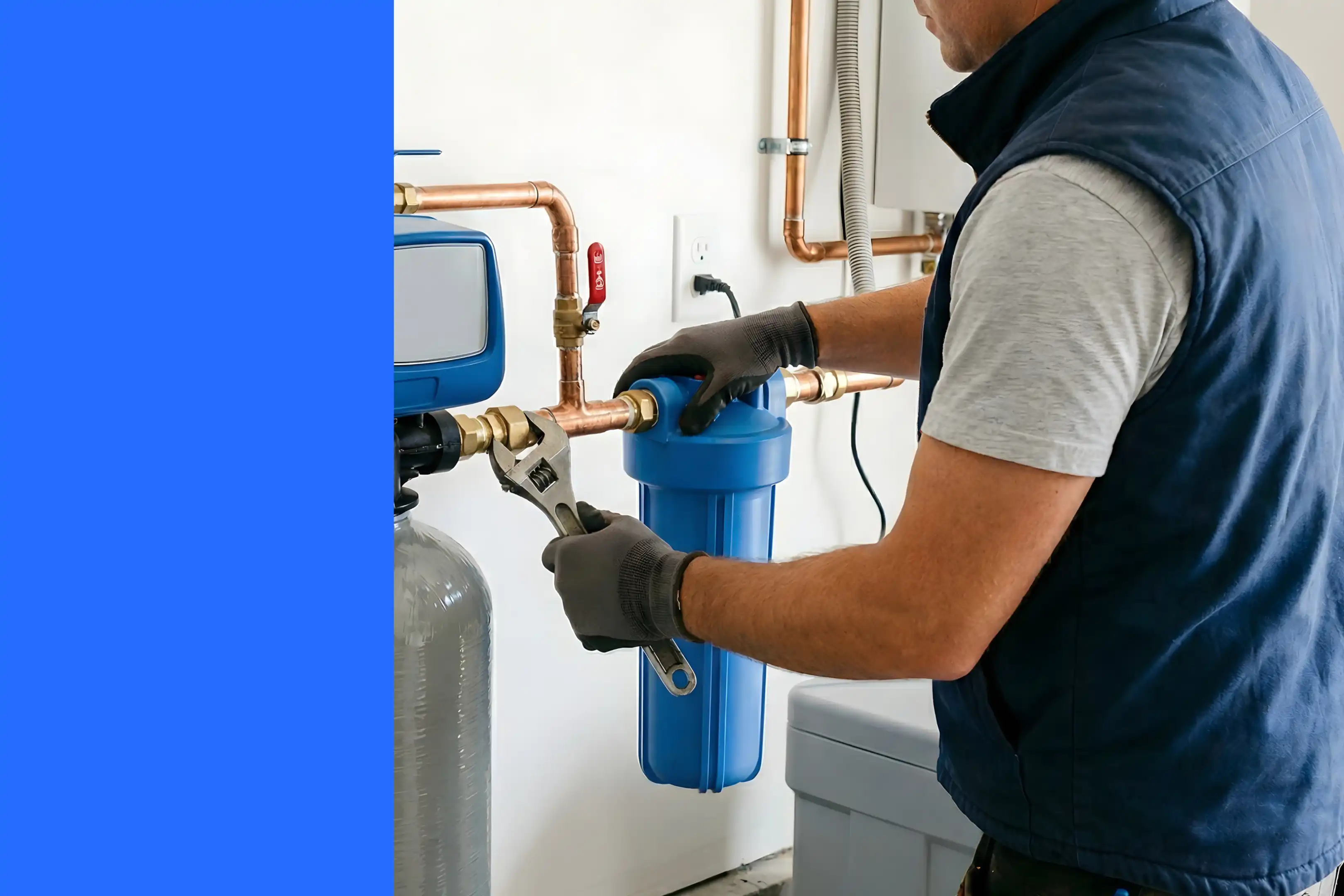
Boilers, cooling towers, HVAC coils, and domestic hot water systems all depend on properly softened water. A structured water softener maintenance checklist catches degradation at the source before hard water minerals cause scale buildup, efficiency losses, and costly repairs across connected equipment.
Key takeaways
- Water softener failures cascade downstream. Incomplete regeneration sends hard water through boilers, cooling towers, and heat exchangers, causing scale buildup that undermines system performance across facility equipment.
- Weekly hardness testing at the softener outlet catches resin degradation and control valve malfunctions before scale damage appears on critical equipment.
- Digital maintenance records transform water quality logs from compliance paperwork into trend data that supports water management plans and proactive resin replacement timing.
How to use this checklist
Customize for your facility
This checklist is a general template that can be customized according to water hardness, system capacity, facility type, and other factors. Manufacturing plants running high-capacity industrial softeners need more frequent resin bed cleaning than small office facilities. Adjust inspection frequencies based on water chemistry: High iron content calls for weekly brine tank checks, while a clean municipal water supply may need only monthly reviews.
Facilities with cooling towers or boilers should focus on downstream equipment protection, since these systems have the least tolerance for hardness minerals. Tailor your water testing intervals to regulatory compliance requirements and equipment warranty terms.
Use a CMMS
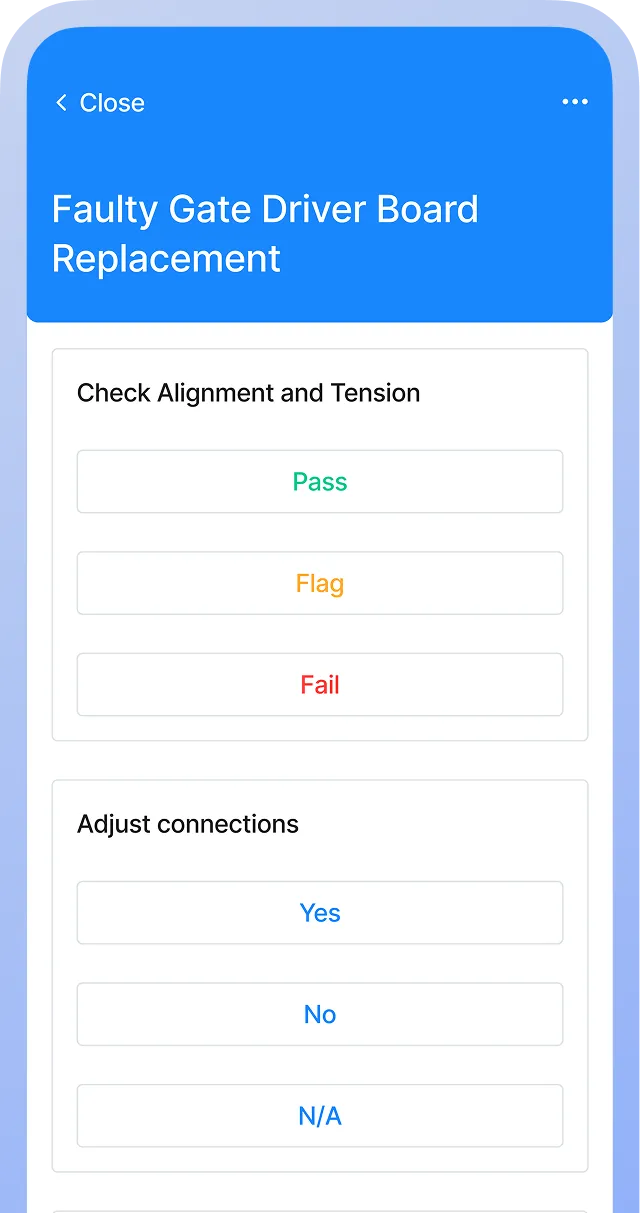
A digital checklist transforms softener maintenance from manual logs into automated workflows, scheduling inspections based on actual water usage patterns rather than arbitrary dates. With a computerized maintenance management system (CMMS), technicians can photograph resin discoloration or scale buildup directly in work orders, creating visual maintenance histories that make trend spotting easier.
Automated reminders help prevent missed regeneration cycles or salt refills. Digital audit trails also satisfy regulatory compliance requirements without a filing cabinet full of paper records.


Water softener maintenance checklist
Brine tank and salt system
Resin tank and media bed
Control valve and electronics
Plumbing connections and piping
Bypass valve and drain lines
Downstream equipment protection
Water quality and performance monitoring
Documentation and compliance
This checklist is to be used only by those with appropriate training, expertise, and professional judgment. You are solely responsible for reviewing this checklist to ensure that it meets all professional standards and legal requirements, as well as your needs and intent.
Warning signs your softener is failing
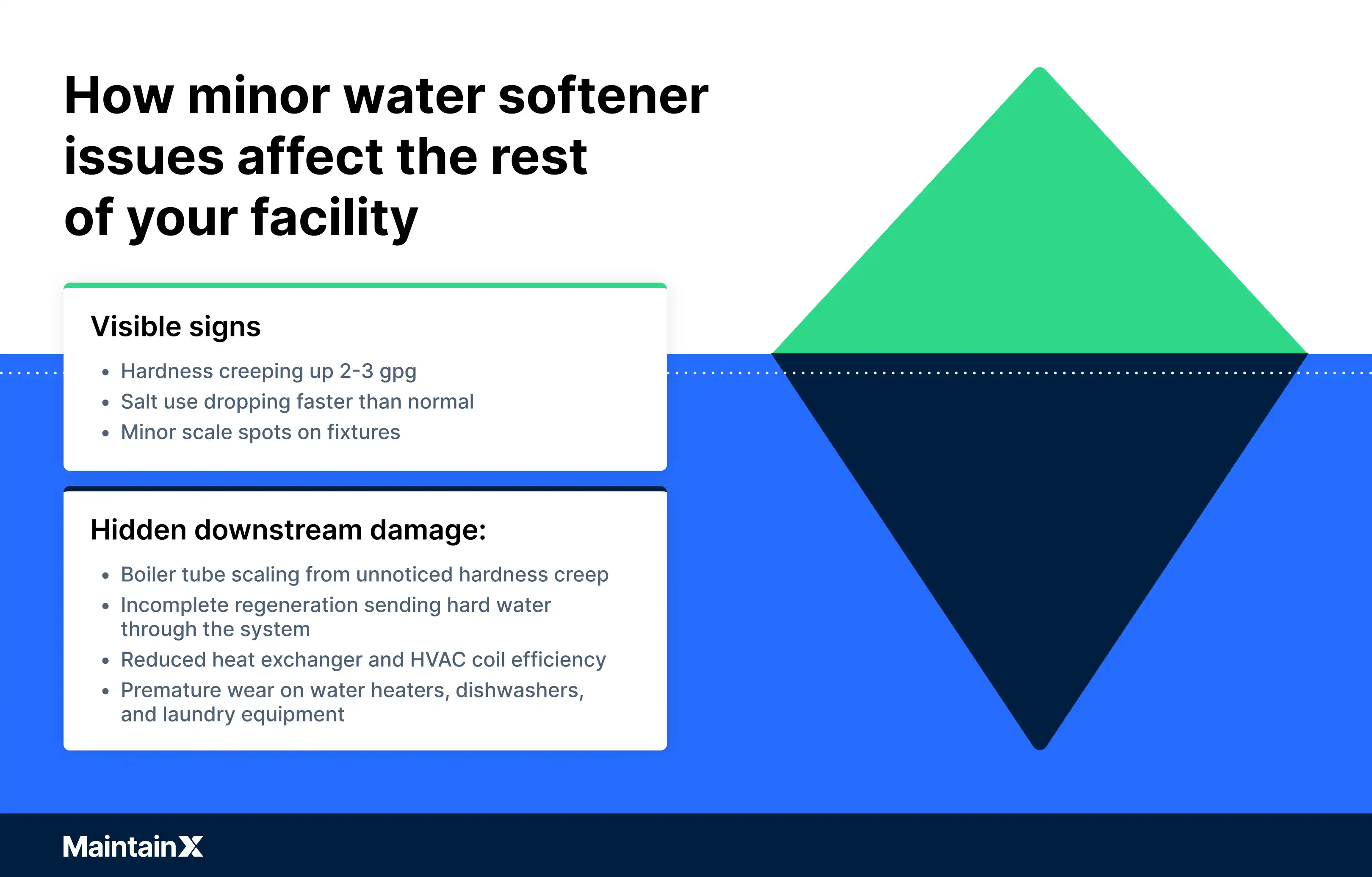
A water softener rarely fails dramatically. Instead, it degrades quietly while scale builds in the equipment it protects. Catching early warning signs prevents costly repairs to boilers, cooling towers, and heat exchangers downstream, and it's the single biggest factor in how long your system actually lasts.
Common indicators include scale deposits or white residue on fixtures, rising hardness in treated water samples, and unexplained drops in hot water heater efficiency. Salt bridging in the brine tank is another frequent culprit: The salt appears to deplete normally, but a hard crust forms above the water line and blocks proper brine production. Salt mushing presents a similar failure mode further down in the tank, where compacted salt at the bottom restricts brine formation instead.
Rising energy costs on connected equipment can also point back to softener problems. Even a thin layer of scale buildup on boiler tubes measurably reduces heat transfer. When downstream assets start underperforming, the softener should be one of the first places to investigate, since a properly maintained unit keeps hardness minerals out of the entire filtration system rather than just the point where water enters the building.
How to verify regeneration cycles complete successfully
Effective verification goes beyond confirming the timer is set. Test water hardness before and after a regeneration cycle to confirm the resin bed is fully recharged. Flow rates during each regeneration phase (brine draw, slow rinse, fast rinse) should match the manufacturer's specifications.
Tracking brine tank salt consumption over time offers a useful trend indicator. A sudden drop in salt use often signals a failed brine valve or stuck injector. Conversely, excessive water in the brine tank after regeneration can point to a drain line restriction.
For softeners feeding steam boilers or cooling systems, many facility managers test hardness daily rather than relying on cycle timers alone.
Document water softener maintenance for ASHRAE 188 and boiler code compliance
Water softener records serve a purpose beyond maintenance tracking. They typically form part of the compliance evidence that auditors and inspectors expect to see.
ASHRAE 188 water management plans typically require documentation of control points throughout facility water systems. The softener is often the first treatment step, making its maintenance logs foundational to the broader plan.
Comprehensive documentation should include dated hardness readings, salt additions, regeneration cycle verification, and any corrective actions taken. Recording who performed each task and what they found adds accountability.
This content is for informational purposes only and does not constitute legal or compliance advice. Always consult the applicable regulations and a qualified professional to confirm your facility meets current requirements.
Capture water softener maintenance data with a CMMS
Paper logs and spreadsheets capture data but don't connect it to the bigger picture. MaintainX ties softener maintenance records to the downstream assets that depend on treated water.
Automated scheduling removes the guesswork from regeneration checks and resin inspections, preventing the kind of costly downtime that comes from a softener quietly failing between inspections. Work order histories create the audit trail that ASHRAE 188 and boiler code compliance typically demand.
MaintainX also links softener performance data to maintenance events on connected equipment, turning the softener from an isolated asset into a tracked upstream control point that supports consistent performance across your entire water supply and every system it feeds.
See it in action by booking a tour.
Water softener maintenance checklist FAQs
How often should commercial water softeners be serviced?
Inspection frequency depends on what the softener protects. Systems feeding critical equipment like boilers or cooling towers typically need monthly inspections, while those serving less critical loads require quarterly checks. Weekly hardness testing catches problems early.
What are the NSF/ANSI certification requirements for commercial water softeners?
Commercial softeners should typically meet NSF/ANSI Standard 44 for residential systems or Standard 61 for drinking water system components. Many facilities also require NSF/ANSI 372 certification to verify lead-free materials in potable water applications.
This information is for general reference only and does not constitute legal or compliance advice. Consult applicable regulations and a qualified professional to confirm requirements for your facility.
What are the signs that a water softener needs immediate maintenance?
Hard water breakthrough, indicated by scale buildup on fixtures or rising hardness test results, signals urgent attention. Other warning signs include irregular regeneration cycles, declining flow rates, salt bridging in the brine tank, or visible resin beads in discharge water.
How does water softener maintenance relate to ASHRAE 188 water management requirements?
ASHRAE 188 water management plans typically require documenting control measures for equipment feeding potable water systems. Softener maintenance logs and water quality testing records provide evidence of hazard control, particularly for systems protecting cooling towers or domestic hot water heaters.
This information is for general reference only and does not constitute legal or compliance advice. Consult applicable regulations and a qualified professional to confirm requirements for your facility.
What type of salt should be used in commercial water softeners, and how much?
Solar salt pellets or evaporated salt pellets work best for commercial systems, which contain more impurities. Consumption varies by hardness and usage, but facilities typically maintain salt levels at least one-quarter full in the brine tank.
Who is qualified to perform maintenance on commercial water softening systems?
In-house facility technicians typically handle routine inspections, hardness testing, and salt replenishment. Complex repairs, resin replacement, control valve servicing, and system troubleshooting usually require certified water treatment technicians or manufacturer-trained service providers with commercial system experience.
How long do commercial water softener components typically last?
Resin beds last 10 to 15 years with proper maintenance. Control valves function for 7 to 10 years. Brine tanks often exceed 20 years. Component lifespan depends heavily on water quality, regeneration frequency, and maintenance consistency.

The MaintainX team is made up of maintenance and manufacturing experts. They’re here to share industry knowledge, explain product features, and help workers get more done with MaintainX!


.webp)