

A commercial property inspection checklist does more than document building conditions. When each finding triggers an assigned work order with clear ownership, inspections become the starting point for maintenance action rather than line items in a forgotten PDF.
Below, we get you started with a customizable commercial property inspection checklist that can be adapted to your needs.
Key takeaways
- Building system failures rarely stay contained; effective inspections should aim to spot cross-system risks before they compound.
- Recurring inspection rhythms produce better outcomes than ad-hoc walkthroughs: Daily checks for high-use systems and quarterly reviews for seasonal equipment create predictable maintenance cycles.
- Using a CMMS helps prevent issues that are identified during an inspection from falling through the cracks.
How to use this checklist
Customize for your facility
This checklist covers inspection items that are common across a wide spectrum of commercial properties. Consider it a starting point that you can adjust for your facility. Remove irrelevant sections and add items as necessary.
Always check local building codes and compliance requirements. As always, follow appropriate safety best practices when conducting any property inspection.
Use a CMMS
Print this checklist out for use on the floor, or import it into a tablet or mobile device. For best results, however, we recommend using it with a computerized maintenance management system (CMMS). Keeping digital inspection records in a CMMS simplifies insurance claims, regulatory audits, and handoffs to new property managers.


Commercial property inspection checklist
Building structure and envelope
Mechanical and HVAC systems
Electrical systems
Plumbing systems
Fire protection and life safety
Security and access control
Common areas and interior spaces
Exterior, parking, and site conditions
Documentation and compliance
Disclaimer: This checklist is to be used only by those with appropriate training, expertise, and professional judgment. You are solely responsible for reviewing this checklist to ensure that it meets all professional standards and legal requirements, as well as your needs and intent.
Why inspection findings should trigger maintenance workflows
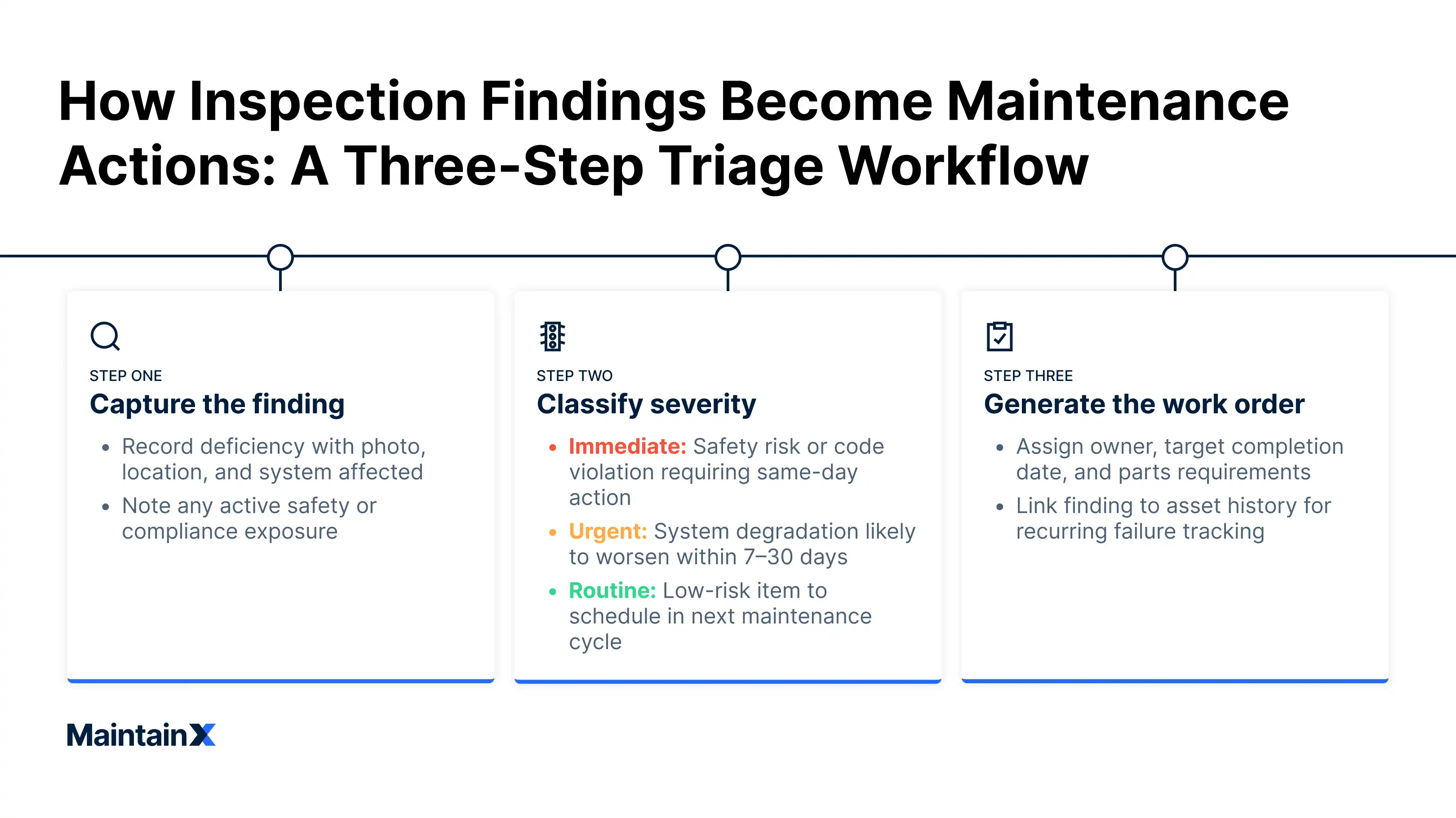
An inspection finding only has value if it leads to action. The most effective facilities teams treat every flagged deficiency as the start of a maintenance workflow.
When an inspector documents a cracked expansion joint on a rooftop, that finding should automatically generate a work order with a clear owner, priority level, and deadline. Otherwise, the issue risks being ignored or forgotten.
This proactive approach also reveals how problems in one system cascade into others. A clogged roof drain can lead to water intrusion that damages insulation, ceiling tiles, and electrical components below. Linking inspection results directly to maintenance workflows helps teams catch these cross-system risks before repair costs multiply.
Commercial property inspection frequency: Daily, monthly, quarterly, and annual schedules
Not every building system needs the same inspection rhythm. Matching frequency to risk and wear patterns keeps the workload realistic while catching problems early.
Daily walkthroughs typically cover life-safety items: emergency exits, fire suppression indicators, and common-area lighting. Monthly inspections often focus on HVAC filters, plumbing fixtures, and parking lot conditions. Quarterly reviews tend to address elevator performance, roof drainage, and electrical panel integrity. Annual inspections usually include full envelope assessments, fire alarm testing, and structural evaluations.
Seasonal shifts matter too. Facilities managers in freeze-thaw climates often add pre-winter roof and pipe inspections to their quarterly schedule, while those in high-temperature, high-UV regions schedule mid-summer checks on roofing membranes and sealants before peak heat causes cracking or delamination. Adding recurring inspections into your maintenance schedule turns these tasks from reactive to proactive maintenance.
Documentation supports insurance and regulatory compliance
Commercial property inspection records often serve as evidence during insurance claims, lease disputes, and regulatory audits. A roof leak claim, for example, is far easier to defend when quarterly drainage inspections show consistent upkeep. Without records, adjusters may attribute damage to neglect rather than an insurable event.
Local fire codes and ADA regulations also generally require periodic inspection documentation. Incomplete records can result in fines or failed occupancy renewals.
Effective documentation captures timestamps, photos, inspector names, and follow-up actions taken. This last detail is often the gap. Showing that a flagged issue led to a completed work order shows due diligence far more convincingly than a checklist full of checkmarks with no resolution trail.
Simplify property inspections with a mobile-friendly CMMS
Paper-based commercial property inspections create a disconnect between identifying a problem and resolving it. MaintainX closes that gap by turning inspection findings into tracked work orders on the spot.
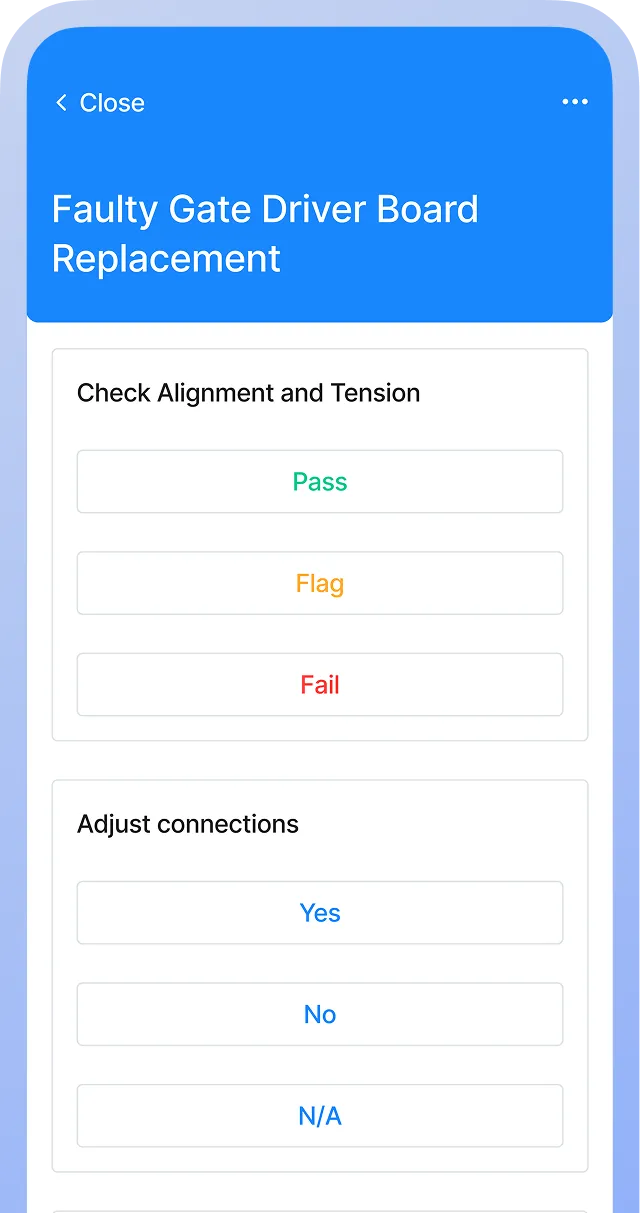
The MaintainX mobile-friendly platform allows inspectors to document deficiencies with photos, attach them to the relevant asset, and assign follow-up tasks without leaving the field. This eliminates the delay between walkthrough and action, which is where many maintenance issues stall.
Book a tour to see how MaintainX can transform checklists and inspections in your property.
Commercial property inspection checklist FAQs
What should be included in a commercial property inspection checklist?
Cover all major systems, including mechanical and electrical systems, plumbing systems, air conditioning systems, and ventilation systems. Assess the building's entire electrical infrastructure, checking for code compliance violations. Inspect load-bearing walls, roof surface, exterior walls, and all exterior elements for structural integrity.
Include a thorough review of fire and life safety systems, such as sprinkler systems, fire alarms, emergency lighting, and exit signs. Evaluate whether all systems are properly maintained by reviewing maintenance records and previous inspection reports. Review building permits and documentation to ensure compliance and identify any tenant improvements or planning renovations that may impact operational continuity.
What OSHA and safety compliance items must be checked during commercial property inspections?
Inspect emergency exits, fire extinguishers, egress lighting, stairwell handrails, and ADA-compliant access points, while identifying safety hazards and thoroughly inspecting life safety systems such as fire alarms and sprinkler systems.
Review maintenance logs and document any deficiencies immediately, assign corrective tasks with deadlines, and maintain compliance records for audits and liability protection.
Note: this content is for informational purposes only and does not constitute legal or compliance advice. Always consult the applicable regulations and a qualified professional to ensure your property meets current requirements.
How often should commercial properties be inspected?
Inspection frequency varies by system: daily for critical equipment like fire suppression, elevators, and boilers where failure poses immediate critical safety or operational risks; weekly for HVAC filters to maintain air quality and system efficiency; monthly for lighting and plumbing, including emergency exit signage and visible leak checks in common areas; quarterly for roofing and exterior elements such as façades, drainage systems, and parking lots, ideally timed around seasonal transitions; and annually for structural components, often completed by a licensed engineer to meet local code requirements.
High-traffic facilities such as hospitals, hotels, and retail centers typically compress these timelines considerably, as heavier usage accelerates wear and increases the consequences of overlooked deficiencies.
What are the most commonly overlooked items in commercial property inspections?
Roof drainage systems, HVAC condensate lines, parking lot drainage, weatherstripping, exterior walls, and roof surface often get missed. Moisture intrusion in these areas can lead to significant property damage and costly repairs, making early detection essential to prevent escalating issues. For example, a simple clogged drain can damage roofing, leading to interior water damage and mold remediation costs.
Do commercial property inspections require specialized certifications?
Routine maintenance inspections don’t require certifications, but specialized systems do. Elevators need licensed inspectors, fire suppression requires certified technicians, and some jurisdictions mandate licensed professionals for electrical and plumbing assessments.

The MaintainX team is made up of maintenance and manufacturing experts. They’re here to share industry knowledge, explain product features, and help workers get more done with MaintainX!



.webp)