

Most vacuum pump failures are predictable. Rising discharge temperatures, declining vacuum depth, and increasing oil consumption all signal developing problems weeks before a pump goes down. A structured preventive maintenance checklist captures these trends systematically, turning routine inspections into early warning intelligence and audit-ready documentation.
Key takeaways
- Oil condition, vacuum depth, and discharge temperature tell you more about pump health than a visual inspection alone. Trending these readings across service intervals reveals failure trajectories early enough to act on them.
- Shaft seals, exhaust filters, and vanes wear predictably under normal operating conditions. Catching early signs of degradation during routine inspections prevents the kind of internal damage that requires full pump rebuilds or replacement.
- Paper logs capture data but rarely make it actionable. A computerized maintenance management system (CMMS) connects inspection findings to work orders, flags readings that exceed defined thresholds, and builds the continuous maintenance record that auditors expect to see.
How to use this checklist
Customize for your facility
Start with the downloadable PDF we've included on this page, then adjust inspection intervals based on your pump's operating environment and duty cycle. Facilities with continuous operations or corrosive process gases inspect more frequently than clean room applications. Reference your pump manufacturer's specifications and service manual for model-specific clearances and tolerances.
Use a CMMS
A CMMS turns individual inspection readings into trend data. When discharge temperature or oil consumption climbs steadily across three consecutive checks, the pattern is visible before the pump crosses into failure territory.


Vacuum pump preventive maintenance checklist
Motor and electrical components
Pump housing and mechanical assembly
Lubrication and oil system
Seals, gaskets, and exhaust
Vacuum performance and gauges
Inlet, outlet, and connections
Safety systems and controls
Documentation and compliance
This checklist is to be used only by those with appropriate training, expertise, and professional judgment. You are solely responsible for reviewing this checklist to ensure that it meets all professional standards and legal requirements, as well as your needs and intent.
Operating hours vs. calendar schedules: Which is better for preventive maintenance?
A vacuum pump running 20 hours a day wears at a completely different rate than one cycling on for a few hours each shift. Calendar-based maintenance schedules ignore this reality. A pump might hit 2,000 run-hours in six weeks or six months, depending on the application.
Effective preventive maintenance programs tie inspection intervals to cumulative operating hours. Regular oil changes, vane inspections, and filter replacements all correlate more reliably to runtime than to dates on a calendar. Most manufacturers specify service intervals in hours for exactly this reason.
Hour meters or runtime counters make this practical. Without them, teams tend to default to calendar schedules and either over-maintain lightly used pumps or under-maintain heavily loaded ones.
How to interpret vacuum pump warning signs before failure
Individual readings rarely tell the full story. A discharge temperature of 190°F might be normal for one pump model and a red flag for another. What matters is the trend.
Rising discharge temperatures over several inspections often point to restricted airflow, degraded oil, or worn internal components. A gradual decline in ultimate vacuum level signals internal leakage or damaged seals. Increasing oil consumption between regular oil changes can indicate vane or cylinder wear progressing toward pump failure.
When each inspection task specifies an acceptable range and an action-required boundary, technicians can spot trajectory changes early. A reading that sits within range but has climbed steadily for three consecutive checks deserves attention before it crosses the line. Trending turns routine data collection into early warning intelligence.

Why checkmark-style inspections fail OSHA audits
A column of checkmarks tells an auditor that someone held a pen. It doesn't confirm what they observed, measured, or decided. OSHA and other regulatory bodies typically expect documentation that shows actual conditions, not just task completion.
Defensible inspection records include quantified readings, the technician's name, a timestamp, and clear pass/fail criteria. When a pump's oil level reads at minimum threshold against manufacturer specifications, that record carries weight. A checkmark next to "oil level OK" does not.
Investigators look for evidence that known warning signs were monitored and acted on. Programs built around recorded values and defined thresholds hold up under scrutiny. Programs built around checkmarks tend to collapse the moment someone asks, "What exactly did you inspect?"
Note: This is a general informational summary only and does not constitute legal, regulatory, or compliance advice. Requirements for vacuum pump maintenance and documentation vary by industry, jurisdiction, and application. Always consult applicable OSHA standards, EPA regulations, your equipment manufacturer's specifications, and a qualified professional to determine the specific inspection, documentation, and compliance obligations for your facility and equipment.
Simplify vacuum pump preventive maintenance with a CMMS
Paper logs and spreadsheets can capture inspection data, but they rarely make it easy to act on that data later. Searching through binders for a six-month temperature trend or confirming who last serviced a specific pump becomes its own project.
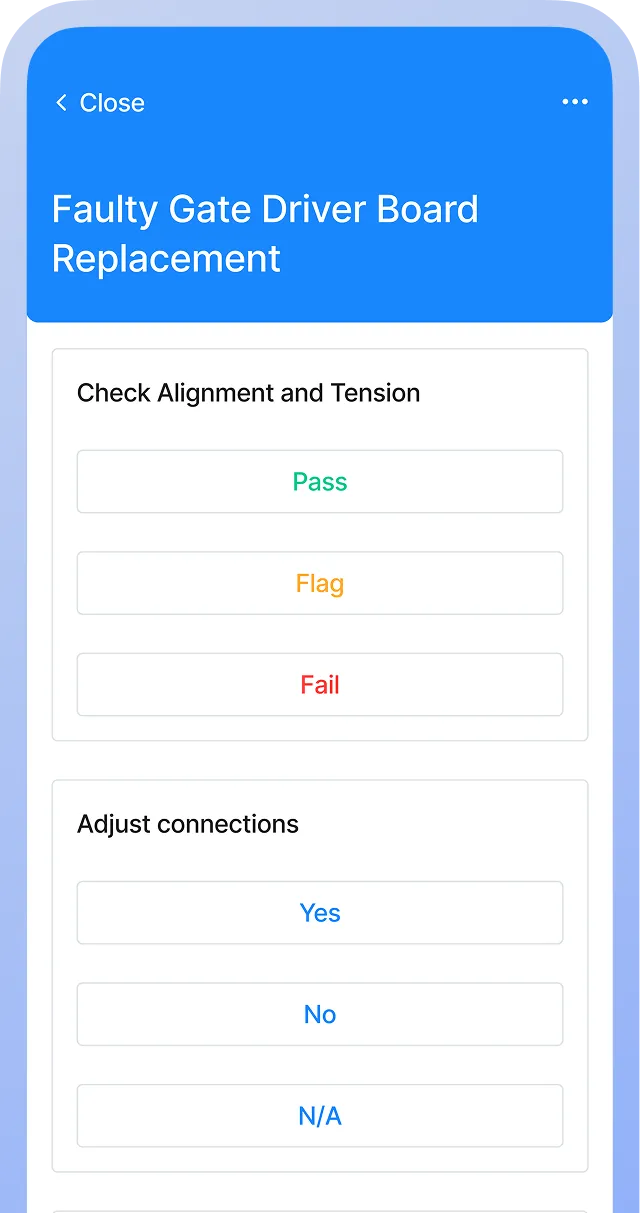
MaintainX centralizes inspection records, attaches readings directly to asset histories, and flags values that cross predefined thresholds. Work orders trigger automatically based on run-hours rather than calendar dates, keeping PM intervals matched to actual usage and manufacturer recommendations.
See MaintainX in action by booking a tour.
Vacuum pump maintenance checklist FAQs
What should a vacuum pump preventive maintenance checklist include?
A complete vacuum pump preventive maintenance checklist should cover all critical systems, organized by inspection frequency:
- Daily visual inspection: Check oil level through the sight glass, inspect cooling fins and filter housing for dirt buildup, verify adequate airflow and proper ventilation around the pump casing, listen for unusual noises or excessive vibration, and confirm the cooling system is functioning properly.
- Weekly checks: Inspect shaft seals and exhaust filters for leaks or saturation, check the gas ballast valve operates freely, verify the air filter is clean and unobstructed, and confirm the pump reaches its rated vacuum level.
- Oil change and filter service: Drain used oil and replace with manufacturer-recommended oil at run-hour intervals, replace filters per manufacturer guidelines, and inspect internal components for contamination or wear.
- Periodic service: Test motor amperage against nameplate values, check coupling alignment, inspect rotary vane pumps or diaphragm pumps for vane wear and seal condition, verify the cooling system provides proper cooling under load, and confirm all safety precautions and lockout/tagout procedures are followed before accessing internal parts.
Regular upkeep across these intervals protects pump performance, extends service life, and prevents costly downtime.
How often should vacuum pump oil be changed in commercial facilities?
Regular oil changes should be scheduled based on operating hours rather than calendar dates. Most continuous-duty rotary vane pumps require fresh oil every 2,000 to 4,000 run-hours. Monitor oil clarity and condition through the sight glass between changes; darkened or cloudy oil signals immediate replacement regardless of runtime. Always use the manufacturer-recommended oil grade for your operating conditions.
What safety precautions are required before performing vacuum pump maintenance?
Lock out and tag out electrical power, close and tag isolation valves, and verify zero energy states before starting work. Allow hot components to cool, vent residual vacuum pressure, and confirm sufficient airflow and proper ventilation when handling used oil or refrigerants. These safety precautions apply to all maintenance tasks, from filter housing inspection to internal component service, and should be documented for each service event.
How do you test if a vacuum pump is performing to specification?
Measure the ultimate vacuum level against manufacturer specifications using a calibrated gauge. A 10% drop from baseline indicates developing pump performance issues. Track discharge temperature, pumping speed at various pressures, and time to reach target vacuum. Trending degradation across regular inspections reveals performance issues before they lead to pump failure or costly repairs.
What inspection frequency is needed for continuously operating vacuum pumps?
Continuous-duty pumps typically require daily visual checks, weekly detailed inspections every 168 run-hours, and full professional servicing every 2,000 to 4,000 hours. Calendar-based maintenance schedules fail because a pump running 24/7 accumulates wear far faster than one used intermittently. A well-maintained vacuum pump running on hour-based intervals will consistently outperform one serviced on arbitrary calendar dates.
What are the most common causes of vacuum pump failure?
Oil contamination and degraded oil lead most failures, followed by damaged seals, worn bearings, overheating from inadequate proper cooling or dirt buildup on cooling fins, and ingestion of process contamination through a clogged air filter. Missing intake filters, skipped regular oil changes, and operating beyond rated pressure ranges accelerate wear on internal components dramatically. Early detection through regular maintenance prevents most of these failures before they cause unexpected downtime.
What documentation is required for vacuum pump preventive maintenance programs?
Effective programs require timestamped inspection records with quantified readings covering vacuum level, temperatures, oil condition, and vibration data, along with technician attribution for every entry. Blank logs or simple checkmarks collapse under regulatory scrutiny. Trending data demonstrates due diligence, reveals failure patterns early, and validates that your preventive maintenance checklist is producing reliable performance rather than just administrative compliance.

Marc Cousineau is the Senior Content Marketing Manager at MaintainX. Marc has over a decade of experience telling stories for technology brands, including more than five years writing about the maintenance and asset management industry.

.webp)