

A structured facility management checklist organized by inspection cadence (daily, weekly, monthly, quarterly, and annually) keeps teams focused on the right priorities at the right time, so nothing falls through the cracks. It also turns routine findings into documented action, so compliance readiness becomes a byproduct of consistent maintenance rather than a separate effort.
Below, we provide daily, weekly, monthly, quarterly, and annual facility management checklists that you can download and use on their own or integrated with a computerized maintenance management system (CMMS). We also cover some best practices that will help you turn regular inspections into a comprehensive preventive maintenance plan.
Key takeaways
- Time-based inspection cadences help facility managers prioritize what matters when, preventing the common mistake of treating daily walkthroughs and annual system reviews as equally urgent.
- Building systems rarely fail in isolation: Missing a monthly filter inspection, for example, can lead to degraded air quality, accelerating equipment wear.
- Digital checklists in a CMMS create audit trails that can help meet requirements for OSHA, NFPA, and ASHRAE documentation.
How to use this checklist
Customize for your facility
Think of these checklists as a baseline for regular facility maintenance and adjust accordingly. Manufacturing plants face different demands than office buildings or healthcare facilities. Review each checklist category against your equipment inventory and operations, remove items that don’t apply, and expand sections relevant to your critical systems.
Before finalizing your checklist, consult applicable safety standards and regulatory requirements, such as OSHA, NFPA, or local building codes, to ensure you’re meeting all of your compliance obligations.
Use a CMMS
Paper checklists are useful on the floor, but they don’t always translate to corrective action. Using our facility management checklists with a CMMS digitizes inspections with photo documentation, automatic scheduling, and complete audit trails.
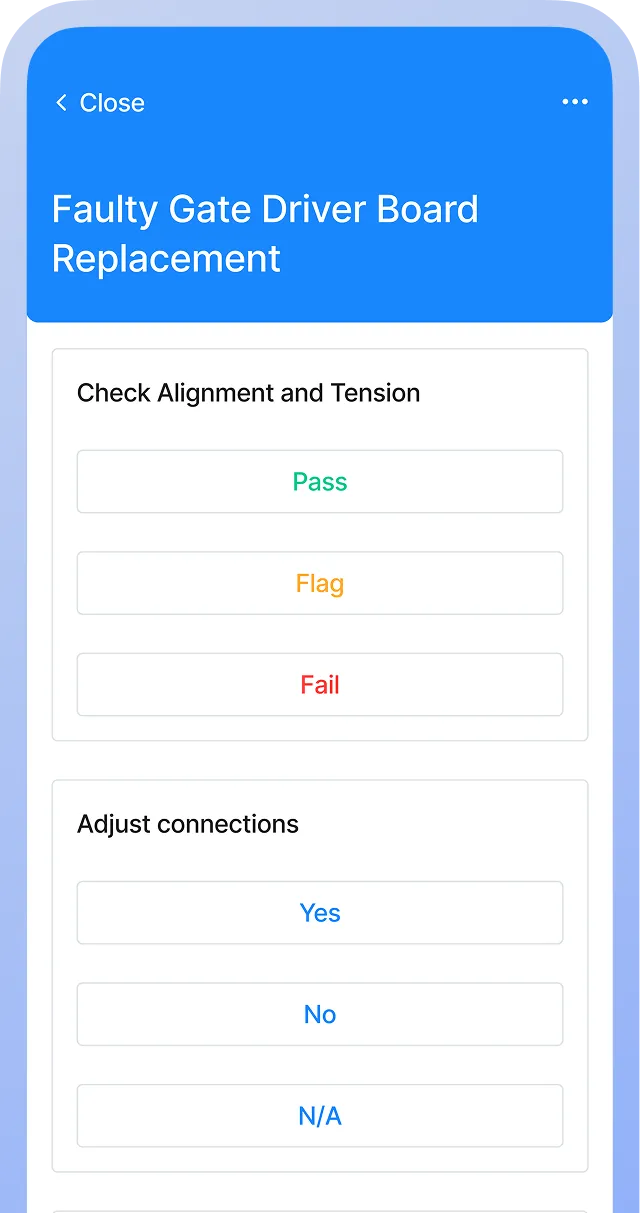
With a mobile-enabled CMMS, technicians can receive tasks on their phone, record findings in real-time, and trigger work orders immediately when issues appear. Over time, the platform will track completion rates, flag recurring problems, and centralize compliance records for audits.


Daily facility management checklist
Building systems
Interior spaces
Grounds and exterior
Environmental health
Weekly facility management checklist
HVAC systems
Fire and life safety
Plumbing
Security
Equipment
Monthly facility management checklist
HVAC systems
Electrical
Fire and life safety
Emergency systems
Building envelope
Grounds and parking
Interior spaces
Environmental and pest control
Accessibility
Quarterly facility management checklist
HVAC systems
Fire and life safety
Plumbing
Building envelope
Security
Documentation
Semi-annual facility management checklist
HVAC systems
Plumbing
Accessibility
Safety and compliance
Annual facility management checklist
Major systems
Fire and life safety
Elevators and conveyances
Building envelope
Environmental
Compliance and planning
This checklist is to be used only by those with appropriate training, expertise, and professional judgment. You are solely responsible for reviewing this checklist to ensure that it meets all professional standards and legal requirements, as well as your needs and intent.
Seasonal considerations for facility inspections
Preventive maintenance priorities shift with the seasons, changing the focus of every inspection cycle.
Spring inspections typically focus on winter damage assessment, clearing debris from drainage systems, and preparing cooling equipment. Summer shifts attention to HVAC performance under peak load, UV degradation of roofing membranes, and landscaping that may obstruct sightlines or egress paths.
Fall is the time to verify heating system readiness, clean gutters before leaf accumulation peaks, and inspect weather stripping before cold air infiltration becomes costly. Winter rounds emphasize snow load monitoring, ice dam prevention, pipe freeze protection, and salt damage to flooring and entryways.
The underlying cadence stays consistent; what changes is the focus within each cycle. Be sure to adjust your inspection checklists accordingly.
When to escalate from in-house maintenance to professional services
Not every inspection finding belongs on your maintenance team's plate. Knowing when to call a specialist protects both the building and the people inside it.
Regulatory requirements draw some of these lines clearly: Fire sprinkler system repairs, elevator maintenance, backflow preventer testing, and high-voltage electrical work typically require licensed professionals by code. Performing this work without proper credentials can void insurance coverage and create serious liability.
Other escalation triggers are judgment calls. Refrigerant handling, structural concerns, mold remediation beyond surface-level cleanup, and roof repairs on commercial membranes all benefit from specialist expertise.
Conversely, in-house teams can handle work that doesn't require specialized licensing or heavy equipment, like filter replacements, light fixture repairs, minor plumbing adjustments, door hardware fixes, and routine painting.
A useful rule of thumb: If the repair requires equipment or certifications the in-house team doesn't have, it's time to escalate.
How to turn inspection findings into prioritized work orders
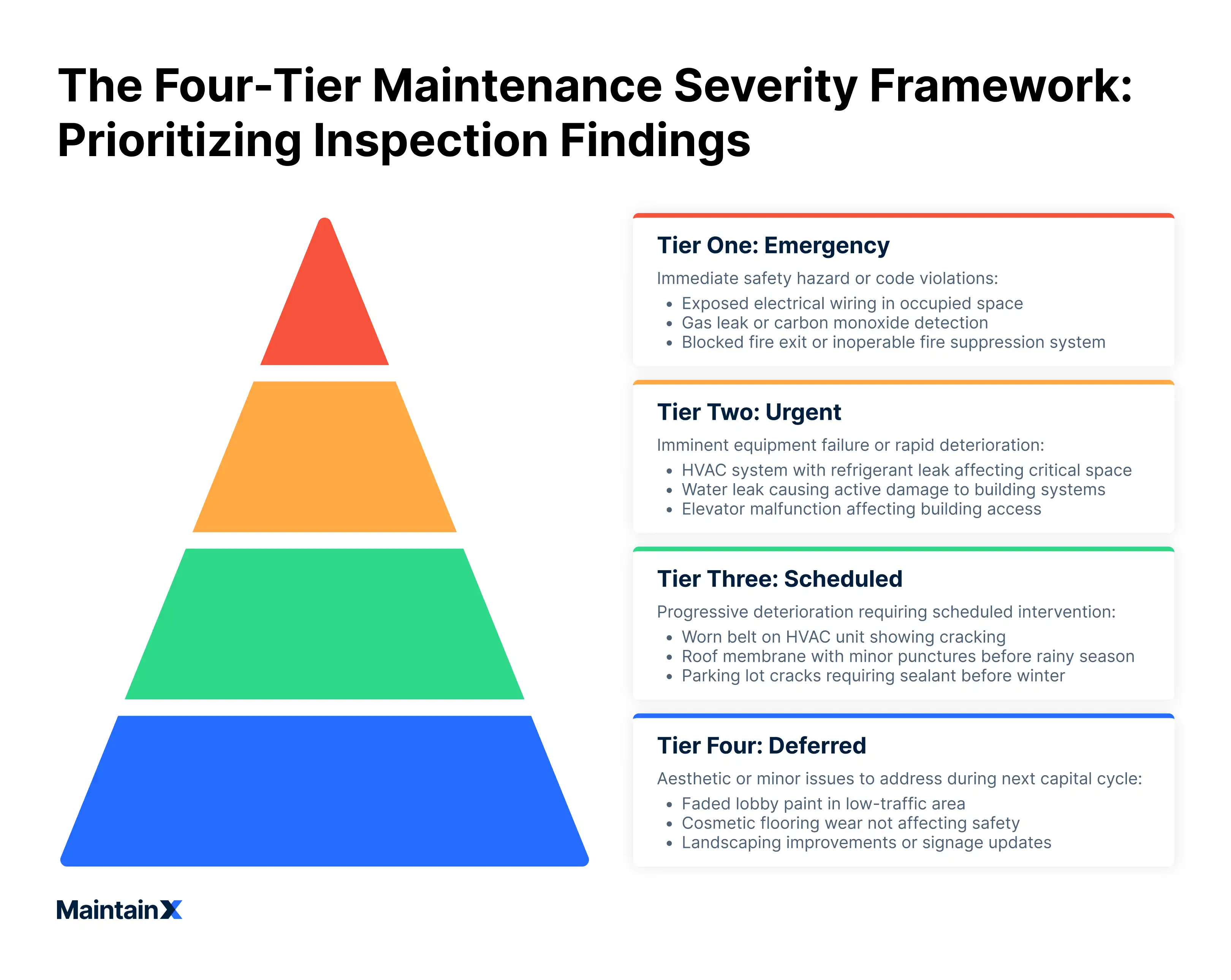
Effective facility management programs define clear severity tiers during the inspection itself. For example, tagging each finding as either critical (immediate action), high (within 24 hours), medium (this week), or low (scheduled maintenance). A CMMS automates this workflow by letting technicians assign priority levels in the field, instantly routing urgent issues to the right person and scheduling the rest without manual follow-up.
A blocked fire exit generates an immediate work order with same-day resolution. A stained ceiling tile gets categorized for investigation within the week. Minor cosmetic wear enters the backlog for scheduled preventive maintenance.
Each finding should include enough detail for the assigned technician to act without a follow-up visit. Vague notes like "leak in hallway" cost time and waste resources; a note that says "active drip from ceiling tile B-204, directly below rooftop unit 3" gets resolved faster.
Simplify facility management with a CMMS
Managing inspection cadences across daily, weekly, monthly, quarterly, and annual cycles creates significant scheduling complexity.
MaintainX is a mobile-friendly CMMS designed to connect inspection data to asset history, helping teams spot patterns across systems and make informed decisions about repair-vs-replace thresholds. Turn routine checklists and inspections into a strategic maintenance program.
Book a tour to see it in action.
Facility management checklist FAQs
What should a complete facility management checklist include?
Typically, the five main tasks included in a facility management checklist are safety checks, equipment maintenance, cleaning and sanitation, documentation, and compliance verification.
Effective checklists organize inspections by cadence, with maintenance tasks and regular inspections as core components. Daily walkthroughs address safety hazards, weekly rounds cover equipment checks, monthly tasks handle preventive maintenance, quarterly reviews assess building systems, and annual audits verify compliance.
A cost-effective checklist helps facilities across different industries avoid compliance issues by ensuring all essential areas are covered
How often should different facility management inspections be performed?
Inspection frequency varies for different systems. Fire safety devices need monthly testing, HVAC filters require monthly changes, structural elements warrant quarterly reviews, and full accessibility audits occur annually.
High-traffic areas demand daily walkthroughs. Emergency exits, fire extinguishers, and carbon monoxide detectors also require regular inspection to ensure compliance and safety. Cold weather requires special attention to heating systems and plumbing systems to prevent failures and maintain building efficiency. Urgent issues and minor issues should be differentiated and addressed according to their impact on operations.
How do you create an effective facility management checklist for an office building?
Start by identifying regulatory requirements, then organize tasks by inspection cadence rather than building system. Include building automation systems and energy-efficient equipment in your facility management checklist. Make sure all equipment is properly installed and checked regularly for proper operation.
Include clear escalation criteria for each item, so teams know when findings require immediate work orders versus scheduled maintenance. Document everything: completed inspection reports, photos of flagged issues, work order histories, and vendor service records. Using digital tools like a CMMS can make the job easier for facility managers.
What are the consequences of not following a facility management checklist?
Skipped inspections create cascade failures across systems. Neglecting regular maintenance and failing to replace filters, for example, can lead to costly repairs and increased energy consumption. If building exterior, outdoor areas, parking lots, and light fixtures are not well-maintained and properly cared for, safety suffers.
Ensuring all systems are functioning properly through regular maintenance helps reduce energy consumption and prevents unexpected breakdowns. Addressing minor issues and unique challenges in outdoor areas helps prevent larger problems. A missed roof inspection leads to water intrusion, damaging electrical systems and compromising fire safety.
What technology or tools are best for managing facility inspection checklists?
Digital tools like a CMMS help manage both building maintenance checklists and facility checklists by centralizing inspection tasks, scheduling, and compliance tracking in one platform. These tools make the job easier for facility managers by streamlining processes, reducing manual paperwork, and improving task visibility.
Many organizations use digital platforms to stay up to date with maintenance and compliance requirements, ensuring they meet industry standards and regulations. Digital platforms provide audit trails, track completion rates, and reveal patterns that paper checklists miss.
Who is responsible for completing facility management checklists in an office building?
Facility managers typically oversee checklist programs and assign tasks based on expertise. Maintenance technicians handle equipment inspections, custodial staff perform daily walkthroughs, and specialists complete HVAC or fire safety reviews. Clear role assignment prevents gaps in inspection coverage, where tasks go unnoticed simply because no one knew they were responsible for them.

The MaintainX team is made up of maintenance and manufacturing experts. They’re here to share industry knowledge, explain product features, and help workers get more done with MaintainX!

.webp)