

Facility Maintenance Checklist: A Compliance-Ready Inspection Guide
A well-structured facility maintenance checklist gives teams clear priorities when time and budgets are tight. This guide helps your team work systematically rather than reactively, catching small issues before they escalate into costly repairs or compliance failures.
The checklist below organizes items by compliance weight and inspection cadence so nothing falls through the cracks.
Key takeaways
- Knowing the difference between maintenance best practices and compliance requirements helps teams prioritize when resources tighten.
- Tracking deficiencies from discovery through documented resolution creates a closed loop that regulators expect to see.
- Digital checklists in a computerized maintenance management system (CMMS) create dated, timestamped maintenance records that can simplify audits and help prove regulatory compliance.
How to use this checklist
Customize for your facility
This checklist is meant to be broad in scope. Think of it as a generic template, and adapt as necessary to meet your specific equipment, occupancy type, and regulatory requirements.
Commercial buildings may require additional ADA compliance checks, while manufacturing facilities typically need more frequent equipment inspections. Review local fire marshal requirements and industry-specific regulations to add relevant items. Adjust inspection frequencies based on equipment criticality, manufacturer recommendations, and operational hours.
Use a CMMS
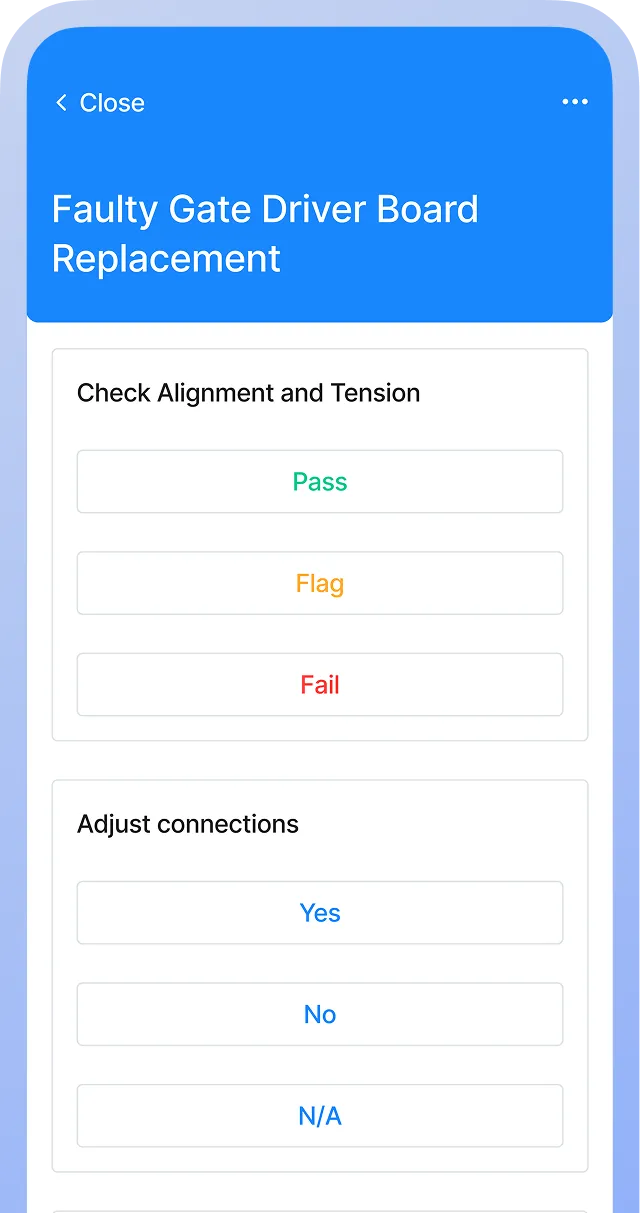
Print this checklist out and use it on its own, or import it into a CMMS. Using a CMMS allows technicians to complete facility inspections on mobile devices, capturing photos of deficiencies and generating work orders directly from the floor.


Facility maintenance checklist
HVAC and mechanical systems
Electrical systems and lighting
Plumbing and water systems
Fire life safety system
Building exterior and grounds
Interior spaces and accessibility
Security and access control
Documentation and compliance
This checklist is to be used only by those with appropriate training, expertise, and professional judgment. You are solely responsible for reviewing this checklist to ensure that it meets all professional standards and legal requirements, as well as your needs and intent.
How to schedule facility maintenance by regulatory priority
Start by sorting every maintenance task into one of two buckets: code-mandated or operationally discretionary. NFPA fire door inspections and OSHA electrical safety checks belong in the first bucket. Miss a deadline, and you're facing citations, fines, or worse. Lubricating door hinges and touching up parking lot striping belong in the second. Important, but not the kind of thing that puts you in front of a code enforcement officer.
Once tasks are sorted, build your schedule around compliance deadlines first. Map each code-driven item to its required cadence: monthly fire extinguisher visual checks, quarterly emergency lighting tests, semi-annual sprinkler inspections, annual backflow preventer certifications. Treat each cycle as its own compliance clock with a named owner and a logged completion date.
Then, fill remaining labor capacity with discretionary work, prioritizing whatever poses the greatest operational or liability risk if deferred. The result is a schedule that protects the facility legally, keeps critical systems functional, and still makes room for ongoing upkeep, without treating every task as equally urgent.
Important note: The information on this page, and in this checklist, is for informational purposes only. Always consult current regulations and/or a compliance professional before changing your maintenance routine.
Fire life safety best practices to include in a facility management checklist
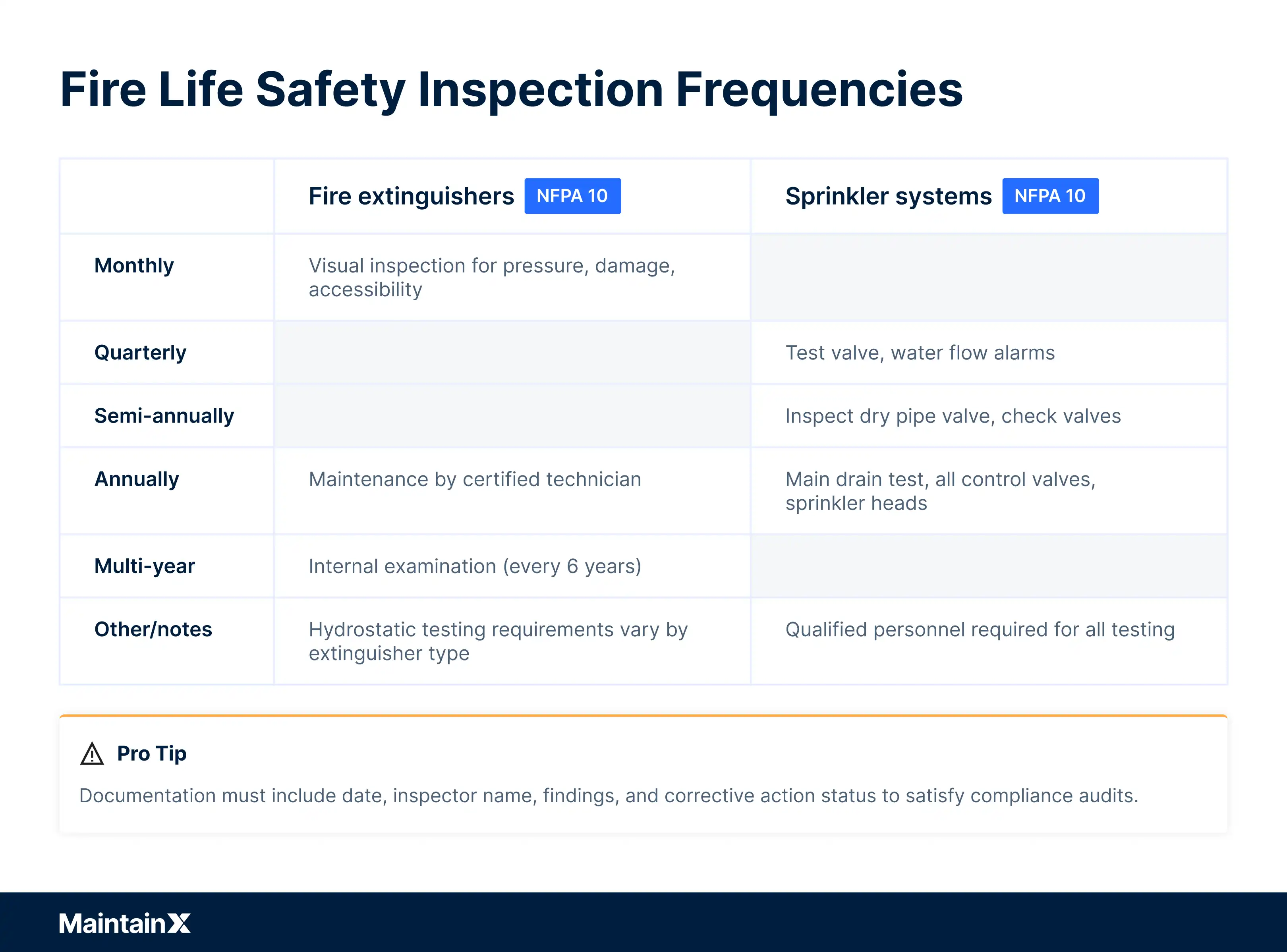
Monthly fire life safety tasks typically include visual fire extinguisher checks and emergency lighting spot tests. Quarterly requirements often cover sprinkler system valve inspections and fire pump testing. Semi-annual cycles usually address kitchen hood suppression systems. Annual inspections cover fire alarm panel testing, full sprinkler system evaluations, and fire door assemblies.
Multi-year obligations add another layer of scheduling complexity. Five-year internal sprinkler pipe inspections and hydrostatic testing of fire extinguishers are easy to overlook because they fall outside routine schedules, but they shouldn’t be missed.
Mapping these different maintenance cadences into a single facility management calendar view helps facility teams see what's due now, what's approaching, and what carries the steepest consequences for non-compliance. Local jurisdictions may impose additional requirements worth verifying.
What to document when building maintenance inspections find deficiencies
Spotting a deficiency during a walkthrough is only half the job. To ensure the issue is corrected, your documentation should capture the specific condition found, its location, the date and time of discovery, and who identified it. Photos add objective evidence that written descriptions alone can't provide. From there, create a corrective work order that includes the assigned technician, target completion date, and priority level based on compliance stakes.
Once repairs wrap up, closing the loop with documentation matters just as much to prevent issues from recurring. Record what was done, which parts were used, and attach verification photos or test results. A deficiency-to-resolution loop creates a chain of evidence that can help a facility prove due diligence.
How a CMMS closes documentation gaps
Paper logs and spreadsheets create documentation gaps almost by design. Completed checklists and inspections get misfiled, corrective actions lose traceability, and proving compliance months after the fact becomes a scramble.
MaintainX ties inspections directly to work orders, creating an unbroken chain from documentation to resolution. When a technician flags a deficiency on a digital checklist, the system can generate a corrective work order with photos, timestamps, and assigned personnel already attached.
Every action is logged automatically. Facility teams can spend less time on admin and more time on actual maintenance. Recurring inspection schedules trigger on their required cadence, so code-driven tasks with penalty exposure don't slip through the cracks.
See how MaintainX makes facility maintenance easier. Book a tour today:
Facility maintenance checklist FAQs
What does facility maintenance include in a commercial building?
Facility maintenance encompasses HVAC systems, electrical, plumbing, fire safety, structural, and grounds systems. Commercial building maintenance checklists typically address both mandatory compliance tasks (OSHA guardrails, NFPA fire equipment) and operational priorities like energy efficiency and occupant comfort.
How often should facility maintenance inspections be performed?
Inspection frequency varies by system and code requirements. Life safety equipment needs monthly checks, HVAC quarterly reviews, roofing semi-annual inspections, and fire suppression annual testing. Effective maintenance schedules layer these cadences to distribute workload year-round.
What are the most commonly overlooked items on facility maintenance checklists?
Emergency lighting battery tests, roof drain clearance, and fire door functionality often slip through. Generator load tests under capacity frequently get forgotten. Teams also miss documenting corrective actions after finding deficiencies, creating compliance gaps, even when physical work happens.
How do you create an effective preventive maintenance schedule for a facility?
Start by separating code-mandated tasks from operational priorities, then assign realistic frequencies based on manufacturer specs and regulatory minimums. Balance daily, monthly, quarterly, and annual work to prevent seasonal bottlenecks.

The MaintainX team is made up of maintenance and manufacturing experts. They’re here to share industry knowledge, explain product features, and help workers get more done with MaintainX!

.webp)