

When your machine maintenance checklist connects inspection items to specific failure modes, every aspect of the inspection becomes clearer and more actionable for technicians. With a well-ordered checklist, organizations can catch problems early, trigger corrective work orders, and satisfy compliance requirements.
This guide and the following maintenance tips will help you categorize preventive machine inspections and maintenance for clear, streamlined processes. We've based the checklist around OSHA and NFPA 70B standards. However, be sure to check current requirements before proceeding.
Key takeaways
- Maintenance checklists work best when each inspection connects to a specific failure mode, giving technicians the appropriate actions to take
- As equipment ages, machine maintenance frequency should increase, and inspections should focus on checking for corrosion and wear-related issues
- Managing digital checklists in a computerized maintenance management system CMMS lets you route abnormal findings to work order queues based on severity thresholds
How to use this checklist
Customize for your facility
This checklist is meant to be a baseline template for machine maintenance. Adapt inspection frequencies based on your equipment type and operating environment.
High-speed production machines typically require more frequent monitoring than auxiliary equipment, such as HVAC systems, because of high demands on the machinery. Regulatory requirements vary between facilities and machine types as well. For example, food processing facilities need different sanitation checks than metal fabricators, so adjust checklist items in line with these standards.
You should adjust wear component thresholds based on your OEM specifications, operating conditions, and warranties, and add machine-specific items from your equipment manuals to the checklist template. Manufacturing plants running 24/7 shifts need tighter inspection intervals than facilities operating single shifts.
Use a CMMS
Upload this checklist to a computerized maintenance management system (CMMS) to eliminate paper logs and create central, searchable machine maintenance records.
A CMMS will automatically schedule inspections based on calendar dates or real-time operating hours, ensuring a consistent maintenance schedule and reducing missed checks. It can also generate work orders directly from failed inspection items and maintain audit trails for compliance documentation.

Machine maintenance checklist
Daily pre-shift checks
Weekly inspections
Monthly preventive maintenance
Quarterly service and testing
Annual overhaul and certification
Safety systems and guarding
Monitoring and escalation triggers
Documentation and compliance
This checklist is to be used only by those with appropriate training, expertise, and professional judgment. You are solely responsible for reviewing this checklist to ensure that it meets all professional standards and legal requirements, as well as your needs and intent.
How to turn preventive maintenance checklist findings into corrective work orders
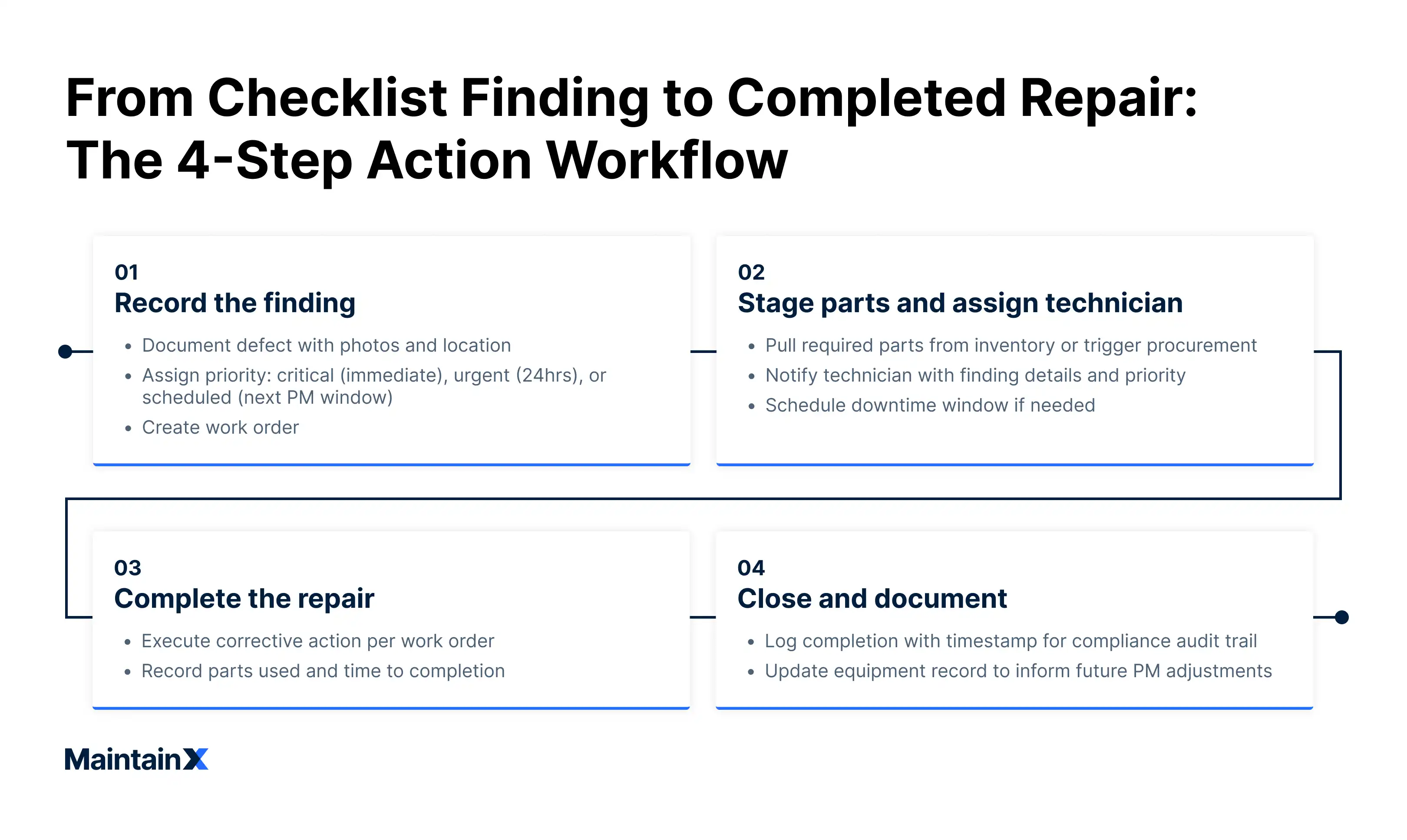
When each inspection item maps to a specific failure mode, maintenance teams can identify exactly which steps to take to resolve the problem. For example, a vibration reading outside tolerance on a spindle motor points to bearing wear. That finding should then generate a corrective work order with the right priority, parts, and craft assignment already attached.
Minor deviations, such as a slight drop in coolant, might warrant a scheduled follow-up, while readings that suggest imminent failure call for immediate intervention. Pre-defined response workflows remove guesswork and keep technicians focused on fixes rather than decision trees.
This approach turns every inspection into a diagnostic event that feeds the broader equipment maintenance and asset management strategy.
How age changes your machine maintenance checklist priorities
Early in a machine's life, inspections tend to focus on installation-related issues: alignment, fastener torque, and calibration drift. As operating hours accumulate, failure modes shift toward wear-driven concerns like seal degradation, bearing fatigue, and electrical insulation breakdown.
Regular inspections can catch early warning signs of potential equipment failure, preventing costly breakdowns. You should adjust inspection frequency and focus based on the machine’s age and historical failure data, prioritizing components or systems that have experienced issues in the past. For instance, a machine with three gearbox repairs in two years deserves closer lubrication checks than one with a clean record.
Use historical checklist data to support continuous improvement, identify patterns, and refine maintenance processes. This can reduce downtime, maximize uptime, enhance equipment reliability, extend the machine's lifespan, and help allocate resources as equipment ages.
Build OSHA and NFPA compliance into your preventive maintenance plan
Compliance and maintenance often get treated as separate activities, but the inspection tasks that prevent failures overlap heavily with regulatory requirements.
OSHA's lockout/tagout standard (29 CFR 1910.147) requires periodic energy control procedure reviews. A checklist item verifying LOTO point condition during routine inspection satisfies that requirement while also catching damaged isolation devices before they cause harm. NFPA 70B recommends thermographic surveys and insulation resistance testing on electrical systems. These same checks detect failure modes like loose connections and degraded wiring.
Machine guarding inspections work the same way. Checking guard integrity and overall functionality isn't just a compliance checkbox; it’s a preventive maintenance task. Missing or damaged guards indicate impact events or unauthorized removal, both signs of deeper operational issues.
Note: This content is provided for general informational purposes only and does not constitute legal, regulatory, or professional compliance advice.
Why use a CMMS for machine maintenance checklists?
Paper checklists and spreadsheets capture a snapshot of machine maintenance. MaintainX connects that snapshot to all the tasks that came before and action items that happen next, supporting a structured preventive maintenance program.
When a technician logs a finding against a specific failure mode, MaintainX links it to that asset's full history. Over time, patterns emerge, such as recurring overheating on the same motor or repeated hydraulic leaks at a particular fitting.
Based on these trends, organizations can respond proactively to pursue continuous improvement, optimize maintenance processes, and refine their preventative maintenance program.
To see MaintainX in action, book a tour today.
Machine maintenance checklist FAQs
What should be included in a preventive maintenance checklist?
A comprehensive checklist links each inspection to a specific failure mode and defines the response when issues are found. It should include visual inspections of air filters, operational tests, measurement points, and clear escalation paths that trigger work orders and parts staging.
How often should preventive machine maintenance be performed?
Preventive maintenance frequency depends on a variety of factors, including machine age, operating hours, failure history, and manufacturer recommendations.
For instance, newer equipment may need monthly checks, while older machines with known wear patterns and failure history often require more frequent inspections on a daily or weekly basis, especially for critical components like bearings and seals.
What are OSHA's requirements for a successful preventive maintenance program?
OSHA requires documented lockout/tagout procedures, machine guarding inspections, and maintenance records proving compliance with energy control standards. Regular preventive maintenance checklists that capture LOTO verification and guard condition checks satisfy these documentation requirements.
Note: This is a general informational summary only and does not constitute legal, regulatory, or compliance advice. Consult a licensed machinery inspector, qualified machine contractor, or legal counsel to determine the specific obligations applicable to your jurisdiction and equipment.
How do you safely perform preventive maintenance tasks on energized equipment?
Never perform maintenance on energized equipment unless absolutely required. Follow your facility's lockout/tagout procedures: Isolate all energy sources, verify zero energy with testing instruments, and use proper PPE.
How should heavy equipment maintenance checklists differ for different types of industrial machinery?
Tailor checklists to each machine type's failure modes and operating environment. High-speed rotating equipment needs vibration and temperature checks, while hydraulic systems require pressure tests, inspection of hoses, and leak inspections. Extended operating hours and high production demands also increase the needed inspection frequency.

The MaintainX team is made up of maintenance and manufacturing experts. They’re here to share industry knowledge, explain product features, and help workers get more done with MaintainX!





.webp)