

A good industrial preventive maintenance checklist connects your maintenance workflows to the specific regulations driving them.
That distinction matters when resources are tight. Knowing whether an inspection is OSHA-mandated, NFPA-required, or simply a best practice helps you make smarter prioritization calls and gives your team a cleaner paper trail when auditors come knocking.
This industrial preventive maintenance checklist template walks you through the relevant tasks for your facility. Be sure to verify current OSHA and NFPA requirements before you put it to work.
Key takeaways
- Distinguishing between regulatory requirements and voluntary best practices helps maintenance teams allocate resources based on compliance risk
- Condition-based assessment methods allow facilities to set PM intervals based on actual equipment health and criticality, instead of relying on arbitrary maintenance schedules
- Storing digital checklists in a computerized maintenance management system (CMMS) transforms documentation from administrative overhead into compliance insurance
How to use this checklist
Customize for your facility
This checklist covers common industrial preventive tasks, but facilities vary widely. Add or remove items based on your equipment types, production processes, and regulatory requirements. For example, heavy manufacturing plants may need more frequent bearing inspections, while food processing facilities require additional sanitation checks.
Start with the basics we’ve included here and adjust accordingly.
Use a CMMS
A CMMS replaces paper checklists with mobile workflows that capture evidence and track completion trends, creating centralized records and driving operational efficiency.
Technicians complete inspections on tablets or phones and add photos and meter readings in real time. The system generates audit trails, monitors compliance rates, and identifies recurring deficiencies. Automated scheduling ensures tasks don't slip between shifts, while historical maintenance data helps improve inspection frequencies and justify equipment replacement decisions.


Industrial preventive maintenance checklist
Production equipment and machinery
Electrical systems and power distribution
HVAC and building mechanical systems
Fire protection and life safety
Material handling and conveyance
Compressed air and utility systems
Facility structure and grounds
Documentation and compliance
This checklist is to be used only by those with appropriate training, expertise, and professional judgment. You are solely responsible for reviewing this checklist to ensure that it meets all professional standards and legal requirements, as well as your needs and intent.
How condition-based maintenance plans extend equipment lifespan, reduce downtime, and simplify regulatory compliance
Calendar-based preventive maintenance schedules often default to arbitrary intervals: weekly, monthly, quarterly. NFPA 70B's updated guidance encourages using a condition-based assessment approach, where actual equipment health drives inspection timing.
Plant managers can then balance uptime with resource constraints. For instance, material handling equipment running in a clean, climate-controlled room doesn't need the same attention as one operating in a dusty, high-vibration environment; the latter equipment needs more frequent inspections and maintenance. Condition indicators like thermal readings, vibration trends, and insulation resistance values are the best signals of when intervention is truly needed.
Maintenance teams that adopt condition-based logic tend to catch failures earlier while reducing unnecessary work on healthy equipment, so there are fewer unplanned shutdowns and better allocation of technician hours. Pairing this approach with regulatory requirements ensures that mandated inspections still happen on schedule, even as voluntary checks adapt around real-world conditions.
How to determine escalation criteria for checklist findings
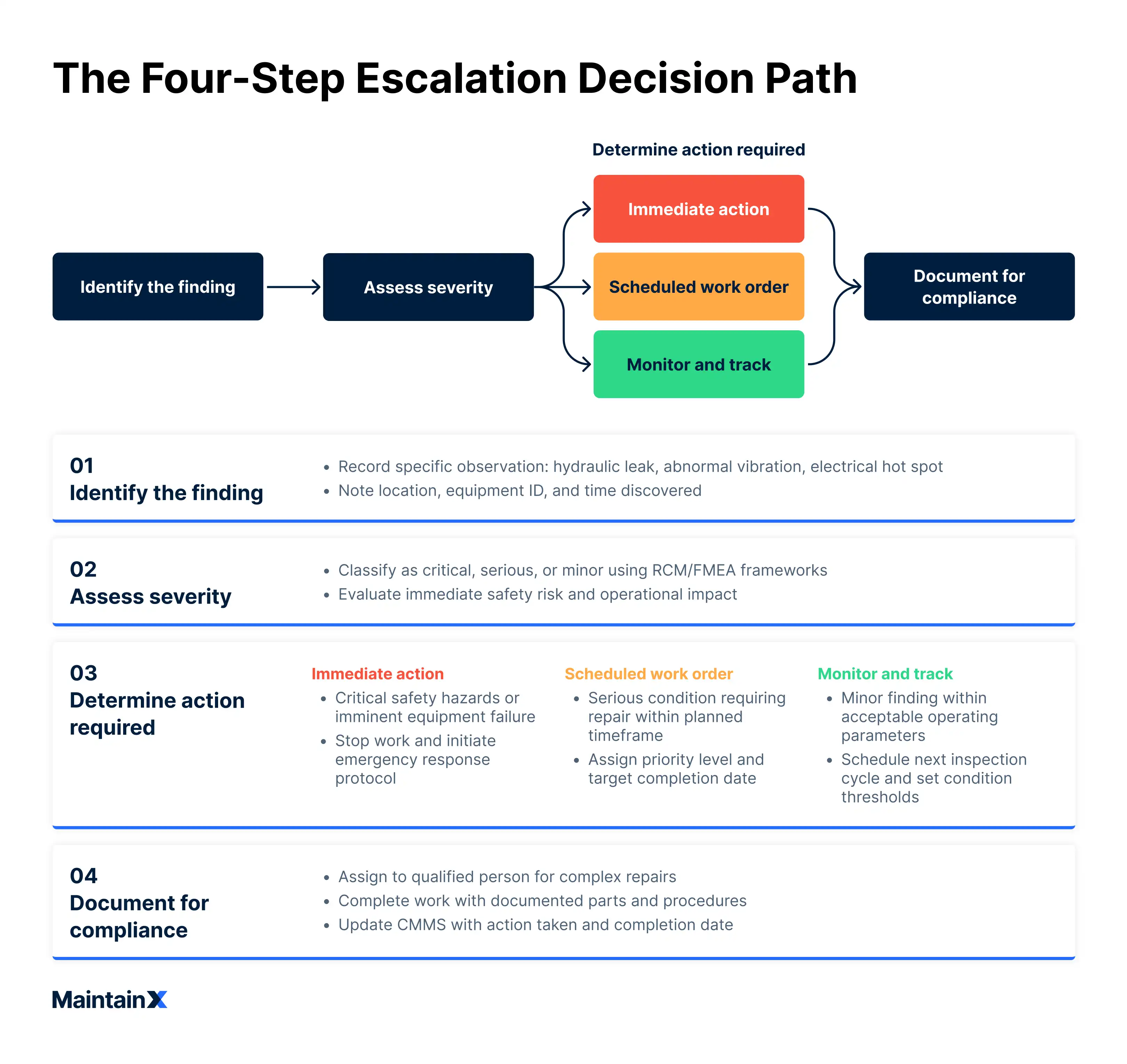
A maintenance checklist that only looks for “pass or fail” requirements leaves too much to interpretation. Effective escalation criteria should define what counts as a finding, how severe it is, and what happens next.
Experienced plant managers typically classify findings into three tiers:
- Minor issues get logged for the next scheduled maintenance window
- Moderate findings trigger a work order within a defined timeframe
- Critical findings require immediate shutdown or lockout until corrective action is complete.
Regulatory context shapes these tiers. An OSHA-mandated guard found missing on a conveyor is automatically critical, not a judgment call. A slightly elevated vibration reading on a non-critical pump might be minor.
Mapping each checklist item to its regulatory driver ahead of time removes ambiguity in the field so technicians spend less time debating severity and more time acting on it.
The hidden cost of a paper-based preventative maintenance program
Paper checklists get the job done until an auditor asks for proof, or supervisors face unplanned downtime due to facility issues.
OSHA and NFPA inspectors expect specific documentation: inspector identification, equipment serial numbers, timestamped findings, and records of corrective actions. Pulling that evidence from filing cabinets or binders full of handwritten notes is slow and error-prone. For plants where PM tasks carry OSHA or NFPA mandates, the gap between “done” and “documented” represents real liability.
Beyond audit readiness, paper creates operational blind spots. Supervisors can't track completion rates in real time. Trends across equipment failures or worker shifts stay invisible until a breakdown forces a retroactive review, unplanned downtime, and costly repairs. Illegible entries and missing forms erode the very clarity the inspection checklist should build.
A digitized CMMS streamlines inspections and centralizes historical data. Plant managers can collect proof of compliance in minutes and stay informed of equipment needs for more streamlined repairs and improved equipment uptime.
Go digital with a mobile-friendly CMMS
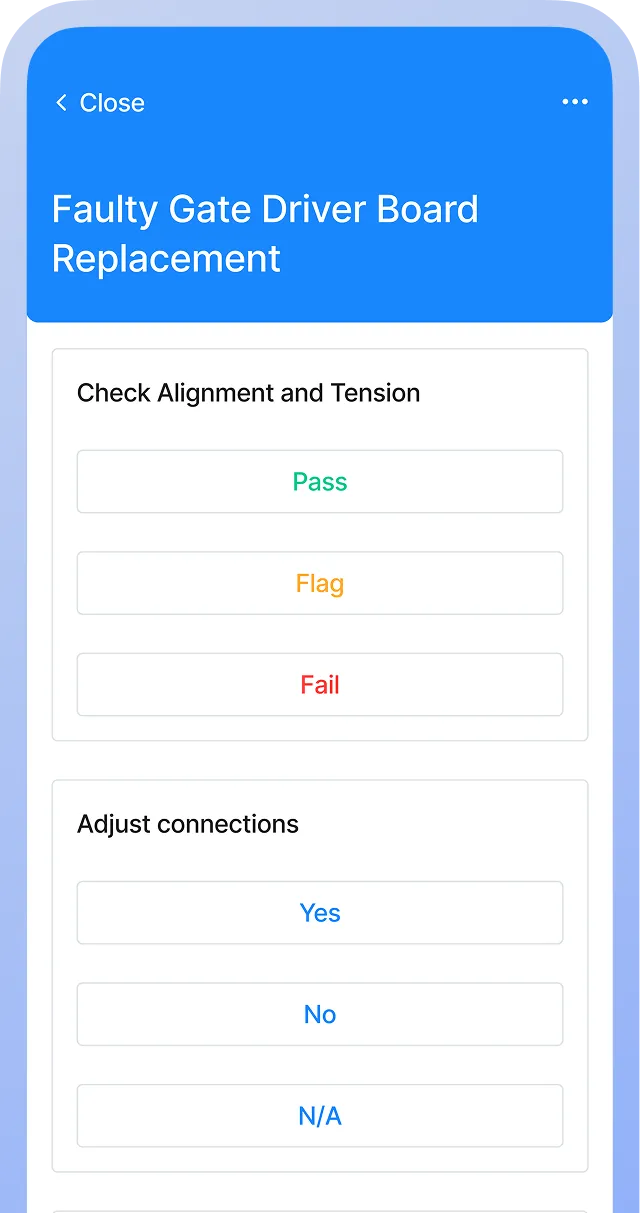
MaintainX turns static industrial preventive maintenance checklists into connected workflows. Technicians complete inspections on a mobile device, and every entry is automatically timestamped with the inspector's ID and the equipment's asset record to match the documentation OSHA and NFPA auditors look for.
Digital checklists also support the escalation logic plant managers build into their preventive maintenance programs. A critical finding can automatically generate a priority work order, notify the right supervisor, and attach photos from the field. Nothing falls through the cracks between inspection and corrective action.
Organize regulatory and voluntary tasks in one platform and optimize equipment operation with MaintainX. Book a tour today.
Industrial preventive maintenance checklist FAQs
What OSHA requirements apply to industrial preventive maintenance programs?
OSHA 1910.147 mandates lockout/tagout procedures, while 1910.212 requires machine guarding inspections. Specific requirements vary by industry segment, most typically require documented inspections, prompt hazard corrections, and employee training records to demonstrate compliance during audits.
Note: This is a general informational summary only and does not constitute legal, regulatory, or compliance advice. Consult a licensed technician, qualified contractor, or legal counsel to determine the specific obligations applicable to your jurisdiction and equipment.
How do you create the ultimate preventive maintenance checklist for manufacturing equipment?
Map each inspection task to its regulatory driver, whether OSHA, NFPA, or manufacturer requirements. Apply condition-based frequency logic rather than arbitrary schedules, and define clear escalation paths that specify what findings trigger work orders versus immediate shutdowns.
To ensure all necessary tasks are included and standardized, use a preventive maintenance checklist template, like the above, that can be customized for your facility’s needs.
What's the difference between preventive maintenance and predictive maintenance tasks?
Preventive maintenance follows fixed schedules (like weekly bearing lubrication and monthly filter changes) regardless of equipment condition. Predictive maintenance uses real-time data from sensors, vibration analysis, or thermography to schedule interventions only when indicators show developing problems.
How does ISO 55000 asset management integrate with preventive maintenance programs?
ISO 55000 provides the framework for risk-based decision-making that determines maintenance intervals and resource allocation. Through lifecycle cost analysis, performance metrics, and documentation systems, it links maintenance activities to strategic asset objectives.

The MaintainX team is made up of maintenance and manufacturing experts. They’re here to share industry knowledge, explain product features, and help workers get more done with MaintainX!




.webp)