
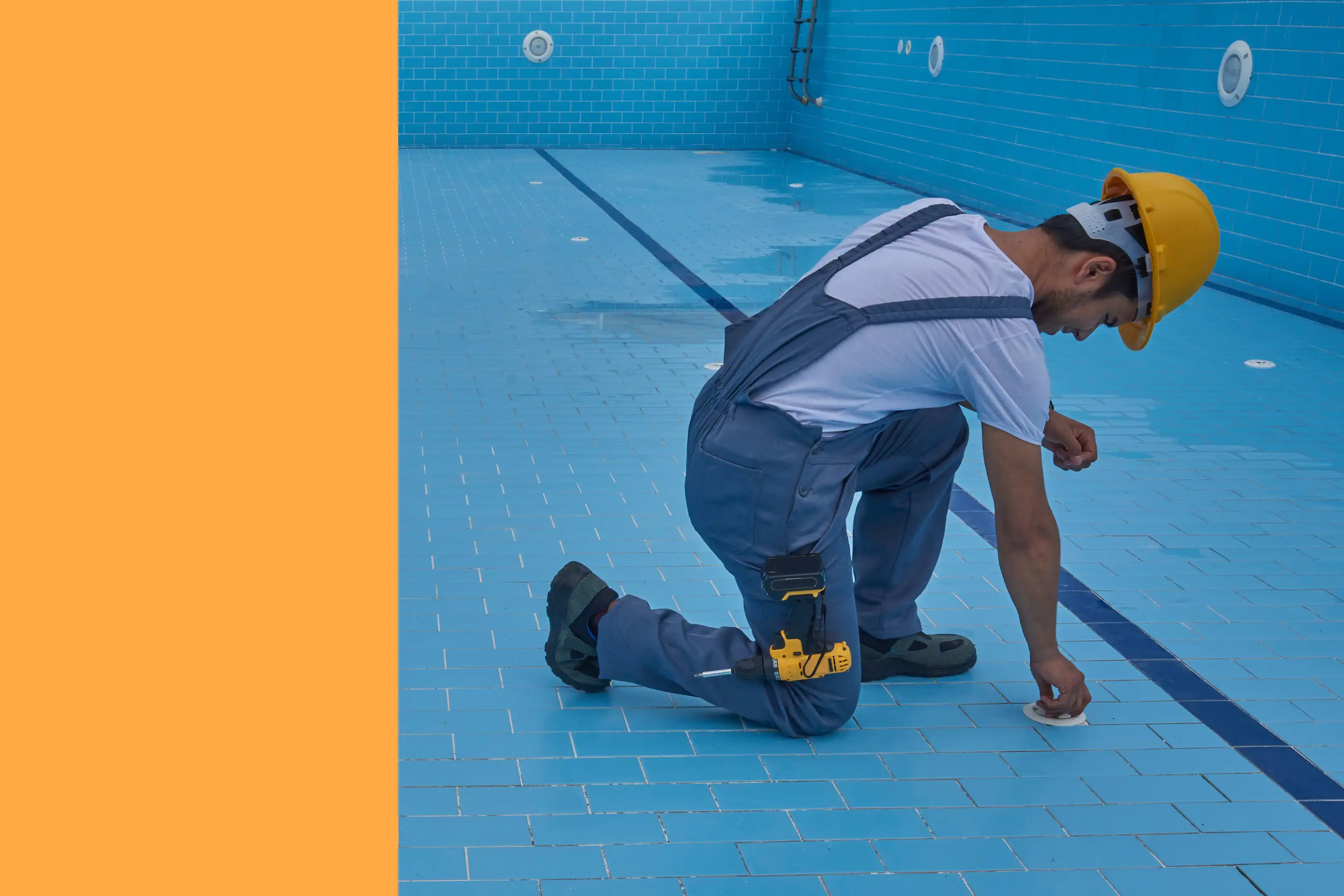
Keeping the water clean is only part of commercial pool maintenance. Chemistry testing, cleaning, and equipment repairs all help maintain a safe, comfortable environment for guests.
A thorough pool maintenance plan keeps these processes streamlined and organized. This guide provides a step-by-step checklist built around the regulatory requirements and best practices for keeping your pool facility safe and operational.
Key takeaways
- Health inspectors typically required dated, signed logs as evidence of ongoing pool maintenance
- Daily verification of safety and accessibility features is critical for meeting Federal VGB Act requirements
- Digital checklists in a computerized maintenance management system (CMMS) create an essential audit trail for commercial pool operators
How to use this checklist
Customize for your facility
This checklist covers requirements common to most commercial swimming pools, but pool owners should tailor their maintenance routine to their facility’s specific needs and environment. For example, indoor and outdoor pools require different chemical management. Spas and water features typically need more frequent testing, and facilities with higher occupancy limits often need more frequent testing and filtration checks.
Consider your pool type, equipment configuration, and regulatory environment when setting inspection frequencies. State and local health codes also vary significantly, so cross-reference your jurisdiction's operating permit requirements.
Use a CMMS
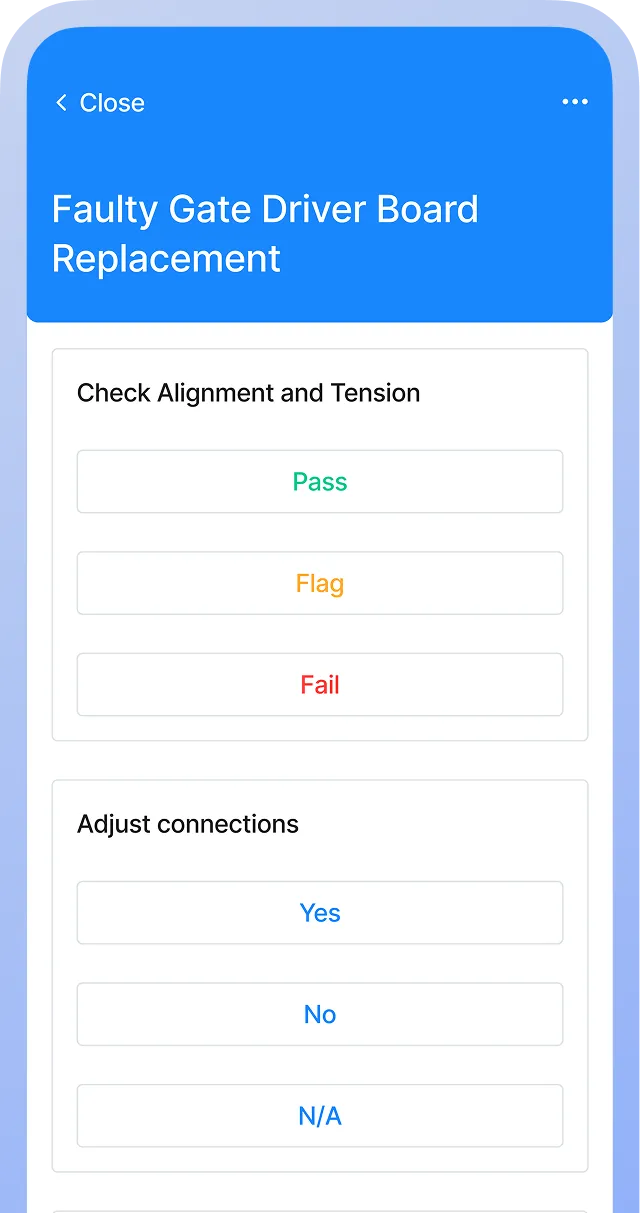
Upload this checklist to a CMMS to keep centralized records of commercial pool inspections and maintenance. A mobile CMMS provides photo documentation, automatic work order generation, and timestamped audit trails that simplify health department inspections.
Digital checklists also help reduce compliance risk by preventing missed tests and documenting corrective actions. Within a digital system, you can keep chemistry logs, drain cover dates, and operator certifications organized in one searchable record.


Pool maintenance checklist
Water chemistry testing
Chemical equipment inspection
Filtration and circulation systems
Drains and entrapment prevention
Chemical storage and handling
Pool structure, surfaces, and deck
Safety, accessibility, and emergency equipment
Documentation and compliance
This checklist is to be used only by those with appropriate training, expertise, and professional judgment. You are solely responsible for reviewing this checklist to ensure that it meets all professional standards and legal requirements, as well as your needs and intent.
How to prepare for a commercial pool health inspection
Health inspectors review your records just as closely as they test the water. They often request a dated, signed maintenance log first, and incomplete documentation can trigger a deeper investigation of the entire facility.
Begin preparation 30 days before a scheduled inspection. Facility managers should gather chemical testing logs, equipment service records, and incident reports into a single compliance file. Missing entries from even a few days can raise red flags.
Beyond compiling paperwork, you should complete a walkthrough from the inspector's perspective to try to catch overlooked issues. VGB-compliant drain covers, functional ADA pool lifts, posted safety signage, and accessible emergency equipment all fall within the typical inspection scope, and failure in any of these areas carries potential closure authority.
Note: this content is provided for general informational purposes only and does not constitute legal, regulatory, or professional compliance advice. Inspection requirements vary by jurisdiction and are subject to change; consult your local health authority or a qualified aquatics compliance professional to confirm the specific standards applicable to your facility.
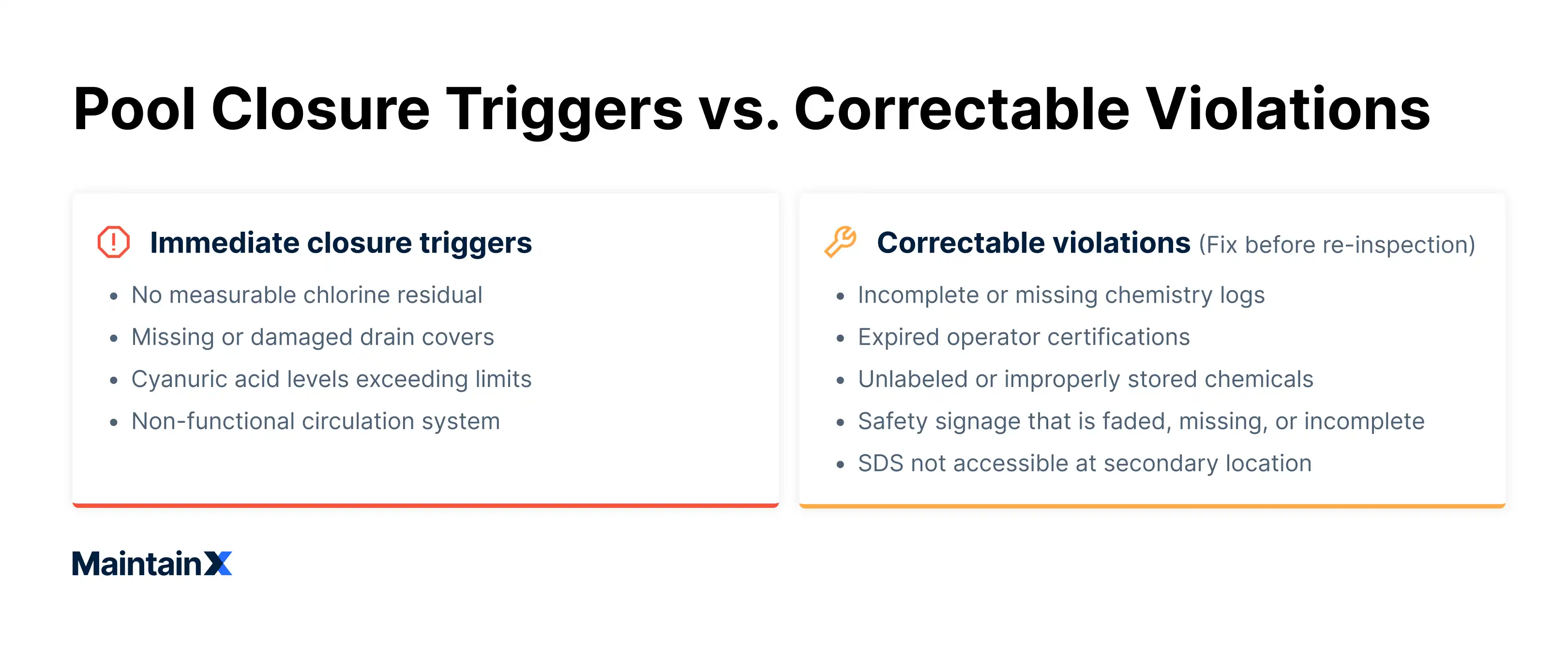
Common pool care violations that trigger closures
Immediate closure triggers generally fall into one of three categories:
- Unsafe water chemistry, for example, free chlorine levels outside the acceptable range
- Missing safety equipment, like an inaccessible rescue device
- Broken or non-compliant drain systems, such as a non-functional VGB drain cover
Less obvious violations can also lead to closures. For instance, inspectors typically consider unlocked chemical storage rooms, expired test reagents, and gaps in contamination response logs as systemic maintenance failures and closure triggers.
Critically, most closures stem from documentation gaps rather than genuinely hazardous conditions. A pool might be perfectly safe, but without a signed, dated record proving it, an inspector has grounds to close the facility.
Chemical storage compliance: OSHA requirements for commercial pools
OSHA typically requires that hazardous chemicals like calcium hypochlorite and muriatic acid stay in separate, ventilated storage areas. Mixing these chemicals, even through fume contact in a shared closet, can produce toxic chlorine gas.
Compliant storage areas need clear labeling, safety data sheets within arm's reach, ventilation, and secondary containment for liquid chemicals. Eye wash stations and appropriate PPE must stay accessible at the point of use, not in a back office. (OSHA requirements change routinely, so check these standards frequently to maintain compliance.)
Keep your pool inspection-ready year-round with a CMMS
MaintainX turns recurring pool maintenance tasks into scheduled, trackable workflows with built-in documentation that keeps your facility safe and swim-ready for everyone.
And for pool owners managing facilities across multiple locations, a CMMS brings standardization that spreadsheets can't match. Operators can ensure that every site follows the same checklist, the same frequency, and the same documentation standards. When an inspector arrives at any property, the records are consistent and complete.
Use MaintainX to build the kind of maintenance culture where inspection day feels routine, rather than stressful. Book a tour today.
Pool maintenance checklist FAQs
How often should commercial pool water chemistry be tested?
Perform water testing at least twice daily during operating hours to check pool water chemistry, and conduct additional tests after heavy use or weather events.
Health codes require documented pH, chlorine, alkalinity, and cyanuric acid readings. Incomplete logs give inspectors grounds for immediate closure.
What VGB Act compliance requirements apply to pool drain covers?
VGB Act requires anti-entrapment drain covers rated for your pool type, installed within the past five years, and certified compliant. Inspectors verify covers are intact, secured, and not cracked or missing. Non-compliant drains trigger immediate closure until corrected.
Note: This is a general informational summary only and does not constitute legal, regulatory, or compliance advice. Consult a licensed pool contractor or legal counsel to determine the specific obligations applicable to your jurisdiction and facility.
What should be included in a weekly pool maintenance checklist?
Weekly checklists should cover backwashing filters, inspecting VGB drain covers, testing ADA lift functionality, verifying emergency equipment placement, and checking chemical storage compliance. Health inspectors evaluate documentation across all systems when determining operating standards.
What is the proper way to store pool chemicals safely?
Store chemicals in ventilated, locked areas with secondary containment, separated by compatibility groups. OSHA requires accessible Safety Data Sheets, correct container labeling, and eyewash stations within 10 seconds of storage areas. Violations warrant citations and potential closure.

The MaintainX team is made up of maintenance and manufacturing experts. They’re here to share industry knowledge, explain product features, and help workers get more done with MaintainX!



.webp)