
A transformer maintenance checklist does more than confirm tasks are complete. When each inspection finding triggers a clear next action, whether that's a retest interval, an oil sample, or an outage request, the checklist becomes a decision-making tool that catches developing faults before they become outages or safety incidents.
On this page, you'll find a downloadable transformer maintenance checklist PDF that you can print out and use, or import into a computerized maintenance management system (CMMS). Read on for details.
Key takeaways
- Transformer test results become actionable when abnormal findings, such as elevated dissolved gas analysis readings or declining insulation resistance, trigger compressed inspection intervals rather than simply logging the data and waiting for the next scheduled cycle.
- Recording transformer test data in a CMMS enables baseline comparison and trending analysis that reveal developing failure modes, turning individual oil samples or resistance measurements into early warning indicators.
- Deferred transformer maintenance can invalidate arc flash calculations and alter incident energy levels, requiring reassessment of PPE requirements and potentially creating NFPA 70E compliance gaps.
How to use this checklist
Customize for your facility
Adapt this transformer maintenance checklist to match your specific transformer types. Distribution, power transformer, dry-type transformer, and oil-filled units each have unique inspection needs. Adjust maintenance intervals based on transformer criticality, age, operating conditions, and manufacturer specifications. Facilities in harsh environments or running at high loads typically increase inspection frequency.
Use a CMMS
Digitizing this checklist in a CMMS helps maintain a consistent maintenance history and establish audit trails for regulatory compliance. Automated scheduling ensures critical tests like dissolved gas analysis occur at correct intervals without manual tracking.


Pre-maintenance safety and preparation
Visual and physical inspection
Insulating oil and fluid analysis
Cooling and ventilation systems
Bushings, connections, and tap changer
Protection and monitoring devices
Electrical testing and diagnostics
Documentation and compliance
This checklist is to be used only by those with appropriate training, expertise, and professional judgment. You are solely responsible for reviewing this checklist to ensure that it meets all professional standards and legal requirements, as well as your needs and intent.
How NFPA 70B condition tiers determine transformer inspection frequency
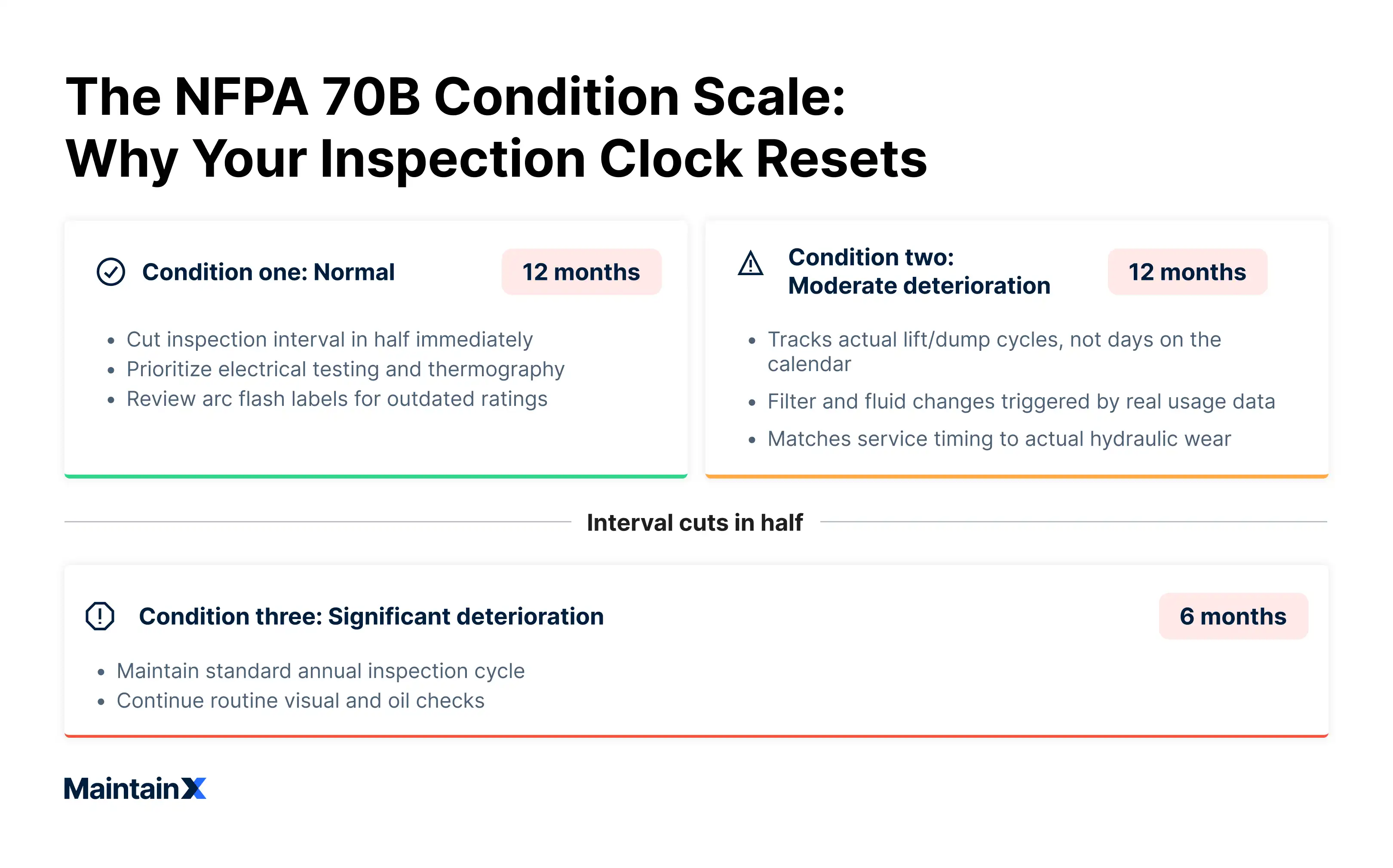
NFPA 70B groups electrical equipment into three condition tiers based on observed health. A transformer in good condition earns longer maintenance intervals. One showing signs of degradation gets compressed schedules and closer scrutiny.
Inspection frequency isn't arbitrary. Previous test results drive the schedule. A power transformer with rising dissolved gas analysis readings or declining insulation resistance moves into a higher-risk tier, triggering more frequent testing and shorter review cycles.
The system rewards well-maintained equipment with less intervention, and flags troubled assets before they fail. Facilities that adopt this framework concentrate resources where risk is highest rather than spreading effort evenly across healthy and degraded units. Each inspection result feeds the next scheduling decision, creating a maintenance rhythm tied to actual equipment condition.
Note: This is a general informational summary only and does not constitute legal, regulatory, or compliance advice. Regulatory requirements for transformer maintenance vary by jurisdiction, equipment type, and operating environment.
Connect visual inspection findings to electrical testing priorities
A visual inspection often reveals the first signs of trouble: Oil leaks on the transformer housing, paint condition changes near cooling fins, or abnormal conditions around the main tank all point toward specific internal issues worth investigating.
These findings should shape what happens next. Oil leaks around gaskets warrant dissolved gas analysis sooner rather than later. Discoloration near bolted connections suggests hot spots that thermal scanning can confirm. A cracked bushing insulator calls for insulation resistance testing before the transformer returns to full load.
Visual checks are the front line of a diagnostic chain. Treating them as isolated pass/fail items misses their real value. When maintenance teams document exactly what they see and route abnormal findings to the right follow-up actions, they can catch developing faults before they lead to failure.
Pre-maintenance safety considerations for transformers in degraded condition
Working on a power transformer that's already showing signs of degradation carries elevated risk. Compromised insulation condition, partial discharge activity, or abnormal dissolved gas analysis results can all increase incident energy levels, changing the safety equation before anyone picks up a tool.
Arc flash analyses depend on accurate equipment condition data. A transformer with deteriorating internals may present higher fault current potential than its last study assumed. Maintenance personnel who skip this reassessment may start the job with insufficient PPE or work at insufficient boundaries, potentially creating an NFPA 70E compliance gap.
Before performing hands-on maintenance tasks, review the most recent test results and visual inspection notes. Verify that arc flash labels still reflect current conditions. If the transformer's health has declined since the last analysis, updating the study before work begins protects both personnel and regulatory standing.
Why log transformer maintenance in a CMMS?
MaintainX stores every inspection result, test measurement, and corrective action in one searchable maintenance history. Over time, this record becomes the foundation for condition-based scheduling. Maintenance teams can compare current transformer oil quality against baseline values, track insulation resistance trends across seasons, and document exactly when a unit shifted from good to degraded status.
Without centralized records, each maintenance event exists in isolation. With them, facility teams build the data-driven case for capital planning, justify budget requests with real performance trends, and maintain the documentation trail that NFPA 70B assessments typically require.
Keep your transformer maintenance program on track with MaintainX. Book a tour today.
Transformer maintenance checklist FAQs
What should a comprehensive transformer maintenance checklist include?
A complete transformer maintenance checklist should cover all critical systems and inspection points:
- Visual inspection: Check for oil leaks, paint condition, moisture ingress, corrosion, and abnormal conditions on the main tank, bushings, and enclosure integrity.
- Transformer oil: Collect samples for dissolved gas analysis, test dielectric strength and moisture content, and compare readings against baseline values.
- Insulation condition: Perform insulation resistance and power factor tests on all windings and record results for trending analysis.
- Cooling systems: Verify fan operation, inspect radiator fins, and confirm temperature monitoring devices are calibrated.
- Protection devices: Test pressure relief device operation, verify control circuits, and confirm trip setpoints match manufacturer specifications.
- Electrical testing: Conduct winding resistance, ratio test, and thermal scanning on bolted connections and tank surfaces.
Each task generates data that determines whether you extend maintenance intervals or accelerate follow-up inspections.
How often should transformer maintenance be performed according to industry standards?
NFPA 70B defines condition-based intervals: monthly for critical transformers, quarterly for normal operating conditions, and annually for non-essential assets. IEEE standards provide additional guidance on specific testing requirements by voltage class and equipment type. Actual frequency depends on trending analysis from dissolved gas analysis, thermal scanning, and load profiles rather than fixed schedules alone.
What is the 80% rule for transformers, and how does it affect maintenance scheduling?
The 80% rule states that transformers operating above 80% of nameplate capacity experience accelerated insulation breakdown and require more frequent inspections. Loading beyond this threshold compresses maintenance intervals and demands closer monitoring of temperature readings and cooling performance.
What safety precautions must be followed during routine transformer maintenance tasks?
De-energize equipment and verify zero voltage before work begins. Confirm current arc flash labels match system conditions, wear appropriate PPE per NFPA 70E, establish exclusion boundaries, and follow lockout/tagout procedures. Outdated assessments on oil-filled or dry-type transformers can invalidate arc flash calculations and put maintenance personnel at risk.
Note: This is a general informational summary only and does not constitute safety, legal, or compliance advice. Always follow applicable NFPA 70B and NFPA 70E standards, IEEE standards, manufacturer specifications, and your facility's own safety protocols. Consult a licensed electrical professional or qualified safety expert to determine the specific requirements for your equipment and jurisdiction.
How do you perform a visual inspection of a power transformer?
Examine bushings for cracks and discoloration, check transformer oil levels and inspect for oil leaks, verify silica gel breather condition and moisture content indicators, inspect cooling fans and radiators, and scan for corrosion on the main tank and bolted connections. Compare temperature readings against baseline values and check paint condition for signs of overheating. Any gradual changes or deviations from normal appearance should trigger dissolved gas analysis or thermal scanning follow-up before the next scheduled maintenance cycle.

Marc Cousineau is the Senior Content Marketing Manager at MaintainX. Marc has over a decade of experience telling stories for technology brands, including more than five years writing about the maintenance and asset management industry.


.webp)