
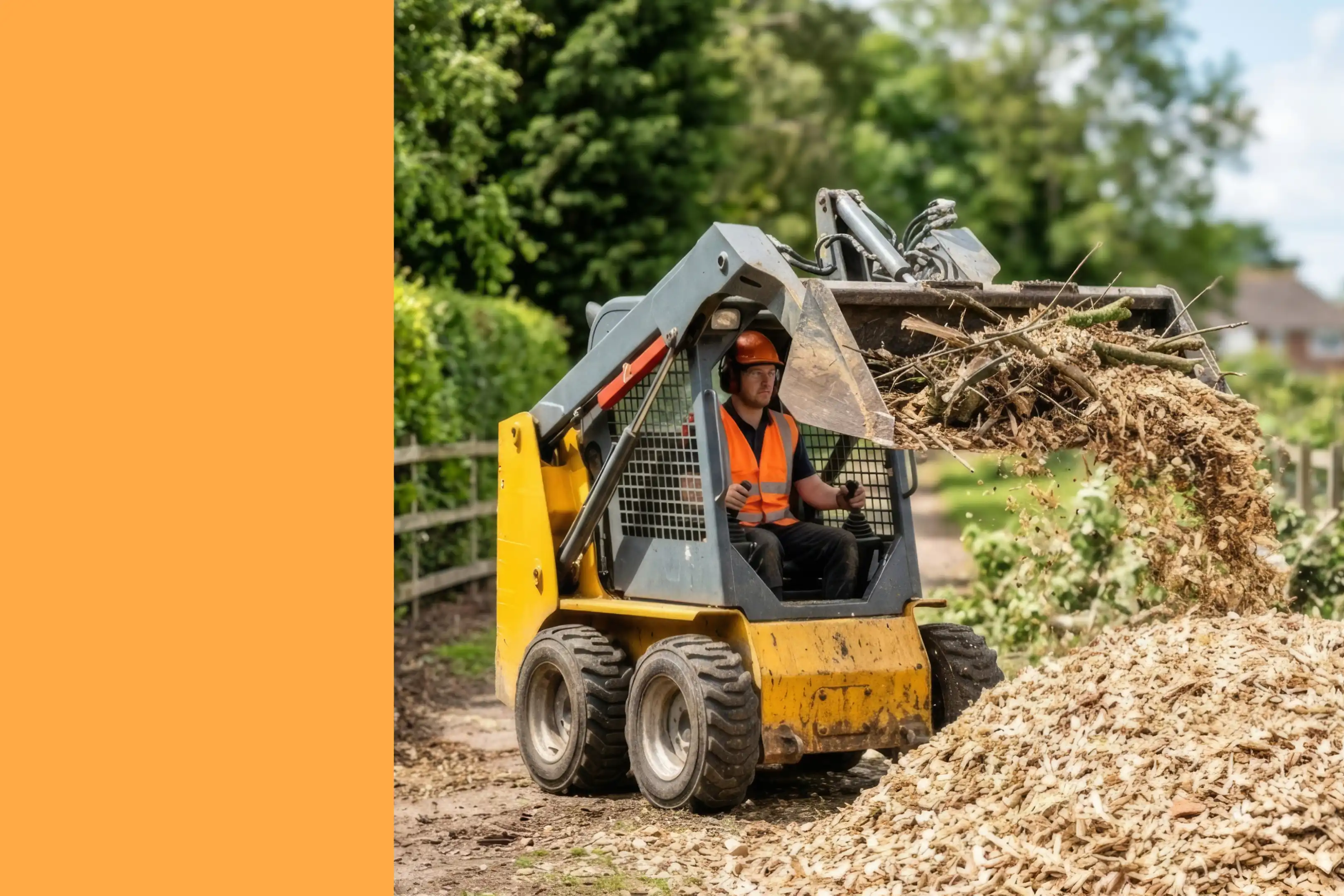
A structured skid steer maintenance checklist connects daily inspection findings to smarter preventive maintenance decisions. This guide includes a downloadable checklist that covers daily, weekly, and monthly operator checks, hour-based PM intervals, and major annual service requirements.
Key takeaways
- Skid steer hydraulic systems create the highest failure risk because they cycle pressure at 3,000+ PSI under rapid, variable attachment loads more intensely than comparable equipment.
- Connecting daily operator observations to PM schedules, rather than relying solely on hour meters, helps maintenance teams address developing issues before they cascade into costly repairs.
- Documenting inspections consistently in a computerized maintenance management system (CMMS) reveals patterns by attachment category and operating environment that enable predictive maintenance decisions rather than reactive repairs.
How to use this checklist
Customize for your facility
Use this checklist as a baseline and adapt inspection intervals for your operating conditions and attachment mix. Construction sites with high-flow attachments typically require more frequent hydraulic checks than basic bucket work. Quarry operations often halve standard service hours. Verify all customizations align with manufacturer recommendations and job site safety requirements.
Use a CMMS
A CMMS automates service alerts, captures hour readings automatically, and maintains complete repair history across your skid steer fleet. Most facilities using digital checklists see better PM compliance and faster defect resolution than those using paper-based checklists.


Skid steer maintenance checklist
Pre-operation and startup checks
Weekly inspection
250-hour service
500-hour service
1,000-hour major service
Seasonal and environmental adjustments
Documentation and compliance
This checklist is to be used only by those with appropriate training, expertise, and professional judgment. You are solely responsible for reviewing this checklist to ensure that it meets all professional standards and legal requirements, as well as your needs and intent.
How skid steer attachments affect your maintenance schedule
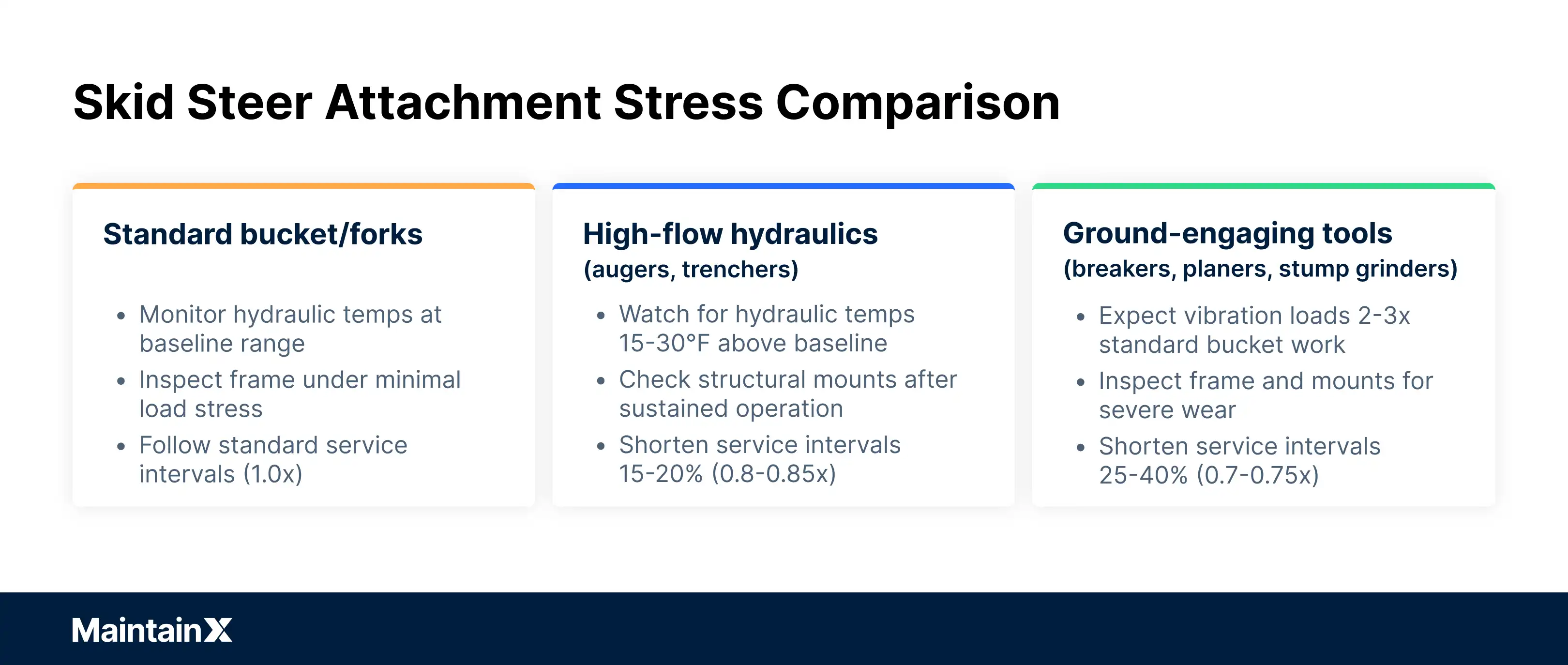
Not all skid steer hours are equal. A machine running a high-flow mulcher cycles hydraulic fluid at far greater intensity than one pushing a bucket. That difference matters for maintenance intervals.
Attachments generally fall into three categories: high-flow hydraulic (mulchers, cold planers), ground-engaging (augers, trenchers), and lifting (pallet forks, grapples). Each stresses different components. High-flow attachments accelerate hydraulic fluid degradation and hose wear. Ground-engaging tools increase drivetrain load and vibration. Lifting attachments put more strain on the lift arms and pivot pins.
Experienced operators and maintenance teams adjust PM intervals based on primary attachment use rather than relying solely on hour meters. A skid steer running a breaker for 200 hours may need hydraulic service sooner than one that spent 300 hours on grading work.
When should inspection findings trigger immediate maintenance?
Daily walkarounds serve as the earliest warning system for failure.
Certain findings should pull a machine from service right away. Hydraulic hose abrasion near attachment couplers, spongy auxiliary controls, and metallic particles in the hydraulic reservoir all point to problems that escalate quickly at 3,000+ PSI. A slow leak at morning inspection can become a blown hose by afternoon.
Other findings call for accelerated PM rather than immediate shutdown: Slight play in pivot pins, minor coolant seepage, or early track wear are worth documenting and scheduling rather than ignoring until the next service interval.
Anything involving the hydraulic system under pressure warrants urgency. Most other findings allow a measured response.
Environmental conditions that accelerate skid steer wear
Teams working in harsh environments typically shorten filter replacement intervals and increase greasing frequency rather than waiting for standard PM milestones.
Dusty demolition sites clog air filters and hydraulic filters faster than paved job sites. Cold weather thickens hydraulic fluid and strains the engine cooling system and batteries. Wet, muddy conditions accelerate undercarriage corrosion and wash grease from pivot points, so pay special attention to those areas during regular inspections.
Seasonal shifts deserve attention, too. Hydraulic hoses that performed fine in summer heat may crack when temperatures drop, and transitions between seasons often reveal issues that stayed hidden during stable conditions.
Simplify skid steer maintenance with a CMMS
MaintainX turns daily inspection data into operational intelligence. When operators log findings digitally, maintenance managers can spot trends across machines, job sites, and time periods. That visibility transforms reactive repairs into informed scheduling decisions.
See how MaintainX makes fleet management easy. Book a tour today.
Skid steer maintenance checklist FAQs
What should a skid steer maintenance checklist include?
A complete skid steer maintenance checklist should cover all essential systems across daily, weekly, and hour-based intervals:
- Daily checks: Check hydraulic fluid levels, engine oil, coolant, fuel level, air filters, and hydraulic hoses. Inspect tires for cuts and proper inflation, lift arms, pivot pins, seat belts, and safety features.
- Weekly inspections: Grease all moving parts, clean debris from the radiator and undercarriage, inspect track tension, check fuel filter and hydraulic hose routing for wear.
- Hour-based service: Change engine oil and filter at 250 hours, replace hydraulic fluid and fuel filter at 500 hours, and flush the full hydraulic system at 1,000 hours.
Regular skid steer maintenance across these intervals protects resale value, reduces downtime, and prevents major problems from developing undetected.
What maintenance does a skid steer need on a daily basis?
Daily checks should cover hydraulic hoses and connections, hydraulic fluid levels, engine oil and coolant condition, tire pressure and condition, and general control functions. These walkarounds take 5 to 10 minutes but catch issues before they become failures. Pay special attention to the undercarriage daily, as debris and mud buildup accelerate wear on tracks and moving parts.
How often should hydraulic oil be changed in a skid steer?
Most manufacturers recommend hydraulic oil changes every 1,000 to 2,000 hours, but high-flow attachments, frequent cycling, and contamination can shorten intervals. Monitor hydraulic fluid levels and condition, temperature patterns, and filtration to adjust timing for your operating environment.
What is the 70/30 rule for skid steer operation, and why does it matter for maintenance?
The 70/30 rule suggests operators use 70% machine power and 30% attachment flow to reduce hydraulic stress. Following this guideline decreases seal wear, reduces heat buildup in the hydraulic reservoir, and extends the life of hydraulic components significantly, reducing the frequency of costly repairs.
What are the most common skid steer maintenance issues in warehouse environments?
Warehouse skid steer loaders commonly experience hydraulic seal degradation from concrete dust contamination, accelerated tire wear from smooth floor turning, battery drain from extended idling, and attachment coupler wear from frequent changes. Regular inspections and keeping the machine clean of debris help prevent these issues from escalating.
How should skid steer maintenance records be documented for compliance?
Record daily inspection findings, fluid changes, component replacements, and operator-reported symptoms in a CMMS. Consistent documentation of your skid steer maintenance guide reveals failure patterns by attachment type, operator, or environmental conditions that enable predictive maintenance scheduling and support compliance documentation.
What preventive maintenance tasks should be scheduled monthly versus annually for skid steers?
Monthly tasks include hydraulic filter replacement, detailed leak inspection, and hose condition checks. Annual tasks cover major fluid changes, drive chain inspection, and control valve calibration. For mini skid steer units with lighter duty cycles, some annual tasks may extend further depending on hours logged and manufacturer recommendations. Daily findings should always trigger earlier intervention when needed.

Marc Cousineau is the Senior Content Marketing Manager at MaintainX. Marc has over a decade of experience telling stories for technology brands, including more than five years writing about the maintenance and asset management industry.


.webp)