
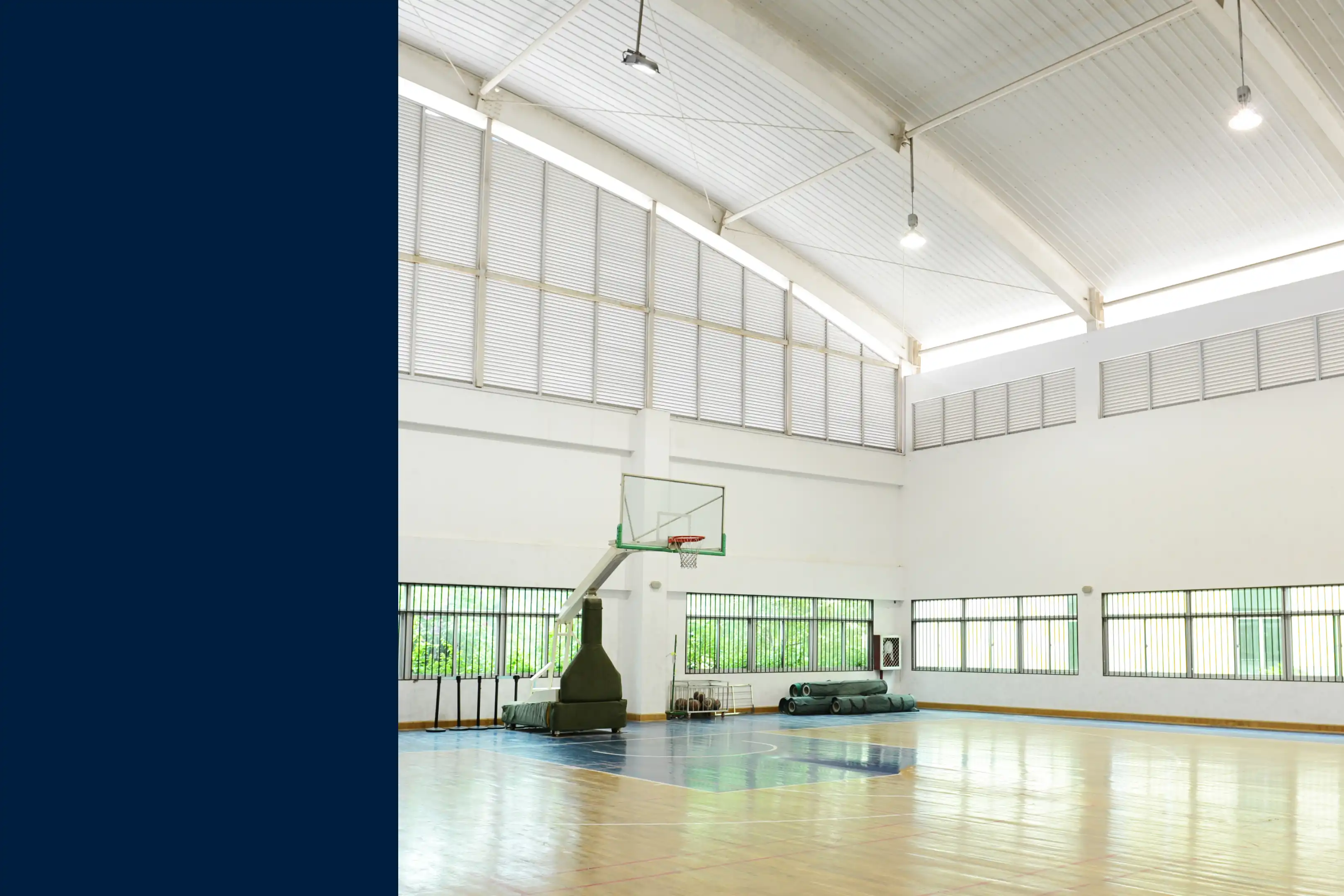
In a gym or fitness facility, safety, cleanliness, and maintenance activities should all be systematically managed to ensure safety and aid regulatory compliance. Consistent, documented inspections may help establish the standard-of-care record that ASTM and NFPA benchmarks typically require in a liability review. A gym inspection checklist organized by spatial risk zones helps facility teams catch hazards systematically, from overhead backstops and hoists down to floor-level surfaces and building systems.
This gymnasium inspection checklist provides a standardized template for use in schools, community centers, commercial gyms, fitness centers, and other facilities. Download and print it out, or, better yet, import it into a computerized maintenance management system (CMMS) for use as part of a broader preventive maintenance program.
Key takeaways
- Regular inspections and proper equipment maintenance are essential for ensuring gym safety, aiding compliance with regulations, and preventing accidents.
- Overhead equipment failures in gyms produce the most catastrophic incidents, making systematic inspection of suspended backstops, dividers, and hoists an important liability prevention priority that connects directly to ASTM standards.
- Gyms serving multiple purposes (athletics, assemblies, special events) require configuration-triggered checks whenever layouts change, verifying bleacher locks, floor anchor coverage, and egress paths for each use case.
- Digital checklists in a CMMS help facilities track inspection cycles by spatial risk zone and automatically trigger configuration-change verifications that paper-based systems typically miss.
- Documented inspections are your first line of defense in any claim regarding gym safety.
How to use this checklist
Customize for your facility
Adapt this checklist to match your facility’s equipment, use patterns, and the unique aspects of your site. School gyms typically prioritize bleacher safety and multi-use configurations, while fitness-focused facilities emphasize weight machines and flooring condition. Add line items for specialized equipment like climbing walls or batting cages.
Ensure your checklist still meets OSHA requirements, applicable ASTM standards, and any local or state regulations governing your facility type.
Use a CMMS
Using a CMMS allows you to track completion of inspection tasks and create digital records for compliance and operational efficiency. Digital checklists enable real-time data access, allowing for immediate updates and facilitating prompt decision-making.
A CMMS can automatically generate work orders when inspectors identify deficiencies, and schedule recurring inspections based on equipment criticality: monthly for overhead systems, quarterly for building systems.


Gym inspection checklist
Overhead equipment and suspended systems
Wall-mounted equipment and padding\
Playing surfaces and flooring
Fitness and portable equipment
Scoreboards and timekeeping systems
Fire safety and emergency systems
Building systems and environmental controls
Locker rooms and adjacent facilities
Accessibility compliance
Bleachers and spectator areas
Multi-use configuration management
Equipment storage areas
Documentation and compliance
Disclaimer: This checklist is to be used only by those with appropriate training, expertise, and professional judgment. You are solely responsible for reviewing this checklist to ensure that it meets all professional standards and legal requirements, as well as your needs and intent.
Early warning signs of overhead equipment failure
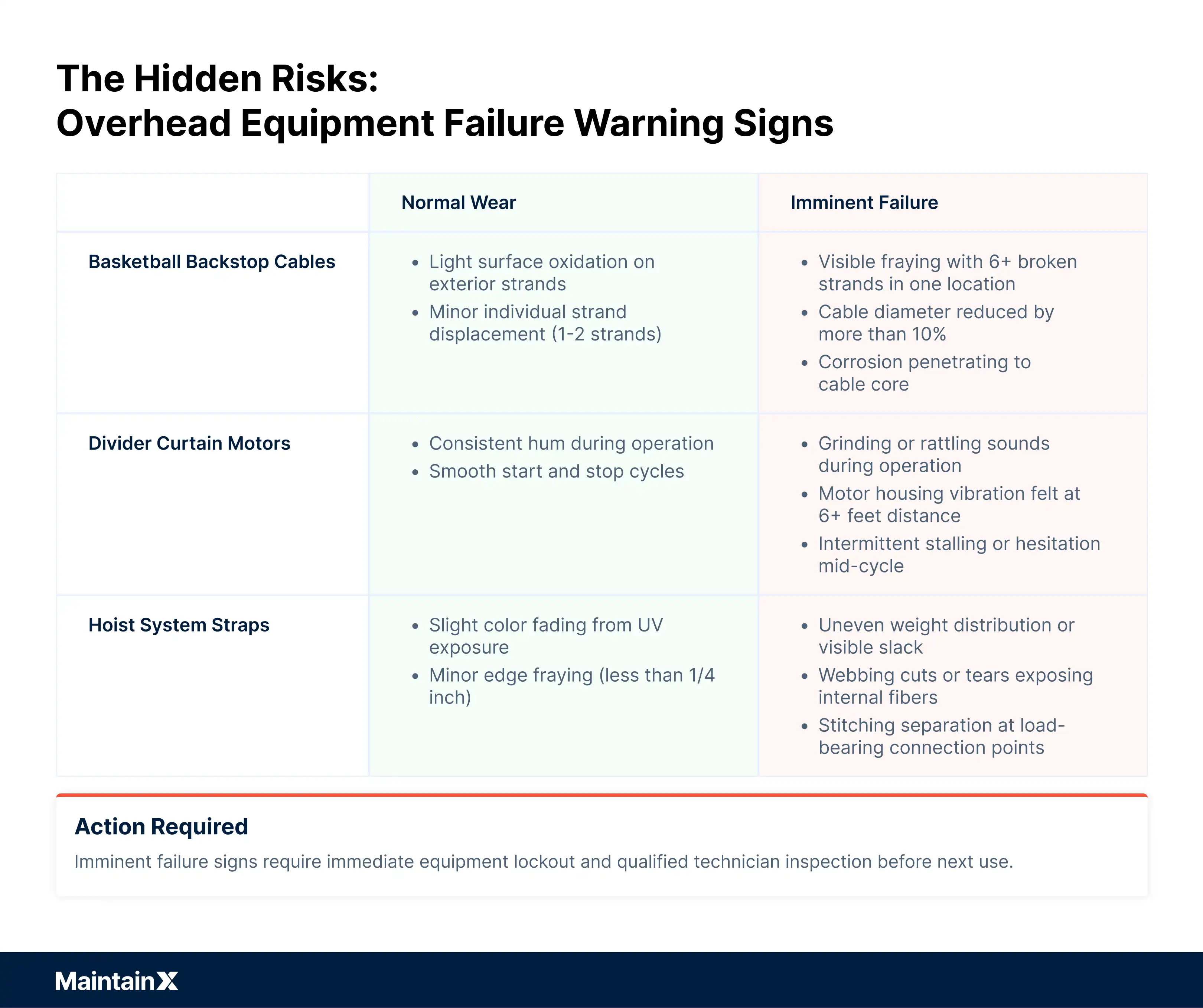
Overhead gym equipment carries the highest consequence of failure. A basketball backstop or gym divider that drops unexpectedly can cause serious injury or death. Catching problems early is a key maintenance priority, but it requires knowing what to look for.
Common warning signs include visible fraying or kinking in wire rope cables, unusual creaking or grinding during operation, and uneven travel when raising or lowering backstops or dividers. Rust or corrosion on turnbuckles, shackles, and anchor plates signals structural weakening over time.
Motor-driven systems often show problems through slower cycle times, intermittent stalling, or limit switches that fail to stop travel at the correct position. Abnormal sounds during operation can indicate bearing failure, motor issues, or component fatigue. Any of these symptoms warrants immediate lockout and a qualified technician's assessment.
Inspection best practices for multi-use gym configurations
School and community gyms rarely serve a single purpose. The same space might host basketball practice in the morning, a school assembly at midday, and a community event that evening. Each transition introduces risk.
Effective gym inspection programs account for multiple use cases by considering all aspects of gym operations, including safety protocols, equipment condition, and facility cleanliness. Gym staff and employees play a crucial role in conducting these inspections, identifying hazards, and maintaining high standards. Training staff on proper equipment use and facility maintenance is vital for ensuring safety.
Many facility teams build transition-triggered inspections into their routines. Before an assembly, they verify bleacher locking mechanisms and aisle clearances. Before athletics resume, they confirm backboard mounting integrity and floor anchor covers.
This approach treats each configuration as its own environment. It also creates a documented inspection trail tied to specific use cases, which strengthens the standard-of-care defense if questions arise.
Manage inspections with automated scheduling and documentation
Paper-based gym inspection logs tend to go missing, arrive incomplete, or sit in a filing cabinet that no one checks. When an incident occurs, that documentation gap becomes a liability.
Maintaining checklists and inspections in a CMMS allows you to create and maintain inspection records that are essential for compliance and legal defense. Facility teams can schedule recurring inspections by risk zone and assign them to specific technicians, while digital systems help track completion of inspection tasks to ensure nothing is missed.
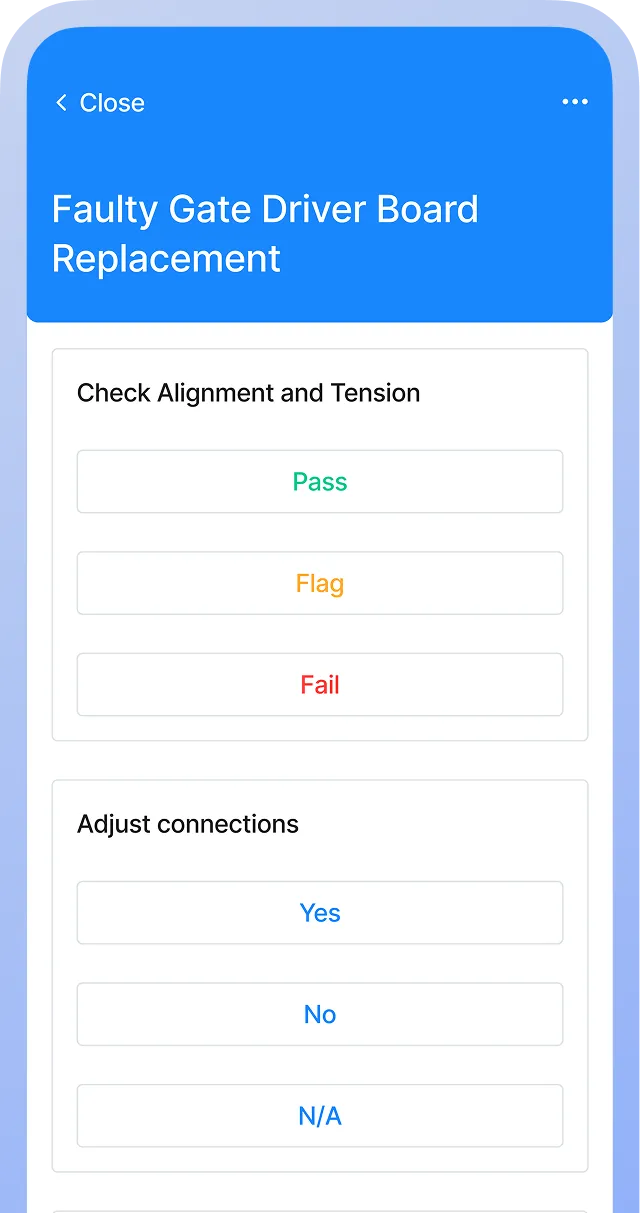
MaintainX allows technicians to capture timestamped photos, technician notes, and pass/fail results in one record. If a backstop cable shows early fraying, the inspection automatically generates a follow-up work order. Nothing falls through the cracks between observation and repair.
For multi-use facilities, transition-triggered inspections can be built into the scheduling logic for a consistent, auditable trail that aligns inspection frequency with recognized best practices for safety and compliance.
To see MaintainX in action and learn how it can benefit your facility, book a tour.
Gym inspection checklist FAQs
How often should school gymnasiums be inspected for safety hazards?
Daily walk-throughs should cover high-traffic areas and floor conditions. Conduct monthly deep inspections of overhead equipment, wall-mounted systems, and building components. Schedule annual third-party assessments for liability documentation and standard compliance verification.
Regular inspections and the use of a gym inspection checklist are essential to maintain safety, prevent accidents, and aid in compliance with safety regulations. Track completion of each inspection to monitor progress and maintain consistent safety standards.
What are the critical safety checks for gym equipment and athletic gear?
Prioritize overhead systems (backstops, dividers, climbing anchors) as the highest-consequence failure category. Inspect wall-mounted equipment for secure attachment, floor-level gear for trip hazards, and portable items for secure storage after each use.
Be sure to check all fitness equipment, including free weights, for damage or instability, and inspect treadmills for proper belt operation, emergency stop function, and overall safety to prevent injuries.
What should a thorough gym inspection checklist include?
Organize checks by spatial risk zones: overhead suspended equipment, wall-mounted systems, floor-level surfaces, and building infrastructure. Include inspection triggers for multi-use transitions like bleacher deployment or divider repositioning between athletics and assemblies.
What documentation is required for gymnasium safety inspections?
Maintain dated inspection records showing each inspection zone covered, deficiencies found, and corrective actions completed. Create a structured system to document compliance with ASTM, OSHA, and NFPA standards, and track completion of all inspection tasks to ensure nothing is missed. Voluntary standards often become the legal benchmark in liability cases, and thorough documentation provides essential evidence in premises liability claims.
What are the most common safety hazards found during gym inspections?
Loose overhead mounting hardware poses the greatest risk. Wall-mounted equipment shows anchor degradation while bleachers develop worn treads and faulty locking mechanisms during repeated deployment. Floor hazards include court surface deterioration and trip edges
During inspections, always check for faulty equipment, signs of wear such as frayed cables or worn parts, exposed foam on pads or upholstery, unusual noises that could indicate bearing failure, and other potential hazards that could compromise safety.
Who is qualified to conduct gymnasium safety inspections?
Facility managers typically handle routine inspections using standardized checklists. Engage certified equipment installers for annual overhead system evaluations. Third-party assessors familiar with ASTM F1487 and relevant NFPA standards can provide liability protection through independent verification. Always check with regulations before assigning any work out.

The MaintainX team is made up of maintenance and manufacturing experts. They’re here to share industry knowledge, explain product features, and help workers get more done with MaintainX!




.webp)