
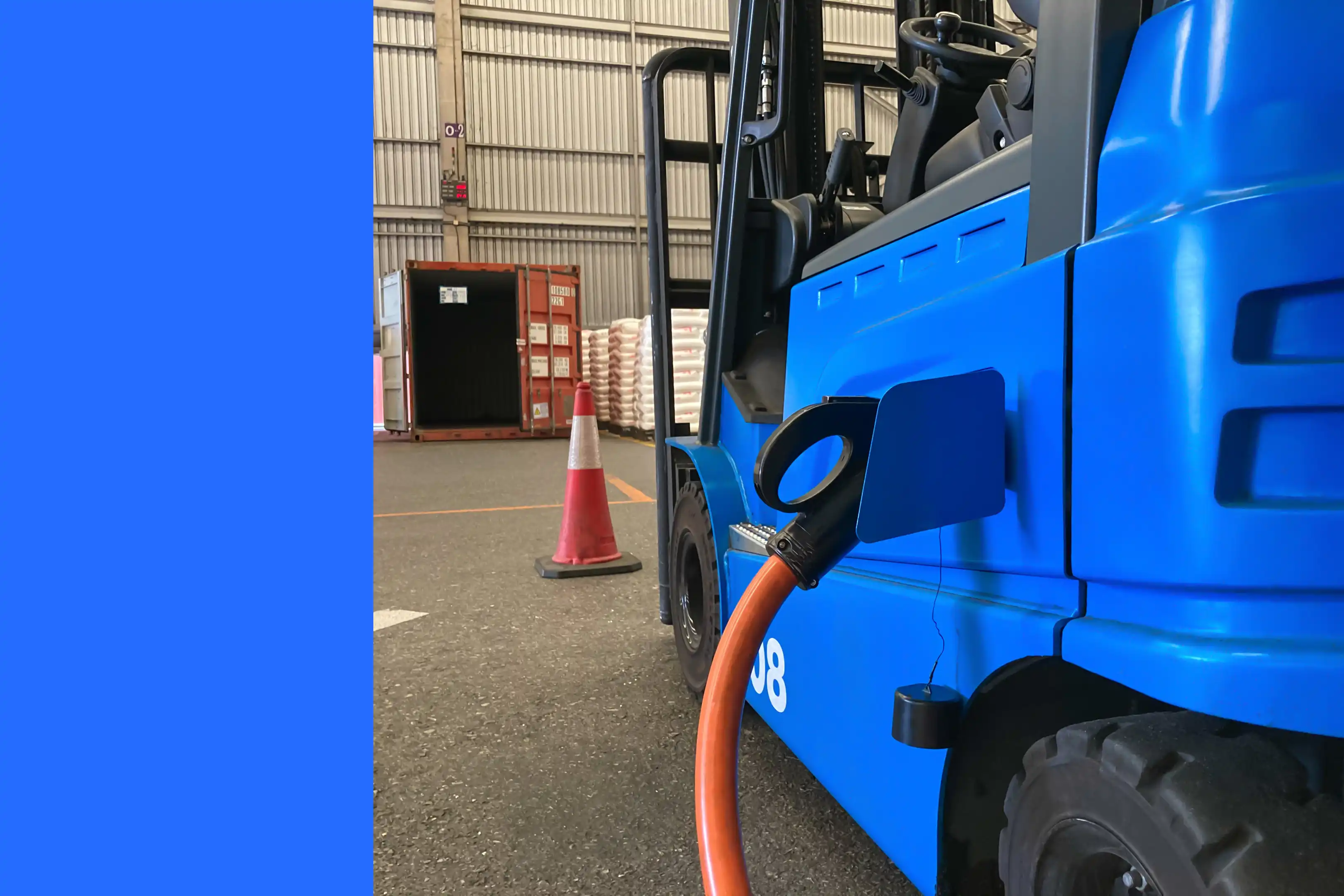
Electric forklifts have unique maintenance needs compared to their gas and LP-powered cousins. Most generic inspection checklists overlook electric-specific battery, motor, and controller issues that can lead to downtime if missed.
Below is a downloadable pack of electric forklift inspection checklists that cover everything from pre-shift to annual maintenance. Print them out, download to a tablet, or import into a computerized maintenance management system (CMMS) to streamline and systematize ongoing preventive maintenance for your fleet.
Key takeaways
- Electric forklift batteries require inspection depth beyond a single checkbox. Connector pitting, electrolyte levels, and cable insulation each signal different failure modes that generic checklists miss.
- Charging station hazards are a blind spot in most inspection programs. Hydrogen gas buildup, drifting charger output, and damaged cables silently degrade batteries and create safety risks that operators typically overlook when they focus only on the forklift itself.
- Recording inspection findings in a CMMS connects daily operator checks to fleet-wide patterns, turning battery degradation and charger issues into predictable maintenance signals rather than surprise failures.
How to use this checklist
Customize for your facility
Think of these checklists and templates that can be customized to the needs of your fleet. Three-shift operations typically need more frequent tire and battery inspections than single-shift warehouses. Lithium-ion batteries require different charging procedures than flooded lead-acid batteries. Cement or grain facilities should pay close attention to dust ingress protection. Consider all of these factors and adjust your checklists as necessary.
Use a CMMS
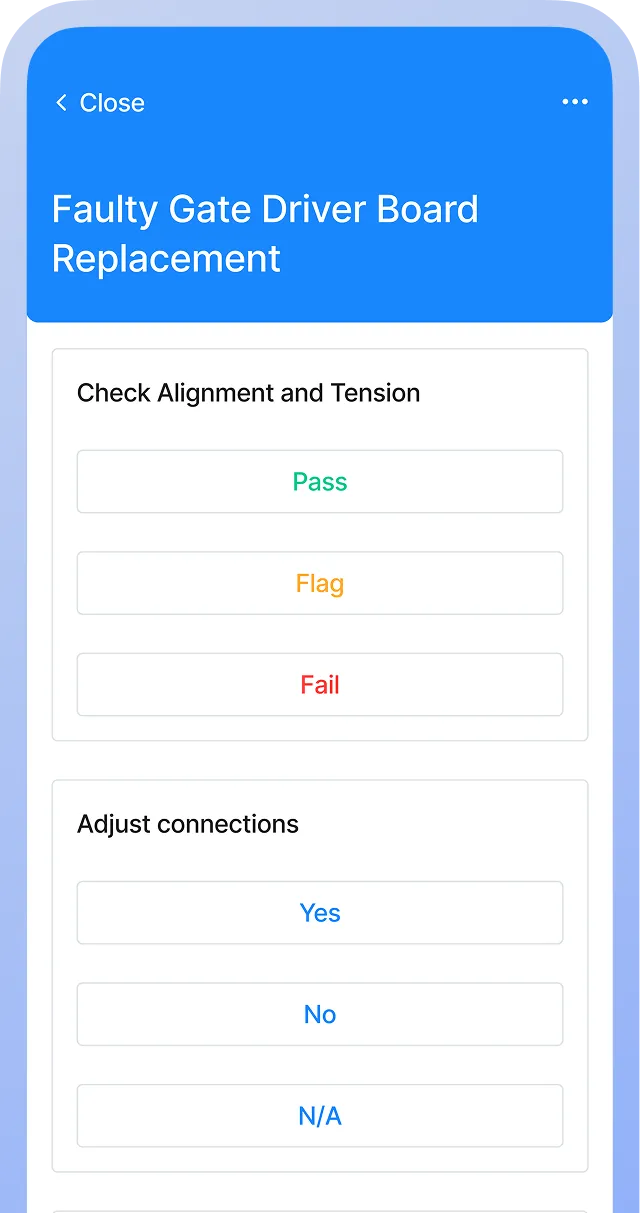
Using these checklists with a CMMS offers several advantages over paper or PDFs. With a CMMS, operators can complete inspections on a mobile device, automatically timestamping entries and flagging defects that trigger follow-up work orders. This creates a searchable audit trail that can help track evolving issues and satisfy OSHA requirements.


Electric forklift inspection checklist
Pre-shift visual inspection
Battery and electrical system checks
Pre-shift operational testing
End-of-shift and charging procedures
Weekly inspection points
Monthly maintenance tasks
Quarterly and annual service
Documentation and compliance
Disclaimer: This checklist is to be used only by those with appropriate training, expertise, and professional judgment. You are solely responsible for reviewing this checklist to ensure that it meets all professional standards and legal requirements, as well as your needs and intent.
Why electric forklift battery inspections require more than a single checkbox
Effective battery inspections cover electrolyte levels, terminal corrosion, cable insulation, and case integrity as separate line items, because each one represents a distinct failure mode with its own consequence. Low electrolyte accelerates plate sulfation, gradually destroying capacity. Corroded terminals increase resistance and heat, creating a fire risk. Cracked cases leak acid, threatening both equipment and personnel.
Temperature matters too, and it follows the same logic. A battery that feels unusually warm during or after charging is signaling likely internal cell degradation. Catching it early can prevent thermal events and extend the pack's usable life by months.
Treating the battery as a system rather than a single yes-or-no item gives maintenance teams the specifics they need to act before a $5,000 replacement becomes unavoidable.
Charging station safety checks operators shouldn't skip
Charging areas introduce hazards that don't exist anywhere else in the facility. Hydrogen gas buildup, acid splash exposure, and electrical faults are all concentrated in one space.
Operators typically focus on plugging in and walking away, but the charging station itself warrants a quick safety scan before and after use. Frayed charging cables and damaged connectors are shock and fire hazards. Malfunctioning ventilation fans allow hydrogen to accumulate to dangerous concentrations. Missing PPE at the station means the next person to handle a leaking battery has no protection.
Voltage and amperage spot-checks matter for safety too, not just battery longevity. A charger delivering inconsistent voltage can overheat cells, and an overheating battery in an enclosed charging area is a thermal event waiting to happen. Including charging infrastructure in your electric forklift inspection checklist ensures these risks get the same attention as the equipment itself.
How inspection data shifts electric forklift fleets from reactive to planned maintenance
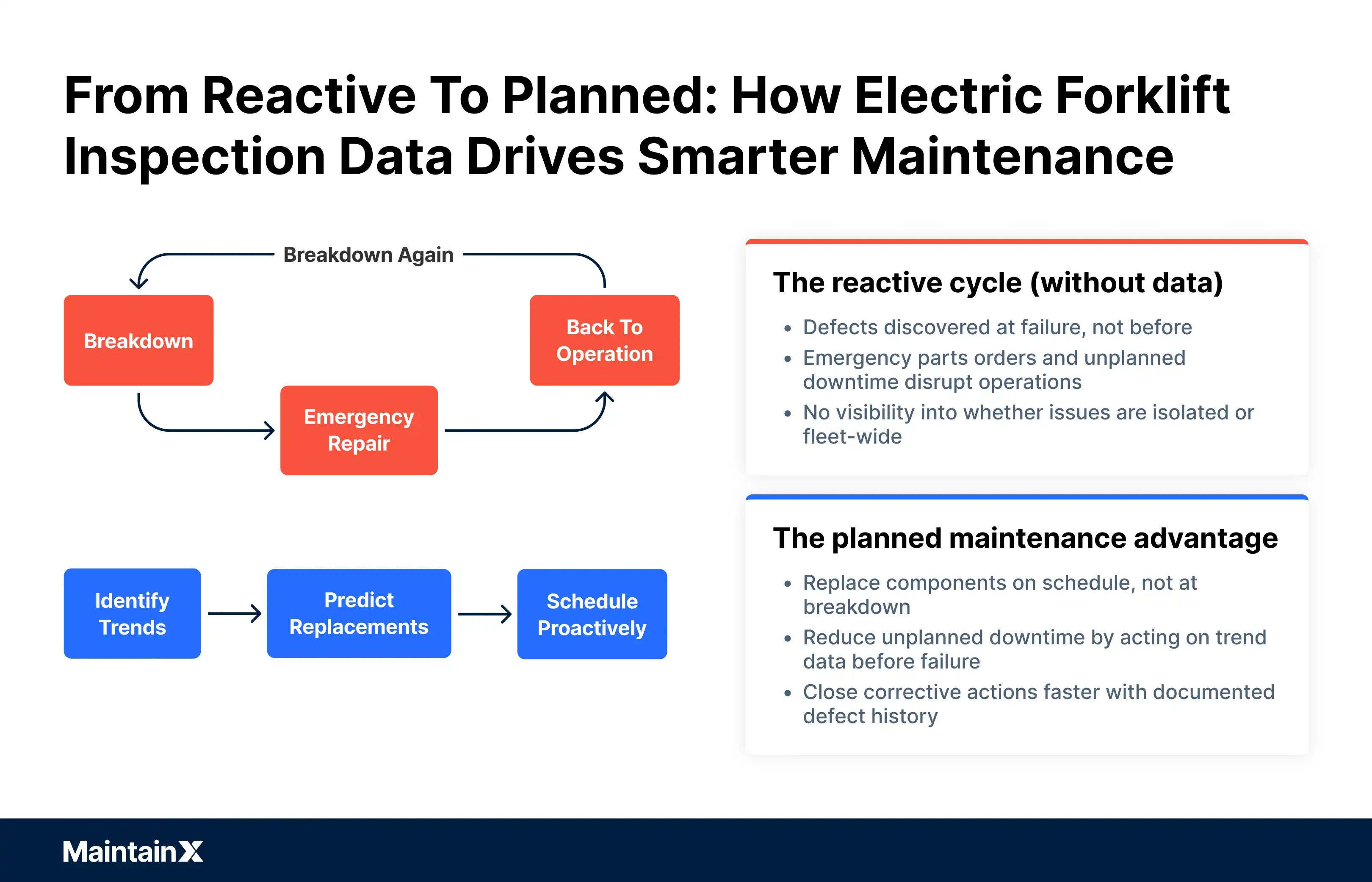
A single inspection finding is a snapshot. Hundreds of them, tracked over weeks, is data that can extend equipment life.
When teams consistently log battery water levels, motor temperatures, and brake conditions, patterns emerge. Three trucks showing accelerated electrolyte loss might point to a faulty charger rather than three bad batteries. Repeated steering complaints on units assigned to cold storage could signal hydraulic fluid viscosity issues specific to that environment.
This kind of fleet intelligence doesn't require sophisticated analytics but consistent data capture at the operator level. The inspection form becomes the sensor.
Facility managers who review this data monthly often find they can schedule replacements and overhauls during planned downtime instead of reacting to breakdowns. Prevention costs a fraction of emergency repair, and the data to justify it is already in the daily logs.
Turn inspection logs into maintenance intelligence with a CMMS
Paper inspection forms check a compliance box, then disappear into a filing cabinet. The findings rarely reach the people who plan maintenance work.
MaintainX closes that gap by connecting checklists and inspections to the rest of the maintenance workflow. When an operator flags a battery cable showing wear, the system can generate a work order, assign it a severity level, and route it to the right technician. No clipboard handoff or lost forms.
See how a mobile-friendly CMMS makes forklift fleet maintenance easy. Book a tour:
Electric forklift inspection checklist FAQs
What are the OSHA requirements for electric forklift and powered industrial truck inspections?
OSHA 1910.178 typically requires daily inspections before each shift or after every 24 hours of use. Written documentation isn't explicitly mandated, but facilities that maintain inspection records show due diligence during audits and protect teams in incident investigations.
Note: This content is for informational purposes only and does not constitute legal or compliance advice. Always consult the applicable regulations and a qualified professional to ensure your facility meets current requirements.
What are the critical items to check on an electric forklift inspection?
Battery condition and connections, motor temperature and unusual sounds, controller function, charging port integrity, hydraulic fluid levels, tire condition, brakes, steering, and safety devices like horns and lights require consistent attention for safe electric forklift operation.
How do you inspect an electric forklift battery safely?
To inspect an electric forklift battery safely, wear protective equipment, including gloves and safety glasses. Never inspect batteries during charging cycles. Before checking connections, ensure the forklift is powered off and the battery is cool to the touch. Inspect terminals for corrosion using a dry cloth or brush rather than bare hands, and avoid letting metal tools bridge terminals. Check that electrolyte levels sit above the plates by viewing the fill wells, not by probing them. Look for case damage or bulging from a safe distance first, and if either is present, do not attempt further inspection without qualified support. Confirm cables show no fraying by visual inspection along the full length of each cable.
Note: This guide is intended for general informational purposes only. Always follow your equipment manufacturer's specifications, applicable OSHA standards, and your facility's safety protocols when working with forklift batteries or electrical equipment.
What should you do if you find a defect during a forklift inspection?
Tag the equipment out of service immediately and document the issue with a severity classification. Minor defects may allow continued operation with monitoring, while safety-critical failures require immediate repair. Notify maintenance and verify resolution before returning to service.
Who is responsible for conducting daily electric forklift inspections?
Operators perform daily pre-shift inspections on equipment they'll use. Maintenance teams conduct periodic inspections, typically monthly or quarterly, for deeper system evaluation. Both require training on electric forklift systems and proper inspection procedures.
What documentation is required for electric forklift inspections?
OSHA typically doesn't explicitly require written records, but documented inspections establish compliance patterns, track recurring issues across your fleet, and provide critical evidence during audits or incidents. Most facilities maintain digital or paper inspection logs. Always confirm your documentation requirements with current regulations.

The MaintainX team is made up of maintenance and manufacturing experts. They’re here to share industry knowledge, explain product features, and help workers get more done with MaintainX!


.webp)