

Dump trucks operate under some of the most demanding conditions of any commercial vehicle, and keeping them running reliably requires more than reactive repairs. A structured dump truck preventive maintenance checklist gives fleet managers a repeatable framework for catching wear before it becomes failure, documenting inspections for regulatory compliance, and building the maintenance history that informs smarter service scheduling over time.
This guide includes a downloadable checklist for daily, weekly, monthly, quarterly, semi-annual, and annual preventive maintenance.
Key takeaways
- A structured preventive maintenance checklist standardizes inspection criteria across your dump truck fleet, ensuring every unit receives the same level of scrutiny regardless of which technician performs the check.
- Hydraulic system failures are among the most costly and disruptive dump truck breakdowns. Regular inspection of hydraulic fluid levels, pump condition, cylinder seals, and hydraulic lines catches developing issues before they sideline trucks during active jobs.
- Uploading a preventive maintenance checklist to a computerized maintenance management system (CMMS) automates service reminders, generates work orders from inspection findings, and creates the timestamped compliance records that DOT auditors expect.
How to use this checklist
Customize for your facility
Most fleet managers adjust service intervals based on actual lift cycles and load weights rather than strict calendar periods. Use this checklist as a template that can be adjusted according to your duty cycle, terrain, and material type.
Be sure to consider your state's specific DOT requirements as well, as some mandate more frequent brake inspections or additional lighting checks.
Use a CMMS
A CMMS provides the audit trail needed for DOT regulatory compliance and helps correlate inspection findings with equipment age and duty cycles. Automated reminders prevent missed inspections, and photo attachments to digital checklists create permanent maintenance history accessible during roadside inspections, reducing administrative burden on fleet operations teams.


Dump truck preventive maintenance checklist
Daily pre-trip inspection
Daily post-operation checks
Weekly inspection points
Monthly maintenance tasks
Quarterly preventive maintenance
Semi-annual and seasonal service
Annual major inspection
Documentation and compliance
This checklist is to be used only by those with appropriate training, expertise, and professional judgment. You are solely responsible for reviewing this checklist to ensure that it meets all professional standards and legal requirements, as well as your needs and intent.
Frame, suspension, and body inspections: What to look for and why
Mileage alone doesn't tell the full story on a dump truck frame. A truck hauling aggregate across rough terrain at 500 load cycles per month accumulates fatigue stress far faster than one running highway miles between job sites.
Experienced technicians focus on known stress concentration points: frame rail webs near dump body mounting brackets, crossmember welds, and spring hanger attachment areas. Cracks often start small at bolt holes or weld toes and spread quickly under repeated loading.
Suspension components deserve the same cycle-aware attention. Leaf spring center bolts, U-bolts, and shock absorber mounts take a beating during loaded hauls on uneven ground. Municipal plow trucks and demolition haulers tend to see accelerated wear in these areas compared to trucks running paved routes. Adjusting inspection frequency based on actual duty severity helps catch fatigue damage before it becomes a structural failure.
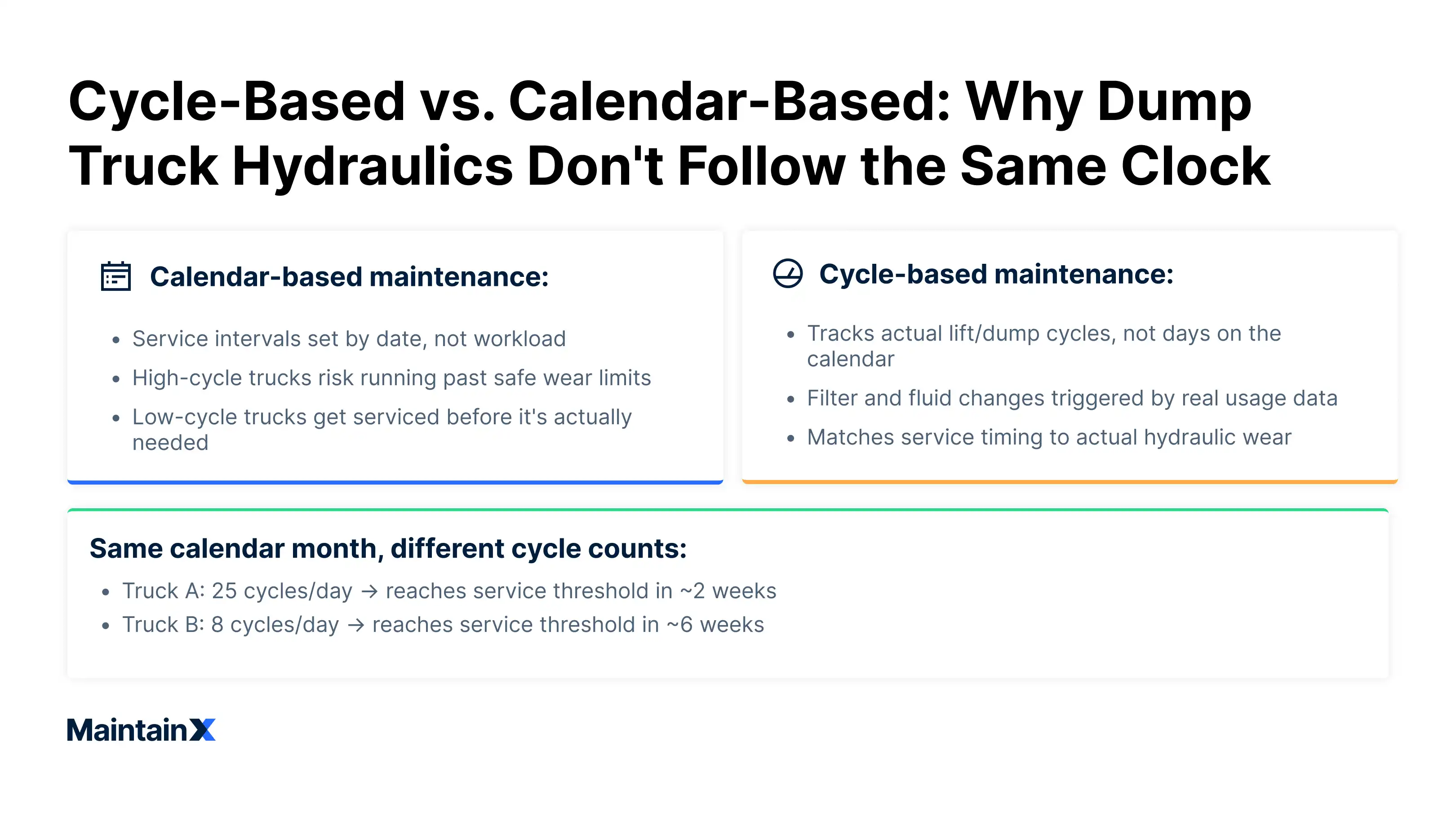
Cycle-based vs. calendar-scheduled hydraulic system PM
Tracking cycle counts gives a more accurate picture of hydraulic system health. Hydraulic pump wear, cylinder seals, hydraulic lines, hose fatigue, and valve performance all correlate more closely with how often the system operates than how many months have passed. Fluid sampling at cycle-based milestones tends to catch contamination and degradation earlier than fixed schedules, reducing costly repairs down the line.
PTO engagement patterns matter too. Frequent short cycles generate more heat spikes than longer, steady operations. Trucks in fast-turnaround applications like demolition or snow removal often need compressed fluid and filter service intervals. Building PM schedules around actual hydraulic workload rather than the calendar helps prevent the kind of mid-shift system failures that sideline trucks and delay jobs.
Connect daily operator checks to preventive maintenance planning
Operators notice problems first: a sluggish lift, a new vibration under load, a tailgate that doesn't latch cleanly, or a brake pedal that feels soft. These observations carry real diagnostic value when they flow into the PM process rather than staying in a driver's head or on a paper form sitting in a clipboard.
Effective dump truck maintenance checklists treat daily walkarounds as the first tier of a structured escalation workflow. When an operator flags a slow hydraulic cycle or notes fluid leaks under the truck, the technician knows to prioritize hydraulic pump pressure testing at the next PM interval. A note about unusual frame noise directs attention to specific weld points during the next body inspection.
This feedback loop works best when reporting is simple and consistent. Standardized checklists with clear escalation criteria help operators distinguish between "monitor next shift" and "take out of service," keeping fleet operations running smoothly while protecting truck safety.
How a CMMS helps with heavy equipment maintenance
Heavy equipment maintenance generates a lot of moving parts: multiple assets, varying duty cycles, operator-reported issues, parts inventory, and compliance records. Spreadsheets and paper logs can hold this information, but they rarely connect it in a way that reduces administrative burden on fleet managers.
MaintainX brings these threads together. Maintenance teams can set PM triggers based on engine hours or cycle counts rather than relying solely on calendar reminders. Operator inspection findings feed directly into work orders, closing the gap between what gets reported and what gets fixed.
Book a tour to see how MaintainX makes fleet management simple.
Dump truck preventive maintenance checklist FAQs
What should a dump truck preventive maintenance checklist include?
A comprehensive dump truck preventive maintenance checklist should cover all critical systems organized by service interval:
- Daily maintenance: Check tire pressure and tread depth, inspect fluid levels including engine oil, hydraulic fluid level, and power steering fluid, test brake system function and parking brake, verify signal lights and warning lights, inspect for fluid leaks, and cycle the dump body to check tailgate operation.
- Weekly checks: Inspect air filter indicator, check battery terminals for corrosion, verify air pressure builds to governor cutout, and inspect suspension components and steering components for wear.
- Monthly inspections: Lubricate chassis and dump body hinges, complete brake system inspection including brake pedal feel and pushrod stroke, inspect hydraulic lines and hydraulic pump for leaks, check fuel system including fuel tanks and fuel filters, and inspect exhaust system condition.
- Quarterly service: Change engine oil and filters based on engine hours, test hydraulic system under load, inspect electrical systems and wiring harnesses, verify ABS function, and inspect frame and body mounting for fatigue cracking.
- Annual inspection: Complete thorough inspection per FMCSA Appendix A requirements, verify fire extinguisher and emergency equipment are present and serviceable, sample hydraulic fluid for contamination, and confirm all lighting and conspicuity markings are compliant.
Regular inspections across these intervals protect truck safety, support regulatory compliance, and reduce costly repairs before they escalate into major system failures.
What are the FMCSA requirements for dump truck preventive maintenance?
FMCSA mandates annual inspections and systematic maintenance for commercial vehicles over 10,001 pounds. Fleet operations must document all maintenance activities, follow manufacturer recommendations, and maintain maintenance history to demonstrate compliance during roadside inspections and terminal audits.
Note: This is a general informational summary only and does not constitute legal, regulatory, or compliance advice. Requirements vary by jurisdiction, vehicle class, and operating environment. Always consult applicable FMCSA regulations, your state DOT requirements, and a qualified professional to determine the specific inspection and documentation obligations for your fleet.
How often should preventive maintenance tasks be performed on municipal dump trucks?
Duty cycle determines inspection frequency more than mileage alone. Operators perform daily maintenance checks before each shift, while hydraulic systems require inspection every 250 engine hours or monthly. Heavy-cycle applications like aggregate hauling on construction sites often compress standard service intervals by 30–50%, particularly for brake inspections and hydraulic fluid changes.
What are the most common dump truck maintenance issues identified during preventive inspections?
Hydraulic fluid leaks, worn tailgate seals, cracked dump body floors, and frame fatigue cracks appear most frequently during dump truck inspections. Brake system issues, PTO engagement problems, and corroded battery terminals also rank high. Severe-duty applications accelerate wear on suspension components, bed liners, and fuel injectors, all of which affect fuel efficiency and reliable performance over time.
How do TMC Recommended Practices improve dump truck preventive maintenance programs?
TMC provides standardized inspection criteria that eliminate guesswork and establish consistent failure thresholds across dump truck fleets. Their practices translate manufacturer specifications into measurable action points, helping technicians identify problems at the same severity level regardless of experience. This consistency reduces both over-maintenance and missed defects, ultimately lowering maintenance costs and repair costs across fleet operations.
How does a CMMS reduce administrative burden in dump truck fleet maintenance?
A CMMS automates scheduling, tracks engine hours and cycle counts, and generates work orders automatically when inspections surface issues. Fleet managers can access maintenance history for each truck, monitor service intervals across the entire dump truck fleet, and produce compliance documentation instantly during audits. This reduces the administrative burden of manual record-keeping while improving PM compliance and giving fleet operations teams better visibility into maintenance costs and repair trends.

Marc Cousineau is the Senior Content Marketing Manager at MaintainX. Marc has over a decade of experience telling stories for technology brands, including more than five years writing about the maintenance and asset management industry.



.webp)