

Daily heavy equipment inspections create a culture of safety and lay the groundwork for an effective preventive maintenance program. Each finding should drive what happens next, whether it’s an immediate lockout, a scheduled repair, or continued monitoring.
This daily inspection checklist for heavy equipment can be used on its own, as is, customized to your fleet, or imported into a computerized maintenance management system (CMMS).
Key takeaways
- Effective daily inspections treat findings as workflow triggers, not filing obligations. Classifying deficiencies by severity (immediate lockout, restricted use, or scheduled repair) enables confident operator triage.
- Digital inspection checklists in a CMMS platform create audit trails that connect daily observations to maintenance patterns, helping teams spot recurring equipment issues before they compound.
- Regulatory compliance flows naturally from structured daily inspection routines with thorough documentation. Well-maintained records protect organizations during OSHA audits without fear-driven box-checking.
How to use this checklist
Customize for your facility
Adapt this checklist to your needs by incorporating manufacturer-specific inspection points, local regulatory requirements, or industry-specific safety standards.
Consider the age of your fleet, usage intensity, and operating environment when determining inspection frequency. Match inspection priorities to equipment criticality: High-risk or high-use equipment often warrants more detailed checks.
As always, ensure staff are properly trained and follow appropriate safety protocols when working around heavy equipment.
Use a CMMS
Paper checklists may work for individual machines, but larger fleets can benefit from using a CMMS to standardize daily heavy equipment inspections. A CMMS automatically routes defects to work orders, assigns corrective actions, and creates audit trails for compliance reporting.
Many modern platforms, such as MaintainX, offer mobile access so technicians and operators can log inspections, view SOPs, and trigger work orders in the field.


Daily inspection checklist
Powered industrial trucks (forklifts, pallet jacks, order pickers)
Aerial work platforms (scissor lifts, boom lifts, vertical mast lifts)
Skid steers and compact track loaders
Compact excavators and backhoes
Telehandlers and reach forklifts
Powered pallet jacks and walkie stackers
Utility vehicles and burden carriers
Documentation and compliance
Disclaimer: This checklist is to be used only by those with appropriate training, expertise, and professional judgment. You are solely responsible for reviewing this checklist to ensure that it meets all professional standards and legal requirements, as well as your needs and intent.
Pre-shift vs. operational checks
Pre-shift inspections catch problems before they become incidents. These checks happen with the engine off and cover structural, fluid, and safety system conditions. Think walkaround visuals, hydraulic hose integrity, tire or track wear, and fire extinguisher presence.
Operational checks happen once the machine is running. They focus on gauges, steering response, brake function, and unusual sounds or vibrations under load.
Each inspection type triggers a different response. A cracked windshield found during a pre-shift walk-around is routed to scheduled repair. A failing brake discovered during operational testing triggers immediate lockout.
Operators must complete the checks and understand the differences between them. A brake issue found at startup means something different than one flagged on a walkaround, and the response should reflect that.
What to do when an inspection fails
A failed inspection item is where the real work begins. Without clear next steps, operators tend to default to "tell the supervisor" and move on. But that’s where risk grows.
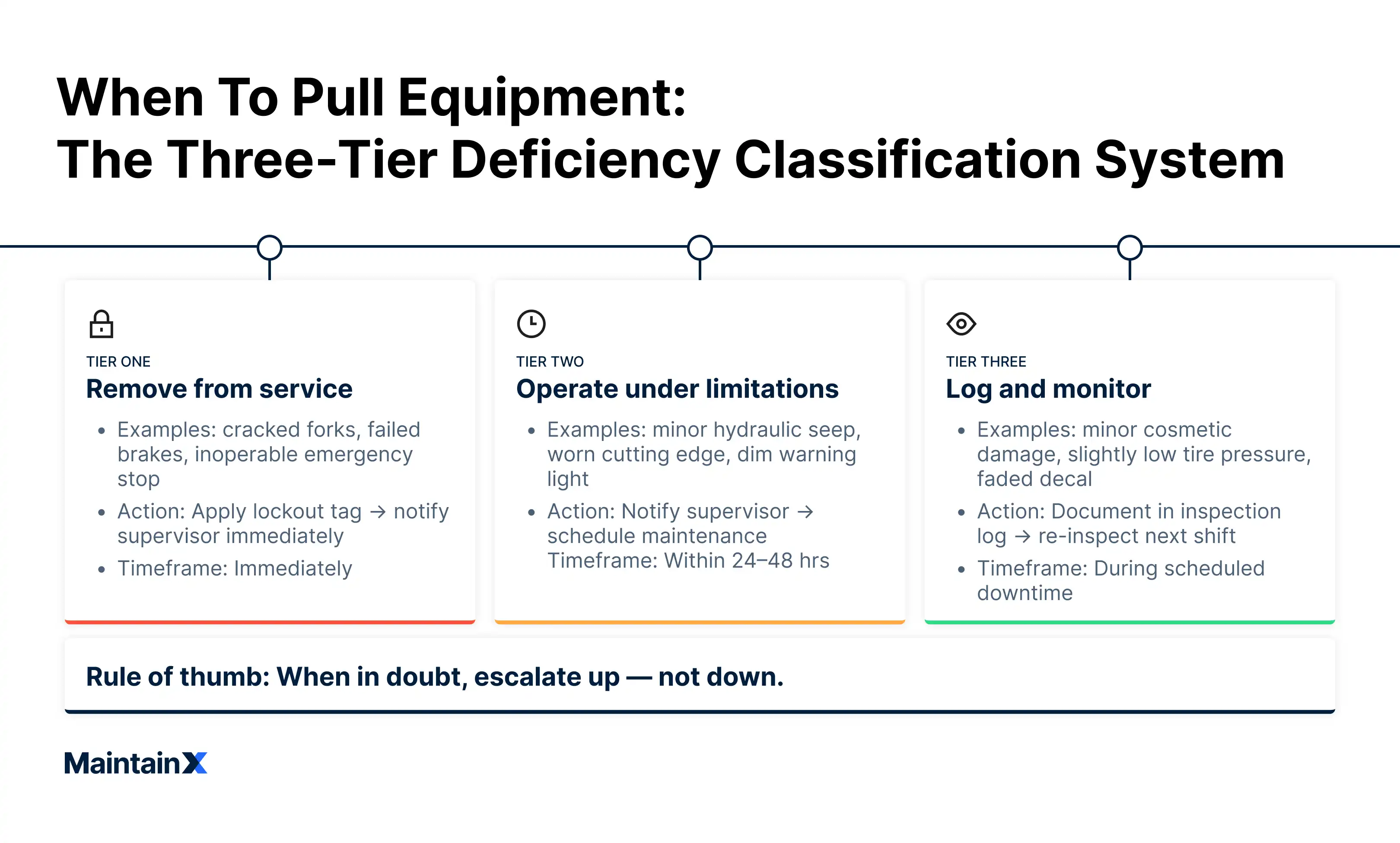
Effective inspection programs tier findings by severity. Immediate hazards like failed brakes or leaking hydraulic lines call for lockout and a priority work order. Monitored deficiencies, such as minor fluid seepage or cosmetic damage, are documented with a defined re-check interval. Scheduled repairs cover wear items approaching service limits.
Defined escalation logic removes guesswork. Operators know which findings stop the machine, which ones need tracking, and which can be deferred. Each tier should connect to a specific workflow: a work order, a follow-up task, or a parts request. The inspection finding drives the response, not a verbal handoff.
Common daily inspection mistakes that create OSHA exposure
Most OSHA citations come from documentation gaps that make it impossible to prove that checks happened.
Generic pass/fail forms are a frequent culprit. They capture a result but no context. When an inspector finds a deficiency, the record should show what was found, what action followed, and when the resolution occurred. OSHA auditors look for that chain of evidence.
Inconsistent inspection schedules across equipment types also create exposure. Inspecting forklifts daily but neglecting dock levelers or conveyors leaves uneven compliance gaps. Building a unified framework that covers all assets in a single shift keeps the standard consistent.
Well-structured inspection routines with clear documentation flow tend to satisfy regulatory requirements as a natural byproduct.
This content is for informational purposes only and does not constitute legal or compliance advice. Always consult the applicable regulations and a qualified professional to ensure your facility meets current requirements.
Why use a CMMS for daily equipment inspections?
Paper inspection forms capture data. A CMMS turns that data into action.
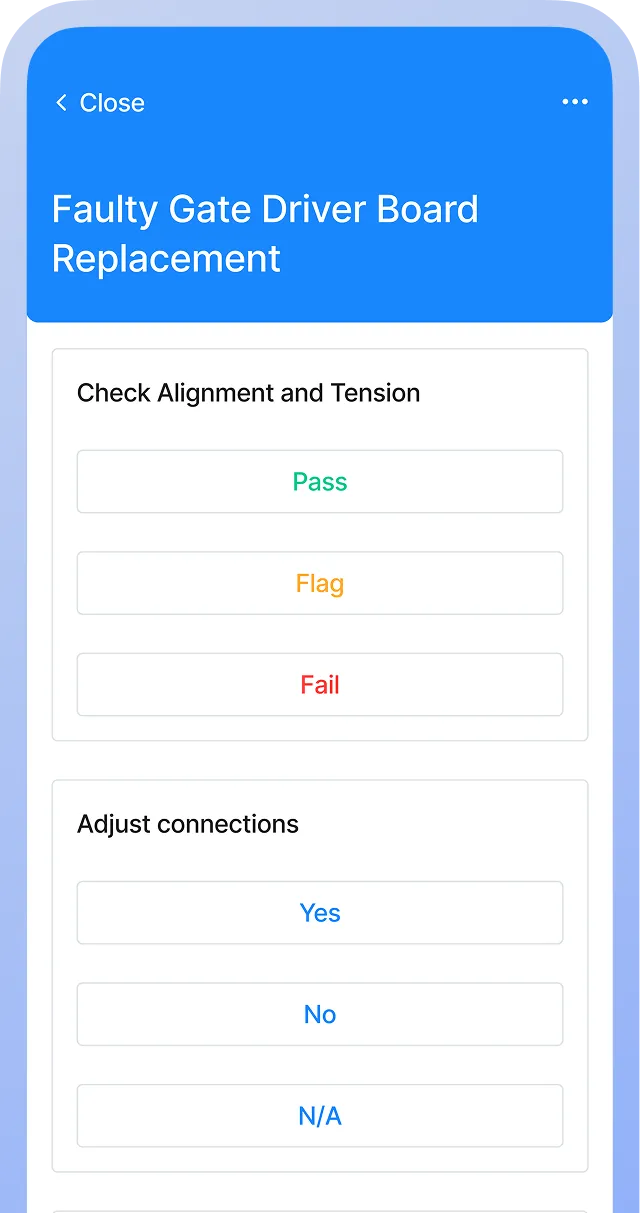
With MaintainX, technicians and operators can automatically generate a work order, assign it to the right technician, and attach photos from the field, closing the gap where deficiencies get lost in shift changes or supervisor inboxes.
For multi-asset facilities, a CMMS also brings consistency. Forklifts, conveyors, dock equipment, and overhead cranes can all follow a unified inspection framework with standardized severity tiers. Historical records build over time, revealing patterns that inform preventive maintenance and capital spending.
See how MaintainX can transform daily checklists and inspections in your facility. Book a tour:
Daily inspection checklist FAQs
What does OSHA require for daily equipment inspections in warehouses?
OSHA 1910.178 typically requires daily pre-shift inspections for powered industrial trucks covering brakes, steering, controls, and safety devices. Facilities must document findings and remove defective equipment from service until repaired. Always check regulations to confirm specifics.
How long should a daily material-handling equipment inspection take?
Most operators complete forklift inspections in three to five minutes, and dock equipment in two to three minutes. Thorough checks matter more than speed. Rushing past critical items defeats the purpose of daily verification.
What's the difference between a daily inspection checklist and a maintenance checklist?
Daily inspections detect problems and trigger maintenance actions. Maintenance checklists guide repair work after issues surface. Think of inspections as diagnostic screenings that determine what maintenance your equipment needs and when.
Who is responsible for completing daily inspection checklists in a warehouse?
Operators typically perform inspections before their shifts, since they're most familiar with equipment behavior. Some facilities assign lead operators or maintenance technicians to handle specialized equipment like conveyors or dock levelers.
What should operators do if they find a defect during a daily inspection?
Severity determines response. Critical safety issues require immediate equipment lockout. Minor deficiencies get tagged for monitoring or scheduled repair. Clear escalation protocols help operators triage confidently without defaulting to supervisors for every finding.
What equipment requires daily inspection checklists in a warehouse environment?
Powered industrial trucks need daily checks per OSHA. Many facilities also inspect dock equipment, conveyors, pallet jacks, and charging stations daily. High-use assets benefit most from consistent pre-shift verification routines.
Should daily inspection checklists be paper-based or digital?
Digital checklists through a CMMS like MaintainX simplify data capture, automate work order creation from failed checks, and provide real-time visibility. Paper works but requires manual transcription and delays maintenance response.

The MaintainX team is made up of maintenance and manufacturing experts. They’re here to share industry knowledge, explain product features, and help workers get more done with MaintainX!




.webp)