

A conveyor belt maintenance checklist organized by physical zone (drive unit, carry side, return side, structure, and controls) mirrors how technicians actually walk down equipment. This guide includes a downloadable checklist organized by zone that ties each inspection item to the failure mode it detects.
Key takeaways
- Zone-based inspection routines help technicians spot failures across adjacent components more naturally than generic top-to-bottom checklists.
- Recording conveyor belt maintenance findings in a computerized maintenance management system (CMMS) enables smarter condition-based maintenance decisions.
- Drive system metrics like motor amperage and temperature often indicate downstream issues before physical symptoms become visible, making them valuable early-warning indicators during daily rounds.
How to use this checklist
Customize for your facility
This checklist is meant to be used as a baseline that can be customized to your facility. Adjust inspection frequencies based on conveyor speed, operating hours, and material type. Consider environmental factors like moisture, temperature extremes, or corrosive materials. Add industry-specific items for food-grade operations, mining, or hazardous material handling.
Use a CMMS
Print out and use this checklist as-is, or import it into a CMMS for mobile-friendly access. Using a CMMS enables automated scheduling across multiple conveyor systems and captures photo documentation of wear patterns.


Conveyor belt maintenance checklist
Belt surface and tracking
Drive system and motor
Rollers and idlers
Pulleys and tensioning
Frame and structure
Safety and emergency controls
Lubrication and housekeeping
Documentation and compliance
This checklist is to be used only by those with appropriate training, expertise, and professional judgment. You are solely responsible for reviewing this checklist to ensure that it meets all professional standards and legal requirements, as well as your needs and intent.
How conveyor failures cascade: Why each inspection item matters
Tying every check to its failure chain turns routine inspections into early warning systems that prevent costly breakdowns.
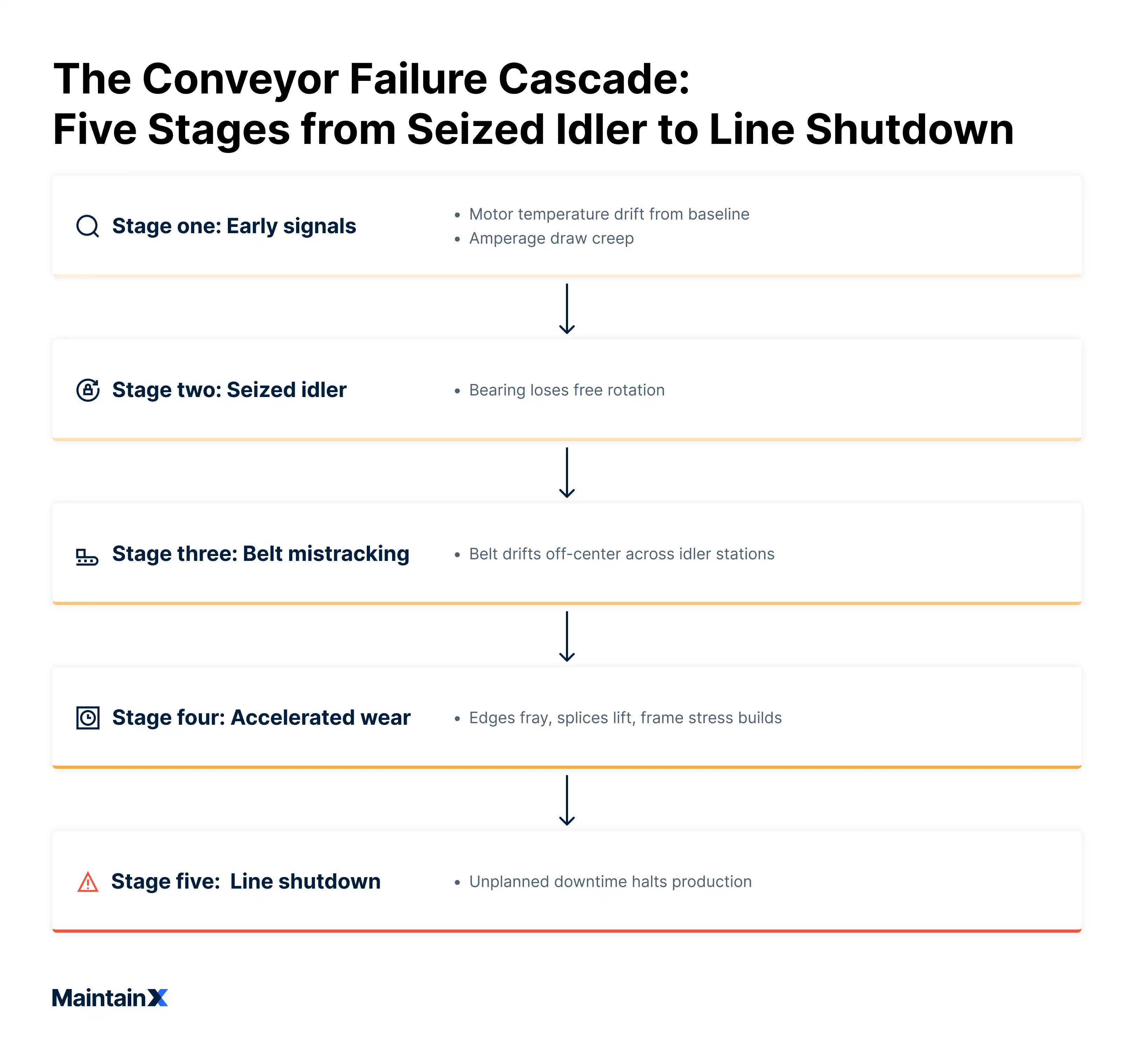
A single worn idler bearing rarely causes a conveyor system to fail on its own. Left unchecked, it generates heat, damages the belt surface, and shifts belt alignment. That misalignment then accelerates uneven wear along the belt edges and stresses the drive motor. Within weeks, a $30 bearing replacement becomes a $15,000 belt swap and hours of lost production.
This is why the zone-by-zone approach matters for effective conveyor maintenance. Each inspection item maps to a specific failure mode and the downstream consequences of missing it. A technician who understands that a sluggish take-up tensioner leads to belt slippage, then drive overload, then unplanned downtime, will prioritize that check differently than someone working through a generic task list.
Cross-industry conveyor compliance: OSHA, MSHA, and FDA requirements
Conveyor belts span nearly every heavy industry, but the regulatory landscape shifts depending on the environment. OSHA's general industry standards (29 CFR 1910) cover guarding, lockout/tagout, and emergency stop requirements for most manufacturing facilities. Mining operations fall under stricter MSHA rules (30 CFR Part 56/57), which typically mandate more frequent inspections and specific guarding around pinch points and material loading zones.
Food and beverage facilities add another layer. FDA and FSMA regulations require sanitary design, cleanability, and documentation that prevent contamination risks at transfer points.
As a best practice, incorporate regulatory callouts into your maintenance routine so teams can quickly identify which checks carry compliance weight. Knowing the regulatory rationale behind each item helps technicians distinguish between best practices and legal obligations, a distinction that matters during audits.
Note: This is a general informational summary only and does not constitute legal, regulatory, or compliance advice. Conveyor system requirements vary by industry, jurisdiction, and operating environment. Always consult the applicable OSHA, MSHA, and FDA regulations, your equipment manufacturer's specifications, and a qualified safety professional to determine the specific inspection, guarding, and documentation requirements for your facility and equipment.
Turn conveyor inspection data into predictive maintenance decisions
This shift from reactive to predictive thinking starts with consistent data collection. Recording severity, location, and frequency of findings across each conveyor zone creates a wear profile unique to each system. Teams can then schedule part replacements and necessary maintenance tasks during planned downtime rather than scrambling after a breakdown, ensuring continuous production flow.
When inspection findings accumulate over weeks and months, patterns emerge. A return idler flagged for unusual noise three cycles in a row signals bearing degradation before it causes belt surface damage. Belt edge fraying that worsens at a consistent rate reveals a belt alignment issue worth investigating at the source.
The checklist itself becomes a sensor of sorts, adding a data point with each completed inspection that sharpens the picture of equipment health over time.
Log every conveyor belt maintenance check with MaintainX
MaintainX replaces binders and spreadsheets with digital records that are searchable, timestamped, and tied to specific assets.
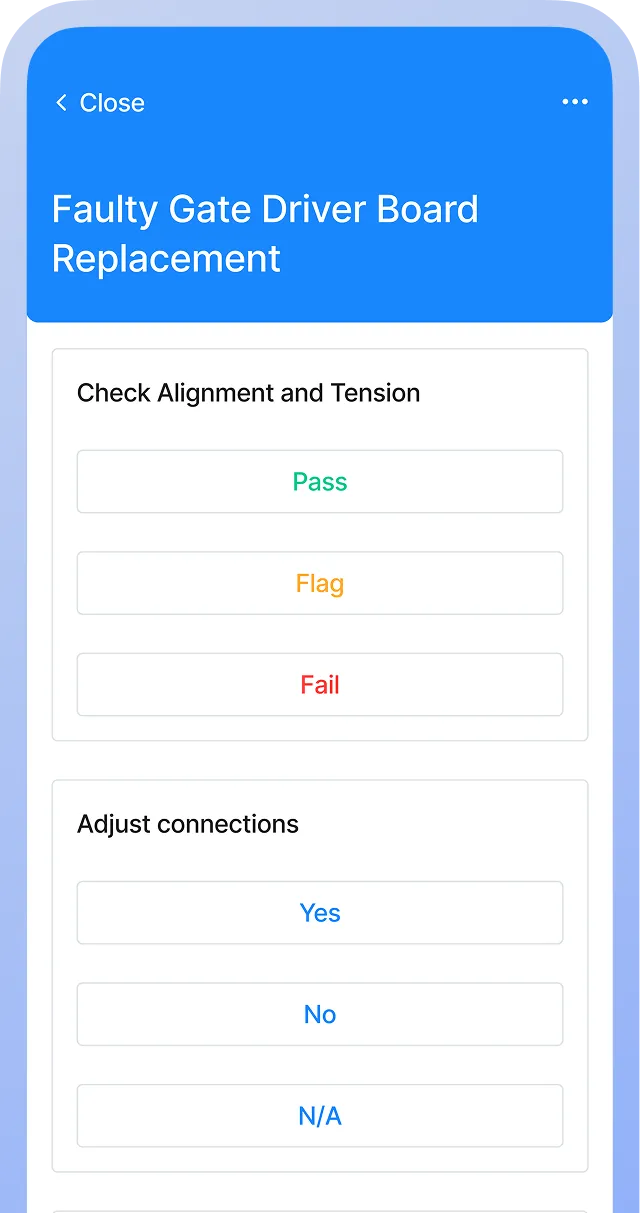
Technicians complete zone-by-zone inspections on a mobile device, attach photos of belt wear or damaged idlers, and flag items for follow-up. Work orders generate automatically from failed checks, so nothing falls through the cracks between inspection and repair.
Over time, MaintainX builds an inspection history for every conveyor in the facility. Maintenance managers can spot recurring conveyor belt issues, compare wear rates across similar systems, and make data-backed decisions about replacement timing.
Book a tour to see how MaintainX can benefit your facility.
Conveyor belt maintenance checklist FAQs
What should a conveyor belt maintenance checklist include?
A complete conveyor belt maintenance checklist should cover all essential components organized by zone:
- Belt surface and tracking: Inspect for cuts, excessive wear, belt slippage, material carryback, and uneven wear patterns; verify belt alignment across all idler stations.
- Drive system: Check motor temperature and amperage against baseline, inspect gearbox for leaks and unusual noise, and verify proper belt tension on drive components.
- Rollers and idlers: Spin idlers to check for seized bearings, inspect impact idlers at material loading zones, and listen for grinding that signals bearing failure.
- Belt cleaners and scrapers: Check primary and secondary belt scrapers for blade wear and proper belt contact to control material spillage and carryback.
- Transfer points: Inspect skirtboard seals for gaps, check chutes for wear or blockage, and verify that material handling operations flow cleanly through each zone.
- Safety devices: Test emergency stop pull cords, verify belt drift switches, and confirm all nip point guards are secured and safety warning stickers are legible.
Routine preventive maintenance across these zones keeps the entire conveyor system running smoothly and prevents costly breakdowns before they affect production.
How often should conveyor belt inspections be performed?
Inspection frequency depends on operating hours and system criticality. High-use conveyor systems typically require daily visual checks, weekly detailed walkthroughs, and monthly thorough inspections covering belt tension, belt alignment, and component wear. Critical production lines may need shift-level monitoring, while low-use systems can follow quarterly schedules. Always stock critical spare parts for high-wear components to minimize downtime when replacements are needed.
What are the most common conveyor belt issues, and how can they be prevented?
Belt misalignment, material spillage, belt slippage, and pulley wear cause most conveyor belt failures. Common conveyor belt maintenance to prevent these issues includes ensuring proper belt tension, regular cleaning with belt scrapers, and tracking adjustments at each inspection cycle. Monitoring wear patterns over time reveals developing problems before they trigger unplanned downtime or serious safety hazards.
How do you ensure proper belt tension on a conveyor system?
Proper belt tension allows 1–3% sag between idlers on the carry side under load. Check by measuring deflection, observing belt tracking behavior, and listening for slapping sounds. Overtensioning accelerates bearing wear on rollers and idlers; insufficient tension causes belt slippage and misalignment. Refer to your detailed maintenance manual for manufacturer-specified tension values for your belt type, whether flat belts, modular belts, or V-belts.
What maintenance records should be kept for conveyor systems?
Document inspection findings, wear measurements, adjustment actions, and component replacements for each zone of the conveyor system. Tracking these records over time in a computerized maintenance management system reveals failure patterns that enable condition-based maintenance scheduling. Date-stamped photos of belt surface condition, splice integrity, and pulley wear provide invaluable trend data for planning maintenance activities and justifying capital replacements.
When should a conveyor belt be replaced rather than repaired?
Replace belts when structural integrity is compromised. Signs include extensive ply separation, deep gouges exposing cords, damage to the lower cover rubber, or recurring splice failures at transfer points. Calculate replacement costs against repair frequency and unplanned downtime. Belts nearing manufacturer-rated operating hours warrant replacement even without visible damage, particularly on high-criticality conveyor systems where unexpected failures would disrupt continuous production flow.

Marc Cousineau is the Senior Content Marketing Manager at MaintainX. Marc has over a decade of experience telling stories for technology brands, including more than five years writing about the maintenance and asset management industry.


.webp)