

Most inspection programs fail because findings get logged, then forgotten. This guide covers every category of heavy equipment inspection, but more importantly, it covers the escalation, lockout, repair, and return-to-service steps that turn documentation into actual defect resolution.
Start with our downloadable heavy equipment inspection checklist, then explore ways to turn regular inspections into proactive preventive maintenance.
Key takeaways
- Inspections only prevent downtime when findings trigger documented action. Discovery should be followed by lockout, qualified repair, and return-to-service sign-off to properly close the loop.
- Digital checklists connected to a CMMS help spot trends, such as developing leaks or component wear, before they force unplanned downtime.
- Equipment-specific checklists matter. Excavators, cranes, dozers, and loaders each have distinct failure modes that a generic form won't catch.
How to use this checklist
Customize for your facility
This checklist covers general heavy equipment maintenance principles, but effective programs align inspection intervals with your specific equipment types and operating conditions. Edit your checklist accordingly.
Equipment in dusty environments typically requires more frequent filter checks, while machines with high utilization may need shortened service intervals. Match inspection frequencies to your OEM maintenance schedules and adjust categories based on your fleet mix.
Keep in mind that many safety-critical inspection items and minimum frequencies are dictated by regulatory requirements. Review applicable OSHA, MSHA, and OEM standards to ensure your program stays compliant.
Use a CMMS
Digital inspection platforms eliminate paper-based tracking challenges and create searchable audit trails. A CMMS allows technicians to complete inspections on mobile devices, automatically generate work orders from flagged deficiencies, and track compliance across your fleet. Digital records simplify trend analysis, while automated reminders ensure inspections happen on schedule.


Heavy equipment inspection checklist
Daily pre-shift inspection
Weekly walkaround inspection
Monthly service checks
500-hour service interval
Annual full inspection
Seasonal and environmental preparation
Telematics and monitoring systems
Documentation and compliance
This checklist is to be used only by those with appropriate training, expertise, and professional judgment. You are solely responsible for reviewing this checklist to ensure that it meets all professional standards and legal requirements, as well as your needs and intent.
Monthly vs. annual heavy equipment inspection requirements
Heavy equipment fleets often operate under overlapping regulatory frameworks. OSHA and MSHA each set distinct inspection intervals, and the requirements vary by equipment type, operating environment, and exposure level.
Monthly inspections typically cover wear items, fluid levels, safety devices, and operator controls. These frequent checks catch developing issues before they escalate into failures or citations. Annual inspections go deeper into structural integrity, load-bearing components, and certified system testing.
What matters most is translating inspection findings into action. A monthly inspection that flags a hydraulic leak only prevents downtime if it triggers an immediate work order. Annual inspection results often carry documentation retention requirements that span years, serving as audit evidence long after the work is complete.
From deficiency to resolution: The heavy equipment corrective action workflow
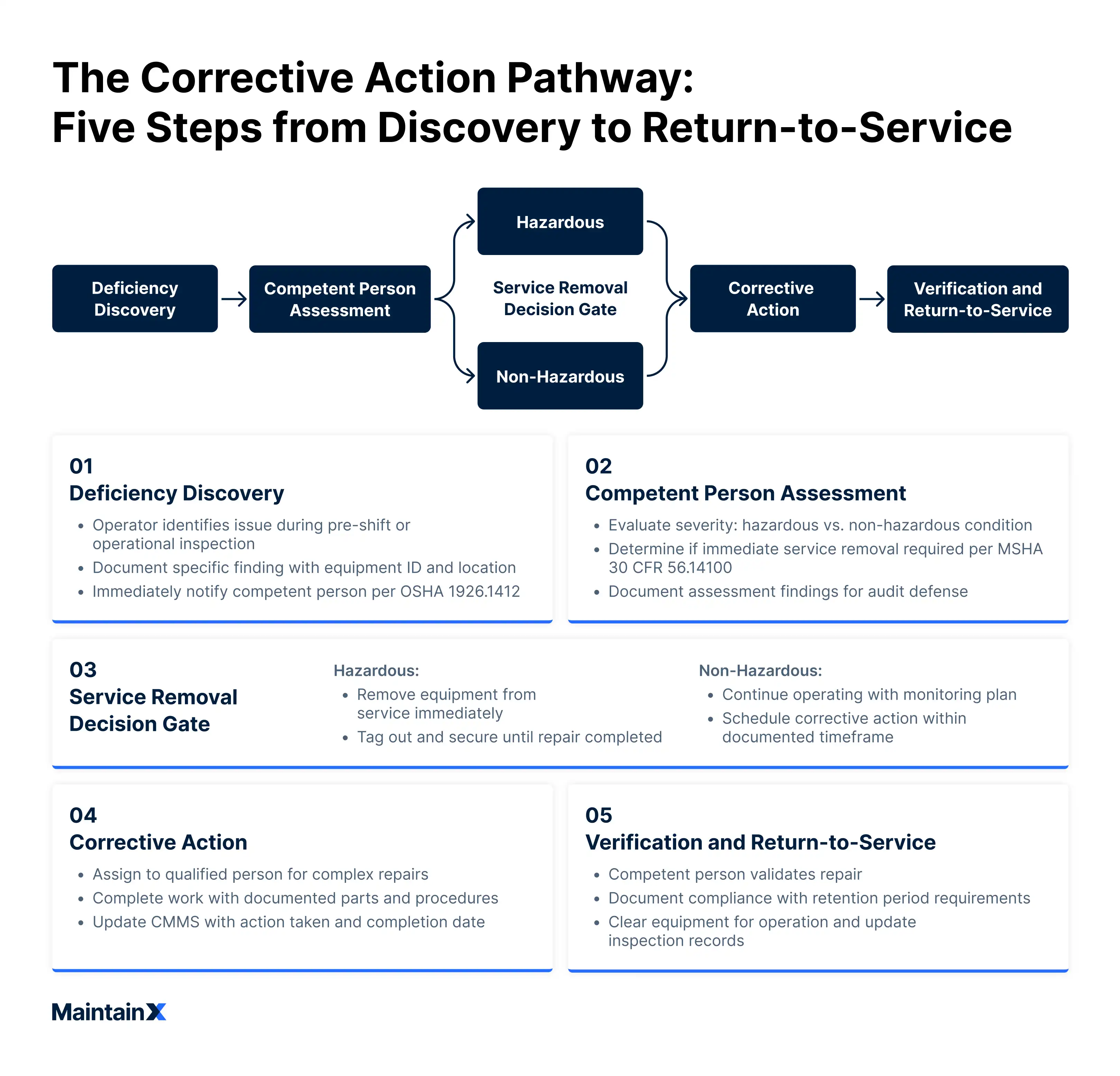
Repair workflows should follow a predictable path: Document the deficiency with photos and severity rating, escalate based on risk level, apply lockout/tagout if the equipment poses an immediate hazard, assign repair to a qualified technician, and schedule re-inspection before returning the machine to service.
The gap between finding a problem and fixing it is where compliance failures take root. Picture an operator who spots a cracked boom weld during a pre-shift walkaround. What happens in the next 30 minutes matters more than the inspection itself. IIf the inspection isn't followed by corrective action, you've created documented evidence that a hazard was known and left unaddressed.
Each handoff between the operator and the maintenance team needs a clear record. During an incident investigation, regulators look for proof that the organization acted on known deficiencies within a reasonable timeframe. A well-documented workflow shows exactly when each step occurred and who was responsible.
Common heavy equipment inspection failures
Most inspection failures fall into predictable categories:
- No documented follow-up: Operators report deficiencies, but no one creates a work order. The finding disappears.
- Skipped pre-shift walkarounds: Production pressure pushes operators to start work without completing daily checks, missing early warning signs.
- Incomplete records: Inspections logged without dates, signatures, or deficiency details lack the specificity regulators expect during audits.
- No re-inspection after repair: A corrective action closes the work order, but no one verifies the fix before the machine returns to service.
Each of these failures stems from treating inspections like a standalone task rather than the first step of a maintenance workflow. Teams that treat inspections as an important part of an overall preventive maintenance program see less downtime, lower operating costs, and an easier path to regulatory compliance.
Standardize inspections across job sites and equipment types with a CMMS
When equipment fleets span multiple job sites, inspection consistency becomes a real challenge. Different operators, supervisors, and regional regulations can produce wildly different documentation quality from one location to the next.
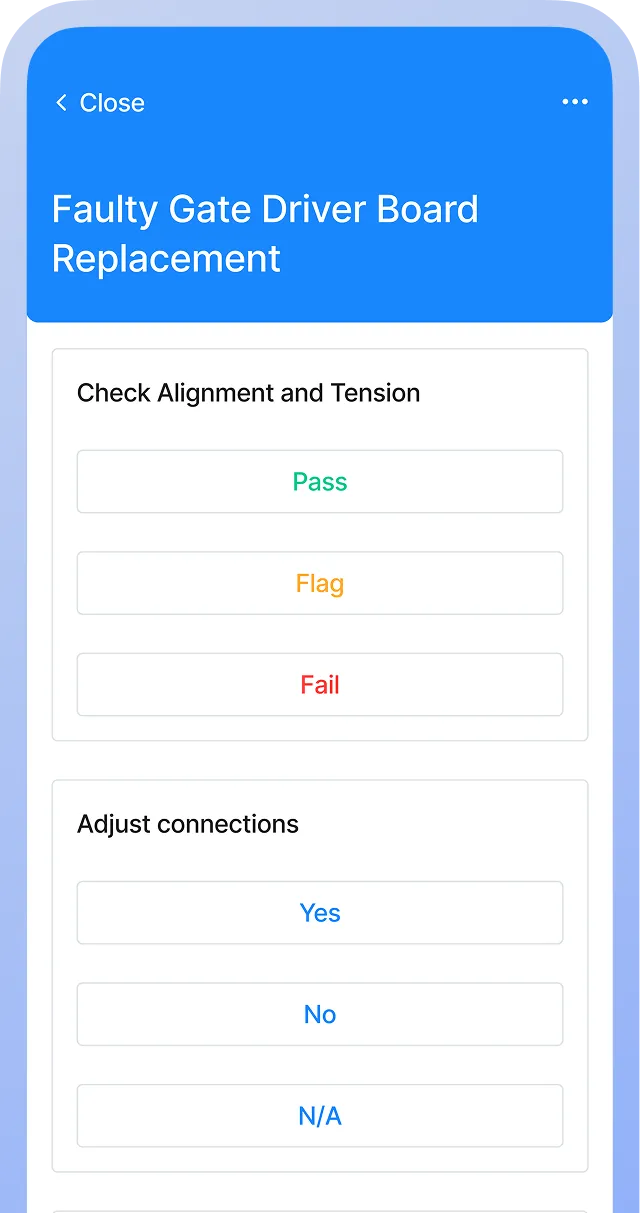
A CMMS connects inspection findings directly to work order creation, parts requests, and re-inspection scheduling. When a technician flags a deficiency on a mobile device, the system can route it to the right maintenance team with photos, severity levels, and equipment history attached.
MaintainX was designed to simplify heavy equipment maintenance inspections and checklists for operators in the field. Book a tour to see it in action.
Heavy equipment inspection checklist FAQs
How often should heavy equipment be inspected, and what's the difference between daily, monthly, and annual inspections?
Heavy equipment should be inspected at three intervals: daily (pre-shift), monthly, and annually. Each level serves a distinct purpose in your maintenance program.
Daily pre-shift inspections are your first line of defense against in-service failures. Operators check fluid levels, tire condition, brake function, lights, and visible hydraulic leaks: anything that could create an immediate safety hazard or cause accelerated damage during operation. Any deficiency found at this level should trigger a hold-for-repair decision before the machine enters service.
Monthly inspections go deeper, covering structural components, safety devices, and wear items that don't change shift-to-shift but degrade over time. Think wire rope condition, cylinder seals, load-bearing pins, and backup alarms. These are typically conducted by a qualified technician and feed directly into your PM scheduling and parts forecasting.
Annual inspections are your compliance and condition baseline. They document overall equipment health against manufacturer specifications, regulatory requirements (OSHA, jurisdictional codes), and your own fleet standards. This is where you identify long-term degradation trends, make rebuild-vs-replace decisions, and ensure your maintenance records can withstand a third-party audit.
Who is qualified to perform heavy equipment inspections, and what is a “competent person”?
Routine pre-shift checks are typically performed by trained operators. Periodic maintenance inspections require certified technicians with equipment-specific credentials. Structural assessments typically demand a licensed professional engineer, particularly under MSHA Part 56/57 or ASME B30 crane standards.
Under OSHA and MSHA regulations, a "competent person" is someone with sufficient training, knowledge, and experience to identify existing and predictable hazards, and the authority to take prompt corrective action. This is a legally defined standard, not just a job title.
What documentation is required for heavy equipment inspections, and how long must records be kept?
Inspection records must include equipment ID, inspector identity, findings, and corrective actions. Retention periods typically span three to five years, though regulations vary. These records serve as legal evidence during audits and investigations, protecting organizations from liability.
What should I do if my heavy equipment inspection reveals a safety defect?
Immediately remove defective equipment from service and apply lockout/tagout procedures. Document findings, assess severity, and escalate to maintenance personnel. Equipment should remain offline until the team completes repairs and verifies them through re-inspection to prevent incidents and compliance gaps.
Do different types of heavy equipment require different inspection checklists?
Equipment-specific hazards require tailored checklists. Excavators need bucket inspections while forklifts prioritize mast stability. Universal items like brakes and lights appear across all types. OSHA and MSHA jurisdictions impose different requirements, especially for equipment operating in overlapping regulatory environments.
Should I use paper checklists or digital inspection software for heavy equipment?
Digital platforms like MaintainX eliminate transcription errors and accelerate the finding-to-fix handoff between operators and maintenance teams. Built-in photo capture and automatic work order generation simplify deficiency resolution. Paper works for simple operations, but digital software scales better across multi-site fleets.

The MaintainX team is made up of maintenance and manufacturing experts. They’re here to share industry knowledge, explain product features, and help workers get more done with MaintainX!




.webp)