

A plant shutdown checklist built around cross-team coordination keeps turnarounds on schedule and on budget. This guide organizes the full maintenance shutdown lifecycle into planning, execution, and restart phases, where upstream completion gates downstream work, so nothing falls through the cracks when dozens of teams are moving at once.
Key takeaways
- Plant shutdowns succeed with cross-team coordination rather than individual task completion. Successful handoffs between operations, maintenance, and safety teams prevent miscommunication that causes accidents during turnarounds.
- Review equipment work order history and deferred maintenance data 4–8 weeks before shutdown so teams can prioritize what actually needs attention rather than discovering critical issues mid-event.
- Capturing as-found conditions and deviations in a CMMS transforms each site shutdown into institutional knowledge that can inform future use and capital planning.
How to use this checklist
Customize for your facility
No two manufacturing plants are alike, and no two shutdown processes are, either. This checklist should be adapted based on facility type, process complexity, and equipment scale. Consider your specific energy sources (thermal, electrical, hydraulic, pneumatic) and ensure each has documented isolation procedures.
A chemical plant requires more rigorous atmospheric monitoring protocols than a manufacturing facility. Facilities with complex process interdependencies typically require coordination checkpoints between production, maintenance, and engineering teams. Align your shutdown sequence with equipment-specific manufacturer recommendations and regulatory requirements.
Use a CMMS
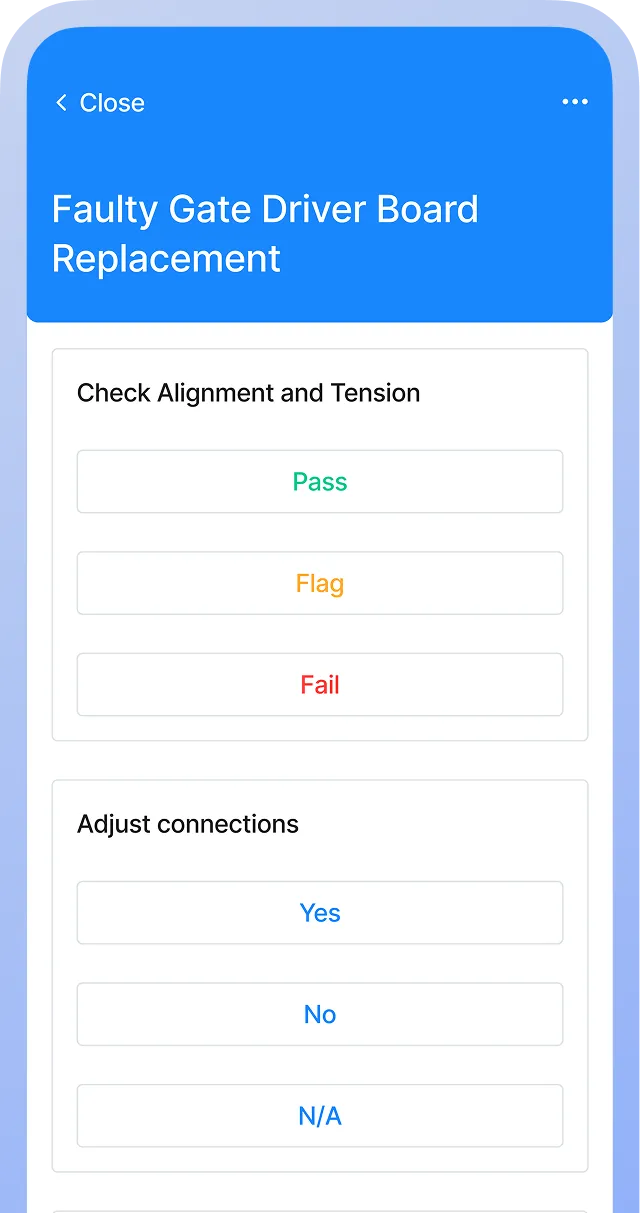
A computerized maintenance management system (CMMS) helps coordinate complex shutdown activities by centralizing work orders, permits, and checklists in one platform. Digital lockout/tagout tracking creates an audit trail for each isolation point and authorized employee.
With a CMMS, teams can efficiently assign tasks, generate work orders, track progress in real time, and attach photos and timestamps, all of which can help with maintenance planning, program reviews, and regulatory audits.


Plant shutdown checklist
Pre-shutdown planning and scope definition
Notifications and team coordination
Production and process shutdown sequence
Energy isolation and lockout/tagout
Safety verification and permit operations
Environmental and hazardous materials controls
Restart and recommissioning
Post-shutdown review and documentation
This checklist is to be used only by those with appropriate training, expertise, and professional judgment. You are solely responsible for reviewing this checklist to ensure that it meets all professional standards and legal requirements, as well as your needs and intent.
Task dependencies and handoff points during shutdown execution
Plant shutdowns rarely follow a single linear path. In practice, multiple crews work parallel streams, and a missed handoff between them can stall the entire schedule.
Mapping out and recording task dependencies before the shutdown starts helps teams see where their work prevents someone else's progress. For example, a vessel inspection crew can't begin until operations confirms depressurization and issues the confined space permit. That handoff needs a defined owner, a communication method, and a timestamp.
Schedule overruns often trace back to undocumented dependencies rather than the work itself taking longer. When teams treat each handoff as a formal checkpoint with written confirmation, delays surface early enough to adjust. Over successive turnarounds, these recorded handoff patterns become a planning resource that tightens future schedules.
How to scope a plant shutdown using maintenance data
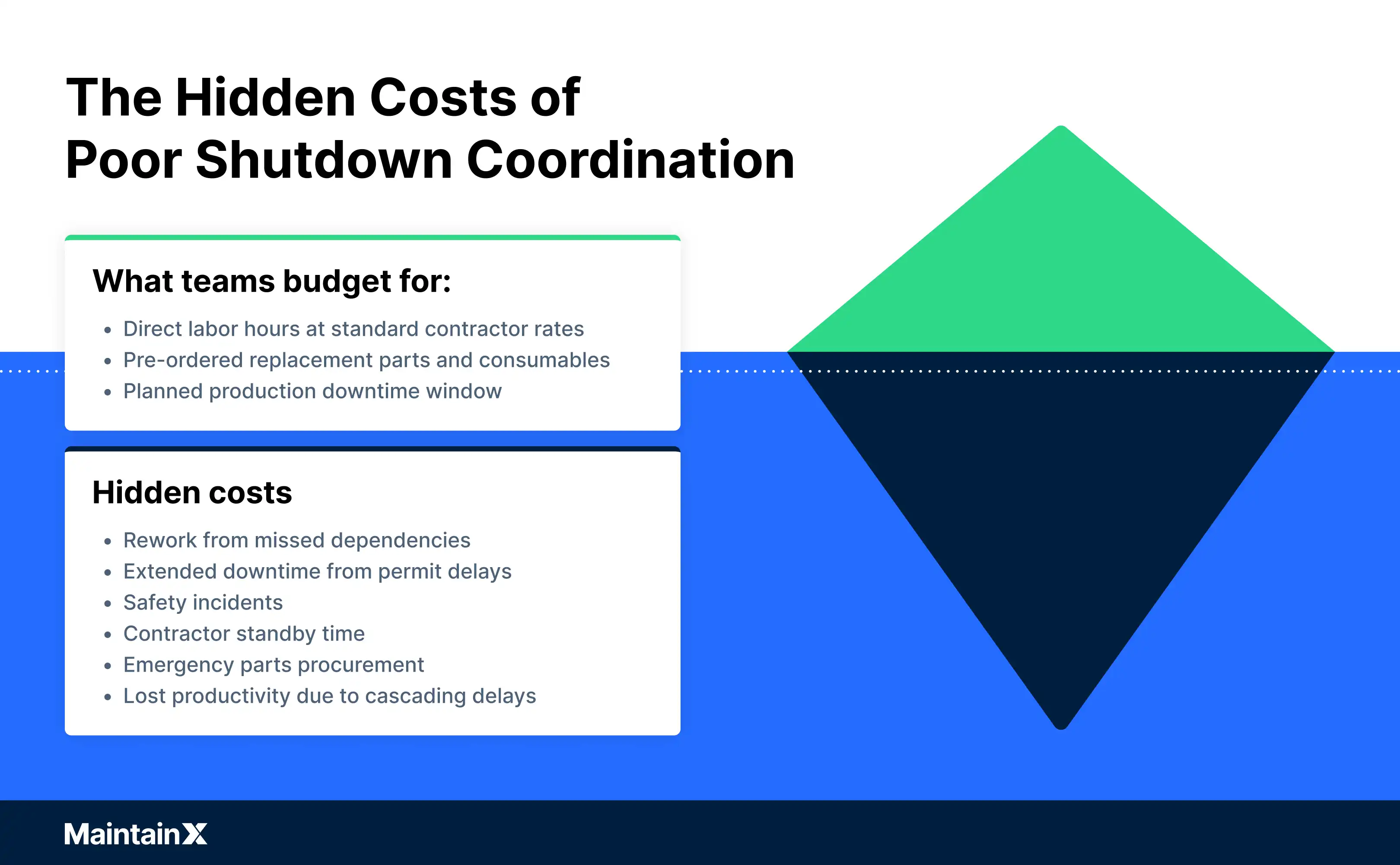
Shutdown scope decisions made without data tend to swing between two extremes: doing too little and deferring risk, or packing in every possible task and blowing the schedule.
Work order history offers a more grounded starting point. Reviewing repeat failures, deferred corrective actions, and asset condition trends from the past 12 months of normal operations helps teams rank what genuinely merits shutdown conditions versus what can wait for routine maintenance windows.
Deferred maintenance backlogs are especially valuable. Items flagged during normal operations but held for "next outage" often pile up without re-evaluation. Some lose relevance as conditions change. A structured backlog review weeks before the shutdown trims scope to high-value work and keeps the schedule realistic. A data-driven approach also gives leadership a defensible basis for budget and resource requests.
How to restart a plant safely after maintenance shutdown
Restart is where shutdown planning pays off or falls apart. A safe restart depends on verified completion of every upstream task, not just a verbal "all clear" from each team.
Effective restart sequences typically follow a reverse-dependency logic. Systems that shut down last come back online first, and each energization step waits for documented confirmation that teams have restored all isolation points.
Pre-startup safety reviews (PSSRs) confirm that teams have closed all permits, removed lockout/tagout (LOTO) devices, and that process parameters match design intent. Skipping or rushing this review is one of the most common sources of post-shutdown incidents.
Capturing thorough documentation during the shutdown process makes these reviews faster and more reliable each turnaround. Experienced teams treat restart as its own phase with dedicated checklists rather than an afterthought tacked onto the tail end of maintenance work.
Run more efficient shutdowns with a CMMS
Shutdown coordination lives or dies by information flow. Spreadsheets and whiteboards can handle small outages, but multi-day turnarounds with dozens of concurrent work streams benefit from more sophisticated tools.
MaintainX is a mobile-friendly CMMS that centralizes work orders, permit status, and task dependencies in one place so every team sees real-time progress. When a crew completes an upstream task, downstream teams get notified immediately rather than waiting for a radio call or shift meeting.
Each turnaround builds on documented durations, resource needs, and lessons learned from previous events. Over time, planning accuracy improves and schedule buffers shrink. MaintainX supports this cycle by linking asset records, inspection findings, and work history directly to shutdown planning workflows.
See how MaintainX transforms plant shutdown checklists and inspections by booking a tour:
Plant shutdown checklist FAQs
What OSHA regulations apply to plant shutdowns?
Primary regulations include 29 CFR 1910.147 for lockout/tagout, 1910.146 for confined space entry, and industry-specific standards. Most facilities also follow OSHA's general duty clause requiring safe workplace conditions during maintenance activities.
Important note: This guide is meant for informational purposes only, not OSHA advice. Always confirm your requirements by checking current regulations or speaking to a compliance professional.
How far in advance should you plan a plant shutdown?
Start planning 4–12 weeks ahead, depending on scope. Review facility work order history and deferred maintenance backlogs to identify critical repairs. Complex turnarounds with third-party contractors require longer lead times for resource coordination.
What confined space requirements apply during plant shutdowns?
Entry permits are required for tanks, vessels, and enclosed process areas. Test facility atmosphere for oxygen, flammable gases, and toxins before and during entry. Station trained attendants outside and establish emergency rescue procedures.
What documentation is required for a compliant plant shutdown?
Maintain LOTO permits, confined space entry forms, work order records, and safety meeting sign-in sheets. These records show compliance and create institutional knowledge that reduces planning time and risk on future shutdowns.
Be sure to check the latest guidelines on proper documentation for plant shutdown compliance.

The MaintainX team is made up of maintenance and manufacturing experts. They’re here to share industry knowledge, explain product features, and help workers get more done with MaintainX!


.webp)