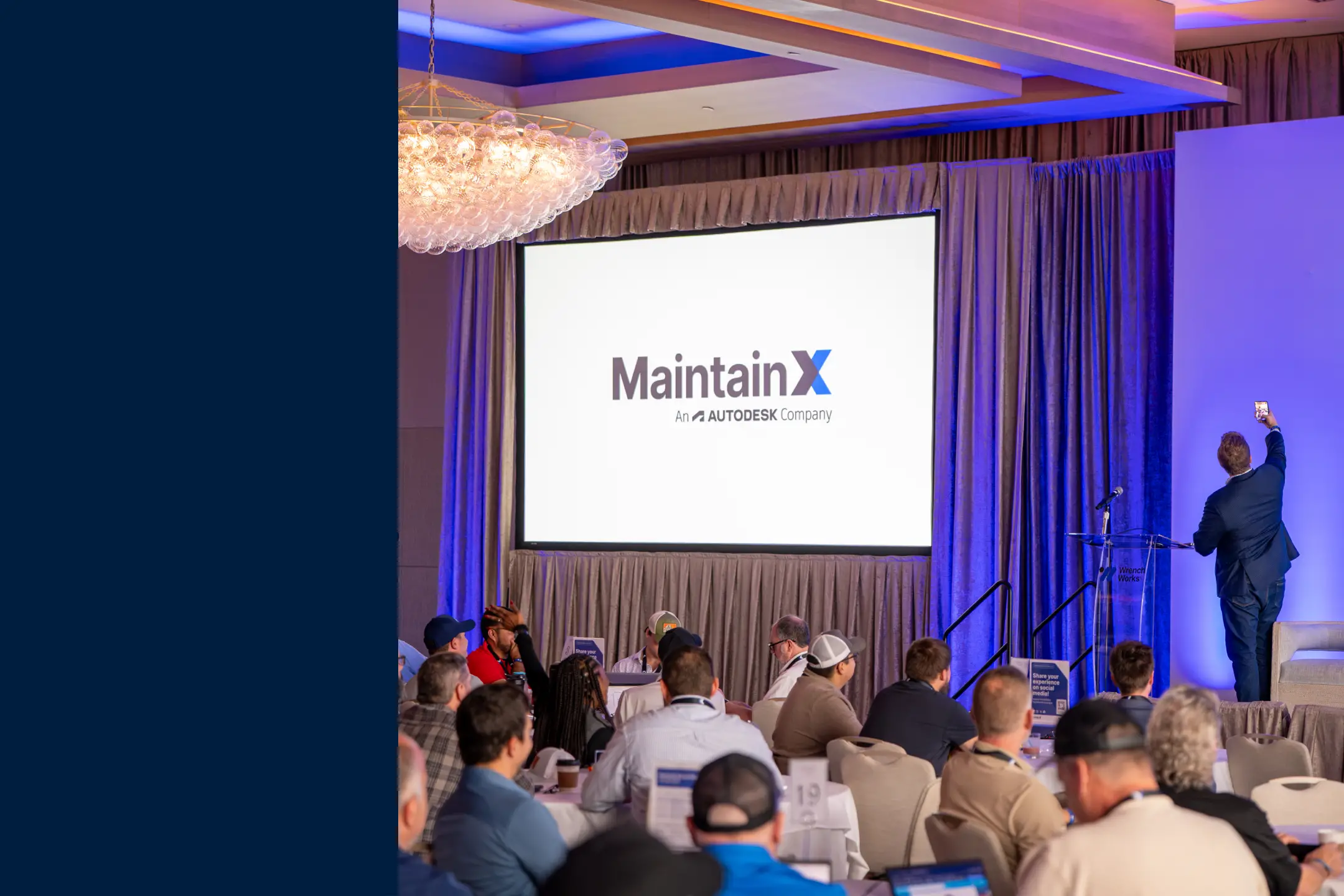
Five days. That's how much planned downtime a PACCAR truck plant in North America gets in a year, and all of it falls over Christmas. The rest of the year, a truck rolls off the line every four to four and a half minutes, and the equipment has to run the entire time.
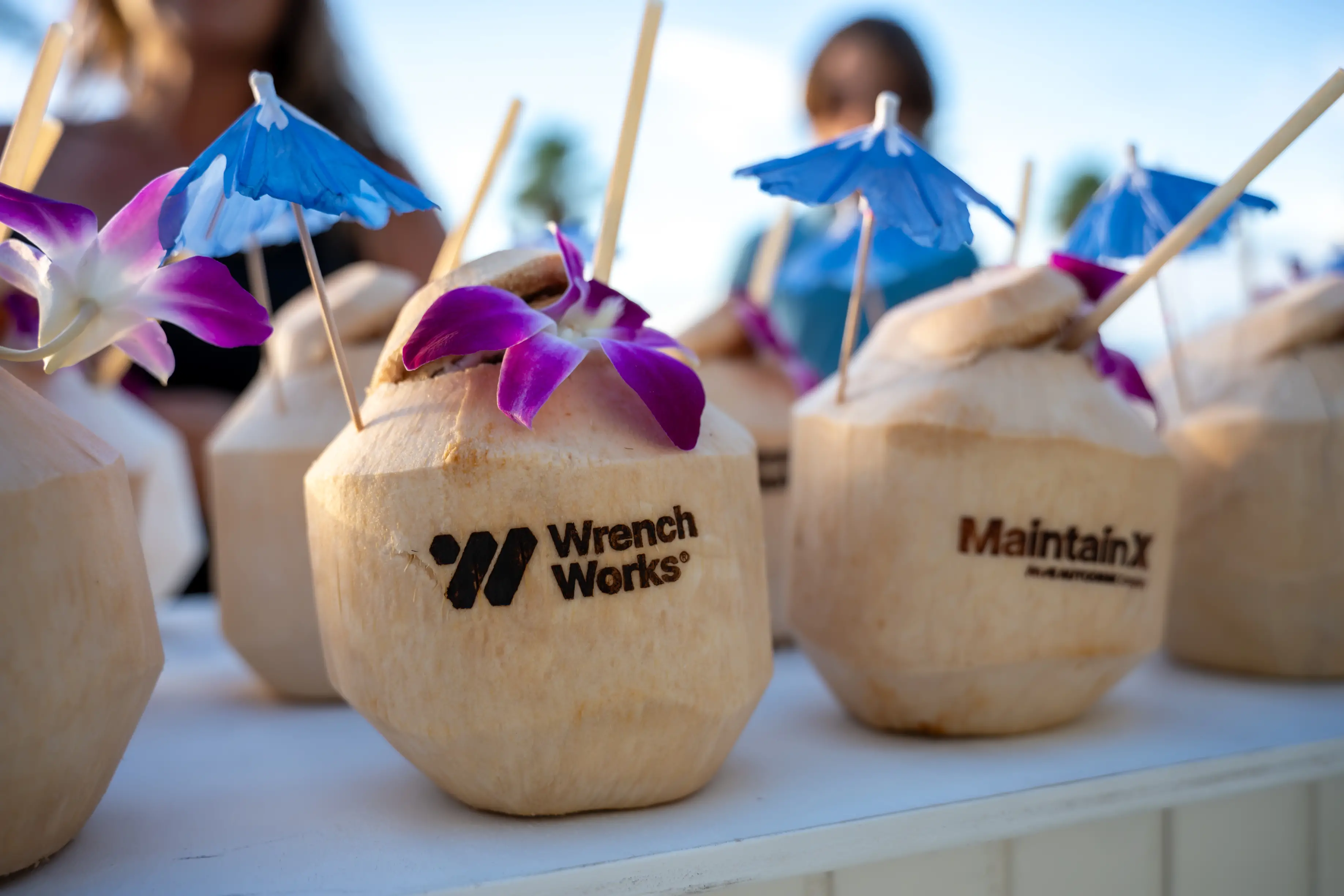
That is the reality that maintenance and operations leaders brought to Clearwater Beach on Nov. 18 and 19, when Wrench Works came to the Opal Sol Resort. Food and beverage manufacturers. Fuel and energy. Logistics, facilities, an airport, a ski resort, a school campus. Different industries, same job: keep things running.
By the end of two days, one idea had surfaced in nearly every room. The technology that sticks is the technology people choose for themselves. The teams that make it stick pair that ownership with discipline: a real problem, a small start, and proof before scale.
Day 1: Certification, Adoption, and a Sunset Reception
Day 1 skipped the headline sessions and went straight to fundamentals. Attendees spent the morning earning their MaintainX Administrator Certification through hands-on, guided training. Then they moved into the Driving Technician Adoption & Change Workshop, working inside MaintainX to find exactly where a poorly configured work order breaks down for a technician, and redesigning it with peers.
Both tracks ended with a certificate ceremony. Then everyone regrouped on the event lawn for a welcome reception as the sun went down over the water.
25 What? Why Amcor and Fortune Brands Went After Machine Data
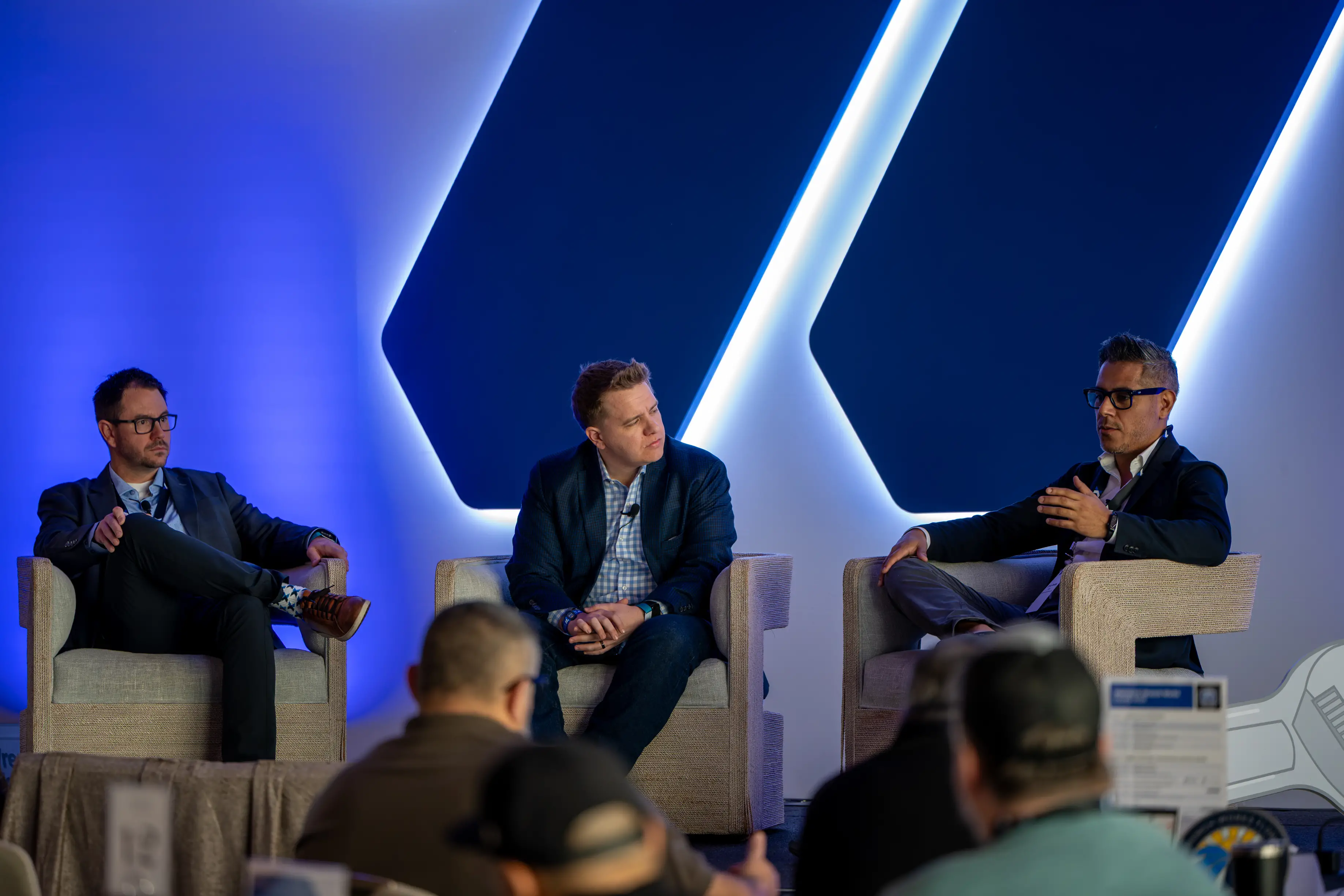
Day 2 opened with Carlos Paredes of Amcor and Pat Knox of Fortune Brands. Two manufacturers, working independently, reached the same conclusion: reliability can't keep running on a different data set than production. Both had hit the same wall. Without a shared view of machine data, nobody could see what was happening on the floor until it was already a problem.
For Amcor, the answer was to unify a stack built through years of acquisitions rather than rip it out. Paredes walked through what closing the loop looks like. A PLC alarm and a radio call become a work request that arrives with full context attached: what alarmed, what product was running, what the operator saw. The technician adds the root cause and the actual fix. That record is what makes the whole system smarter over time.
Then he made the point that stuck with the room. A raw PLC tag reads 25. Twenty-five what? PSI or bar? Which plant, which machine, and was that machine new, repaired, or refurbished? Send that bare 25 to an AI agent at scale and you get garbage in, garbage out. His verdict was blunt. That's not an AI problem. It's a data strategy problem, and no AI platform will fix it for you.
Knox described a harder internal sell at Fortune Brands: translating contextualized floor data into terms leadership already tracks, like MTBF and MTTR. His team built its own connectors into Ignition, internal databases, and ERP, and pointed them at MaintainX data. He showed a dashboard built on the MaintainX API in about two minutes, trending the KPIs his plants care about. The next target is production scheduling, where his schedulers spend a large share of every day validating orders, counts, and inventory. The goal is a plan built with one click. The people doing that work today get moved to other business problems, not cut.
The audience pushed back with exactly the right question. An engineering manager whose plant brought in its first CMMS this year asked when AI actually becomes valuable. Don't you have to master dribbling and rebounding before you try anything fancy?
Paredes answered with a compressor story. Amcor's high-pressure centrifugal compressors had a habit of failing with little warning, and one failure could mean a three-to-four-month repair and a shut-down facility. The team started simple: vibration and temperature. No fancy AI. It fixed the problem. Then the history they had built revealed something nobody expected, a chance to sequence the compressors more efficiently. Once the data fixed a real problem, everybody started trusting it.
Here's what I told the room: If you wait for a maturity benchmark before you start, you will always find a reason to wait. Point the technology at one real problem, and it speeds up the very maturity you were waiting for. Paredes put it more simply. In this era, simple wins.
Built by the Plants, Not Handed to Them
Graham Gillett of PACCAR picked up the thread. He came up through lean manufacturing in the PACCAR Production System, and today he runs a manufacturing excellence team with reliability as one of its core workstreams. Remember those five days at Christmas. European plants get summer, Easter, and Christmas shutdowns to catch up on maintenance. His North American plants don't. He can't afford a tool nobody uses.
His filter for any pilot is simple. Decide up front how you'll know it's ready to scale, and how you'll know it's time to kill it. Most pilots don't fail outright. They sit in purgatory because nobody drew that line in advance.
He drew an equally sharp line between a standard and a science experiment. The difference is ownership. A tool a plant chooses for itself behaves like a standard. A tool pushed onto a plant behaves like an experiment nobody asked to run. He has watched the same tool succeed at one plant and stall at another. The software didn't change. The ownership did.
The example that landed hardest was a Vision AI pilot. PACCAR plants each have around 50 people inspecting quality by hand, and Gillett would rather put those people on work that adds value. Now the plants themselves are pulling the vision system from one site to the next. Truck plants are calling him asking to go live, and he's making them wait until his due diligence is done. He never wants the CIO, CTO, or CEO asking why he made a call without the evidence. He did the same with MaintainX: the decision criteria, success criteria, and ROI are documented and sitting on his boss's desk.
Ownership gets a tool adopted. Discipline keeps it from turning into a science experiment.
He applies the same thinking to material handling, where he is looking at fleets of autonomous mobile robots in place of 150 drivers moving parts from point A to point B, with those people retrained to engineer, maintain, and run the fleet.
Gillett was just as direct about separating a real objection from noise. The complaint that changes his mind is specific and repeated: a Teams thread about not being able to find a component another plant has, or a report that takes hours to assemble. A general complaint about change doesn't. In a finance-driven culture like PACCAR's, that specificity is also what earns a maintenance manager the time and budget they're asking for.
He has seen what ownership looks like up close. On one plant tour, technicians, not managers, presented MaintainX to the visitors. Afterward, a colleague overseas texted to ask why they hadn't done this years earlier.
His advice to the room: technology has to be driven by a problem, not adopted for its own sake. Start with the problem. Ask the people living with it every day before you decide what the pilot even is.
A First Look at What's Next
Between the two spotlights, attendees got an early look at the MaintainX roadmap in a session kept to the room. Judging by the conversations in the hallway afterward, there's plenty there worth coming back for.
Three Challenges to Pick From
Day 2's breakout block gave attendees three hands-on challenges, each built around a scenario instead of a lecture.
Asset Intelligence Challenge: facilitated by Geraldo Signorini and Alex Marotta. Teams faced a familiar bind, a critical asset down for the third time this quarter and a backlog that won't quit. They picked three 90-day priorities, named what could block each one, and decided up front what proof would justify the investment. One reframe from the room stuck: running to failure isn't a mistake. It's a decision you make once you know how the asset fails, who to call, how long the fix takes, and what it costs.
AI Launch Plan Challenge: facilitated by Jason Gatoff, Doug Roberge and me. More on this one below.
The Gold Standard Challenge: facilitated by Jamie Thompson and Tarek Jaafar. The room split across two identical-looking MaintainX environments, one standardized and one not, and both teams got the same questions a CFO or VP of Reliability would ask on any given day. The standardized org answered in under a minute. The other couldn't answer at all, because the data underneath wasn't consistent enough to trust.
Your CEO Just Got Off a Plane: Inside the AI Launch Plan
We opened the AI Launch Plan with a scenario Doug, Jason, and I have all watched play out. Your CEO just got off a plane. The news is full of AI headlines. And the only instruction you get is this: we need an AI strategy.
No budget. No scope. No guidance. You run maintenance, and you're supposed to connect that sentence to the reality of your day job.
So we skipped the theory. Teams picked three AI use cases to pilot in the next 90 days, from a menu that ran from a technician AI assistant to an automated root cause analyst. Then they named what could block each one, and the moment a human has to check the AI's work before it acts.
To get started, I borrowed from Marie Kondo. List the tasks in your week that don't spark joy: the routine work you hate but have to do, every day or every week. That list is where AI belongs first. You don't need to know how the AI will solve it yet. Name the problem and work backward.
My table alone had an airport, a ski resort, a school campus, a multi-site facilities team, and a fuel producer. Here's where they landed.
Prioritization. Scheduling is still manual in most shops, and as one attendee put it, the squeaky wheel gets the grease. Human squeaks, not machine squeaks. Technicians gravitate to the easy job instead of the important one. PMs slip while the operation shouts about something else. Downtime follows, and asset life gets shorter.
Predicting breakdowns. At an airport, one failure can stop the baggage system and send passengers to their connections without their bags. The pain isn't only downtime. It's unpredictable, and it keeps everyone working on their toes.
End-of-shift summaries. Several teams already use this one, and the room called it the clearest early win. A good shift summary done by hand takes 45 minutes or more. I'll admit I was skeptical it would be useful. The feedback changed my mind.
Then came the blockers, and the room was honest about them. Cost, and not knowing who holds the budget. Buy-in from the carpeted side of the building. A workforce that one director described as mostly twice his age and new to AI. Real AI anxiety, spanning everyone from the colleague who proudly pays for his own AI subscription to the one who refuses to touch it. Cybersecurity teams that clamp down on anything new. No internal policy for what AI may do or who approves it. And data that isn't ready: one campus runs boilers from the early 1960s next to boilers installed two years ago, and pneumatic thermostats next to a modern building automation system. Add patchy Wi-Fi across a facility, and connectivity becomes its own project.
The most useful debate was about where the human stays in the loop. The answers converged fast: safety, compliance, and any time money leaves the building. Nobody wants a fat-fingered 100 on a purchase order that should have said 10. That's why the MaintainX Parts Restocker drafts purchase orders into an inbox for approval instead of sending them, and why MaintainX AI only acts within the permissions of the user's role.
One attendee flipped the question: What happens when the AI says the boiler is the priority, and a coworker asks a technician to look at a burned-out light? A good technician helps, because relationships keep a property running. How do you keep that culture alive when a computer is setting the priorities? There isn't a clean answer yet. It's the right question to keep asking. Another table summed up the whole session in three words: trust but verify.
Learning Labs, Powered by Camcode
The afternoon ran two labs back to back so attendees could catch one or both. The AI Training Lab covered how to put MaintainX Assist to work on the floor. The Impact Workshop traced how the value of a single work order shows up everywhere from the shop floor to the P&L.
The Wrench Bench+
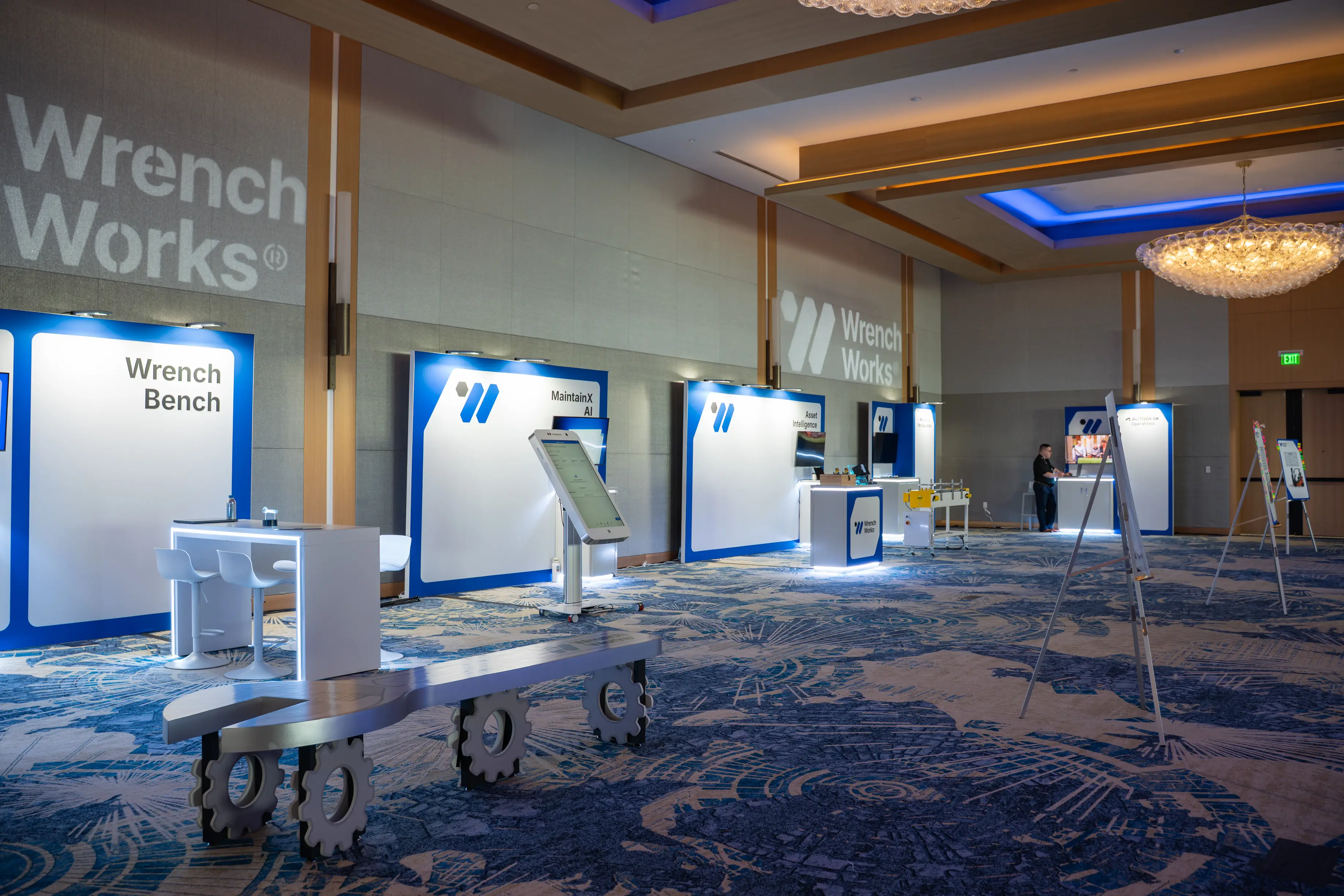
Both days kept a row of booth stations open for anyone who wanted to go deeper between sessions. The Wrench Bench stayed staffed the whole time for walk-up questions about anyone's own MaintainX setup. Next to it: MaintainX AI and what Assist and Smart Hub do on the floor, a first look at Asset Intelligence, MaintainX.org's work bringing MaintainX into vocational and technical education, Autodesk Operations Solutions following MaintainX's move to join Autodesk, and event partner Camcode, whose durable, scannable asset tags connect physical equipment straight to its MaintainX record.
An Evening at the Aquarium: MaintainX Customer Celebration
Day 2 closed with a short trolley ride to the Clearwater Marine Aquarium for dinner, drinks, and the moment we set aside each year to recognize operational excellence that shows up in the data, not just in the intentions.
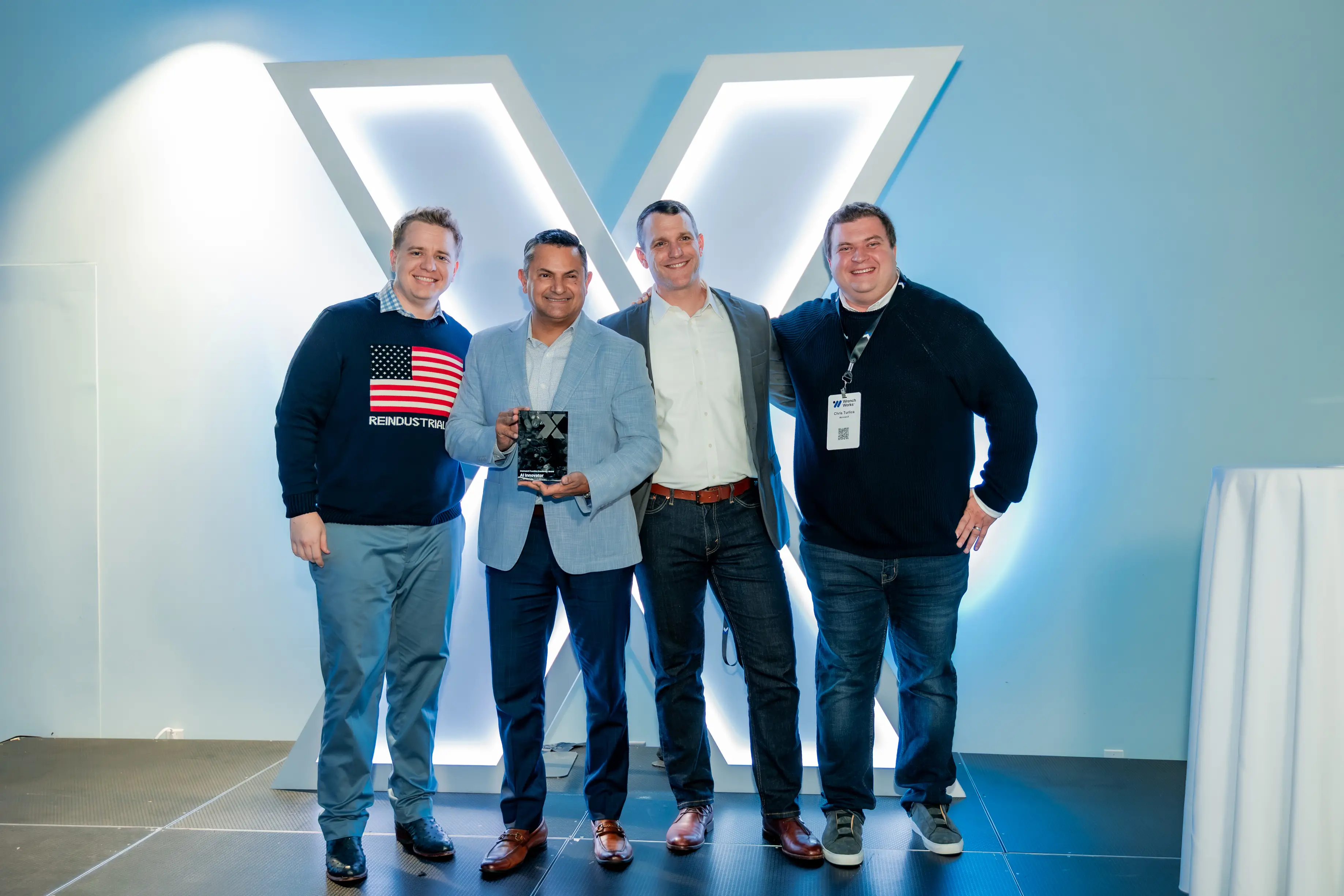
MaintainX Mastery: Reddy Ice, for breadth of use across work orders, parts, purchase orders, meters, and automations. Reddy Ice runs PM work orders and automations across more than 50 sites and was among the earliest adopters of vibration monitoring and PLC data pull-in.
Parts Pro: Vail, for managing parts across more than 160 organizations with disciplined cycle counts, a prioritization scale for high-value parts, and a purchasing integration built around how they work.
Maintenance Maturity: Brenntag, for operating at a scale that pushes MaintainX's own product thinking, with strong global asset standardization and an asset hierarchy spanning multiple organizations.
AI Innovator: Cintas, for high adoption of MaintainX Assist across more than 200 sites, using it to ingest manuals and historical work order comments so technicians can troubleshoot in seconds and hard-won knowledge stays with the company.
Product Pioneer: USALCO, a long-time customer that has grown alongside MaintainX and spoke at our very first customer event more than two years ago.
Chris Wilcox Lifetime Achievement Award, presented for the first time this year to its namesake, Chris Wilcox of Univar Solutions, for more than 30 years spent championing the maintenance profession.
Congratulations to every honoree.
What We Heard Between Sessions
Away from the stage, the conversations at the Wrench Bench and around the floor kept landing on the same lessons, whatever the industry.
A spare you can't see is a spare you buy twice. One airport team, still early in bringing its parts into MaintainX, had an expensive belt fail. They waited a week on a replacement, then found a spare on site after the new one arrived. That's exactly why their parts department is next in line for the rollout.
One system is what makes a part shareable. An engineering manager whose company runs six plants across North America, Europe, and Asia wants every site on the same system, so a critical half-million-dollar spare can serve lines in three locations instead of sitting on three shelves. Before his plant brought in its first CMMS, he joked, work order records disappeared into TON 618, the largest known black hole. Now he pulls up his PM plan when the auditors arrive.
Machine data belongs where the work happens. Teams managing multiple sites want sensor and PLC data flowing into the same system as their work orders, not a separate dashboard nobody checks.
Paper holds up until the audit. Procedures and permits kept on paper look fine day to day. Once an auditor asks for them, they turn into the blocker.
Language shouldn't decide who can fix a machine. Attendees lit up at MaintainX Assist translating and surfacing manuals for technicians who don't share a first language with their documentation. Teams also liked separating system access by team, so maintenance and quality can trust the same reporting.
Every session in Clearwater came at the same idea from a different angle. The plants getting the most out of MaintainX aren't the ones with the loudest mandate from the top. They're the ones where the people doing the work decided they wanted it, and where leaders gave that demand a real problem to solve and a way to prove it.
That's not just a software outcome. It's a trust outcome, and it gets built on purpose.
Start with the problem. Build it with the people who live with it. See you at the next stop.
Wrench Works Florida 2026 FAQs
What does "done with them, not to them" mean for a maintenance pilot?
It's how PACCAR's Graham Gillett described the difference between a tool that sticks and one that doesn't. A plant that chooses a tool and shapes how it's used treats it like a standard. A tool handed down from corporate tends to get treated like an experiment nobody asked to run.
Do we need mature maintenance fundamentals before using AI?
Not necessarily. Amcor started with simple vibration and temperature monitoring on critical compressors, fixed a costly failure mode, and only then found that the data history revealed a better way to sequence those compressors. Pick one real problem with a measurable cost, start small, and let early results build trust in the data.
Why does machine data need context before AI can use it?
A raw PLC value like 25 means nothing on its own. AI needs the unit, the asset it came from, where that asset sits, and its repair history to interpret it. Without that context, AI multiplies bad data instead of fixing it.
When should a human stay in the loop on AI in maintenance?
Attendees at Wrench Works Florida agreed on three moments: anything touching safety, anything touching compliance, and any time money is spent. MaintainX Parts Restocker, for example, drafts purchase orders for approval rather than sending them.
What is a good first AI use case for a maintenance team?
Start with a routine task that eats time every day or week. End-of-shift summaries were the most common early win at the event, since a good summary written by hand can take 45 minutes or more.
What is Asset Intelligence?
Asset Intelligence connects condition data, like vibration and PLC signals, directly into MaintainX so teams can spot an asset drifting toward failure and act.

Nick Haase is a co-founder for MaintainX and is responsible for designing and leading the go-to-market strategies. He is a subject-matter expert in emerging CMMS technologies.