Operations and maintenance teams often work like rival departments instead of partners. Both departments often end up pointing fingers when equipment fails, fighting over who takes the blame for scrapped product, and avoiding collaboration. This dynamic costs plants far more than the occasional defective batch.
This playbook covers practical tactics for breaking down those barriers, like role swapping, shared PM days, and digital systems that replace blame with data.
Why operations and maintenance teams are often at odds
If you walk into any manufacturing facility, anywhere, there’s a good chance you’d find that the operations and maintenance teams are isolated at best and actively hostile at worst.
Cliff West, an OT solutions consultant at MaintainX who spent 15 years in steel tubing manufacturing, remembers arriving at a plant where the two departments "absolutely hated each other." This left him questioning his decision to join the company from the minute he stepped foot on the plant floor.
The animosity wasn't random. It grew from years of high-stakes blame games. When a defect scrapped $150,000 worth of product (80 tons of steel tube down the drain) someone had to answer for it. Both teams fought hard to keep that reject out of their department. Over time, that fighting became the default way of working together.
How conflicting KPIs fuel tension
The root of most conflict between operations and maintenance is how each team gets measured. When a defect or failure occurs, leadership wants to know if it was the operator’s fault or the equipment’s fault? That question turns every incident into a zero-sum game where one team wins and the other loses.
Cliff saw this play out repeatedly. "Everyone is fighting as hard as they can not to get that reject into their department," he explains. The way teams get measured for performance shapes whether they collaborate or compete.
The culture of Cliff’s plant did eventually shift after years of deliberate work. Teams shifted from arguing about blame to arguing about who would take responsibility. That shift didn't happen by accident. It came from changing how people worked together day to day. Let’s take a look at some of the programs Cliff helped implement that reversed the culture and brought operations and maintenance anchored on the same goals.
Role swaps: a tactic for building cross-functional alignment
One of the most effective tactics Cliff used came from necessity. Both departments were running lean, and neither had enough people to handle their workload alone. So they started swapping team members.
The approach was simple: take one handy operator and put them in maintenance for a month. Give operations one maintenance technician in return. Both people spend a month walking in the other team's shoes.
Cliff's role swap worked because of a few key choices:
- Pick the right people: Select operators who are handy and maintenance techs who communicate well
- Set a clear timeframe: One month gives enough exposure without permanently disrupting operations
- Frame it as development: Position the swap as skill-building, not surveillance or punishment
What each team learns from walking in the other's shoes
The swapped employees came back as advocates for the other side. The operator who spent a month in maintenance understood why repairs take time and why technicians get frustrated when equipment gets abused. The maintenance tech who worked operations understood production pressure and why operators sometimes push equipment harder than they probably should.
"It opened their eyes to what the other side experiences on a day-to-day basis," Cliff says. When staff return to their original teams, they break down barriers that exist when departments rarely interact.
Where to start your autonomous maintenance rollout
Both Cliff and Kevin Davis, regional maintenance manager at EMR overseeing 15 sites across the Southeast, recommend the same starting point: daily inspections performed by operators.
Equipment like forklifts, man lifts, overhead cranes, and mobile equipment often require documented pre-use checks. In many plants, those checks happen on paper forms that sit in a filing cabinet. These forms stay trapped in that filing cabinet until the next catastrophic failure hits on Friday at 3:00pm, says Kevin.
Begin with required daily inspections
Starting with required inspections makes sense for a few reasons. Operators already know the task, you're just changing how they document it. The inspections are often regulatory requirements, so you're improving compliance at the same time. And moving from paper to a digital system creates immediate visibility that paper trails never provided.
Use pre-use checks to connect operators with maintenance
The real power of digitized inspections comes from connecting operators directly to maintenance. When an operator flags an issue in a shared system, maintenance sees it immediately. No more paper forms sitting in a file that nobody reviews.
This is the process that Kevin enacted at EMR. Now, operators know that everything they’re logging in the system is immediately routed to the right people on the maintenance team, who see it and start taking action in minutes, according to Kevin. That direct connection motivates operators to report issues because they see results.
Progress to basic maintenance tasks
Once inspections run smoothly, expand to basic maintenance activities like greasing bearings and simple lubrication. The key is providing detailed procedures that leave little room for error.
Cliff recommends making procedures so thorough that operators have very little reason to make a mistake. Include every bearing point, the correct grease type, required tools, and pictures showing exactly what to do. Keep skilled maintenance work with the maintenance team, like electrical troubleshooting, complex mechanical repairs, or anything requiring lockout/tagout beyond basic training.
What operators can handle in autonomous maintenance
Clear boundaries protect both equipment and people. Kevin's approach at EMR involves grouping corrective actions by skill set, like an electrical group, welding group, and mechanical group, rather than having operators attempt everything.
How to structure shared PM days with operations
Cliff's biggest impact came from rethinking how his plant handled PM shutdowns. Initially, Cliff would shut down a section of the plant, send operators home with reduced hours, and hire outside contractors to help with preventive maintenance.
Except, those contractors didn't know the equipment, and they would make more mistakes, says Cliff. Meanwhile, operators who knew the equipment intimately were sitting at home.
Pairing operators with maintenance techs
The solution was straightforward. Cliff generated a list of PM work orders, assigned one maintenance technician to lead a small group of operators, and sent them to tackle the work together. The maintenance tech handled technical decisions and quality control. Operators provided extra hands and learned the equipment in the process. The teams worked together, ate lunch together, and built relationships that improved collaboration long after PM day ended.
Replacing outside contractors with internal teams
Using internal teams instead of contractors delivered multiple benefits for Cliff and his team. It eliminated service agreements and account setup. Contractors no longer made mistakes because they didn’t know the equipment. Operators got full hours instead of going home early. And both teams built relationships that made everyday collaboration easier.
Getting leadership buy-in for autonomous maintenance
Convincing skeptical leadership to buy into the type of system that Cliff built requires connecting the project and its benefits to the problems that senior leaders want solved. Knowing what’s at the top of their priority list and how they define success, then tying your efforts to these elements is how you’ll quickly gain support.
Show immediate value to skeptics
Kevin shares a story about a safety manager who initially rejected the idea of digitizing pre-use checks. Kevin asked one question: "How often do you review the paper pre-use checks?"
Without answering, the safety manager's position flipped and he was asking how quickly Cliff could get the system implemented. The realization that paper records weren't actually being reviewed made the case instantly.
Connect autonomous maintenance to financial visibility
About three months after Kevin's team started using their CMMS, management came back with unexpected feedback. "They said, ‘Wow, I wasn’t aware of the amount of work this small maintenance crew is getting done on a daily basis across this big region,’" recounts Kevin.
That visibility extends to parts and procurement tracking, asset lifecycle data for capital expenditure planning, and work order history that justifies maintenance headcount. When finance can see what's happening, they become allies.
How a shared digital system ends finger-pointing
Before shared systems, disputes about equipment problems turned into interrogations, remembers Cliff. Operations would say that they told maintenance they were doing something wrong, but that they’d been ignored, while maintenance would deny the interaction ever happened. The only way to find the truth was to sit both parties down and interrogate them. This built walls between departments and created a culture where one side was placing the blame on the other.
Making communication transparent and traceable
Disputes become documented facts with a shared system. "When someone logs a problem, you can say 'looks like you logged it, looks like you did or didn't fix it,'" Cliff explains. "It's just a fact instead of an argument over what actually happened."
Kevin has had a similar experience. He describes seeing the entire history of a work order in one place. A mechanic posts an exploded-view drawing and requests a part number. The inventory manager comments with a quote request to the vendor. POs move through approval.
"I’m able to see this exact chronological step through an entire work order system from when it breaks to when it’s fixed."
Enabling real-time collaboration across distance
Kevin shares a story about a leader who was about to drive two hours to help an electrician troubleshoot a problem. Instead, Kevin suggested they try something different: have the electrician take photos and post them in the work order comments.
Within seconds, photos appeared. The expert at one location walked the electrician 100 miles away through the troubleshooting process via the comments.
"After about fifteen minutes, they were able to troubleshoot the issue and the asset was back up and running without the team lead having to drive all over," says Kevin.
Handling resistance from frontline workers
Not everyone embraces change willingly. While some embrace new ways of working and new technology, others are concerned about the change to their daily routine and increased visibility into their work. Here are a few tactics that Cliff and Kevin used to overcome this hesitancy:
Address concerns about increased accountability
Some workers see digital systems as surveillance. Kevin's team addressed this by framing the change as a direct connection to maintenance. Instead of pre-use checks that seemed like busy work no one would look at, Kevin told his team that digitizing each task would make the work they do more valuable than ever. It also meant more visibility into the maintenance response of the requests they made.
Offer incentives for TPM participation
Cliff's plant offered a simple incentive, "If you were an operator that was enrolled in TPM, we'd give you an extra dollar an hour on your paycheck." Frame participation as skill development and career advancement. Make it optional at first to identify champions who can influence their peers.
Make the technology easier than the old way
Kevin planned to buy tablets for each depot. When he explained the process—walk to the docking station, grab the tablet, do your pre-use check, return the tablet—workers suggested using their phones instead to make the process easier.
The fastest path to adoption is showing workers that the new system makes their jobs easier. When operators see immediate response to reported issues, they become advocates for the system.
How MaintainX supports autonomous maintenance programs
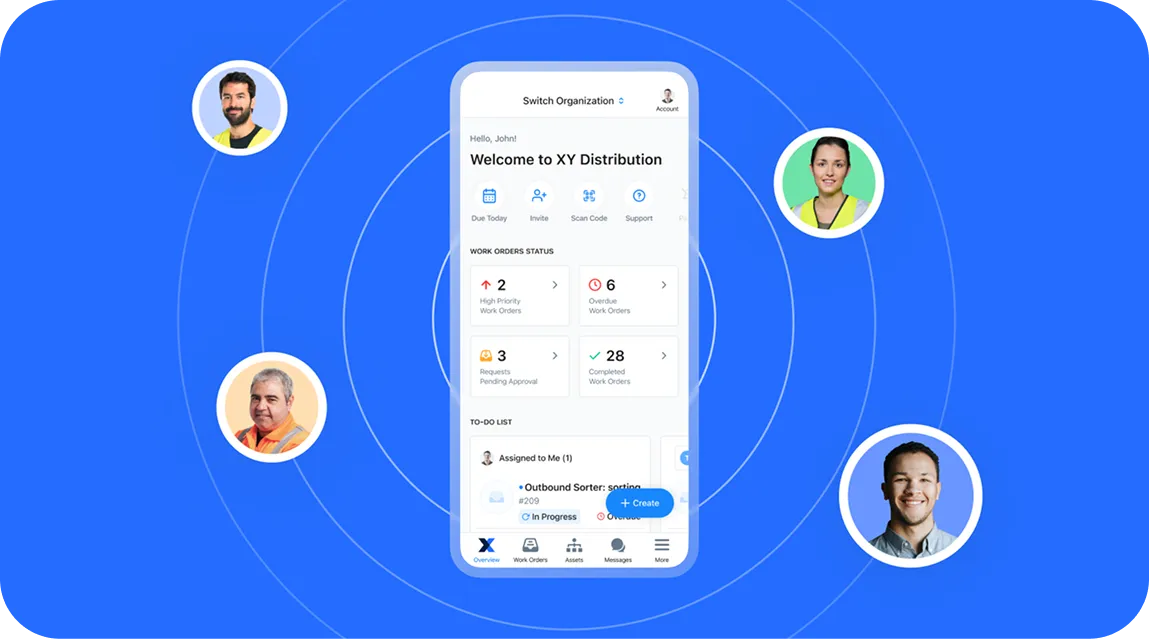
The workflows described by Cliff and Kevin depend on having the right platform connecting operations and maintenance teams. MaintainX enables autonomous maintenance through mobile-first design that lets operators complete inspections from personal phones. Photos and status updates appear instantly for maintenance teams. Procedure templates with images and videos guide operators through unfamiliar tasks safely.

Marc Cousineau is the Senior Content Marketing Manager at MaintainX. Marc has over a decade of experience telling stories for technology brands, including more than five years writing about the maintenance and asset management industry.