
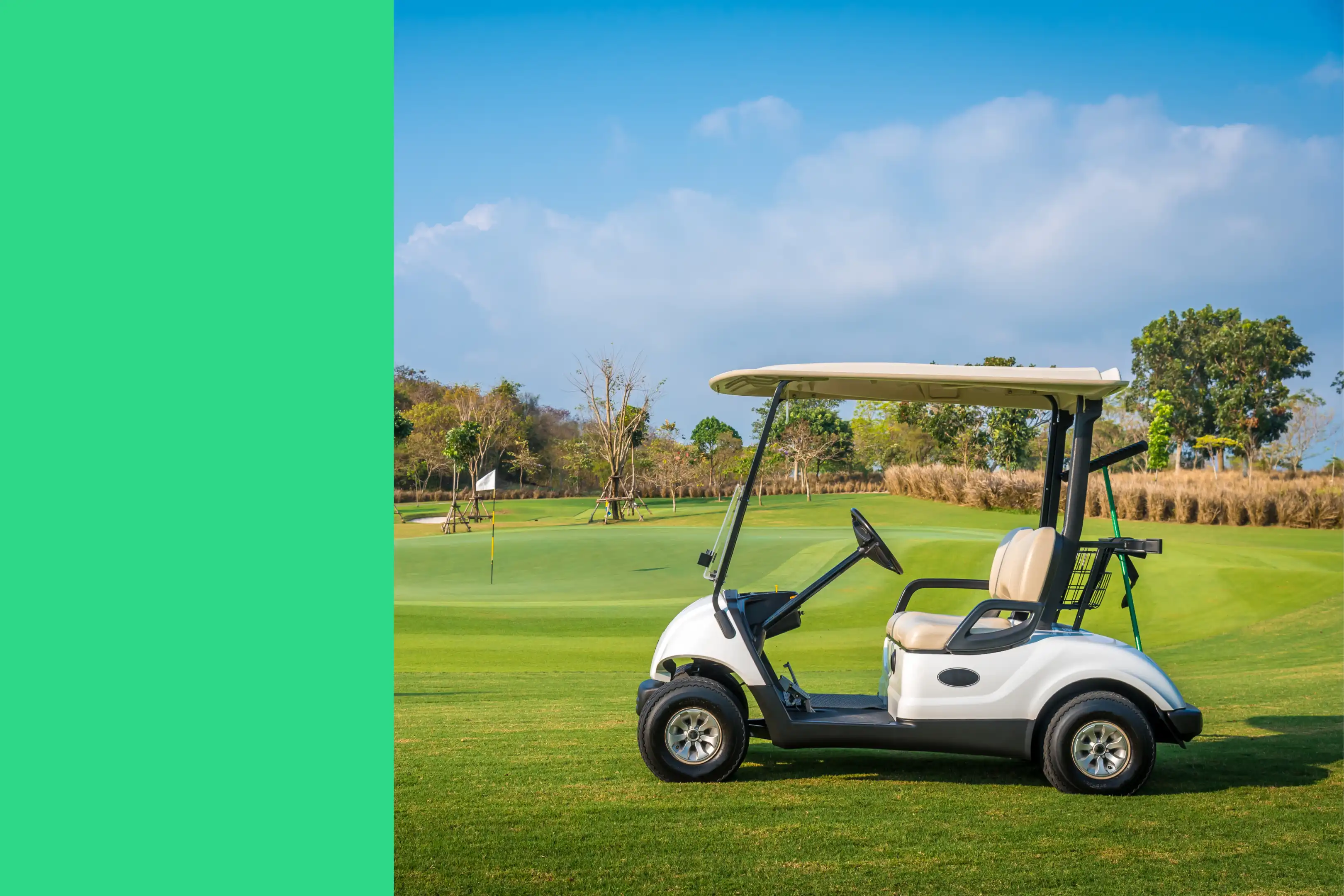
Ad-hoc golf cart repairs create unnecessary downtime and put the guest experience at risk. A structured maintenance checklist helps technicians scale service across an entire fleet through repeatable inspection schedules and consistent repair workflows.
This guide includes a checklist template you can adapt for both electric and gas units. Regular inspections protect the guest experience and reduce liability exposure, and documented maintenance records give your team a defensible paper trail in the event of an audit or incident.
Key takeaways
- A repeatable inspection schedule helps uphold the guest experience across your property while limiting liability exposure in the event of a cart failure or incident.
- Electric and gas carts each require different inspection tasks. Stagger scheduling to avoid overservicing one type and creating unnecessary downtime across the fleet.
- Tracking golf cart maintenance in a computerized maintenance management system CMMS helps surface failure patterns early, so you can address issues before they affect availability during peak demand.
How to use this checklist
Customize for your facility
Adapt this checklist to match your fleet size, operating environment, and usage intensity. Golf courses place different demands on carts than resort properties with short-distance passenger transport. Facilities in coastal or high-humidity environments will typically need more frequent corrosion inspections.
Terrain matters too: hilly courses tend to accelerate brake wear based on how guests use the carts. Adjust inspection frequencies to reflect your daily utilization rates and the manufacturer recommendations for your specific models.
Use a CMMS
Upload this checklist to a CMMS to help your team track inspections across a distributed fleet and automate preventive maintenance scheduling. Staff can log photos of unit conditions, generate work orders on the spot when inspections flag worn or failed components, and build out maintenance histories that reveal recurring failures before they require a major overhaul or battery replacement.
A CMMS also maintains compliance records for annual inspections and operator certifications, with ongoing audit trails that document when and how safety checks were completed.


Golf cart maintenance checklist
Daily pre-operation checks
Weekly inspection
Monthly maintenance
Quarterly service
Seasonal conditioning
Annual overhaul
Charging infrastructure
Documentation and compliance
This checklist is to be used only by those with appropriate training, expertise, and professional judgment. You are solely responsible for reviewing this checklist to ensure that it meets all professional standards and legal requirements, as well as your needs and intent.
How to schedule golf cart maintenance across mixed electric and gas fleets
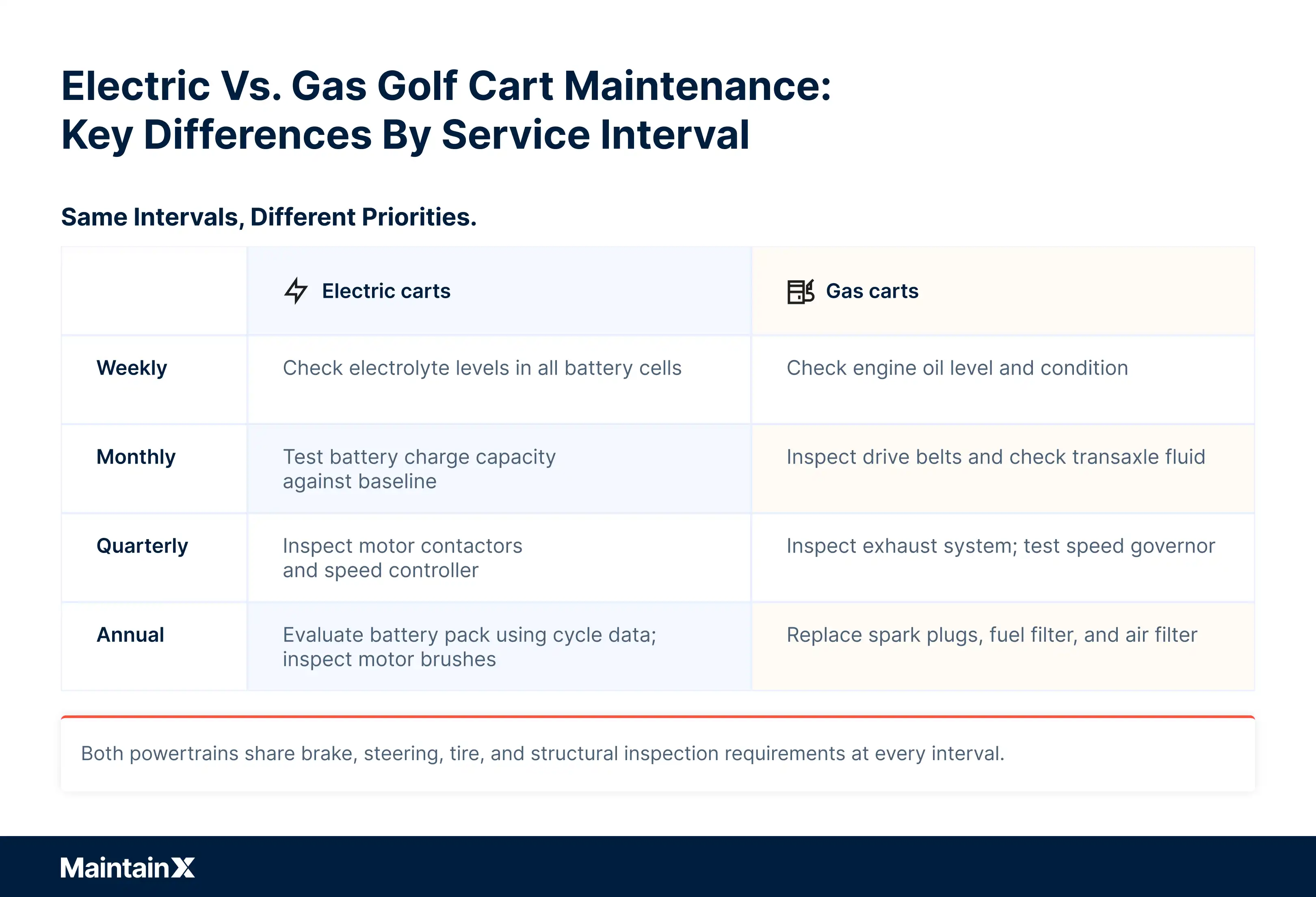
Electric and gas golf carts don't share a service calendar. Electric carts need battery watering, terminal cleaning, and charger checks on regular cycles. Gas carts require oil changes, air filter replacements, and spark plug inspections at engine-hour intervals. Running both types on the same schedule usually means one powertrain gets over-serviced while the other falls behind.
Effective fleet managers match service tasks to cart type and stagger service windows to avoid pulling too many units out of rotation at once. Grouping electric carts for Monday battery checks and gas carts for Wednesday engine service, for example, keeps availability reasonably steady across a mixed fleet throughout the week.
Seasonal shifts affect scheduling too. Pre-season service should start weeks before peak occupancy — a staggered approach catches worn belts or failing cells long before guests arrive, rather than finding five carts down on opening weekend.
Guest transport vs. utility carts: Different inspection standards
Inspection standards vary depending on a unit's on-property purpose.
For guest-facing carts, cosmetic issues are an urgent priority alongside mechanical ones. Cracked windshields, faded paint, or a loose canopy mounts shape how resort visitors and club members perceive your property. They can also signal broader safety concerns. Run thorough checks on these units daily.
Utility carts used by ground crews have different priorities. Because they carry heavier loads, operate on rougher terrain, and accumulate hours faster, suspension, tire tread, and cargo bed condition need more frequent attention. Base mechanical checks on usage hours: oil checks or changes every 100–200 hours of operation, for instance.
Charging infrastructure maintenance for electric golf carts
Charger failure can go unnoticed until it affects operations. A single malfunctioning charging station can leave several carts undercharged overnight, with sluggish performance showing up first thing the next morning. Routine charger inspections covering cable condition, connector cleanliness and output voltage help protect fleet-wide availability.
Make sure your charger count can keep up with fleet demand. A common guideline is one charger per cart, though facilities that stagger usage and run around-the-clock shifts can sometimes share chargers across rotation groups. The goal is to match charge cycles to deployment windows so every cart is fully charged before its next shift.
Electrical panel capacity matters as well. Adding carts without confirming available amperage can trip breakers or degrade charge rates across the entire bay. Planning charger infrastructure alongside fleet growth prevents bottlenecks during peak-season expansion.
Why a CMMS belongs in your golf cart maintenance program
MaintainX converts scattered paper service logs into a structured, searchable digital history for every cart in the fleet. Each completed inspection, battery test, or brake adjustment becomes a timestamped record tied to a specific asset, so operators can demonstrate exactly what steps were taken to keep units safe.
Fleet-wide visibility also supports more proactive maintenance. When multiple electric carts from the same model year all show battery decline in the same month, that's a signal to order parts or schedule deeper service. MaintainX surfaces these patterns automatically, turning routine documentation into a long-term planning tool.
Simplify golf cart repair workflows across your fleet with MaintainX. Book a tour today.
Golf cart maintenance checklist FAQs
What is the 90-degree rule in golf carts, and why does it matter for resort operations?
The 90-degree rule is a standard facility policy requiring golf carts to stay on paved paths until level with the ball, then turn off at a 90-degree angle to approach the ball, and return to the path the same way after the shot.
Resorts widely adopt this policy to minimize turf damage and protect landscaping. It also extends cart lifespan by reducing terrain stress, which matters when your proper maintenance program covers 20 or more vehicles across the property.
How often should hotel and resort golf carts undergo maintenance inspections?
Regular maintenance for hospitality fleets should follow a tiered schedule:
- Daily pre-shift checks catch safety issues before guests board
- Weekly inspections cover golf cart tires, tire pressure, and windshield condition to address wear from constant use
- Monthly service addresses fluids, brake pads, brake fluid, and deeper mechanical systems
High-utilization fleets may need to run these tasks more frequently than golf courses, since carts rarely sit idle between shifts.
What are the most common golf cart problems in hospitality settings, and how can they be prevented?
The most common failures are battery sulfation from inconsistent charging, brake fade from frequent guest stops, and upholstery tears. Scheduled charging cycles that keep the battery pack fully charged, quarterly brake inspections, and protective seat covers prevent most of these issues before they sideline carts during peak occupancy.
For electric golf cart fleets, also watch for loose connections at the battery terminals and low battery water levels in lead acid batteries, both of which accelerate wear and reduce the battery's ability to hold a charge.
How should golf cart maintenance differ between electric and gas-powered fleets?
Electric golf carts require daily charging verification, regular battery watering using distilled water (never tap water), and periodic terminal cleaning to prevent corrosion. The charging process should use the right charger for your battery type, whether lead acid batteries or lithium ion batteries, and batteries should never be left discharged for extended periods, especially during golf cart storage or long term storage between seasons.
Gas carts have their own requirements: oil filter and engine oil changes every 125 hours, fuel filter inspection, fuel lines check, air filters replacement, and spark plug service. Both cart types share brake, steering system, and golf cart tires priorities, but technicians managing mixed fleets should be trained on both powertrains.
What operator training is required for hotel staff driving golf carts for guest transportation?
No federal standard currently exists, but liability exposure demands documented training covering safe operation, guest loading procedures, and emergency response. Courts have treated untrained operators as evidence of negligence. Annual refreshers and sign-off sheets provide essential legal protection, particularly for any street legal cart used beyond the property boundary where street legal tires, turn signals, brake lights, seat belts, and parking brake function are required.
Note: This is a general informational summary only and does not constitute legal, regulatory, or compliance advice. Consult legal counsel to determine the specific obligations applicable to your jurisdiction and equipment.

The MaintainX team is made up of maintenance and manufacturing experts. They’re here to share industry knowledge, explain product features, and help workers get more done with MaintainX!


.webp)