
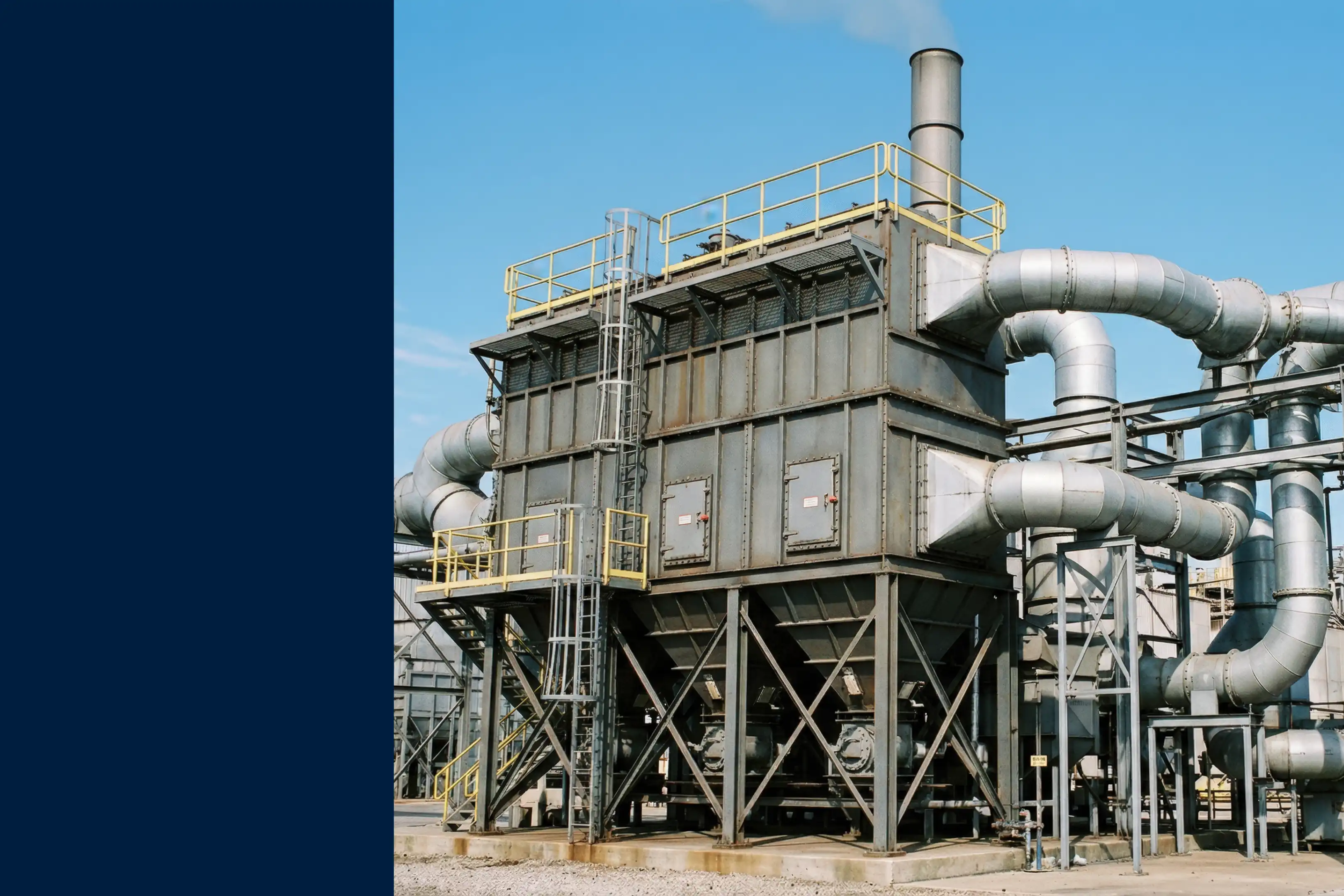
A structured baghouse maintenance checklist builds audit-ready documentation that satisfies both EPA air quality mandates and OSHA combustible dust requirements in a single workflow, turning routine readings into diagnostic signals that drive smarter corrective action across your dust collection system.
Key takeaways
- A single hopper discharge failure can trigger both visible emissions violations and surface dust accumulation under separate enforcement programs. Effective baghouse maintenance bridges EPA air quality mandates and OSHA combustible dust regulations.
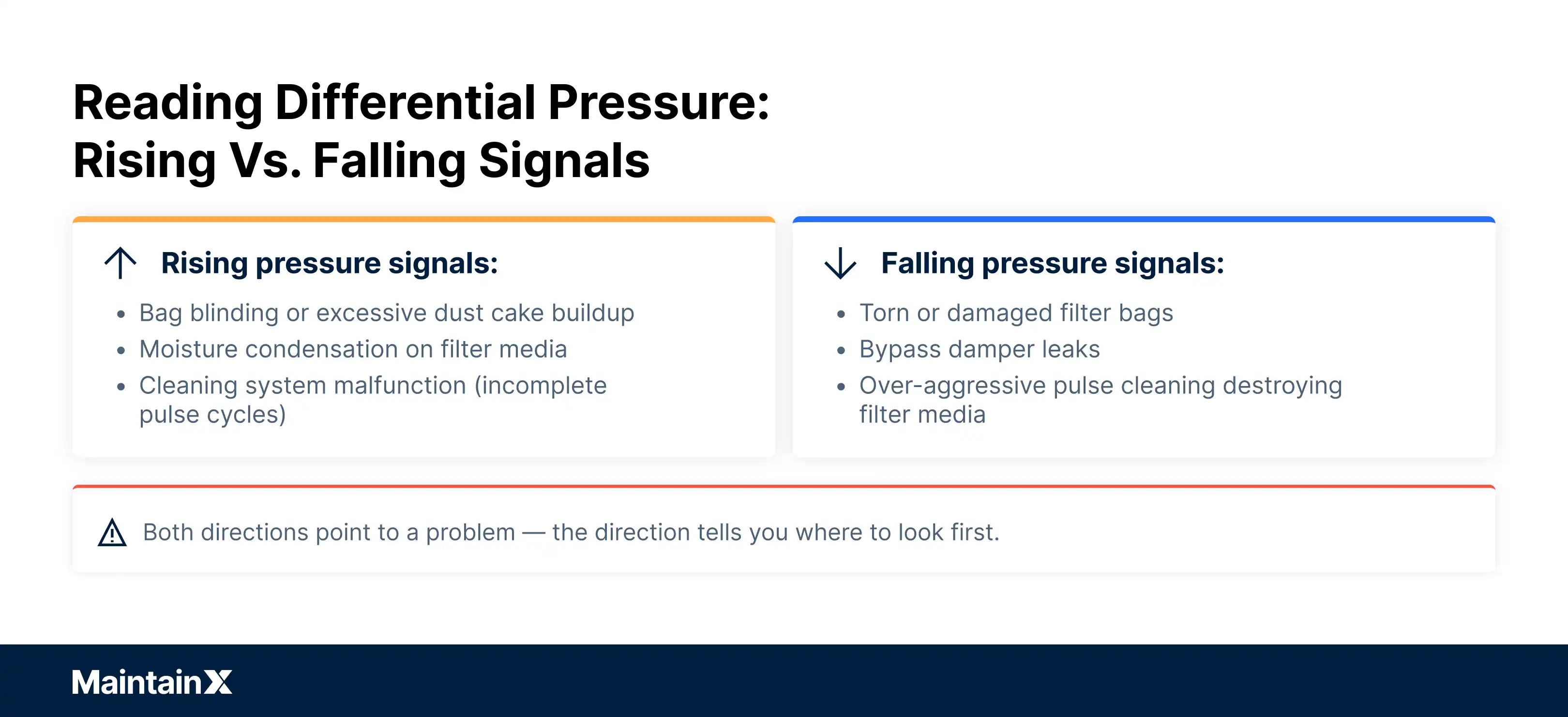
- Differential pressure readings serve as diagnostic signals for cleaning system performance. Rising values point to bag blinding or moisture, while dropping readings indicate a torn filter bag or over-pulsing, each requiring different corrective actions.
- Regulators audit records rather than equipment, making documented maintenance activities important. To meet five-year retention requirements, capture daily pressure readings and alarm responses with timestamps.
How to use this checklist
Customize for your facility
Adapt this checklist to match your baghouse system configuration, dust characteristics, operating environment, and regulatory requirements. Consider adding items specific to your emission limits, permit conditions, or process equipment.
Industrial facilities handling combustible dust often expand safety system checks, while high-moisture environments require additional condensation monitoring. Review your facility's Dust Hazard Analysis and air permit to identify inspection requirements that maintain compliance with NFPA 652 and EPA standards.
Use a CMMS
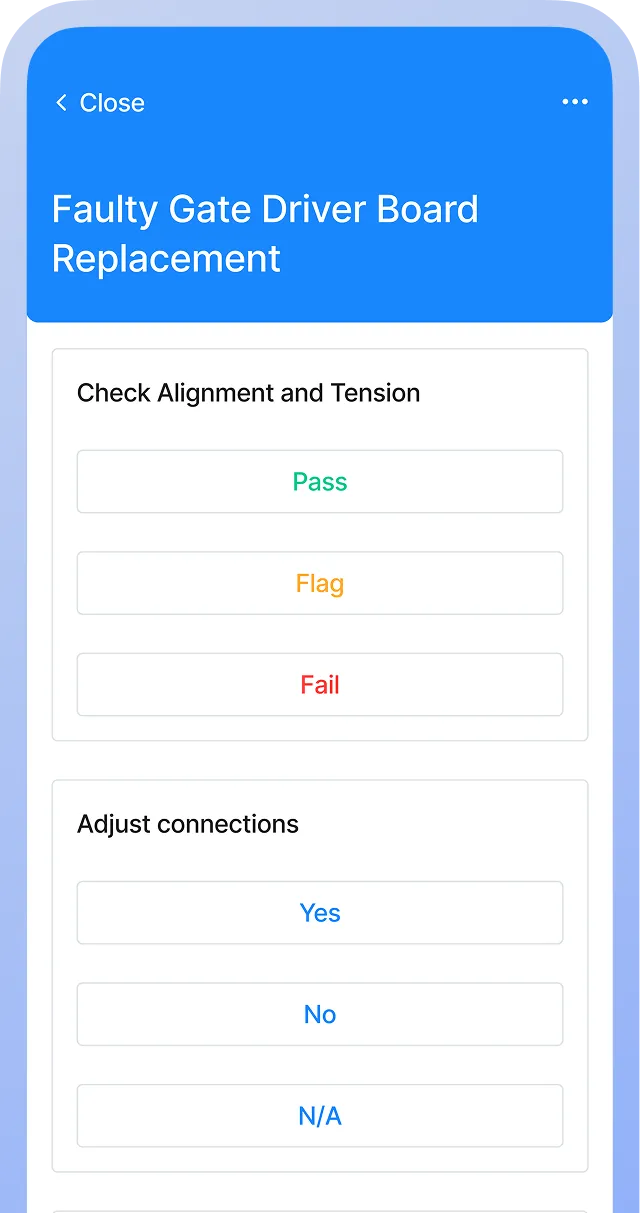
Digitizing this checklist will help track inspection trends, schedule preventive maintenance, and maintain required five-year records. A computerized maintenance management system (CMMS) automates pulse valve checks, differential pressure alerts, and bag change intervals while building audit trails for EPA and OSHA inspections.


Baghouse maintenance checklist
Filter bags and media
Compressed air and cleaning system
Differential pressure and instrumentation
Hopper and dust discharge
Fan and blower assembly
Housing, ductwork, and structural integrity
Combustible dust and safety systems
Documentation and compliance
This checklist is to be used only by those with appropriate training, expertise, and professional judgment. You are solely responsible for reviewing this checklist to ensure that it meets all professional standards and legal requirements, as well as your needs and intent.
How to interpret pressure drop readings for baghouse diagnostics
Pressure drop is the single most informative diagnostic signal a baghouse produces. Experienced teams read the trend direction and rate of change to pinpoint specific problems, rather than treating it as a pass/fail checkbox on a routine inspection.
A gradual rise in baseline pressure drop often points to blinded filter media or inadequate cleaning cycles, whether your system uses pulse jet or reverse air cleaning. A sudden spike can indicate a broken bag, a blocked hopper, or a malfunctioning cleaning system. Conversely, a sharp drop in differential pressure may signal bag failure, since unfiltered air is bypassing the filtration media entirely and clean air standards at the exhaust stack are no longer being met.
Tracking readings over time matters more than any single snapshot. Establishing a normal operating range for each compartment gives teams the context to catch deviations early, before minor drift turns into system downtime. This trend-based interpretation turns routine readings into actionable maintenance intelligence and helps satisfy EPA monitoring requirements at the same time.
Common baghouse failure modes and their regulatory triggers
Baghouse failures rarely stay contained as maintenance problems alone. Most trigger regulatory consequences that escalate quickly.
Bag blinding from moisture or chemical buildup raises pressure drop beyond operating limits. This can force exceedances of permitted emission rates under NSPS or NESHAP rules. Broken or dislodged filter bags allow particulate to bypass filtration entirely, creating visible emissions that invite EPA enforcement.
On the safety side, dust accumulation in hoppers and ductwork crosses into OSHA combustible dust territory. A failed rotary valve or clogged screw conveyor can build hazardous dust depths that violate NFPA 652 housekeeping thresholds, and abrasive materials moving through undersized ductwork can accelerate corrosion and material buildup in ways that make these failures more likely.
Tagging each failure mode to its regulatory origin helps teams prioritize repairs based on compliance risk, not just operational convenience. A leaking bag that causes visible stack emissions, for example, demands faster response than a cleaning cycle running slightly off schedule.
How to collect baghouse maintenance documentation that survives regulatory audits
Regulators audit records, not equipment. A perfectly maintained baghouse with poor documentation looks the same as a neglected one during an EPA or OSHA inspection.
Effective documentation ties each maintenance action to its regulatory basis. Bag replacement logs should reference the applicable NESHAP subpart. Pressure drop readings need timestamps and operator identification. Corrective action entries should capture what triggered the repair, what the team did, and when operations resumed.
EPA rules often require five-year record retention, and some NESHAP subparts mandate that SOP manuals remain available for administrator review. OSHA combustible dust citations frequently reference missing or incomplete inspection records as evidence of program deficiencies.
Organizing records by regulatory standard rather than equipment location alone makes retrieval faster when auditors request specific compliance evidence. Teams that build this structure into their daily maintenance tasks avoid scrambling before inspections.
This information is for general reference only and does not constitute legal or compliance advice. Consult applicable regulations and a qualified professional to confirm requirements for your facility.
Manage baghouse maintenance and documentation with a CMMS
Digital checklists can tag each task to its regulatory origin, whether EPA, OSHA, or NFPA. This helps teams prioritize work based on compliance risk. MaintainX connects inspection data, maintenance actions, and regulatory documentation in a single accessible system.
Automated scheduling keeps recurring inspections on track, minimizing downtime by catching worn parts before they cause an unplanned shutdown, while attached photos and timestamped notes create the audit-ready evidence regulators expect. The five-year retention requirements under many NESHAP subparts become easier to manage when records live in a centralized, searchable platform.
MaintainX supports this approach by unifying air quality and combustible dust workflows in one place, helping industrial facilities keep both regulatory documentation and day-to-day baghouse filter care organized under a single system.
Book a demo and see how it can help.
Baghouse maintenance checklist FAQs
How often should baghouse filters be replaced?
Filter replacement intervals depend on dust load, fabric type, and operating hours. Most facilities replace filter bags every 12-36 months, but rising differential pressure trends provide better timing guidance than rigid calendar schedules.
What are the OSHA and EPA compliance requirements for baghouse maintenance?
EPA NESHAP requires continuous opacity monitoring and Method 5 stack tests for many processes, while OSHA mandates combustible dust hazard assessments and explosion protection. Both agencies require documented maintenance records with five-year retention.
This information is for general reference only and does not constitute legal or compliance advice. Consult applicable regulations and a qualified professional to confirm requirements for your facility.
What causes high differential pressure in a baghouse system?
High differential pressure typically signals clogged filters from excessive dust loading, inadequate cleaning cycles, or moisture condensation. It can also indicate failed pulse valves, compressed air pressure issues, or structural damage reducing airflow through the filter media.
How do you perform a thorough baghouse inspection?
Effective inspections treat readings as diagnostic signals rather than checkboxes. Check differential pressure trends, pulse valve function, hopper levels, and structural integrity. Document findings with timestamps and corrective actions to create audit-ready compliance evidence.
What maintenance tasks should be performed daily on a baghouse?
Typical daily tasks include checking differential pressure gauges, inspecting hopper levels for active discharge, verifying compressed air pressure for pulse cleaning, and walking the system for visible leaks, unusual sounds, or dust emissions.
What are the consequences of neglecting baghouse maintenance?
Neglecting maintenance leads to EPA violations from excess emissions, OSHA citations for combustible dust hazards, unplanned system downtime, and higher energy costs from a dust collector working harder than it should. Undocumented work is effectively unmaintained in regulatory audits, regardless of actual equipment condition.
How do you establish a preventive maintenance schedule for baghouse systems?
Build schedules around regulatory mandates first, including EPA monitoring frequency and OSHA inspection requirements. Then add manufacturer intervals for pulse valves and fan blades, along with routine inspections on daily, weekly, and monthly cycles. Tag each task to its regulatory origin so teams prioritize intelligently during resource constraints.

The MaintainX team is made up of maintenance and manufacturing experts. They’re here to share industry knowledge, explain product features, and help workers get more done with MaintainX!

.webp)