
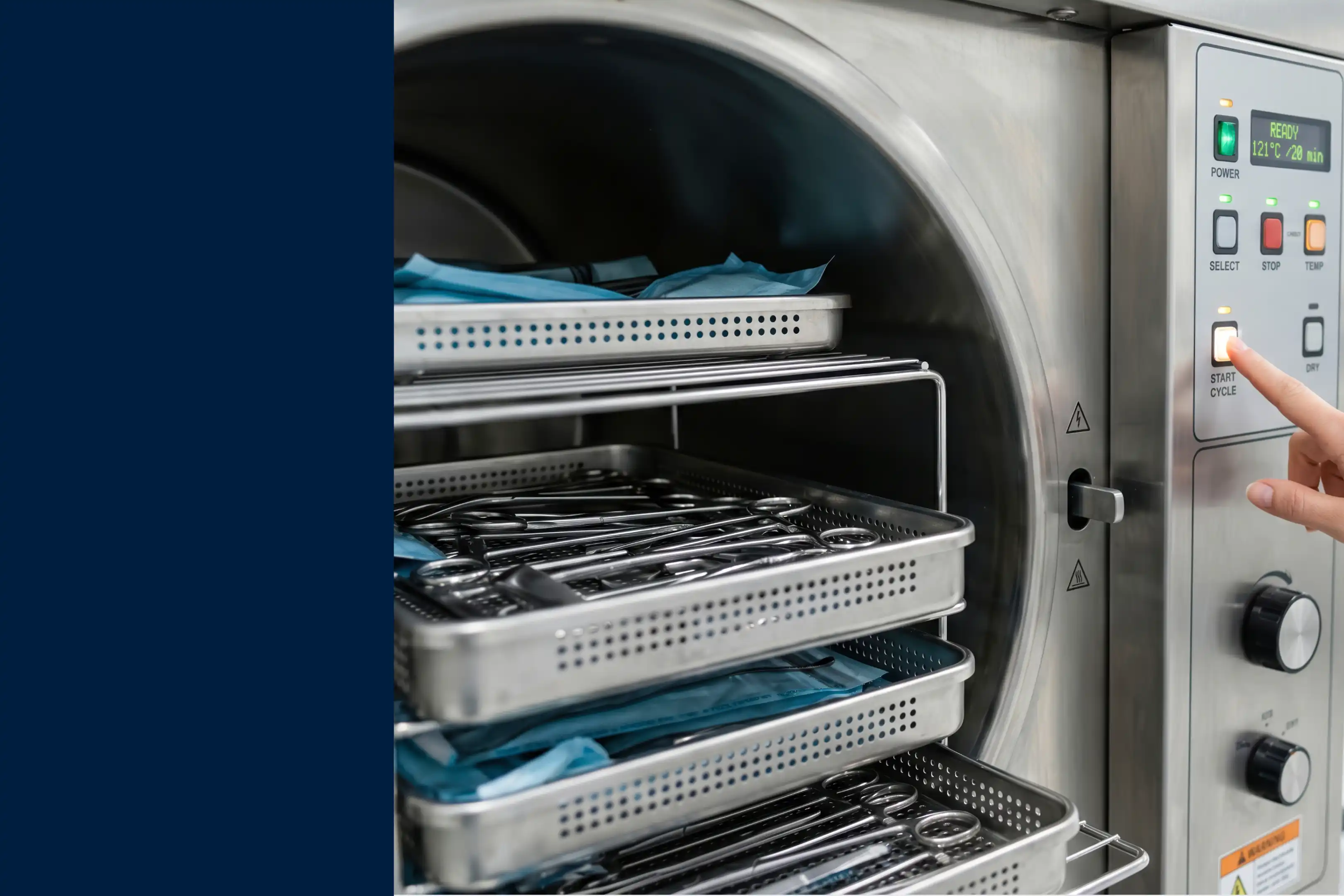
Autoclaves are the last line of defense in sterile processing, and when they fail, the consequences reach far beyond the equipment itself. A structured autoclave maintenance checklist gives sterile processing teams a consistent framework for catching mechanical issues before they compromise sterilization cycles, while building the documented service history that AAMI ST79 compliance and accreditation reviews require.
Key takeaways
- Mechanical maintenance is the foundation of sterile processing and infection control. Seemingly minor issues can create air pockets and cold spots that compromise steam quality and steam contact.
- Biological indicator protocols represent the highest-stakes maintenance task most facilities handle inadequately. A positive spore test triggers a corrective cascade that includes quarantining processed instruments, removing the sterilizer from service, and notifying state boards.
- Digital autoclave maintenance logs create a timestamped audit trail that can satisfy AAMI ST79 requirements and validate every sterilization cycle run between calibration events.
How to use this checklist
Customize for your facility
The checklist is based on general best practices for autoclave maintenance. Adapt it as necessary, according to autoclave type, usage volume, and regulatory requirements specific to your industry. Consider your manufacturer's instructions and any state-specific compliance mandates when adjusting intervals.
Use a CMMS
For best results, import this checklist into a computerized maintenance management system (CMMS). A CMMS can help you track autoclave maintenance cycles, calibration due dates, and biological indicator results in one centralized system. Teams can attach calibration certificates, manufacturer documentation, and service records directly to work orders.


Autoclave maintenance checklist
Chamber and door assembly
Steam generation and water system
Controls and instrumentation
Safety systems
Drainage and discharge
Sterilization monitoring and verification
Electrical and power systems
Documentation and compliance
This checklist is to be used only by those with appropriate training, expertise, and professional judgment. You are solely responsible for reviewing this checklist to ensure that it meets all professional standards and legal requirements, as well as your needs and intent.
Common autoclave failures that can be avoided with preventive maintenance
Most autoclave failures trace back to a handful of recurring mechanical issues. Worn door gaskets allow steam to escape, dropping chamber pressure below sterilization thresholds. Clogged drain strainers cause water pooling that interferes with steam penetration. Drifting temperature sensors may display acceptable readings while actual conditions fall short of kill parameters.
Each of these failures will quietly undermine sterility assurance before anyone notices a problem. A door gasket that looks intact can still leak enough steam to create cold spots in a loaded chamber. A temperature probe off by just a few degrees may pass casual inspection but fail a biological indicator test.
Routine preventive maintenance catches these issues at the component level. Replacing gaskets on schedule, flushing drain systems, descaling heating elements and the steam generator, and calibrating sensors all help keep the autoclave operating within validated parameters and prevent sterilization failures.
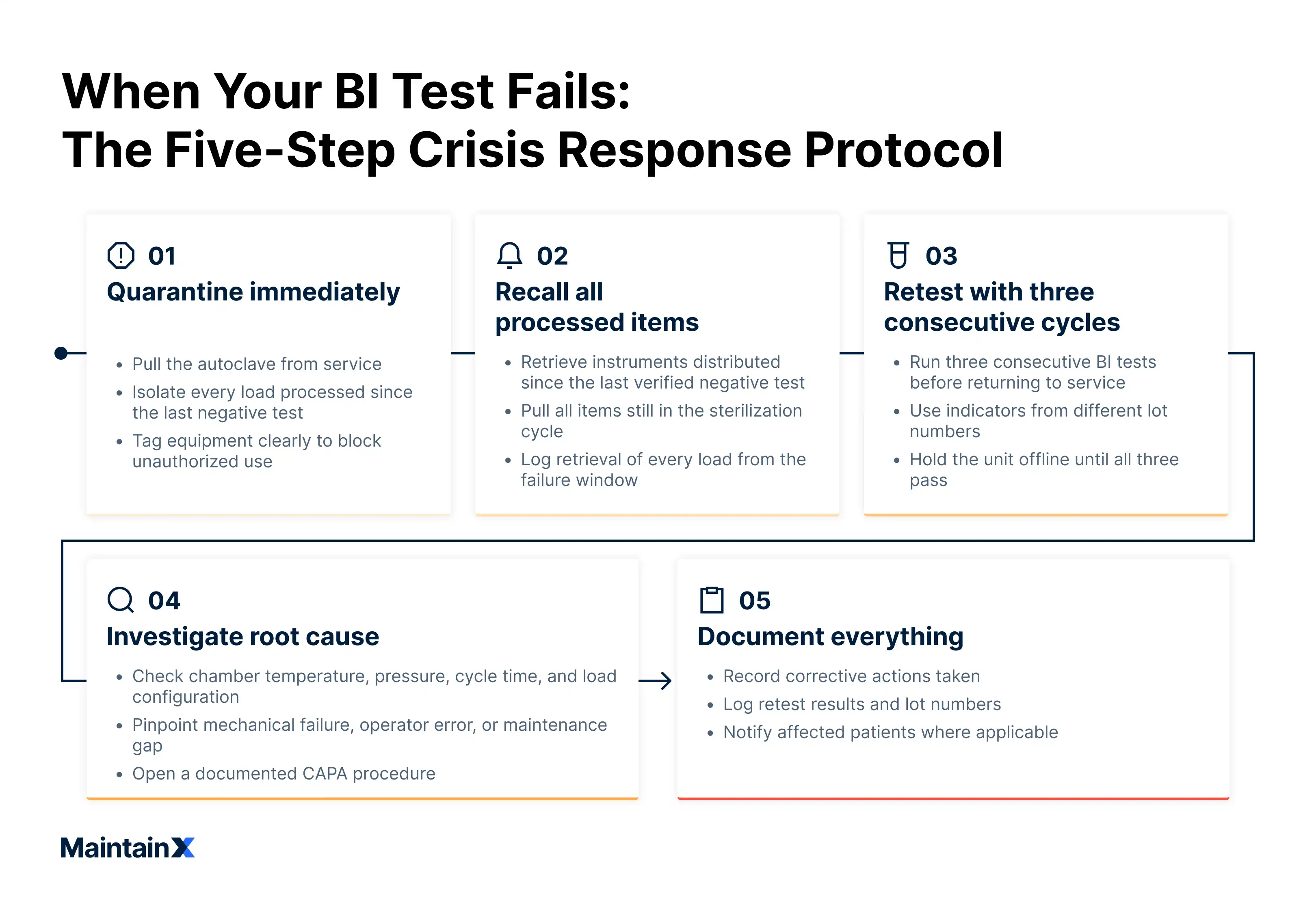
What to do when a biological indicator test fails
A positive spore test means the autoclave did not achieve proper sterilization conditions. The response matters as much as the test itself.
Facility protocols typically start with quarantining any loads processed since the last passing test. Remove the sterilizer from service until your team identifies the root cause. Common culprits include door gasket leaks, vacuum pump malfunctions, mineral deposits on heating elements, and uncalibrated temperature or pressure instruments.
After repairs, most guidelines call for running three consecutive successful biological indicator tests before returning the unit to service. Document every step: the failed result, the investigation findings, corrective action work orders, and requalification test outcomes.
This corrective action trail is exactly what auditors look for. A single failed spore test with a well-documented response demonstrates stronger process control than a perfect record with no evidence of how it was maintained.
Build audit-ready autoclave maintenance records with a CMMS
Autoclave maintenance involves recurring inspections, calibration cycles, corrective actions, and compliance documentation. Managing all of this through paper logs or spreadsheets often leads to missed tasks, error codes going unaddressed, and fragmented records.
MaintainX centralizes these workflows in one platform. Preventive maintenance schedules trigger automatically, so door gasket inspections and sensor calibrations don't depend on someone remembering a due date. When a biological indicator test fails, technicians log the corrective action workflow directly against the asset record, with photo attachments and digital signatures adding verification layers that paper-based systems can't match.
Book a tour to see MaintainX in action and learn how it can help in your facility.
Autoclave maintenance checklist FAQs
What should an autoclave maintenance checklist include?
A complete autoclave maintenance checklist should cover all critical systems with tasks organized by frequency:
- Daily: Clean the chamber interior and drain strainer, inspect the door gasket for cracks or deformation, verify cycle parameters reach proper sterilization thresholds, check distilled water reservoir levels, and wipe down exterior surfaces with a damp cloth.
- Weekly: Run biological indicator spore tests, inspect valves and filters, check for unusual noises during operation, and verify the vacuum pump pulls to manufacturer-specified levels.
- Monthly: Descale heating elements and the steam generator, inspect door interlocks, clean the drain and condensate lines, and pay special attention to mineral deposits on steam-contact surfaces.
- Annual tasks: Calibrate pressure transmitters, test safety valves, conduct professional service on all critical systems, and verify all gaskets and seals meet manufacturer instructions.
Consistent preventive maintenance across these intervals protects patient safety, extends equipment longevity, and keeps sterility assurance records audit-ready.
How often does an autoclave need to be serviced and maintained?
Daily tasks include chamber cleaning, drain strainer inspection, and cycle verification. Weekly biological indicator testing validates sterilization efficacy. Professional service typically occurs quarterly or semi-annually, depending on volume and manufacturer specifications, and is essential to prevent mineral buildup, heating element wear, and drift in critical parameters that lead to costly repairs.
What maintenance records are required for autoclave compliance?
Compliance requires daily cycle logs with time, temperature, and pressure readings, weekly biological indicator results with lot numbers and incubation records, and a complete autoclave maintenance log sheet documenting filter changes, door gasket replacements, and professional service visits. These records prove equipment reliability and support sterility assurance during regulatory inspections.
Note: This is a general informational summary only and does not constitute legal, regulatory, or compliance advice. Requirements vary by facility type, jurisdiction, and regulatory body. Always consult applicable standards, including AAMI ST79, your state health department requirements, and a qualified professional to determine the specific maintenance, documentation, and compliance obligations for your facility and equipment.
What are the critical daily maintenance tasks for dental autoclaves?
Clean the chamber and drain strainer to prevent debris and residue buildup that compromises sterilization. Inspect door gaskets for tears or hardening that allow pressure loss. Verify cycle parameters reach proper sterilization thresholds and check distilled water reservoir levels to avoid dry cycles that damage heating elements. Wipe down trays and exterior surfaces with a damp cloth per manufacturer's instructions.
How do you perform biological indicator testing on an autoclave?
Place a spore strip containing heat-resistant bacteria inside a test pack, process through a normal sterilization cycle, then incubate according to manufacturer instructions. Growth indicates sterilization failure; no growth confirms the autoclave achieved proper sterilization conditions. Always incubate an unprocessed control indicator alongside the processed strip to verify spore viability.
What causes an autoclave to fail biological indicator testing?
Temperature drift from faulty sensors or mineral deposits on heating elements prevents reaching sterilization thresholds. Pressure leaks through worn door gaskets allow steam to escape. Inadequate air removal by the vacuum pump traps cold pockets. Overloading blocks steam penetration through trays and instruments. Each failure mode represents a gap in preventive maintenance that routine inspections and regular cleaning should catch early.
What type of water should be used in autoclaves and why does it matter?
Always use distilled water rather than tap water. Tap water minerals create scale buildup on heating elements, steam generator components, and valves, causing temperature drift, pressure irregularities, and eventual component failure. Mineral deposits also leave residue on instruments and compromise steam quality, all of which undermine proper sterilization and require costly repairs over time.

Marc Cousineau is the Senior Content Marketing Manager at MaintainX. Marc has over a decade of experience telling stories for technology brands, including more than five years writing about the maintenance and asset management industry.

.webp)