
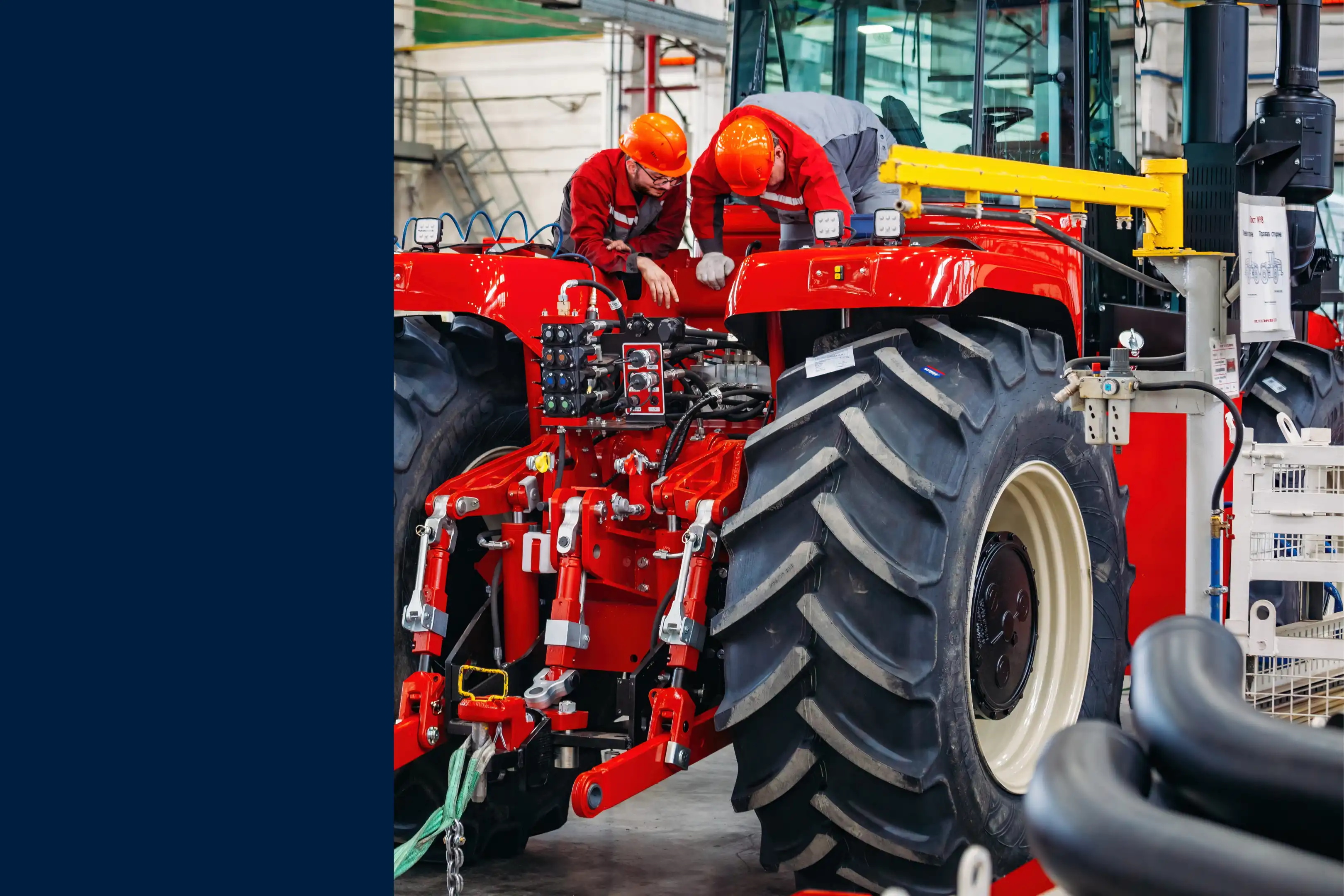
A structured tractor maintenance checklist does more than track inspections. It gives every finding a clear next step: pass, flag for monitoring, or pull from service. That built-in escalation path keeps equipment running safely and builds the documentation trail auditors typically expect.
Key takeaways
- Structured pass/fail thresholds for each inspection point eliminate confusion about escalation. Inspectors know exactly when findings require documentation only, a scheduled repair, or immediate equipment removal.
- Recording findings consistently in a computerized maintenance management system (CMMS) reveals degradation patterns over time, like creeping oil consumption or declining hydraulic fluid pressure, helping maintenance teams intervene before failures occur.
- ROPS and seat belt deficiencies typically mandate immediate out-of-service status under OSHA regulations, making structural safety inspection the first priority during every pre-operation check.
How to use this checklist
Customize for your facility
Adapt this maintenance checklist to match your tractor fleet and operating conditions. Agricultural operations running high-hour seasonal equipment need different intervals than grounds maintenance tractors with lighter duty cycles.
Add tasks specific to your attachments, such as front-end loaders, backhoes, or mowers. Adjust service intervals based on manufacturer recommendations and actual usage patterns. Municipal and institutional facilities should align frequencies with budget cycles and regulatory reporting periods.
Use a CMMS
A CMMS digitizes inspection workflows and creates automatic service reminders based on hour readings or calendar intervals. Technicians can complete checklists on mobile devices in the field, capturing photos of wear and triggering work orders when deficiencies exceed acceptable thresholds.
Digital records provide audit trails for compliance documentation and help identify patterns. Recurring hydraulic leaks or premature belt wear, for example, can signal underlying problems that are easy to miss without consistent data.


Tractor maintenance checklist
Daily pre-operation checks
Weekly inspections
Monthly maintenance
Quarterly service
Seasonal and annual maintenance
Safety and emergency equipment
Documentation and compliance
This checklist is to be used only by those with appropriate training, expertise, and professional judgment. You are solely responsible for reviewing this checklist to ensure that it meets all professional standards and legal requirements, as well as your needs and intent.
How to escalate tractor inspection findings into work orders
A checklist finding without a clear next step is just an observation. Effective inspection programs define escalation paths before inspectors ever pick up a clipboard.
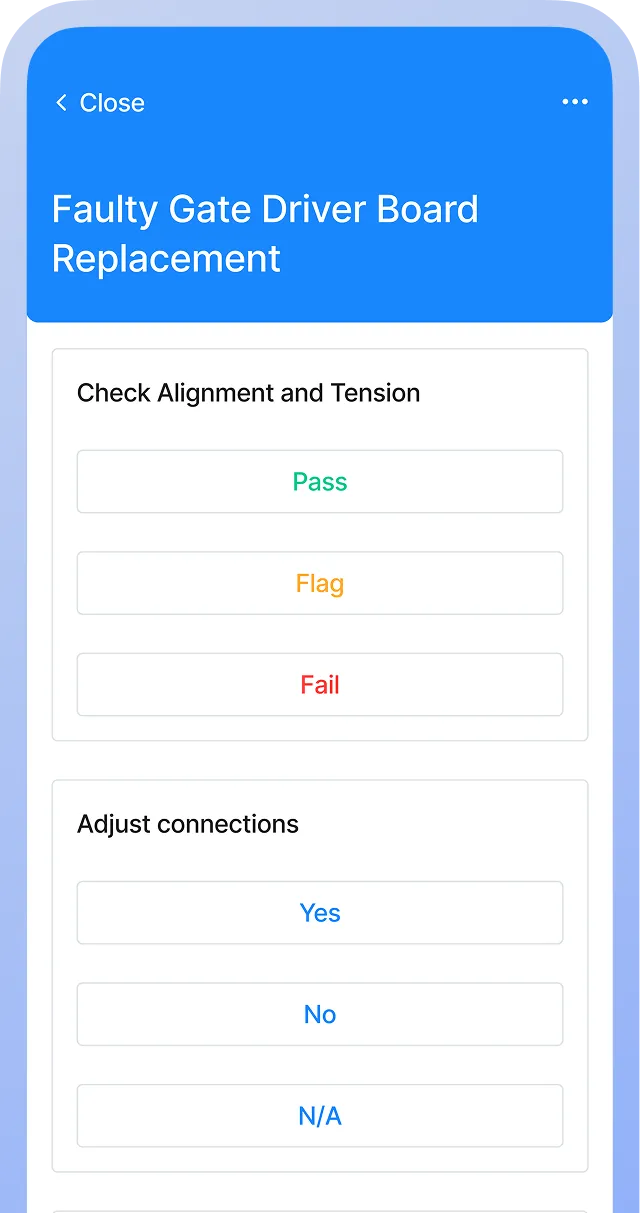
Most teams benefit from a simple three-tier structure. Green findings pass inspection and need no action. Yellow findings note early wear or minor issues that warrant a scheduled work order within a defined window. Red findings pull the tractor from service immediately and trigger a corrective work order on the spot.
When inspectors know exactly which category a finding falls into, there's no ambiguity and no delay. A CMMS routes those findings directly into work orders with the right priority, asset history, and assigned technician already attached. That connection between inspection and action is what separates documentation from actual reliability.
Common tractor failures that start as minor inspection findings
Most costly tractor breakdowns don't happen overnight. They start as small, easy-to-dismiss findings during routine inspections.
Steady increases in engine oil consumption often signal worn piston rings or valve seals weeks before a major engine issue surfaces. A slight hydraulic fluid pressure drop during a three-point hitch check can indicate a failing pump or deteriorating seals. Uneven tire wear points to alignment or suspension problems that, left unchecked, accelerate component fatigue across the drivetrain.
The key is capturing these findings consistently so trends become visible. A single low coolant reading needs a top-up; three low readings across consecutive inspections suggest a leak that should be investigated. Teams tracking this data over time shift from reacting to failures toward anticipating them, keeping more tractors in service and fewer in the shop.
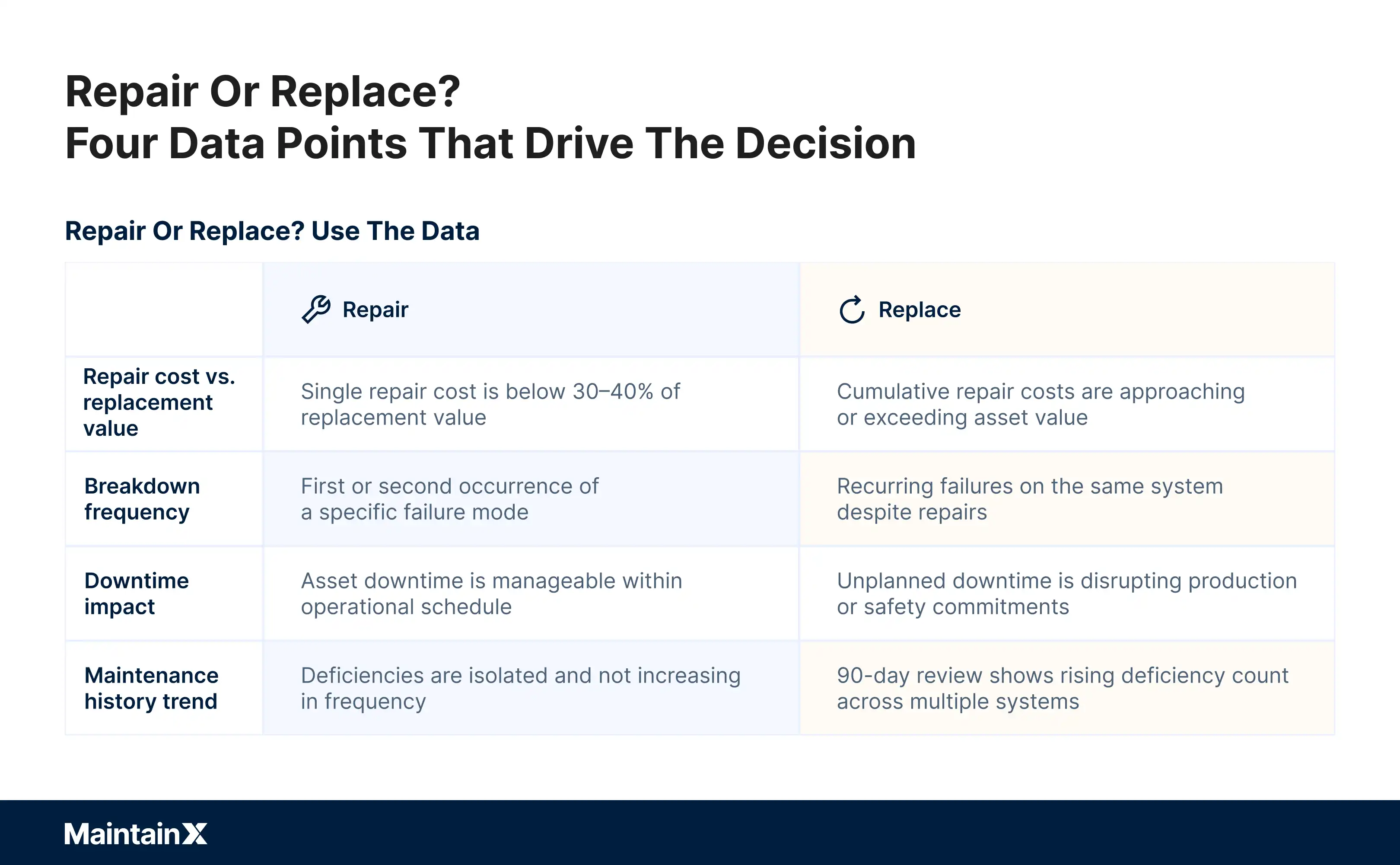
When to repair vs. replace tractor components using maintenance data
The repair-or-replace question comes up constantly in fleet management. Without data, the answer usually defaults to whatever costs less today.
Maintenance records change that calculus. When a hydraulic cylinder has needed seal replacement three times in 18 months, the pattern suggests the cylinder body itself may be worn beyond effective service. Repair costs that seem reasonable in isolation add up when viewed across an asset's full history.
Facility managers typically weigh repair frequency, total spend per component, and the downtime each failure causes. A component averaging two failures per season may justify replacement even if each individual repair seems affordable. A complete maintenance checklist gives you the data to make that call with confidence.
How a CMMS keeps your fleet ready year-round
Managing a mixed equipment fleet with spreadsheets or paper logs works until it doesn't. Seasonal demand shifts, staggered service intervals, and multiple operators across tractors, loaders, and utility vehicles create complexity that manual systems struggle to handle.
MaintainX centralizes inspection checklists, service schedules, and work orders across every asset in the fleet. Standardized workflows mean a new technician follows the same inspection steps and escalation criteria as a 20-year veteran. Consistent records of engine oil changes, hydraulic fluid service, cooling system maintenance, and safety checks ensure nothing gets missed between seasons.
That visibility turns routine inspections into a reliable system for keeping equipment available when it's needed most. Ready to see it in action? Book a tour of MaintainX today.
Tractor maintenance checklist FAQs
What should a tractor maintenance checklist include?
A complete tractor maintenance checklist should cover all essential systems and components your equipment depends on:
- Engine oil: Check levels daily and replace at manufacturer-specified service intervals to protect against wear and contaminants
- Hydraulic fluid: Inspect for leaks and test pressure regularly to keep hydraulic components in good condition
- Cooling system: Check coolant levels and inspect hoses and clamps to protect the engine from overheating
- Battery: Clean terminals and test charge to ensure reliable starts, especially at the start of each season
- Air filters: Inspect and clean to prevent dust and debris from entering the engine
- Tires: Check for cuts, bulges, and proper inflation before each workday
- Safety equipment: Inspect ROPS, seat belts, guards, and shields at every pre-operation check
Following this checklist consistently keeps your tractor running safely and helps you catch minor issues before they become costly repairs.
How often should you change engine oil in a tractor?
Most manufacturers recommend changing engine oil every 100 to 200 hours of operation, though this varies by engine type and workload. Check your operator's manual for the service interval specific to your machine. In dusty or high-load conditions, more frequent oil changes help protect engine components from contaminants and wear. Always replace the oil filter at the same time to ensure clean lubrication throughout the engine.
How do you maintain a tractor's hydraulic fluid system?
Start each day by checking hydraulic fluid levels and inspecting hoses and connections for leaks. Replace hydraulic fluid and filters at manufacturer-specified intervals, typically annually or every 500 to 1,000 hours depending on the machine. Test hydraulic system pressure quarterly and inspect cylinders, seals, and mounting hardware for wear. Contaminated or degraded hydraulic fluid is one of the most common causes of component failure, so keeping fluid clean and at the right level is essential.
What cooling system maintenance does a tractor require?
Check coolant levels daily and inspect hoses, clamps, and the radiator for leaks or debris buildup at the start of each season and throughout the year. Flush and replace coolant at manufacturer-recommended intervals, typically every two years or per hour meter. Clean debris from the radiator regularly, especially during heavy seasonal workloads when dust and plant material can restrict airflow and cause the engine to run hot.
How do you keep a tractor battery in good condition?
Inspect battery terminals regularly for corrosion and clean them as needed to ensure reliable connections. Test battery charge and load capacity at least once a season, and before putting equipment into storage for an extended period. A weak battery that struggles to start the engine in cold weather is often a sign it's time for a replacement. Keep the battery secure and free of debris to protect it from vibration damage during operation.
How do you maintain tractor maintenance records for compliance?
Maintain date-stamped inspection records showing equipment ID, inspector name, findings, and corrective actions taken. Document each service task, including engine oil changes, hydraulic fluid replacements, cooling system flushes, and safety equipment checks, to build a complete maintenance history for each machine. This documentation creates the audit trail OSHA expects during investigations and demonstrates your facility's proactive approach to equipment safety.
Note: This is a general informational summary only and does not constitute legal, regulatory, or compliance advice. Always consult the applicable OSHA standards, your equipment manufacturer's specifications, and a qualified professional to determine the specific inspection and documentation requirements for your facility and jurisdiction.

The MaintainX team is made up of maintenance and manufacturing experts. They’re here to share industry knowledge, explain product features, and help workers get more done with MaintainX!


.webp)