
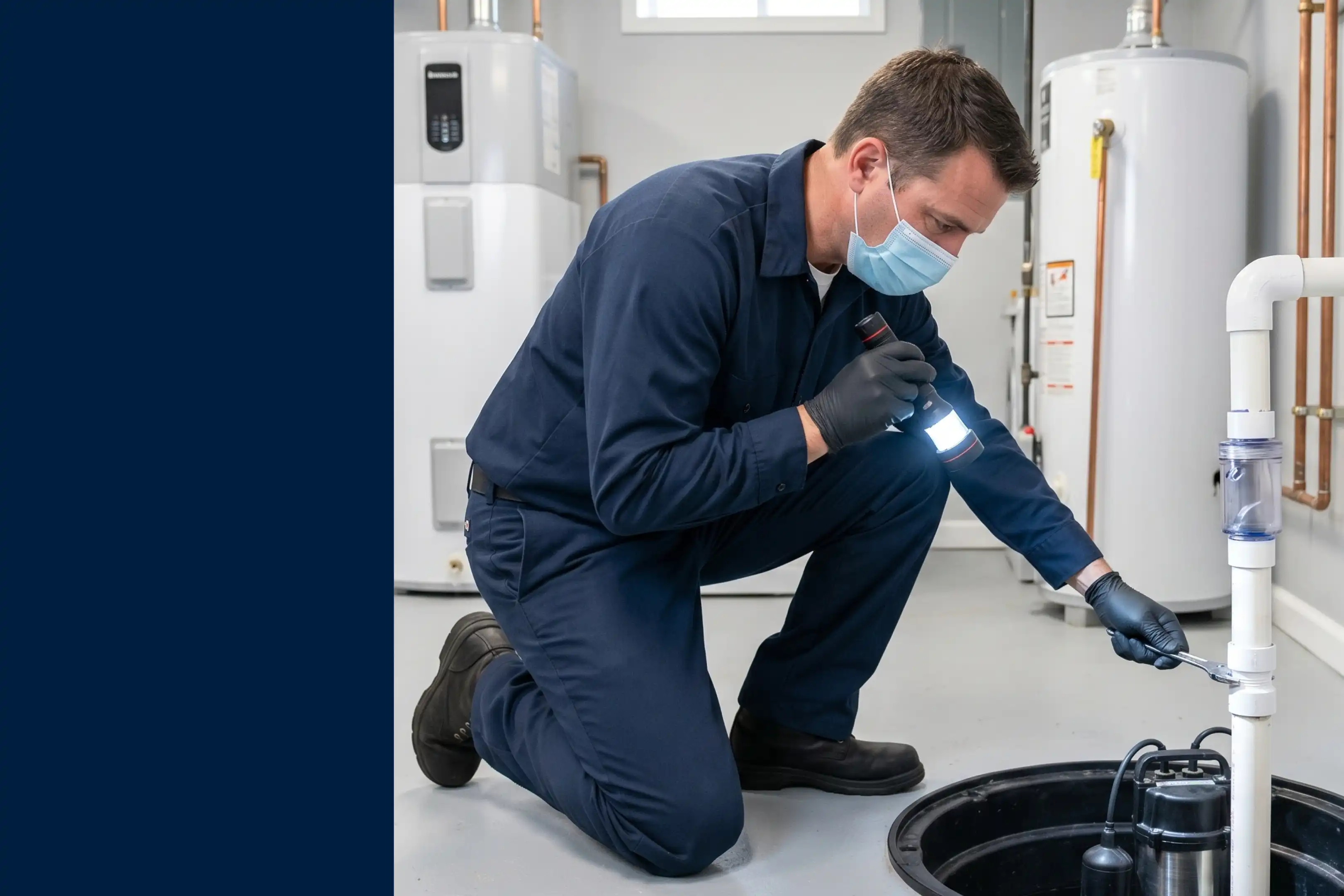
When a sump pump fails, the consequences extend far beyond the pump itself, reaching elevators, electrical rooms, fire suppression systems, and stored inventory.
A sump pump maintenance checklist and standardized inspections keep this often-overlooked equipment functioning as a key part of facility-wide infrastructure protection. This resource will help you build a regular maintenance cadence for your facility's sump pump and keep ongoing records of each task completed.
Key takeaways
- Sump pumps protect critical downstream systems, and a single float failure can trigger mandatory elevator shutdowns or flood protection equipment.
- Routine maintenance should include monthly activation testing to catch float failures and discharge obstructions early, and quarterly backup power verification to prepare for storms.
- For commercial facilities managing multiple sump pump types, storing digital checklists in a computerized maintenance management system (CMMS) help standardize inspections and customize configurations for each site.
How to use this checklist
Customize for your facility
Adapt this checklist based on pump configuration and risk profile. High-occupancy buildings may need daily alarm checks, while light-use facilities can run quarterly schedules.
Consider pump count as well. Multi-pump systems need lead-lag testing, while single-pump setups require robust backup power. Adjust inspection depth based on pit accessibility and local groundwater conditions. Manufacturing facilities with chemical exposure should add corrosion monitoring.
Match maintenance frequency to seasonal risk, particularly in flood-prone regions or areas with spring snowmelt.
Use a CMMS
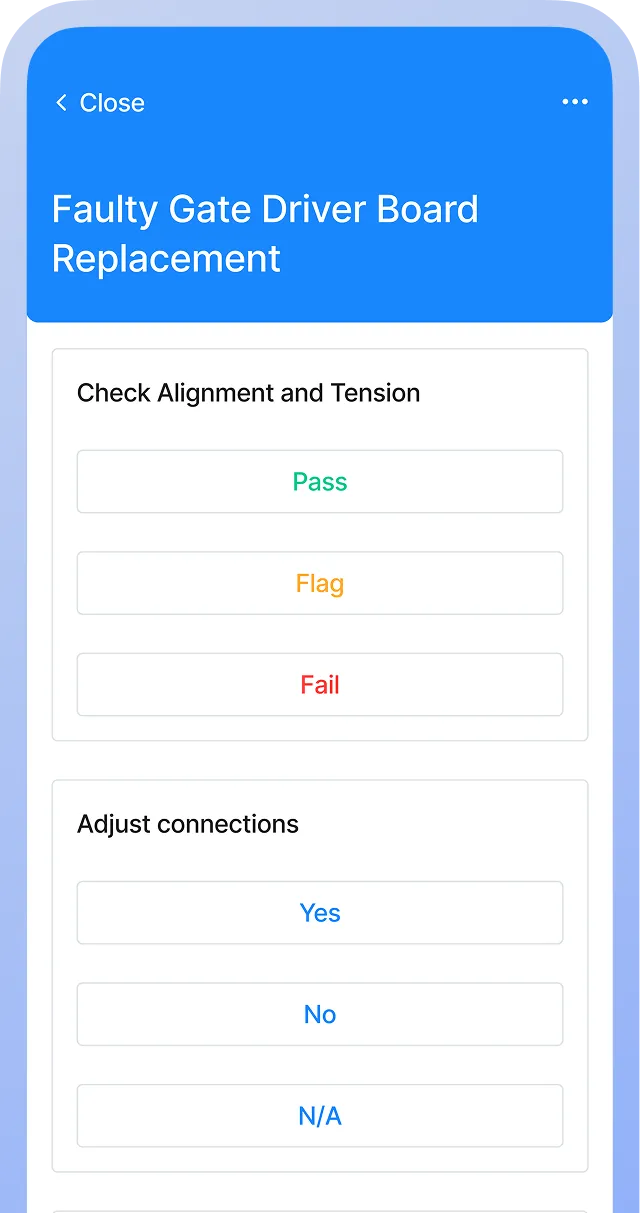
Upload this checklist to a CMMS to help ensure consistent documentation, automatically log completion dates, and send alerts when scheduled tasks are overdue. Automated reminders help ensure inspections don't slip between service windows.
Digitizing sump pump inspections helps facilities track performance trends across multiple locations and identify recurring failures through centralized record-keeping. During inspections, technicians can attach photos of worn components directly to work orders to document repair needs. A CMMS also creates an audit trail for regulatory compliance as technicians log inspections, failures, and repair steps in the digital checklist.


Sump pump maintenance checklist
Pump motor and impeller
Float switch and activation controls
Sump pit and basin
Discharge piping and check valve
Electrical supply and backup power
Alarms and monitoring systems
Operational and performance testing
Documentation and compliance
This checklist is to be used only by those with appropriate training, expertise, and professional judgment. You are solely responsible for reviewing this checklist to ensure that it meets all professional standards and legal requirements, as well as your needs and intent.
How sump pump failures cascade through commercial facilities
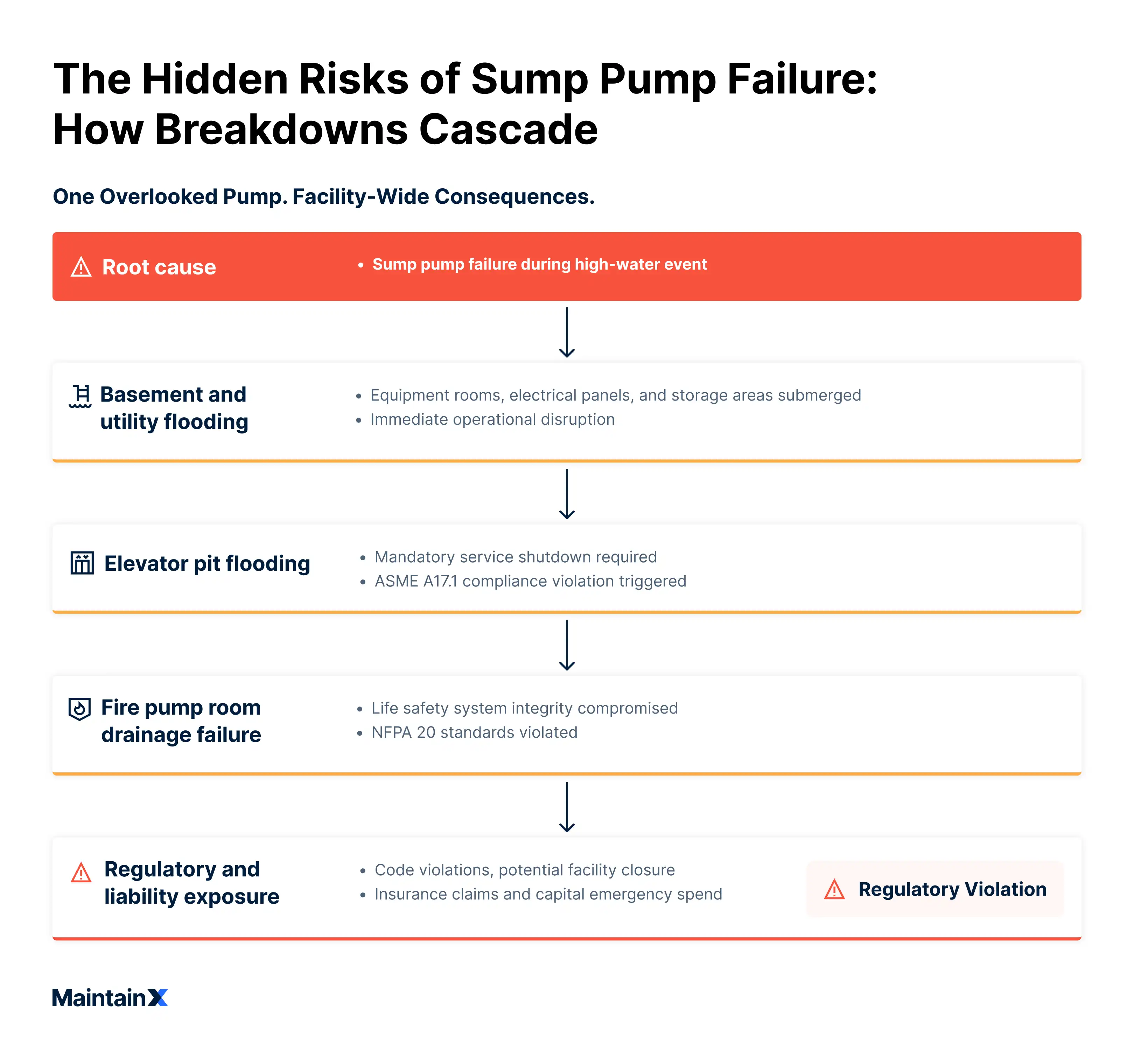
A failed sump pump rarely remains just a sump pump problem. In commercial buildings, water can quickly reach elevator pits, electrical switchgear rooms, fire pump enclosures, or ground-floor inventory storage.
As a result, sump pump failure can lead to impacts like these:
- Elevator pit flooding can trigger safety lockouts that strand tenants and halt freight movement.
- Water intrusion into electrical rooms risks arc flash events and extended power outages.
- Fire pump rooms compromised by standing water may violate code compliance and void insurance coverage.
The financial exposure of these events grows with every hour: Restoration costs, business interruption claims, and regulatory penalties compound quickly. A single weekend failure during heavy rain can shut down entire facilities for weeks.
These risks are why experienced facility managers treat sump pumps as infrastructure protection systems rather than isolated mechanical equipment, following detailed maintenance and repair procedures and documenting each inspection.
Backup power and redundancy testing protocols
Facilities need sump pumps most during storms, which is also when power outages are most likely. Battery backup systems and redundant pumps can bridge that gap, but only if they're verified regularly.
Effective redundancy testing starts with simulating primary pump failure to confirm the backup activates automatically, then running it long enough to verify sustained performance under load. Battery-powered units also require regular capacity checks, since batteries degrade over time and may not hold sufficient charge during a prolonged outage.
For buildings protecting high-value infrastructure such as data centers or electrical vaults, many teams test backup systems monthly rather than quarterly. The cost of a single missed switchover during a storm far exceeds the labor hours spent on more frequent verification.
Maintenance scheduling across multiple properties
Portfolio-wide sump pump programs can get complicated quickly. A single portfolio might include groundwater pumps beneath parking structures, elevator pit pumps in office towers, sewage ejectors in retail spaces, and fire pump room sumps, each with different inspection intervals and code requirements. Teams need clearly defined schedules and responsibilities to ensure full coverage.
Seasonal changes should also shape scheduling. Most facility managers front-load inspections before their region's wet season, when pump failures carry the highest consequences. Spring thaw in northern climates and hurricane season along coastlines create natural scheduling anchors.
Start by standardizing a core checklist framework for all pumps, then create site-specific modifications based on pump type and local code. Teams managing 10 or more locations often group properties by risk tier, prioritizing buildings where flooding threatens critical infrastructure over those with simpler drainage needs.
How a CMMS helps with commercial sump pump maintenance
MaintainX centralizes sump pump inspection scheduling, records, and work orders in one mobile-friendly platform.
Teams can use digital checklists to ensure every inspection follows the same standard regardless of pump type, capture photo documentation of conditions like rust, debris buildup, or discharge line damage, and schedule follow-up work orders directly from the system. Automated scheduling prevents inspections from slipping, especially before high-risk seasons.
MaintainX also builds an audit trail that shows consistent preventive care, useful during insurance reviews or regulatory inspections.
Turn sump pump maintenance into ongoing infrastructure protection with MaintainX. Book a tour today.
Sump pump maintenance checklist FAQs
What maintenance is required for sump pumps in commercial properties?
Essential commercial maintenance includes monthly pump testing, quarterly float switch inspection, and annual discharge line verification and basin cleaning. Each task protects critical infrastructure including electrical rooms, elevators, and fire pump rooms from water damage that disrupts operations.
What are the emergency backup power requirements for commercial sump pumps?
Building codes typically require battery backup or generator power for pumps protecting critical areas like elevator pits or fire pump rooms. Backup systems should be capable of running the pump for 24 to 48 hours during a power outage to prevent flooding.
What is the most common problem with sump pumps in commercial buildings?
Most commercial sump pump issues stem from float switch failures. Debris, mineral buildup, or mechanical wear can prevent switches from activating the pump, leading to basin overflow and potential damage to electrical systems, stored inventory, or building foundations.
When should lockout/tagout procedures be used during sump pump maintenance?
Apply lockout/tagout whenever maintenance requires direct electrical contact, component replacement, or work inside the pump housing. Always isolate power at the breaker before removing covers, testing switches, or replacing motors to prevent accidental activation.
How long do commercial sump pumps typically last, and when should they be replaced?
Commercial sump pumps typically last 7 to 10 years under normal conditions. Pumps showing reduced flow capacity, frequent cycling, unusual noise, or visible corrosion should be evaluated for replacement. Units protecting critical infrastructure may warrant earlier replacement to avoid downtime risk.

The MaintainX team is made up of maintenance and manufacturing experts. They’re here to share industry knowledge, explain product features, and help workers get more done with MaintainX!

.webp)