

A thorough Class A pre-trip inspection checklist turns daily walk-arounds into an early warning system by giving drivers a systematic way of catching maintenance issues before they lead to downtime. This protects CSA scores, prevents roadside failures, and gives you actionable fleet intelligence.
Below, you’ll find a Class A pre-trip inspection checklist that can be adapted to a range of applications, from long-haul trucking to construction to municipal fleets.
Key takeaways
- Pre-trip inspections only prevent roadside violations when their findings trigger corrective maintenance action.
- Driver vehicle inspection report (DVIR) reviews establish accountability between shifts, preventing the "I didn't see the report" gap that leads to operating vehicles with known defects.
- Track recurring pre-trip findings in a computerized maintenance management system (CMMS) to reveal patterns like repeated brake adjustments and chronic air leaks. These patterns inform PM scheduling and identify vehicles needing attention before failures escalate.
How to use this checklist
Customize for your facility
Adapt this pre-trip inspection list to match your fleet composition and operational requirements. Carriers running specialized equipment (refrigerated trailers, tankers, or flatbed configurations) should add cargo-specific items like reefer unit temperature logs or strap tension checks.
You should also consider your defect history when customizing. Fleets with recurring brake or tire issues at certain locations benefit from targeted inspection points. Adjust inspection intervals based on regional enforcement patterns and seasonal conditions.
Finally, review all applicable regulatory, insurance, and legal requirements. This pre-trip inspection checklist is meant as a template for informational purposes only.
Use a CMMS
This checklist can be printed out and used on its own, or imported into a CMMS.
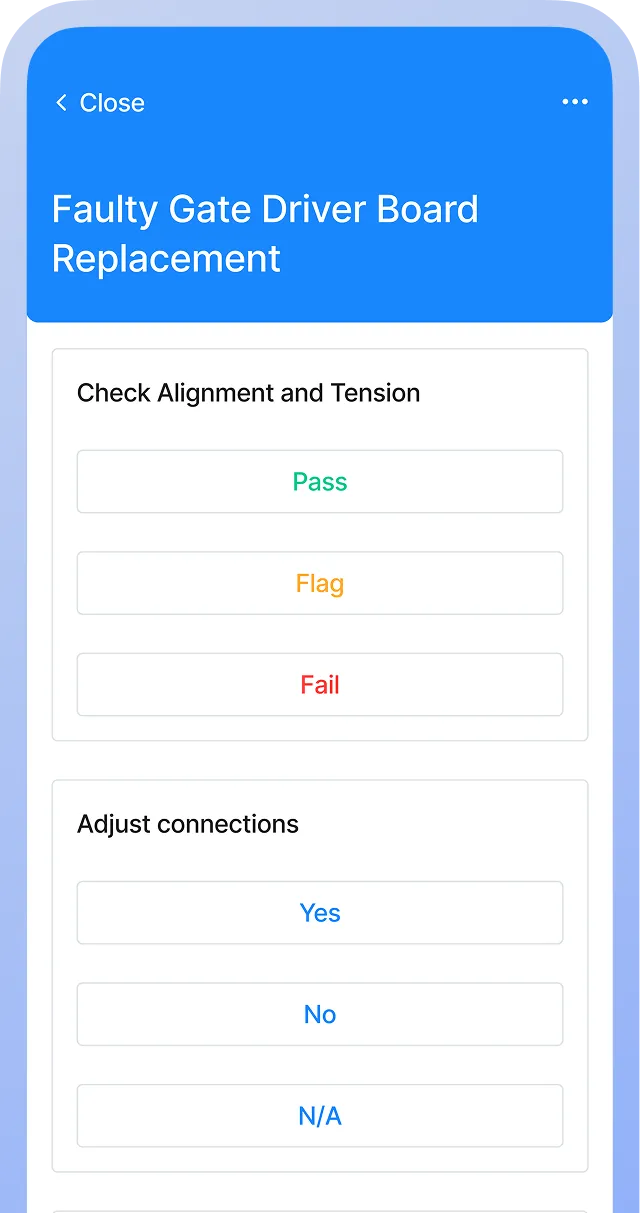
Logging inspection checklists in a CMMS eliminates paper DVIR handling and creates permanent compliance records. Drivers complete inspections on mobile devices, with defects automatically routed to maintenance for assignment and tracking.
A CMMS flags recurring issues across the fleet, helping maintenance teams identify patterns that manual logs miss. Digital records also simplify DOT audits by providing instant access to inspection history and repair certifications required for compliance reviews.


Class A CDL pre-trip inspection checklist
Pre-start review and DVIR handoff
Engine compartment
Cab interior and controls
Exterior walkaround: Tractor
Coupling system and fifth wheel
Trailer inspection
Air brake system tests
Documentation and compliance
This checklist is to be used only by those with appropriate training, expertise, and professional judgment. You are solely responsible for reviewing this checklist to ensure that it meets all professional standards and legal requirements, as well as your needs and intent.
How air brake test results predict maintenance needs
Air brake checks generate some of the most actionable data in a pre-trip inspection. Governor cut-in and cut-out pressures, air pressure build-up rates, and leakdown results all follow predictable degradation curves before a component fails.
A compressor that once built pressure from 85 to 100 psi in 30 seconds but now takes 50 seconds signals wear worth tracking. Repeated slow leakdown findings on the same unit often point to valve or chamber issues that worsen steadily. These aren't isolated snapshots. They're trend lines.
Fleet maintenance teams that capture brake test values digitally can spot units drifting toward failure weeks in advance. That lead time turns a potential roadside breakdown into a scheduled PM event, keeping the truck in service on planned terms rather than FMCSA's.
Common pre-trip defects that lead to roadside violations
Brake adjustment issues, tire tread depth violations, and lighting malfunctions consistently rank among the top out-of-service findings for Class A vehicles.
These defects are costly beyond the violation itself. Each one feeds into a carrier's CSA score, and with the 2026 CSA methodology overhaul approaching, the weight of individual violations may shift significantly. A pattern of missed brake adjustments during pre-trips can quietly erode a fleet's safety rating over months.
The common thread across these high-frequency defects is that pre-trip inspection checklists catch early warning signs days before a component reaches out-of-service condition. The difference between a noted finding and a roadside violation usually comes down to whether that finding triggered a repair or just filled a line on a form.
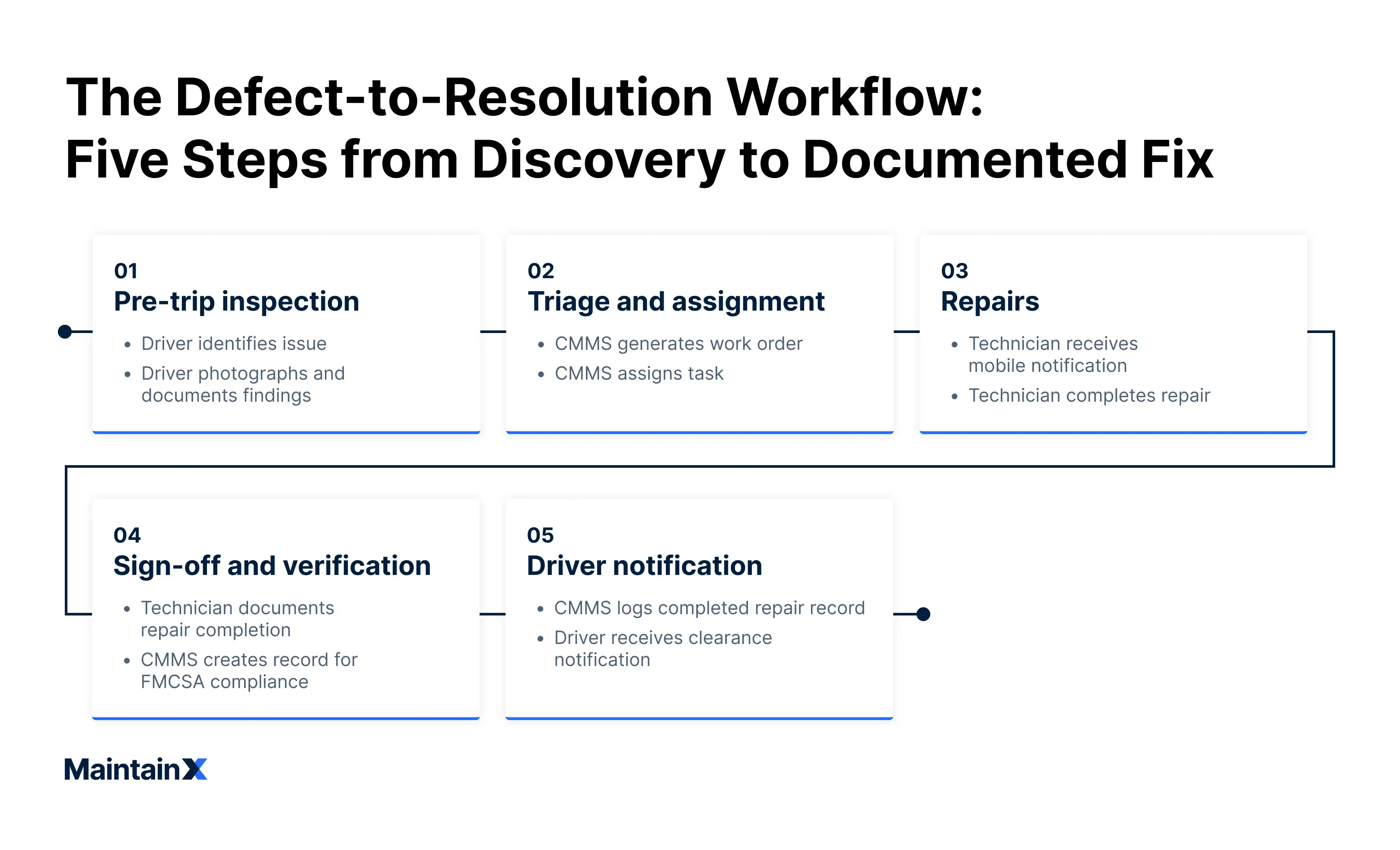
What happens after you find a defect: The driver-to-maintenance workflow
A pre-trip inspection checklist loses its value if defects are found but not resolved. The gap between a driver noting a problem and a technician fixing it is where most inspection programs break down.
Effective fleets treat every defect as the start of a work order, not the end of an inspection. The driver documents the finding, a maintenance coordinator triages severity, and the repair enters a queue with clear priority and accountability. That closed loop matters at scale. When 50 drivers submit findings daily, even a small percentage of lost reports means trucks rolling with known issues.
Improve fleet maintenance planning with a CMMS
Pre-trip inspection checklists generate a steady stream of maintenance intelligence, but only if that data reaches the right people in a usable format. Paper DVIRs make it difficult to spot patterns across a fleet of dozens or hundreds of trucks. If you have a large fleet that requires ongoing maintenance, using a CMMS like MaintainX can bring significant benefits.
MaintainX connects driver-reported findings directly to work order creation, parts inventory, and asset history. When a driver flags a defect, it enters the same system technicians use to schedule and document repairs. Nothing gets lost between the cab and the shop.
Over time, this creates a searchable record of recurring issues by unit, component, and frequency. Maintenance planners can adjust PM intervals based on actual inspection trends rather than generic OEM schedules, so there are fewer surprises at roadside and more informed decisions about fleet spending.
Learn how MaintainX helps with checklists and inspections by booking a tour today:
Class A pre-trip inspection checklist FAQs
What are the FMCSA requirements for Class A pre-trip inspections?
FMCSA Part 396.11 requires drivers to conduct pre-trip inspections and complete a driver vehicle inspection report (DVIR) documenting any defects affecting safe operation. Key focus areas include brakes, steering, lights, tires, coupling devices, and cargo securement. Carriers must maintain inspection records and ensure defects are repaired before dispatch.
Important note: This is not legal or regulatory advice. Always confirm current FMCSA and other requirements before proceeding.
How long should a thorough Class A pre-trip inspection take?
Experienced drivers complete pre-trip inspections in 15–30 minutes. New drivers may need 45 minutes initially. Rushing through checks to safety critical items to meet schedules creates serious liability exposure. Time invested up front prevents roadside violations and costly breakdowns.
Do I need to document every pre-trip inspection or only when defects are found?
Drivers must typically complete DVIRs daily, even when no defects exist. Carriers should retain these for 90 days. Complete documentation of every finding, from fluid leaks in the engine compartment to worn brake pads or low power steering fluid, creates maintenance intelligence that reveals patterns. Repeated issues signal needed PM adjustments.
What's the most efficient order to conduct a Class A pre-trip inspection?
Follow a systematic walk-around: Begin with pre-start checks, then work left-side front-to-back, rear, right-side back-to-front, and finish with coupling verification. At the rear, confirm trailer parking brake function and inspect the air lines and landing gear. Check that the fifth wheel is properly secured and the safety latch is engaged. Consistent sequencing helps prevent missed items when inspecting multiple vehicles daily.
Can I be placed out of service for failing a pre-trip inspection?
Yes. Inspectors place vehicles out of service for critical violations, including brake defects, steering problems, tire issues, and lighting failures. These are automatic failure triggers on roadside checks. A thorough trip inspection catches these before enforcement encounters that damage CSA scores.
What are the most commonly missed items on a Class A pre-trip inspection?
Drivers frequently overlook glad hand seals, trailer brake connections, fifth wheel locking mechanism engagement, license plate lights, and under-hood fluid leaks. Under the hood, it's easy to skip the air compressor, exhaust system, and fluid levels. On the trailer, spring hangers, leaf springs, and cross members should be checked for cracks or unauthorized welds. Landing gear inspection and cargo securement hardware also get abbreviated when schedules tighten.
What's the difference between pre-trip, en-route, and post-trip inspections for Class A vehicles?
Pre-trip inspections verify full roadworthiness before departure, covering everything from tire pressure and tread depth to brakes and steering. En-route checks confirm safe operation during travel, especially after loading or adverse conditions. Post-trip inspections document issues for repair, closing the defect-to-resolution loop and ensuring safety equipment like the fire extinguisher is properly mounted before the next driver takes the wheel.

The MaintainX team is made up of maintenance and manufacturing experts. They’re here to share industry knowledge, explain product features, and help workers get more done with MaintainX!


.webp)