
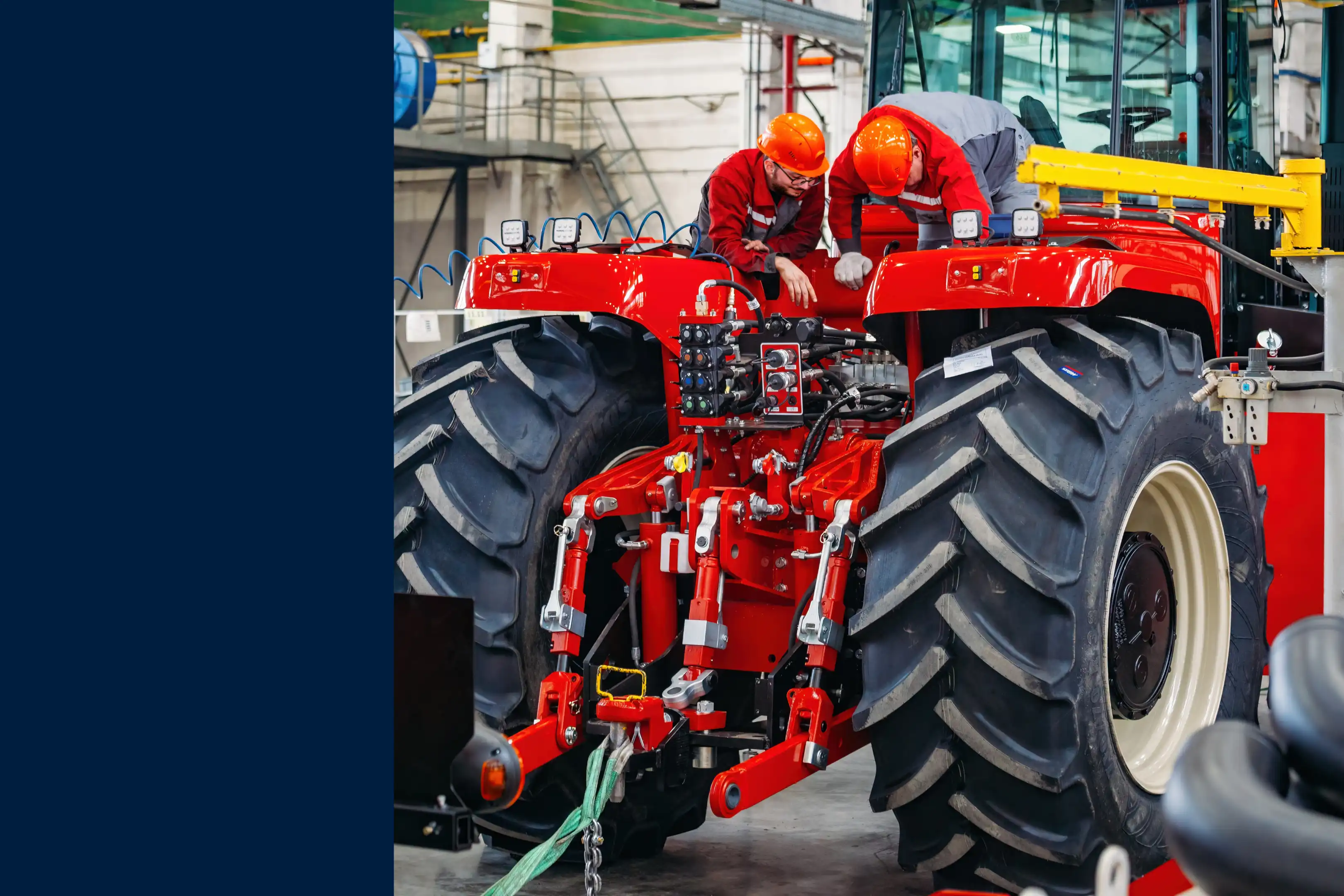
A farm equipment maintenance checklist organized around seasonal pressure points, like the demands of planting and harvest, keeps small teams focused on the right tasks at the right time.
This guide is designed to help your team establish inspection and maintenance rhythms for pre-season commissioning, daily in-season checks, and post-season storage prep. With a comprehensive checklist and a digital record, you can support optimal equipment performance and prevent missed inspections that lead to costly breakdowns.
Key takeaways
- Structure farm equipment maintenance into three key phases: pre-season commissioning, daily in-season checks, and post-season storage prep.
- Connection points between tractors and implements cause most in-field failures since PTO drivelines, hydraulic couplers, and hitch pins endure constant stress cycles.
- A computerized maintenance management system (CMMS) bridges seasonal transitions, documenting deferred post-season repairs and surfacing needs before planting and harvest windows.
How to use this checklist
Customize for your facility
Adapt this checklist to match your operation's equipment mix and crop cycles. For instance, grain operations may prioritize combined maintenance differently than livestock farms with feed mixers.
Add commodity-specific items like planter meter calibration or sprayer nozzle patterns. Consider your state's agricultural equipment regulations, and incorporate required safety inspections to uphold compliance standards.
Use a CMMS
Upload this checklist to a CMMS to track equipment history, schedule preventive maintenance tasks by operating hours, and document compliance.
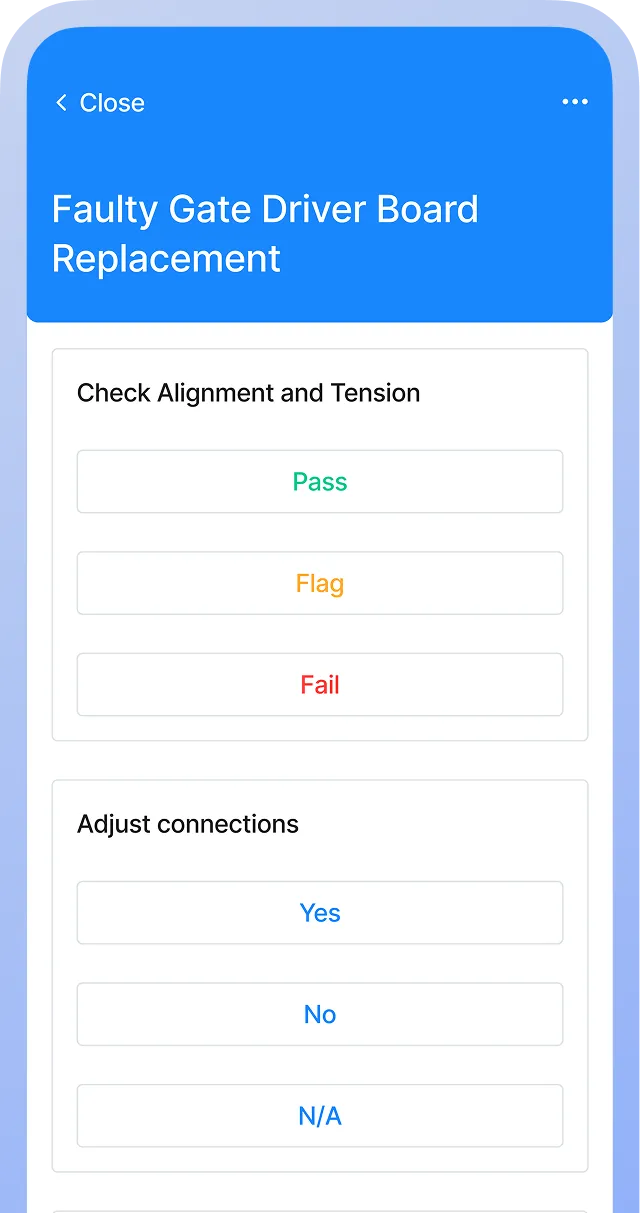
Farm operators can use the CMMS to set automated reminders for seasonal commissioning and filter changes. Mobile access lets operators log issues directly from the field for greater operational efficiency year-round. You can also track maintenance and repair costs to support resource allocation and inform equipment replacement decisions.


Farm equipment maintenance checklist
Pre-season commissioning
Daily pre-operation checks
Weekly in-season checks
Mid-season and monthly maintenance
Tractor-implement interface
Road transport and safety
Post-season winter storage
Documentation and compliance
This checklist is to be used only by those with appropriate training, expertise, and professional judgment. You are solely responsible for reviewing this checklist to ensure that it meets all professional standards and legal requirements, as well as your needs and intent.
How to schedule maintenance around planting and harvest windows
Farm maintenance follows the needs of the land rather than a static monthly calendar. Planting and harvest windows can shift by weeks depending on weather, which means maintenance schedules need built-in flexibility, especially during peak seasons.
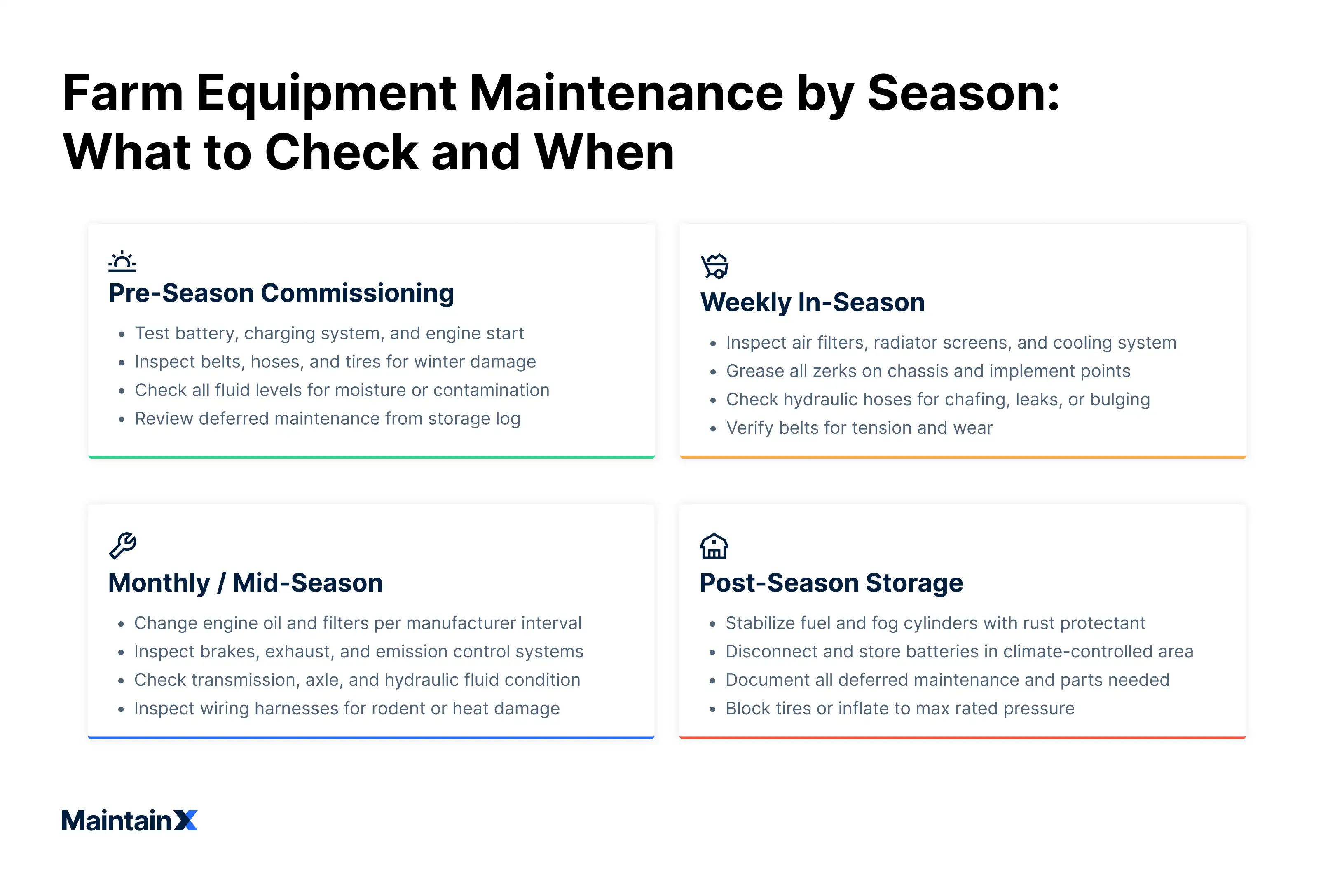
Most experienced operators break the year into three distinct phases:
- Pre-season commissioning: This work happens during the window between ground thaw and planting. That's the time for equipment inspections, fluid changes, and addressing everything deferred at last season's end.
- In-season daily checks: During planting and harvest, there’s no time for deep service work. Maintenance shrinks to five-minute walkarounds before each field run.
- Post-season storage prep: Next year’s reliability begins during post-season storage prep. Document what wore down, what got bypassed, and what parts need to be ordered to limit surprises during the pre-season window.
Throughout these three phases of maintenance, maintain detailed records with a comprehensive checklist to keep track of work completed and ensure peak performance.
Common equipment failures after winter storage and how to prevent them
Year after year, spring commissioning tends to surface the same repeated failures. Rodent-damaged wiring tops the list, followed by dry-rotted belts, corroded battery terminals, and seized hydraulic cylinders. Fuel systems cause trouble too, especially when diesel sits untreated through freezing months.
Prevent these issues before equipment goes into storage. Adding fuel stabilizer, disconnecting batteries, spreading rodent deterrents, and lightly coating exposed hydraulic rams in grease all take minutes but can save days of downtime in spring.
Then, when pulling equipment out of storage, conduct a structured walk-through to catch most issues before they become field breakdowns:
- Check wiring harnesses for chew marks
- Cycle hydraulic cylinders fully and watch for sluggish movement
- Spin belts by hand to feel for cracks
A brief post-season storage log, updated in a digital system of record, makes pre-season commissioning faster and limits guesswork in the spring.
Inspect PTO shafts and hydraulic couplings to prevent in-field failures
Most in-field failures start at the connection points between tractors and implements. PTO drivelines, hydraulic quick-couplers, 3-point hitch pins, and electrical harnesses all endure constant stress, vibration, and dirt exposure. Yet they rarely get the same attention as engines or tires.
Regular inspections of PTO shafts should cover shield condition, universal joint play, and shear bolt inventory. A worn U-joint can fail suddenly, turning a routine mowing pass into a safety incident.
Hydraulic quick-couplers deserve similar focus because contaminated couplers introduce dirt into the entire hydraulic circuit. Check O-rings for swelling, clean coupler faces before every connection, and watch for slow leaks at the fitting.
These interface checks take just a few minutes during pre-field walkarounds, helping to maintain farm machinery and ensure operational efficiency. For small teams managing diverse fleets, catching a bad coupling early avoids hours of costly roadside repair and delays in productivity.
Use a CMMS to track maintenance across seasonal transitions
MaintainX helps farm operations prioritize repairs efficiently. Digital maintenance logs show which equipment ran the most hours and which repairs were patched rather than fixed. That way, the team can quickly see which machines most urgently need their time and attention when they’re at their busiest.
Track farm equipment maintenance with MaintainX, and every task is documented year-round. Book a tour to see it in action today.
Farm equipment maintenance checklist FAQs
What should a farm equipment maintenance checklist include?
A comprehensive farm equipment maintenance checklist establishes a maintenance schedule covering pre-season commissioning, daily in-season checks, and post-season storage prep. Prioritize tractor-implement connection points like PTO drivelines, hydraulic couplers, and hitch pins alongside engine, hydraulics, and safety systems like ROPS.
How often should farm equipment be inspected and maintained?
Inspection frequency follows the agricultural calendar. Conduct thorough pre-season commissioning, daily five-minute checks before field use during planting and harvest, and post-season storage prep. Schedule dedicated regular maintenance sessions monthly or every 100 operating hours to prevent breakdowns and extend equipment lifespan.
What are ROPS requirements, and why are they important for tractor maintenance?
Rollover protective structures (or ROPS) are mandatory safety frames that protect operators during tractor rollovers. Federal regulations require ROPS on most tractors. Regular inspections check for structural damage, loose bolts, and missing components that compromise protection.
Note: This is a general informational summary only and does not constitute legal, regulatory, or compliance advice. Consult a licensed inspector, qualified contractor, or legal counsel to determine the specific obligations applicable to your jurisdiction and equipment.
What is the difference between preventive and predictive maintenance for farm equipment?
Preventive maintenance follows a set schedule. For example, changing oil every 100 hours regardless of condition. Predictive maintenance looks for potential failure indicators like fluid analysis, vibration monitoring, or temperature readings to address issues before failure occurs, potentially reducing unnecessary service.
How do I create a lockout/tagout procedure for farm equipment maintenance?
Establish written procedures for each machine. Document energy sources (engine, hydraulics, electrical, and stored pressure), shutoff locations, and lock placement points. Train operators on isolation steps, use standardized tags, and verify a zero-energy state before maintenance begins.
What maintenance records should I keep for farm equipment?
Track operating hours, service dates, parts replaced, issues found, and deferred repairs in digital maintenance logs. Records bridge seasonal transitions by documenting what needs attention before spring commissioning or what was stored as incomplete. You should also include warranty information and inspection results for safety systems as evidence of compliance.

The MaintainX team is made up of maintenance and manufacturing experts. They’re here to share industry knowledge, explain product features, and help workers get more done with MaintainX!




.webp)