

A thorough checklist for farm inspections helps operators ensure that no task falls through the cracks across equipment, structures, chemicals, water systems, and worker protection. Review each of these areas to uphold safety and compliance requirements and keep your facility ready for any audit.
We've designed this checklist for use in large agricultural operations that need to balance safety and compliance. Adapt it for use in your facility.
Key takeaways
- Farms must comply with a complex mix of regulatory standards, including OSHA equipment standards, EPA chemical rules, and FDA water requirements. Inspection documentation is an essential element of compliance for all of these agencies.
- Seasonal cycles affect farm inspection priorities. Pre-harvest checks differ from post-harvest inspections.
- Using digital checklists helps farms ensure that inspection findings lead to corrective action, while documenting compliance for agency visits.
How to use this checklist
Customize for your facility
This checklist covers common farm operations, but facility managers should adapt it based on their specific operation: dairy, row crop, livestock, or mixed operations. Consider adding inspection items for specialized equipment like milking parlors, irrigation pivots, or poultry houses.
You should also review local agricultural safety regulations and OSHA requirements. This checklist and the editorial content on this page are for informational purposes only and do not constitute legal advice.
Use a CMMS
Upload this checklist to a computerized maintenance management system (CMMS) to digitize farm inspections and create central, accessible audit trails.
With a CMMS, facility managers can schedule recurring inspections, automatically assign tasks to crew members, and track corrective actions through completion. Mobile access enables field inspectors to complete checklists and sync data in real time.


Farm inspection checklist
Equipment and machinery
Buildings and structures
Chemical storage and environmental compliance
Agricultural water systems
Worker safety and emergency preparedness
Livestock facilities and operations
Fields, grounds, and utilities
Documentation and compliance
Note: This checklist is to be used only by those with appropriate training, expertise, and professional judgment. You are solely responsible for reviewing this checklist to ensure that it meets all professional standards and legal requirements, as well as your needs and intent.
Which farm inspection regulations apply to your operation?
Farm inspections often fall under multiple regulatory umbrellas. Your specific requirements will depend on things like farm size, product type, and workforce.
- OSHA's general duty clause applies to most farms, but operations with 10 or fewer employees may qualify for certain exemptions.
- The FDA's Food Safety Modernization Act (FSMA) sets produce safety standards. Smaller farms below specific revenue thresholds can claim modified requirements or full exemptions.
- The EPA sets regulations around pesticide storage, nutrient management, and water discharge.
- State departments of agriculture also often impose their own structural and environmental standards on top of federal rules.
Mapping each inspection area to its governing body clarifies which findings carry legal weight and which reflect best practice. This distinction directly shapes how teams prioritize corrective work and allocate resources.
A CMMS makes this easier to manage at scale: tag inspection items by regulatory category, maintain centralized compliance notes, and use task completion records as an ongoing audit trail. When inspectors or auditors come knocking, that documentation is your first line of defense.
Common farm inspection violations and how to prevent them
The most common recurring farm inspection violations typically related to chemical storage, equipment, and water systems. Here are a few examples:
- Unlabeled containers, missing Safety Data Sheets, improper segregation of incompatible products
- Missing PTO guards, disabled safety interlocks, and expired fire extinguishers
- Backflow preventer failures or inadequate wellhead protection
Avoiding these issues starts with consistent documentation. Farms that inspect these areas on a set schedule and record all findings in a central digital system tend to catch problems before an auditor does.
Turn inspection findings into corrective work orders
Every farm inspection finding needs a clear path from discovery to fix. Typically, that path should involve a work order.
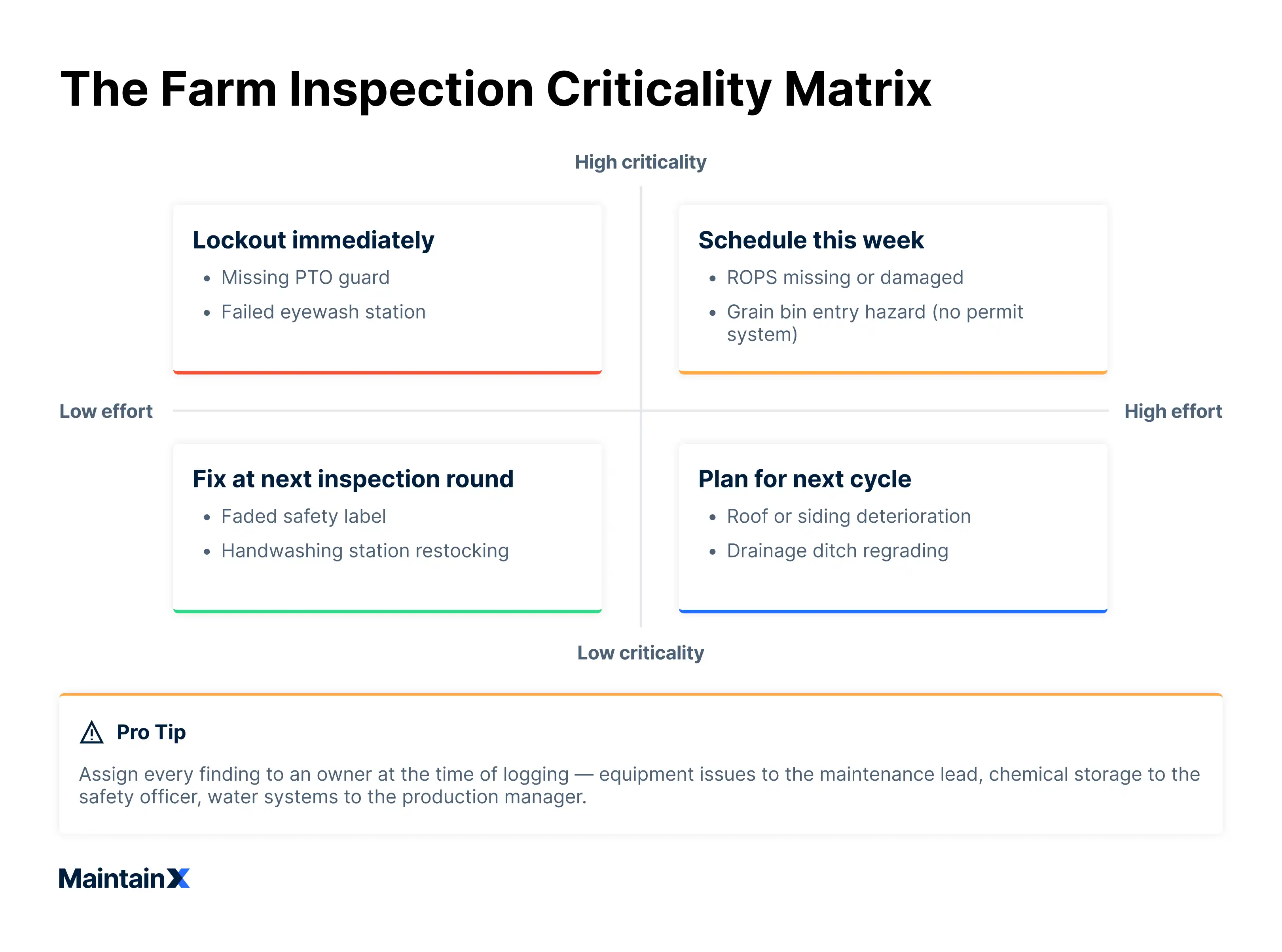
Effective work orders assign each task to a specific person with a target completion date. Categorize findings by severity to help teams address high-priority safety hazards immediately while scheduling lower-risk items within a reasonable window.
If someone marks a corrective task complete, an additional check should confirm the fix. This extra verification step creates an audit trail that proves action was taken to resolve every finding.
Farm audits and maintenance are easier with a CMMS
Paper-based farm inspection records seem easy to use on the surface, but lost forms, illegible handwriting, and scattered filing systems can make these records ineffective.
MaintainX centralizes inspection checklists, corrective work orders, and supporting documentation in one platform. Teams can complete inspections on mobile devices, attach photos of deficiencies, and generate work orders directly from flagged items. This process saves them time and effort, while creating a clear, accessible compliance record.
MaintainX helps align inspection frequency with seasonal demands. Using a digital checklist and automated notifications, you can set up multiple inspection workflows that each run on their own cadences. As you track each inspection over time, you gather a repository of historical data that can make it easier to identify equipment wear patterns and plan proactively for replacement and repairs.
Book a tour and learn how to simplify your farm inspection process with MaintainX.
Farm inspection checklist FAQs
What should be included in a complete farm inspection checklist?
A complete farm inspection organizes checks by operational domain, such as equipment safety, building structures, water systems, worker protection areas, and chemical storage and handling. This domain-based approach ensures relevant coverage for your specific operation.
How often should farm safety inspections be conducted?
Safety inspection frequency varies by operational area. Farmers should conduct monthly equipment checks, quarterly facility reviews, and seasonal deep inspections before planting and harvest.
Operators should conduct weekly walkthroughs of high-risk areas like chemical storage during active seasons.
What are the OSHA requirements for agricultural workplace regulatory inspections?
OSHA exempts farms with fewer than 10 employees and family-owned operations from most general industry standards.
Larger agricultural employers must follow confined space, hazard communication, and field sanitation regulations. State plans may impose additional requirements.
Note: This is a general informational summary only and does not constitute legal, regulatory, or compliance advice. Consult a licensed inspector or legal counsel to determine the specific obligations applicable to your jurisdiction and equipment.
How do I inspect farm equipment for safety hazards?
Farm equipment safety inspections focus on guards, shields, power take-off covers, and safety interlocks. Check hydraulic lines for leaks, verify tire condition and inflation, and test emergency stops. Seasonal machinery requires pre-use inspection after storage periods.
What is the EPA Worker Protection Standard and how does it affect farm inspections?
The EPA Worker Protection Standard requires agricultural employers who use pesticides to train workers, provide protective equipment, restrict entry to treated areas, and maintain application records. Inspections verify training documentation, PPE availability, and safety poster display compliance.
What are the most common violations found during farm inspections and safety audits?
Common violations include:
- Inadequate machine guarding
- Missing or expired fire extinguishers
- Improper chemical storage
- Insufficient emergency eyewash stations
- Incomplete training records
When any of these violations occur, the inspector must document the expected corrective action, the assignee, and the verification date when the correction was confirmed.

The MaintainX team is made up of maintenance and manufacturing experts. They’re here to share industry knowledge, explain product features, and help workers get more done with MaintainX!

.webp)