

Between 2011 and 2017, the U.S. Bureau of Labor Statistics reported 297 crane-related fatalities, an average of 42 deaths per year. Most of these incidents trace back to defects that inspection programs are designed to catch before they become deadly.
OSHA typically mandates regular crane inspections for most facilities, but meeting your compliance requirements is only part of preventing accidents. This checklist and guide will help you establish a preventive maintenance framework that catches problems before they become safety hazards.
Key takeaways
- Service classification and operating conditions should impact inspection frequency alongside OSHA and manufacturer requirements.
- Recurring defects signal the need for adjustments before small issues become major failures.
- Maintain operational continuity by setting clear thresholds that distinguish immediate shutdown conditions from monitor-and-schedule items.
- Tracking deficiencies across inspection cycles in a CMMS can uncover patterns that individual inspections miss.
How to use this checklist
Customize for your facility
Crane configurations vary widely across facilities. Overhead bridge cranes, gantry cranes, and jib cranes each have unique inspection points. You’ll want to adjust this checklist based on your equipment types, service classifications, and duty cycles.
For example, OSHA generally requires more frequent inspections for cranes in severe service or critical lifts. Environmental factors matter too: Outdoor cranes need weather exposure checks, while corrosive atmospheres demand closer attention to structural corrosion.
Use a CMMS
We’ve made this crane inspection checklist available as a PDF for you to print out or to use on a tablet. However, for the best results, we recommend using a computerized maintenance management system (CMMS).
A CMMS transforms crane inspection documentation from paper forms into searchable digital records. This creates automatic audit trails that simplify regulatory documentation requirements. And, with a CMMS, facilities can schedule inspections based on service classification, attach photos of deficiencies, and track patterns across inspection cycles.


Crane inspection checklist
Structural and frame components
Wire rope and drums
Hooks and hoist chains
Load-handling attachments
Hydraulic and pneumatic systems
Electrical systems and controls
Brakes and drive mechanisms
Safety devices and operational aids
Documentation and compliance
This checklist is to be used only by those with appropriate training, expertise, and professional judgment. You are solely responsible for reviewing this checklist to ensure that it meets all professional standards and legal requirements, as well as your needs and intent.
How to build a systematic crane inspection program
To build a systematic crane inspection program, start by categorizing each crane based on actual usage patterns and environmental factors. A crane running two shifts in a dusty manufacturing environment faces different stresses than one used occasionally in a climate-controlled warehouse. These differences should shape inspection schedules: Rough conditions or heavy-duty use require more frequent and more detailed inspections.
Pattern recognition strengthens any program over time. When the same component fails repeatedly across inspections, that signals a deeper issue worth investigating. Persistent hydraulic contamination could point to environmental factors, including airborne particulates, chemical exposure, or poor ventilation. Recurring brake lining wear might indicate usage beyond design parameters. Treating these patterns as data rather than isolated incidents transforms routine inspections into continuous improvement opportunities.
Inspection frequency requirements: OSHA daily, monthly, and annual standards
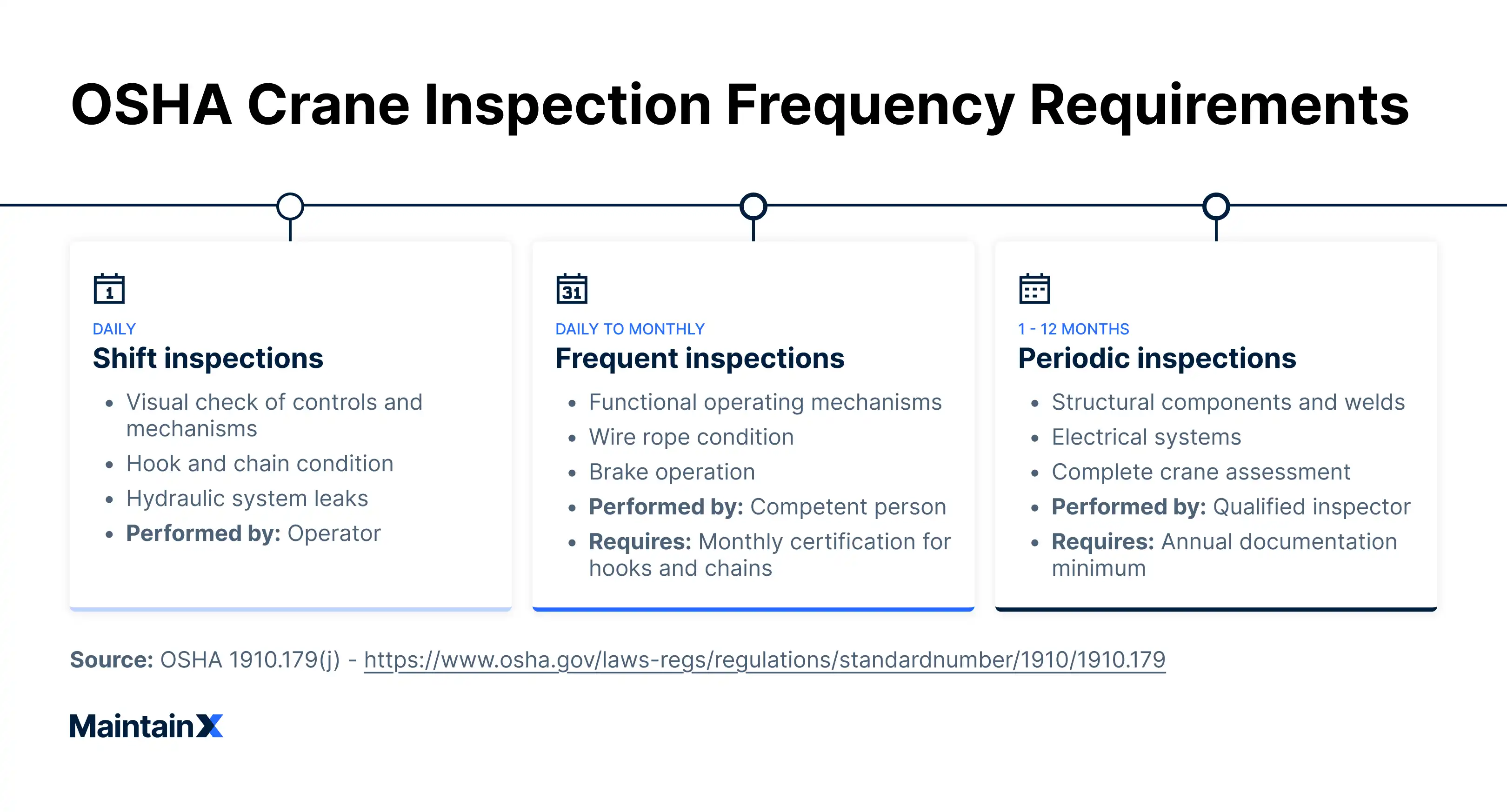
Many facilities use OSHA guidelines as a baseline for establishing inspection frequencies. However, these typically represent recommended minimums rather than optimal schedules.
Daily checks cover operational items like controls, hooks, and wire rope reeving. Monthly inspections add deeper component examination of brake systems, hydraulic lines, structural welds, and load-bearing pins. Annual complete inspections require documentation and often third-party involvement, including load testing, non-destructive examination of critical welds, and complete structural integrity
Cranes sitting unused for one to six months require frequent inspection before returning to service. Equipment idle longer than six months needs a full inspection regardless of its condition when parked.
Previous inspection findings should influence your calendar, too. If hydraulic leaks appear regularly, consider more frequent checks of seals, hoses, and fittings. Waiting for the next scheduled inspection while problems compound creates both safety hazards and regulatory risk.
Multi-site crane inspection standardization and compliance tracking
Inspection standardization across multiple facilities requires balancing consistency with local conditions. Core inspection criteria should remain uniform, but frequency adjustments may vary by site based on service classification and environmental factors.
Centralized tracking of inspection findings, maintenance actions, and failure patterns in a CMMS helps identify which locations struggle with specific issues. This consolidated view transforms isolated data points into actionable intelligence across your operation.
Multi-site organizations waste resources when each location reinvents solutions to problems others have already solved. By comparing locations in your CMMS, you can replicate what works and intervene where problems cluster.
Clear documentation standards make audits straightforward regardless of which facility OSHA visits. Every inspector should record findings the same way, flag deficiencies using consistent severity criteria, and route issues through identical escalation paths. This consistency also enables meaningful cross-site comparisons that surface trends that could be missed when viewing each location in isolation.
Simplify crane inspections with a mobile CMMS
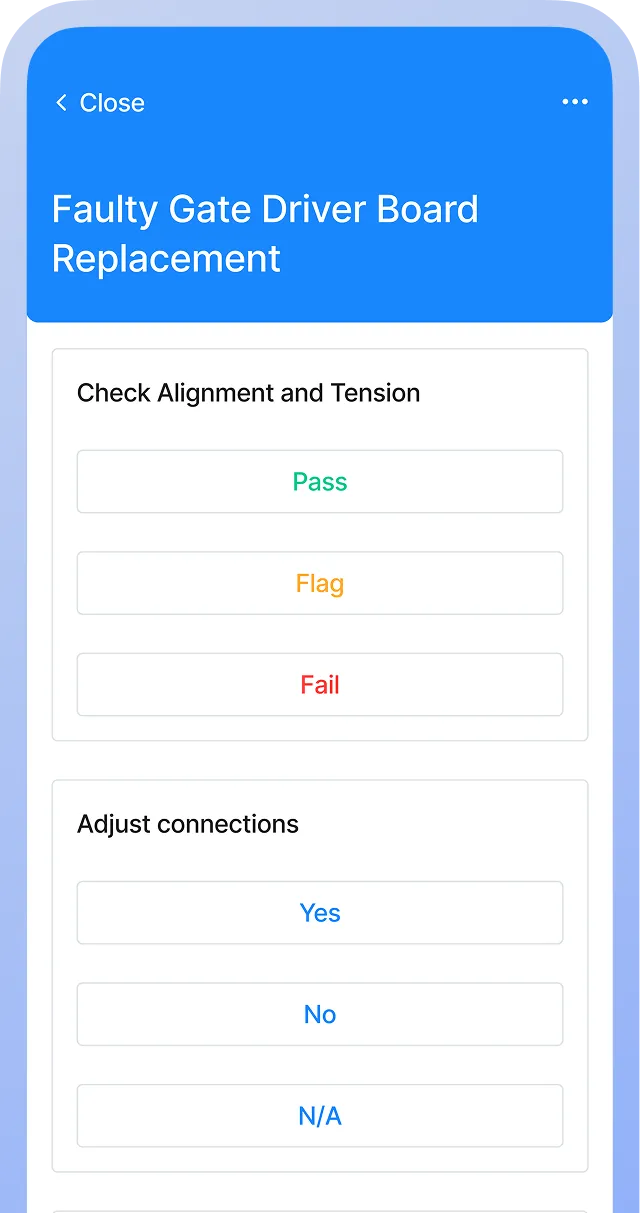
A CMMS eliminates the gap between finding problems and documenting them. With a mobile-ready CMMS, inspectors can photograph deficiencies, note measurements, and flag issues for follow-up without returning to a desk.
Digital records also simplify the distinction between immediate shutdown conditions and monitor-and-schedule findings. Clear thresholds built into inspection workflows help inspectors make consistent decisions. For example, a hook throat opening exceeding 15% triggers automatic escalation, or minor wire rope wear below the discard criteria generates a future work order instead.
See how MaintainX makes crane inspections easy
MaintainX transforms crane safety from paperwork into preventive action. Our mobile CMMS puts customizable checklists and digital inspections directly in your inspectors' hands, capturing photos, measurements, and deficiencies in real time.
Book a tour to see how leading facilities are replacing clipboards with intelligence that keeps cranes running safely and compliantly.
Crane Inspection Checklist FAQs
How often are crane inspections required by OSHA?
OSHA regulations typically address daily, frequent (weekly to monthly), and annual inspections. Requirements vary based on crane type, service classification, and operating conditions. Consult with qualified safety professionals to determine appropriate inspection frequencies for your facility
Initial inspections are conducted before a crane is put into service for the first time. Pre-operational inspections are performed by the crane operator or maintenance personnel at the beginning of each shift to check the crane's controls and safety features.
Routine inspections are conducted monthly or quarterly, focusing on critical components and wear-prone parts such as brakes and load chains.
More comprehensive inspections are performed annually or biannually to examine the crane's overall condition over time.
What documentation is required for crane inspection compliance?
Maintain dated records of when all inspections were performed, ensuring that all relevant documents and findings are included in the inspection records. Note identified deficiencies, corrective actions taken, and inspector credentials.
Documentation of all actions taken during the inspection and repair process is often crucial for tracking the crane's condition and ensuring regulatory compliance over time.
What are the most important items to check during a daily crane inspection?
Daily inspections consist of visual and functional checks by the operator before each shift, focusing on the condition of structural elements, safety devices, and critical systems. Visual inspections performed by a competent person are required before every shift to identify immediate hazards.
Prioritize load-bearing and safety-critical components: Inspect and verify the condition of hooks for throat opening and twist, wire ropes for broken wires or kinking, brakes for proper holding, controls for responsiveness, and limit switches for function. Inspect all safety devices to ensure they prevent safety hazards, and check structural elements for signs of damage, deformation, or cracking. Evaluate the condition of all systems, including mechanical, electrical, and safety systems. Any issues identified during these inspections should be addressed immediately before the crane is operated.
Who is qualified to perform crane inspections?
Daily and frequent inspections should be conducted by a qualified inspector trained in the inspection of the specific type of crane. Periodic and complete inspections typically need qualified personnel with specialized knowledge, often engineers or certified crane inspectors.
What happens if a crane fails inspection?
Remove the crane from service immediately and tag it out. If a crane is deemed unsafe, operations should cease immediately to prevent further risk or damage.
Establish clear thresholds to guide your decision-making: Hook throat opening exceeding 15% or twist beyond 10 degrees requires immediate shutdown; lesser deficiencies may allow monitored operation with scheduled repairs before the next use cycle. After repairs, a thorough re-inspection and functional test should be performed to verify that the crane is safe to operate.
If necessary, the crane should be taken out of service until repairs are made and verified by a third-party auditor.
How can digital inspection tools improve crane safety programs?
Using specialized software like a CMMS to manage a crane inspection checklist can improve efficiency and data management, and helps ensure consistency in inspection procedures. These digital tools also help keep all personnel on the same page by providing transparent and accessible records. When brake lining wear or hydraulic contamination recurs despite repairs, a CMMS can flag systemic issues requiring program-level adjustments. Automated scheduling, photo documentation, and trend analysis strengthen both compliance and actual safety outcomes.
What are the consequences of skipping crane inspections?
Beyond OSHA citations averaging $15,000 or more per serious violation, uninspected cranes create catastrophic failure risk. Equipment damage, worker injuries, and liability exposure compound quickly. Most crane accidents trace back to identifiable defects that routine inspections would catch.

The MaintainX team is made up of maintenance and manufacturing experts. They’re here to share industry knowledge, explain product features, and help workers get more done with MaintainX!



.webp)