

The more assets you have, the more you can benefit from standardized processes, especially when tracking equipment across multiple sites. An asset management checklist is a critical tool for overall asset management, helping organizations track, maintain, and optimize their equipment and other valuable resources. This approach maximizes asset value, helps compliance, and supports operational efficiency.
Below, we put together a standard asset management checklist for use in your facility. Download and start using it right away, or, better yet, import it into a mobile-friendly computerized maintenance management system (CMMS) to make regular inspections easier.
Key takeaways
- Asset management programs succeed when tracking feels effortless. QR code scanning and photo capture during walkthroughs create accurate records without adding paperwork burden to technicians.
- Starting with three to five critical pieces of equipment typically yields better adoption than launching a complete asset management program all at once.
- Regular audits improve data integrity, provide confidence in financial reporting, and help compliance with internal policies and external regulations.
- A CMMS that automatically generates work orders from flagged conditions closes the loop between identifying problems and resolving them.
How to use this checklist
Customize for your facility
Asset management requirements vary based on industry, facility size, and regulatory environment. Healthcare facilities may need stricter tracking for medical devices, while manufacturing plants often prioritize production equipment uptime.
Start with this checklist and adjust inspection frequencies based on asset criticality. Mission-critical equipment typically warrants weekly checks, while support assets may only need monthly reviews. Add industry-specific compliance items to align with ISO 55000 or other relevant regulations.
Regularly review and adjust your asset management strategy to ensure it remains aligned with business goals and adapts to changing operating conditions.
Use a CMMS
Paper checklists are a great starting point, but we strongly recommend using CMMS for ongoing asset management.
Modern, mobile-friendly CMMS platforms typically let technicians verify asset locations and update condition data in real time, transforming paper-based tracking into a searchable digital system.
From there, automated workflows can trigger work orders when inspections reveal deficiencies, eliminating manual handoffs. Over time, a CMMS will produce audit-ready documentation that demonstrates compliance and tracks performance trends.


Asset management checklist
Asset inventory and identification
Condition assessment and monitoring
Preventive maintenance integration
Documentation and compliance
Financial and performance metrics
This checklist is to be used only by those with appropriate training, expertise, and professional judgment. You are solely responsible for reviewing this checklist to ensure that it meets all professional standards and legal requirements, as well as your needs and intent.
Common mistakes that lead to downtime
The most common asset management mistake is to treat the checklist as a compliance document rather than an operational tool. When teams complete checklists just to check boxes, they miss the warning signs hiding in plain sight. A technician might note “pump vibration within acceptable range” without recognizing that vibration levels have been steadily creeping upward over the past three months. As a result, they’ll miss a clear early indicator of bearing failure.
Ramping up too quickly is another common mistake when launching an asset management program. Facilities often struggle when they roll out complete programs covering every asset at once. Start with three to five critical equipment types to build sustainable habits before expanding.
Another overlooked mistake involves ignoring the data that checklists generate. Recurring issues noted during inspections should trigger preventive maintenance schedule adjustments. When the same problem appears three times in six months, that pattern deserves attention beyond a work order.
What asset management metrics should you track?
Checklist completion rates matter, but they only tell you if the work happened, not whether it prevented failures or improved asset performance. The metrics that actually drive better outcomes focus on three areas: inspection quality, asset health trends, and response effectiveness.
- Inspection duration by asset type reveals when technicians are finding something worth investigating. If a pump inspection that typically takes 15 minutes suddenly takes 25, that extra time often means a technician noticed an anomaly and investigated further. Track this over time to identify which assets are showing early signs of trouble.
- Condition trend data is your early warning system for asset degradation. Rather than just recording that a bearing temperature is "within spec" at 75°C, track the trajectory: 68°C three months ago, 71°C last month, 75°C today. Tracking trends helps catch problems in the degradation phase, when maintenance is still cheaper than replacement, instead of waiting for catastrophic failure.
- Issue-to-resolution time measures whether your inspection program actually prevents breakdowns or just documents them. If technicians identify a loose coupling on Monday but the work order doesn't get created until Friday, or worse, gets created but sits in the backlog for weeks, you're building a documentation graveyard. A key goal of asset lifecycle management is to close the loop between detection and correction before minor issues become emergency repairs.
How a mobile CMMS simplifies asset management inspections
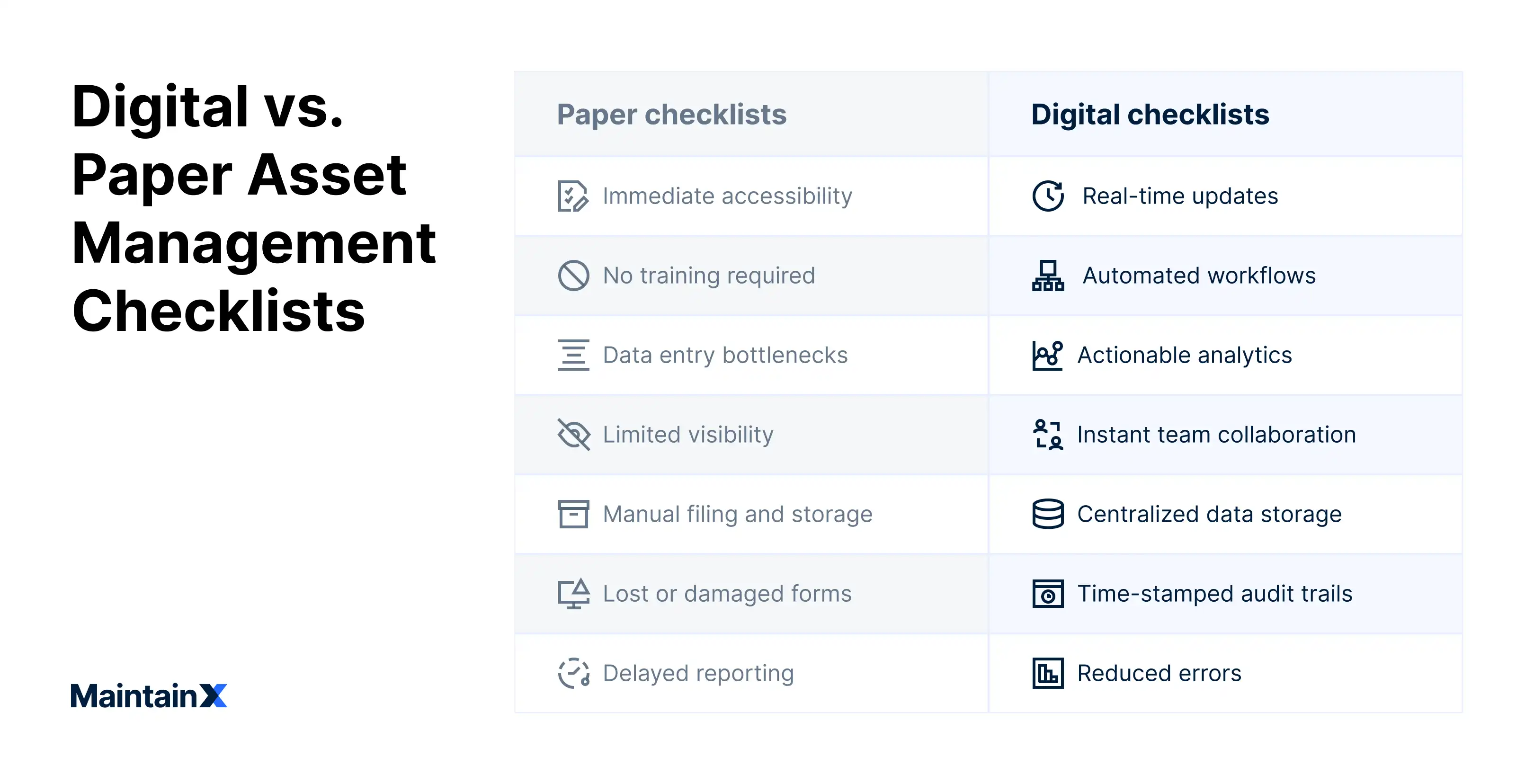
Paper checklists might seem immediately accessible, but they create serious operational drag. Data entry bottlenecks slow down reporting, limited visibility means issues slip through the cracks, and manual filing systems make it nearly impossible to spot patterns across your asset portfolio.
Digitizing inspection checklists in a mobile CMMS eliminates these friction points with real-time updates, automated workflows that route flagged issues instantly, and centralized data storage that gives your entire team instant access to equipment history. The result is actionable analytics instead of delayed reporting, time-stamped audit trails instead of lost forms, and reduced errors instead of transcription mistakes.
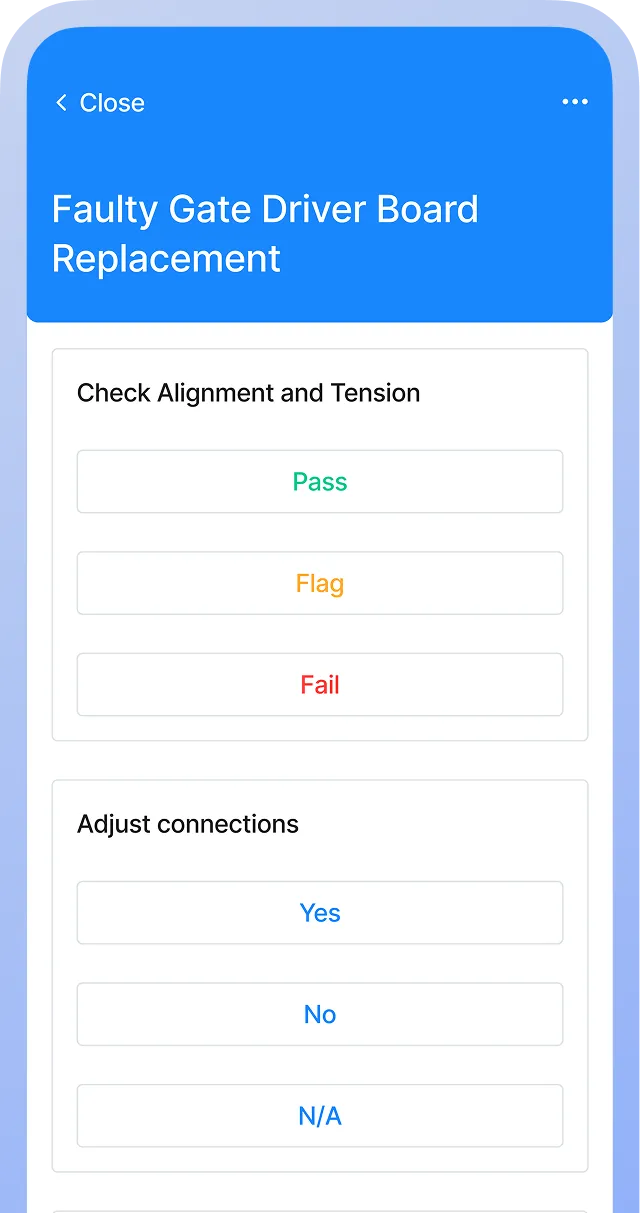
A technician using a mobile CMMS platform can scan an asset tag and complete the inspection on their phone. Any flagged issue automatically generates a work order with the relevant context attached. Technicians spend time inspecting equipment rather than transcribing notes or hunting for the right form.
Ready to streamline your asset management inspections?
MaintainX turns asset management checklists and inspections into real-time visibility across your equipment portfolio. Our mobile-first platform connects inspections to work orders automatically, so flagged issues get resolved instead of filed away. Book a tour to see it in action.
Asset Management Checklist FAQs
What are the essential components every asset management checklist must include?
A comprehensive asset management checklist should include an asset register, identification fields, asset tracking methods, condition assessment criteria, compliance verification items, and clear action triggers. A well-structured checklist helps ensure that all assets are properly tracked and accounted for.
An asset register is essential for tracking asset performance, compliance, and maintaining accurate records. This should include details such as purchase information, current condition, maintenance history, and depreciation.
How long does it take to set up an asset management program across my organization?
Most teams see meaningful adoption within four to six weeks. Leveraging asset management software or an asset management system can significantly streamline the setup and adoption process, making it easier to track and manage assets from the start.
Begin with three to five critical equipment types, build the habit, then expand systematically. Trying to track everything on day one typically leads to abandonment.
What's the difference between an asset management checklist and a preventive maintenance schedule?
Asset management checklists track asset inventory, location, and condition across your equipment portfolio. These tools help organizations develop successful maintenance plans, optimize maintenance management, and ensure that maintenance logs are kept up to date for each asset.
Preventive maintenance schedules define when specific maintenance tasks occur. Checklist data often reveals which assets need adjusted PM frequencies. A structured maintenance plan, supported by technology, helps prevent breakdowns, reduces unexpected repair costs, and lowers overall maintenance costs.
How do I get my maintenance team to actually use the asset management checklist?
Adoption hinges on reducing friction. Asset management software can provide automated reminders, data tracking, and compliance reporting, making it easier for maintenance managers and authorized personnel to adopt and consistently use an asset management checklist.
Mobile-first tools with QR scanning eliminate manual data entry. When technicians see that flagged issues automatically generate work orders (saving them from chasing supervisors), usage becomes self-reinforcing.
Can I customize an asset management checklist for my specific industry or asset types?
Absolutely, and you should. Generic checklists miss industry-specific compliance requirements and equipment nuances. Start with templates, then adapt inspection criteria, condition ratings, and required documentation to match your actual assets and regulatory environment.
How soon can I expect to recover costs and see improved asset performance from my asset management program?
Effective asset management ensures operational efficiency and minimizes operational costs, while optimizing resource utilization across the organization. Organizations typically recover setup costs within the first year through reduced equipment downtime and avoided compliance penalties.
The larger gains come from identifying recurring failures and condition trends, informing smarter maintenance investments. Establishing clear objectives for asset management helps guide decision-making and resource allocation, ensuring that asset management efforts are aligned with overall business objectives.
Continuous improvement is necessary. Regularly revisiting asset management goals and strategies helps organizations adapt to technological advancements and maintain operational efficiency. By using an asset management checklist, organizations can streamline processes, identify gaps, and ensure all steps are covered when managing both tangible and intangible assets.

The MaintainX team is made up of maintenance and manufacturing experts. They’re here to share industry knowledge, explain product features, and help workers get more done with MaintainX!


.webp)