
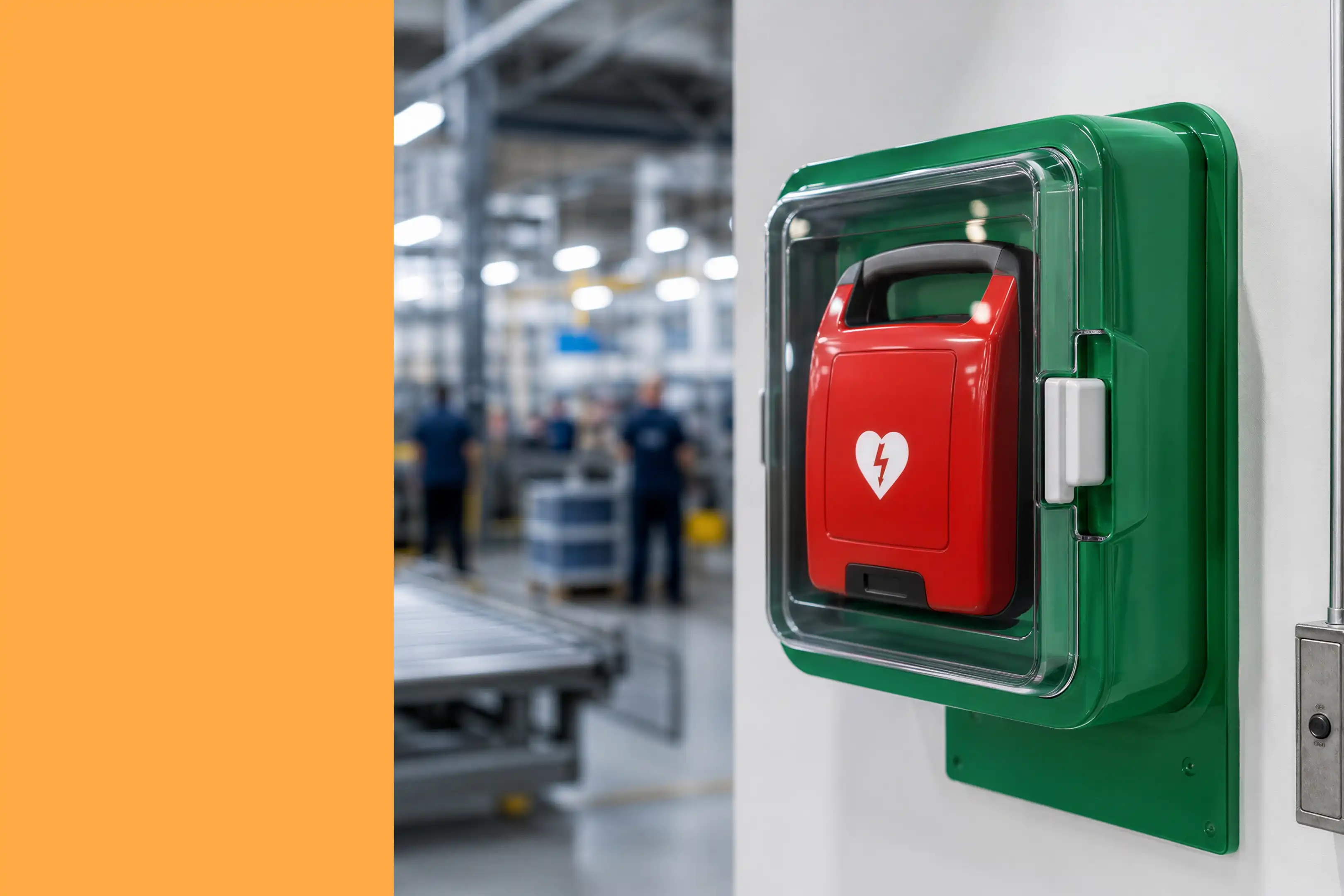
An automated external defibrillator (AED) that fails during a cardiac emergency is a preventable tragedy. When you use a structured AED maintenance checklist with clear ownership, escalation paths, and documented inspection history, you can keep every device ready to perform.
This digital checklist gives your organization the verifiable compliance trail that Good Samaritan protections require. Adapt it for your facility, and upload it to a computerized maintenance management system (CMMS) to keep your AEDs ready for use in any emergency.
Key takeaways
- Assign specific maintenance owners to inspect each AED location. This keeps devices from being forgotten between emergencies.
- It can take up to four to six weeks to order replacement batteries and pads. Factor that timing into expiration tracking to avoid last-minute scrambles for batteries and pads, and keep every unit deployment-ready.
- Good Samaritan protections depend on provable maintenance records, not just having a checklist. Using a CMMS creates an audit trail that's more likely to hold up under scrutiny.
How to use this checklist
Customize for your facility
Adapt this checklist based on your AED model, deployment locations, and regulatory requirements. For instance, facilities with multiple buildings or floors may need additional signage checks to ensure the device is clearly visible. High-traffic areas like gyms or manufacturing floors warrant more frequent visual inspections of the AED.
Adjust inspection frequency based on manufacturer recommendations; most models are inspected monthly. States and local jurisdictions vary in registration and notification requirements, so you should confirm your obligations with local EMS.
Use a CMMS
Upload this checklist to a CMMS to track task inspections digitally and eliminate manual logs. A CMMS lets you set up automated reminders tied to each AED location, store expiration dates for batteries and pads, and trigger reorder alerts when supplies are running low.


AED maintenance checklist
Battery and power system
Electrode pads and connections
Device status and self-test
Physical condition
Cabinet, signage, and accessibility
Rescue accessories
Program management
Documentation and compliance
This checklist is to be used only by those with appropriate training, expertise, and professional judgment. You are solely responsible for reviewing this checklist to ensure that it meets all professional standards and legal requirements, as well as your needs and intent.
How to manage AEDs across multiple sites and buildings
The core challenge of maintaining a large network of AEDs is visibility. Paper logs taped to AED cabinets work until someone forgets to conduct a scheduled check, an inspector transfers departments, or a log gets moved or misplaced. What’s more, remote and low-traffic locations are especially vulnerable to missed checks without a central system to remind and notify designated inspectors.
Effective multi-site AED programs typically share a few traits:
- Centralized asset registers that track every unit's location, expiration dates, and assigned inspector
- Standardized inspection intervals rather than ad hoc schedules
- Clear escalation paths when a check is missed
A digital system like a CMMS, along with a structured maintenance checklist, can check all of those boxes by documenting unit details, outlining expected inspection workflows, and defining next steps for failed or incomplete inspections.
Why AED programs fail between emergencies (and how to prevent it)
AEDs typically fail when dead batteries go unnoticed, and expired pads sit unchanged.
Accountability is the key to preventing this neglect. Most facility teams know AEDs need inspection, but they don’t always take the next step to ensure it happens by assigning an owner, establishing missed-check alerts, or defining a consequence for an unsigned log.
Build AED checks into the same recurring schedule as other life-safety inspections to keep them from becoming invisible. When they share a workflow with fire extinguishers and emergency exits, they stay on the radar.
A digital system and checklist streamlines checks, maintains an ongoing central record, and keeps everyone accountable, while also supporting all life-safety inspections in a single solution.
Documentation requirements that protect your organization
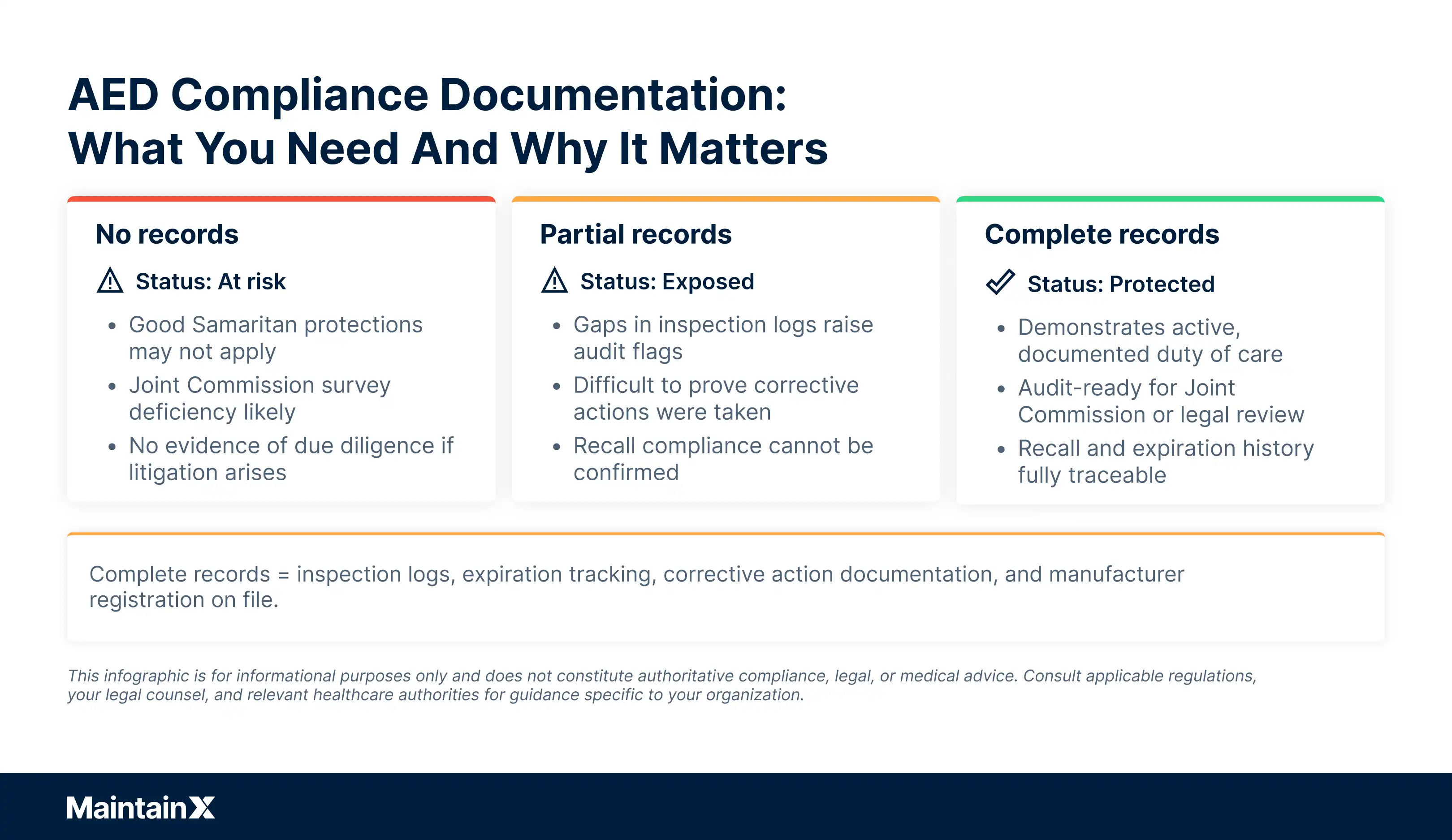
Good Samaritan laws and AED liability protections exist in every U.S. state, but those protections are often conditional. Many require proof of a reasonable maintenance program, not just device ownership.
If an AED fails during a cardiac event and your organization can't produce consistent inspection records, legal exposure can grow significantly. You need a verifiable trail showing that inspections happened on schedule, teams corrected issues promptly, and pads and AED batteries were replaced before expiration.
Maintain ongoing documentation, including:
- Dated inspection logs with the inspector's name and records of battery and pad replacements
- Corrective actions taken for any issues found
- Training or certification records for designated responders
Documentation protects the organization, but only when the records are consistent, timestamped, and accessible under scrutiny.
From paper checklists to automated compliance: How a CMMS helps
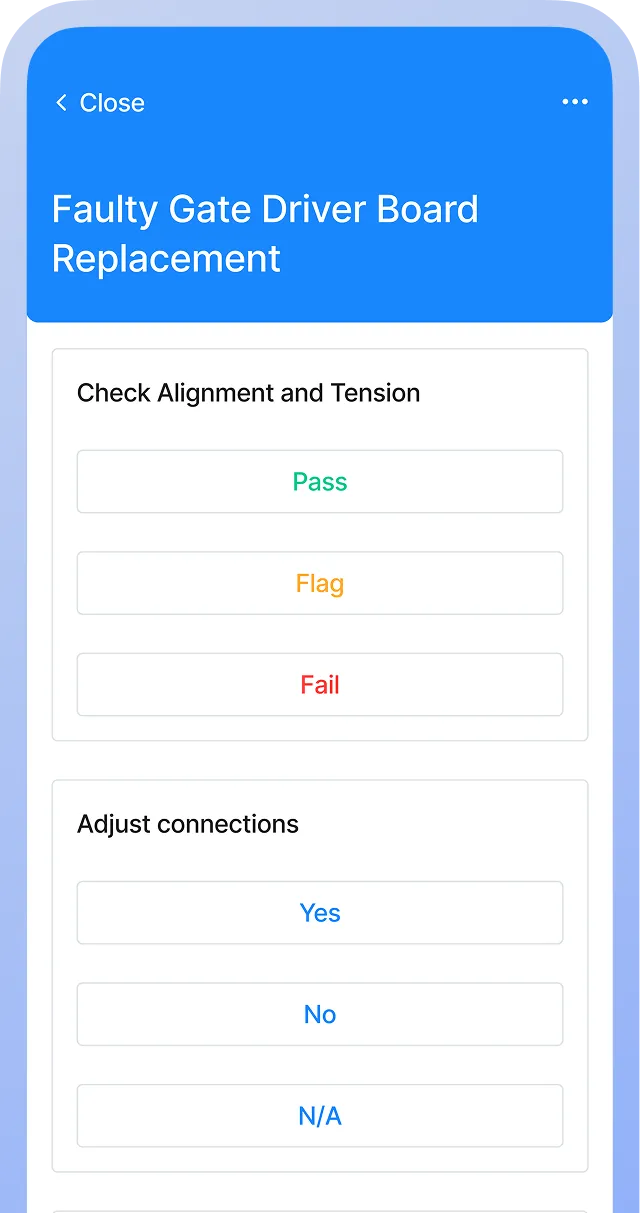
Paper AED logs are easy to lose, hard to audit, and impossible to monitor across multiple locations in real time. Managing checklists in MaintainX replaces clipboard-based tracking with scheduled, assigned, and recorded inspections.
With MaintainX, each AED lives in a centralized asset register with its location, pad expiration date, and battery status. Recurring work orders go to specific team members on a set cadence, and missed checks trigger automatic notifications. Digital tracking makes an even bigger operational difference at scale, enabling facilities with 40 devices across a campus or portfolio to keep every AED ready for use.
Keep every defibrillator in your facility operational and compliance-ready with MaintainX. Book a tour today.
AED maintenance checklist FAQs
What are the maintenance requirements for an AED?
AEDs require monthly status checks, battery and pad expiration monitoring, and post-use inspections.
Assigning clear ownership is critical. Designating specific staff to perform checks and documenting every inspection creates accountability that prevents devices from being forgotten between emergencies.
How often should AEDs be inspected and serviced?
Inspect AEDs monthly for indicator lights, battery status, and pad expiration dates. Manufacturer servicing varies by model but typically occurs every two to five years. Focus on building consistency to prevent gaps where critical failures go undetected.
What are the regulatory requirements for AED registration and documentation?
Requirements vary by state but generally include registering devices with local EMS agencies and maintaining inspection logs.
Good Samaritan protections depend on proving consistent maintenance. Complete records serve as legal armor if liability questions arise after use during an emergency response.
Note: This is a general informational summary only and does not constitute legal, regulatory, or compliance advice. Consult a licensed inspector, qualified contractor, or legal counsel to determine the specific obligations applicable to your jurisdiction and equipment.
When should AED pads and batteries be replaced?
Replace pads and batteries before manufacturer expiration dates, typically every two to five years for batteries and two to three years for pads. Track expiration dates systematically across all devices. Expired components render the entire unit ineffective during cardiac emergencies.
Who is responsible for AED maintenance, and what training is required?
Facilities or safety managers typically own AED programs, delegating monthly inspections to trained site staff.
Basic training covers status indicator interpretation and troubleshooting. Formal ownership assignments with backup personnel prevent missed inspections and responsibility confusion across teams.
How should AED maintenance records be documented and stored?
Maintain timestamped logs showing inspector identity, findings, and corrective actions for each device. Digital systems are superior to paper logs, especially for multi-site visibility and audit trails. Verifiable documentation protects against liability while ensuring accountability when inspections span locations or responsibilities change.
What are the best practices for managing multiple AEDs across a facility?
Centralize scheduling and tracking through digital systems like a CMMS that alert staff before missed inspections or component expirations. Assign location-specific ownership with escalation protocols for overdue checks.
Standardized workflows prevent individual devices from slipping through the cracks as fleets grow across buildings or campuses.

The MaintainX team is made up of maintenance and manufacturing experts. They’re here to share industry knowledge, explain product features, and help workers get more done with MaintainX!


.webp)