
Ten to twelve hours a week. That's what one maintenance leader at Toyota Industries spent keeping a homemade spreadsheet alive, week after week, so his plant could pretend it had a maintenance system.
Then they moved to MaintainX. And every number they cared about got worse.
That's not a bug. That's the price of admission.
A maintenance program can run for years on numbers that feel right without ever being true. That was the thread running through Wrench Works DMV, where maintenance and operations leaders from the DC, Maryland, and Virginia area and well beyond spent two half-days in sessions, breakouts, and one panel that got refreshingly honest about what a good metric actually is.
Who was in the room
I went through the registration list before we started. It is worth telling you who showed up.
Somebody in that room keeps a public television and radio station on the air. Somebody keeps an art museum running. Somebody grooms the trails on a mountain. Somebody keeps an ambulance fleet on the road, which means somebody else's worst day depends on their PM program.
There were churches. Universities. A treatment center. An airport authority. Car washes, laundries, lumber yards, bakeries, quarries, label plants, trucking fleets. And a company building humanoid robots.
Not one of them has the same job. Every single one of them has the same problem. Something has to keep running, and when it does, nobody notices. Nobody throws a party for the failure that did not happen.
That's why the room exists.
Day 1: The data gets worse before it gets better
That line came up more than once, and it set the tone early.
Over lunch we walked through findings from MaintainX's State of Industrial Maintenance 2026 survey of more than 2,200 leaders across the US and Canada. Unplanned downtime is still climbing for most organizations, even where budgets and headcount are growing. AI told a different story. Fifty-eight percent of respondents are using it in some form, up from 44% a year ago, and 75% report measurable ROI inside six months.
The technology is maturing fast. But only for the teams with the data discipline underneath it.
Inside the TACG session: Nine months of honest numbers
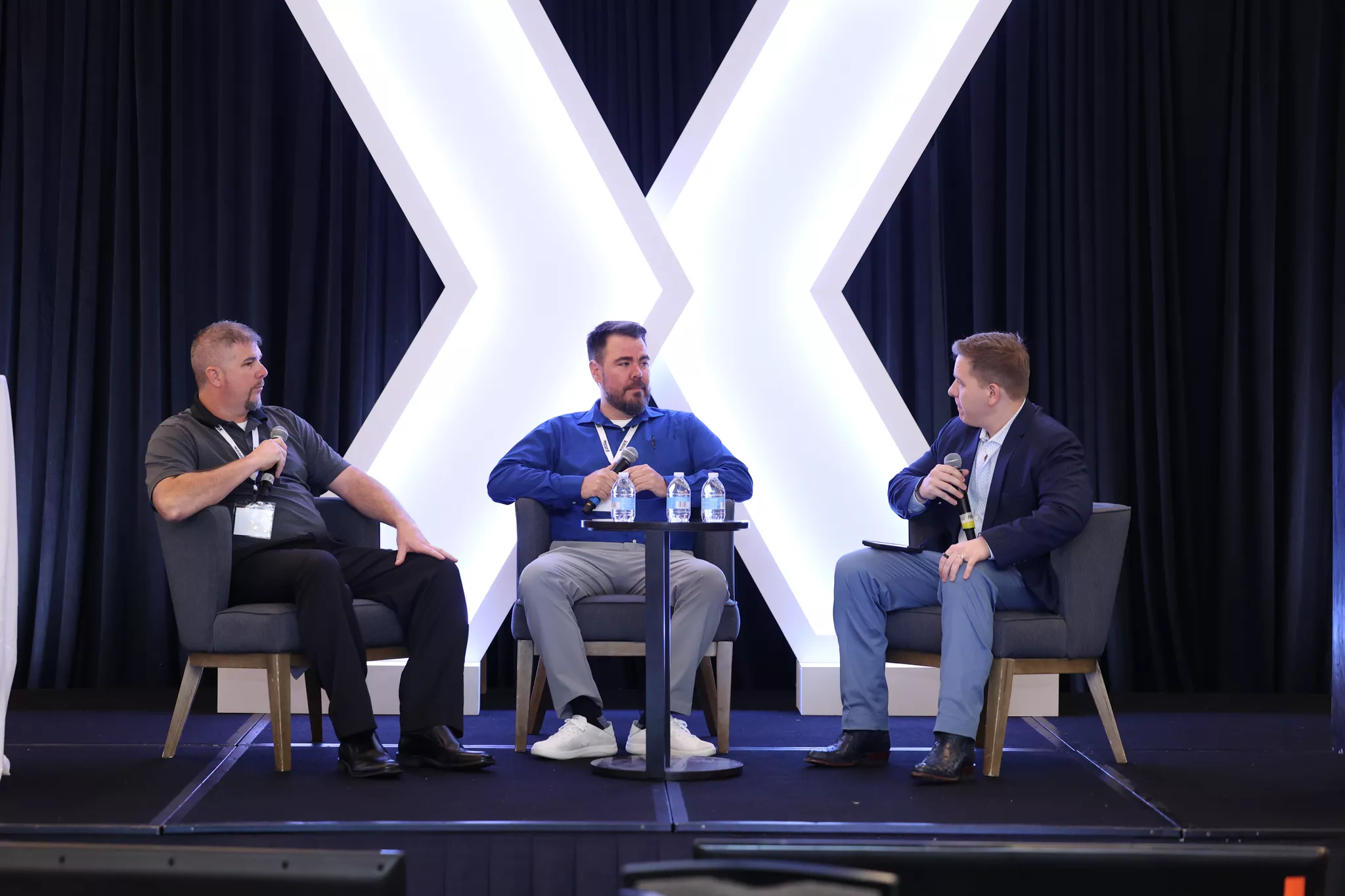
The afternoon centerpiece was a conversation with two maintenance leaders from Toyota Industries Compressor Group: Daniel Akins and Leon Harkins. Nine months ago their plant came off a homegrown desktop system that had been in place since 2006, plus the spreadsheet holding it together.
The first result was not better numbers. It was worse ones. For the first time, the system had no reason to flatter anybody.
Daniel and Leon did not gloss over what that cost them.
Asset tracking went from a dozen pieces of equipment to roughly 150. KPIs that used to look strong started raising uncomfortable questions. The old system was desktop-based, so technicians carried notepads all day, jotted times on the wall, and sat down hours later to enter it all from memory. Leon's word for what that produced was manipulation. Not malice. Just what happens when you ask people to reconstruct a shift at 4 p.m.
The first six months were a steady stream of complaints. Technicians did not love the timestamps or the accountability that came with them. Leadership wanted to know why a new system meant more work and no clean chart to point at. Daniel went to the company president and told him the real downtime number was going to be roughly three times worse than what they had been reporting, and that the new one was the accurate one.
Then it turned. Leon built custom dashboards he trusts enough to act on, which happened once technicians adopted the start and stop timer and the numbers stopped needing his manual reconciliation. Production started using work requests instead of stacking paper sheets from twenty different departments.
Asked directly what the ROI has been, both were straight about it: a single hard number is still hard to produce. What they can show instead is structure. Requirements a technician cannot bypass. A safety acknowledgment before a job starts, which Leon pushed us hard to build, because he has a lot of new associates on the floor right now. A die cast team that volunteers to go first on new planning tools so the kinks get worked out before a company-wide rollout. A maintenance and production relationship with far fewer surprises.
On AI, they were just as direct. It will help in specific, real ways. What is slowing them down is approvals, cost, and internal buy-in. Not the technology.
A first look at what's next
Following the TACG conversation, attendees got an early look at where the MaintainX platform is headed. That preview was for registered guests in the room only. If you caught it, you know what is coming. If you did not, that's reason enough to be at the next one.
Recognizing the frontline: Wrench Works DMV Awards
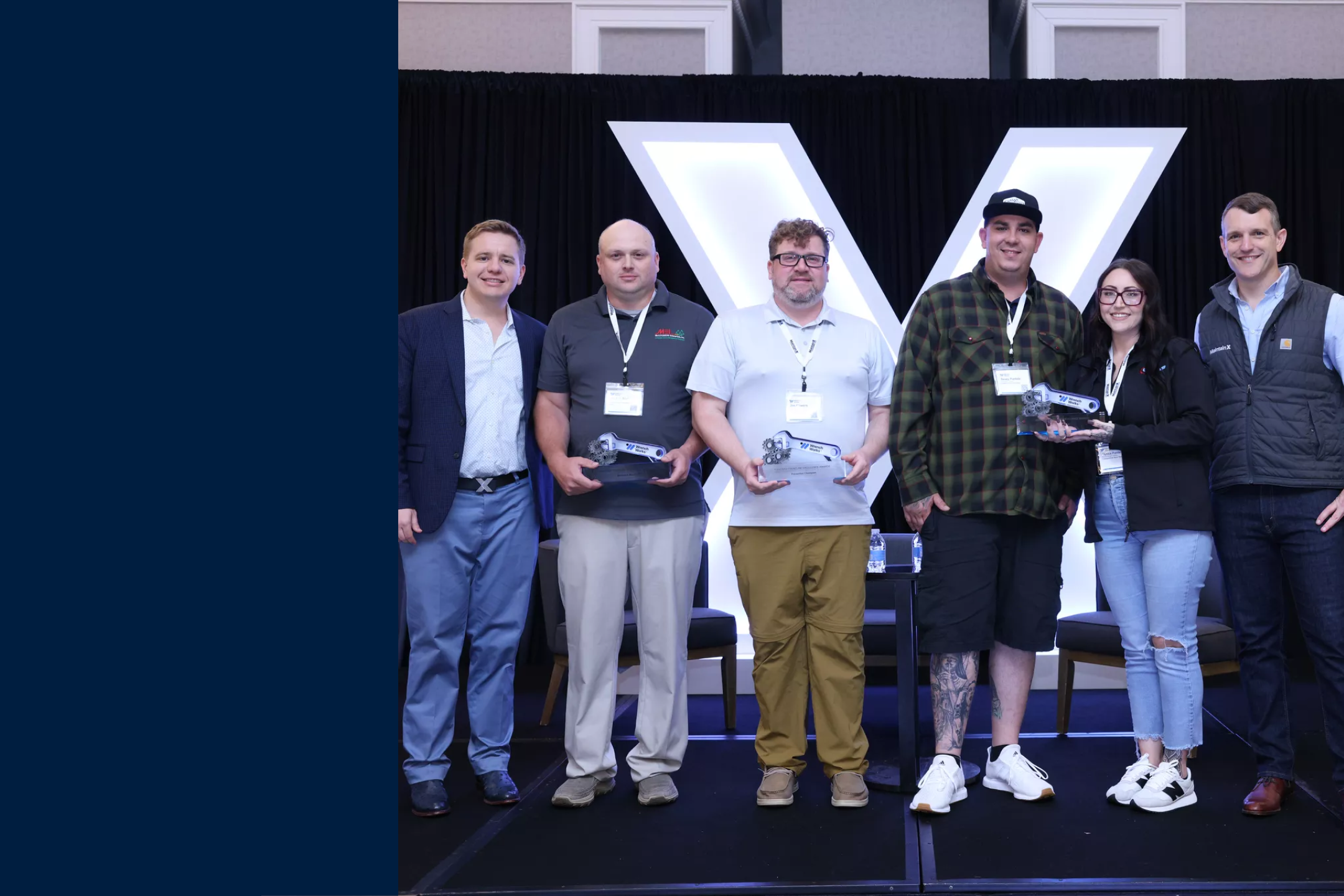
DMV brought the Frontline Excellence Awards back for a second round:
- Preventive Champion: Bell Ambulance, for a high ratio of preventive work sustained across a large volume of work orders.
- Parts Pro: Cobblestone Carwash, for disciplined tracking of parts consumption, purchasing, and cycle counts.
- MaintainX Mastery: McCutcheon, for breadth of usage spanning work orders, parts, purchase orders, and more.
Congratulations to all three teams.
Hands-On with AI: The Camcode Training Lab
Our AI Training Lab, run with partner Camcode, put attendees at a keyboard with MaintainX Assist instead of in front of slides. Teams worked one scenario end to end: troubleshoot an unfamiliar asset, then close it out with a report, using Assist the whole way.
Most people left with a specific answer to a specific question. Where in that workflow did the AI actually save time.
Three challenges, no room for vague answers
Day 1 wrapped with three breakout challenges built to push teams past good intentions and into specifics.
Catch It Early Challenge, led with partner AssetWatch, pulled the largest crowd of the event. Teams worked three real equipment failures (a film extruder, a mining hydraulic system, and an ammonia compressor) using actual condition monitoring data, placed each one on the P-F curve, and decided what they would have done differently.
AI Launch Plan Challenge, the second best attended session, gave teams three jobs: pick three AI use cases you could pilot in 90 days, name what would realistically block you, and set the one rule for when a human overrides the AI.
I ran that room, and the first show of hands told the story. Nearly every person had used an AI tool. When we ran a version of this exercise a year ago, two hands went up.
The use cases teams landed on were not futuristic. They were the parts of the job nobody enjoys. An auto-responder for the people who keep emailing work requests instead of submitting them. Incomplete requests that say "machine down" and nothing else. Work requests written in Spanish by technicians who assume nobody can read them, so they write worse English instead. Validating whether a contractor actually performed the PM they billed for. Diagnostic support so a team stops paying a $300 service call to swap a $20 part.
The blockers were just as familiar. IT. Training. Who builds the thing and who maintains it after launch. Cost, and whether the ROI clears the bar. Compliance, especially on safety, where the rules change by state and by county.
One point worth repeating from that room. If your team does not have an approved AI tool, they are using the free one on their phone right now, and pasting your operational data into it. They will do that with or without your guidance. So give them a sanctioned place to work instead.
The override rules got sharp fast. Anything with a safety consequence goes to a human. Anything above a dollar threshold goes to a human. And then somebody added the one most people miss: frequency. A $1,000 approval limit still lets an agent order a hundred $500 items a day. Set the ceiling and set the rate.
Gold Standard Challenge put two business units from the same organization side by side and asked teams to answer the questions a CFO or VP of Reliability would actually ask. It started with naming conventions, work order categories, and PM plans, and it ended with each group building its own version of a Monday morning dashboard.
Plenty of teams can say AI and standardization matter. Far fewer can say which use cases, in what order, with which guardrails, or exactly where on the curve they would have caught the problem first.
Closing out day one
Day 1 ended with dinner, a reception, and a live band. An energetic close, and a chance for the breakout conversations to keep going without a worksheet in front of anybody.
Day 2: Adoption and impact
Day 2 was built around two workshops rather than sessions to sit through.
Driving Technician Adoption and Change, led by our customer education team, had attendees work inside MaintainX to feel exactly where a poorly configured work order breaks down for a technician, then rebuild it themselves alongside peers. It was one of the most engaged rooms of the event, and everyone left with a repeatable method for spotting that friction and fixing it.
The Impact Workshop, run again with our Solutions Consultants, traced one work order's path from the plant floor to the boardroom. Attendees worked through four sections (asset downtime, labor efficiency, inventory, and capex deferral) and left with a draft plan for the next 6 to 12 months tied to metrics leadership already tracks.
What DMV made clear
Better maintenance data does not arrive quietly. It shows up first as worse looking numbers, harder conversations, and a six month stretch nobody enjoys. The structure and the trust come later, and only for the teams that hold the line long enough to get there.
TACG's experience was not the exception in that room. It was the norm everybody else recognized.
Thank you to every leader who showed up and pushed the conversation forward. Bring your worst numbers to the next one. That's where the work starts.

Nick Haase is a co-founder for MaintainX and is responsible for designing and leading the go-to-market strategies. He is a subject-matter expert in emerging CMMS technologies.
.png)
.png)
.webp)
.png)
.webp)