
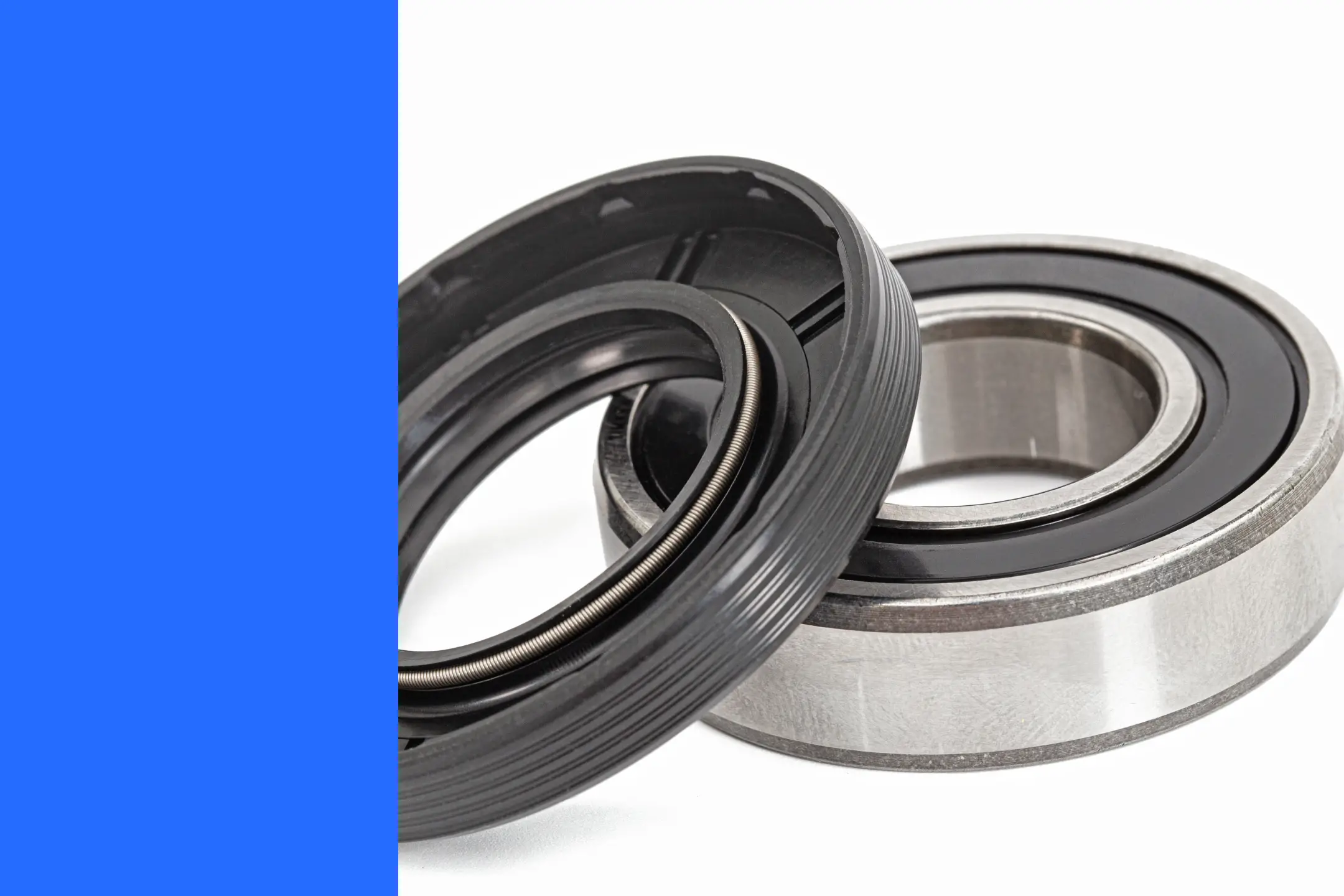
Maintenance teams usually know they have a parts problem before they know exactly what that problem is. A critical bearing is missing when it’s needed for an emergency fix. Shelves are packed with slow-moving stock that ties up budget. Your spend on rush shipping is ballooning and being questioned by senior leaders.
That’s why spare parts management deserves more attention than it often gets. Poor inventory control increases unplanned downtime, maintenance costs, and purchasing chaos.
The good news is that you don’t need to track everything to improve. You need the right KPIs. This guide breaks down the most important spare parts inventory KPIs, shows how to calculate them, explains what each one tells you, and gives you practical ways to improve them.
Key takeaways
- Spare parts inventory KPIs help maintenance teams move from reactive firefighting to better control by showing where inventory issues are increasing downtime, cost, and planning risk.
- The most useful KPIs do more than measure storeroom activity. They connect parts performance to business outcomes like uptime, MTTR, throughput, cost control, and schedule stability.
- Strong KPI tracking starts with the basics: segment parts by criticality, standardize inventory processes, and connect parts data to maintenance workflows so the numbers lead to action.


Why spare parts inventory KPIs matter
Inventory data by itself does not improve performance
Most maintenance teams already have inventory data, like part numbers, bin locations, stock counts, and purchase histories. But if the information is outdated, incomplete, or disconnected from maintenance workflows, it becomes hard to trust and to use.
The right KPIs help you turn raw inventory records into something operationally useful. This allows you to ask and answer better questions, like if you’re stocking the right parts or if stockouts are creating downtime risk? The answers to these questions are the ones that lead to action.
The right KPIs connect inventory performance to business outcomes
Spare parts inventory affects whether technicians can complete work on time, whether preventive maintenance gets done as planned, and whether a breakdown turns into a short repair or a long production delay.
That’s why inventory KPIs matter outside the storeroom. They connect parts performance to business outcomes like uptime, cost control, schedule stability, and supply chain efficiency. For example, a weak fill rate can delay maintenance tasks and poor inventory accuracy can trigger costly emergency purchase orders. When maintenance leaders track the right KPIs, they can make a stronger case for changes that improve both reliability and cost control.
KPIs help you prioritize action instead of reacting to symptoms
Inventory management often becomes reactive without comprehensive and accurate KPIs. Teams respond to the loudest shortage, the latest rush order, or the last breakdown that caused pain. That may solve the immediate problem, but it rarely fixes the system behind it.
KPIs give you a way to prioritize. They help you see where the biggest issue is in your storeroom and the processes around it so you can fix them faster and for good.. Spare parts inventory KPIs helps you decide where to act first.
What to do before you track KPIs
Segment parts by criticality
Not every inventory item should be managed the same way. A low-cost consumable does not carry the same risk as a replacement part tied to critical machinery with a long supplier lead time.
Start by segmenting your spare parts inventory by criticality. A practical approach is to sort parts into a few clear groups:
- Critical parts that can stop production
- Important but non-critical parts
- Common consumables
- Obsolete or rarely used stock
Some teams also separate insurance spares from routine-use items, since those categories behave differently and should not be measured the same way.
Having this context changes the way you interpret KPIs and how you make decisions based on them. For example, a stockout on a low-priority item may be annoying. A stockout on a critical spare can create serious downtime and cost.
Add basic data fields that make KPIs usable
Make sure your inventory records contain some foundational data needed to calculate and interpret KPIs. You may have some solid numbers to draw from, but the data becomes much less valuable without enough context.
Some examples of basic data to associate with parts include:
- Part number
- Description
- Associated asset or equipment type
- On-hand quantity
- Storage location
- Supplier
- Lead time
- Unit cost
- Minimum and maximum stock levels
- Usage history
- Site-level data for all the above (if you manage parts across multiple locations)
These fields make KPI tracking more practical. For example, you cannot calculate inventory turnover reliably without inventory value and usage history. The goal is to make sure your inventory management system has enough structure to support decision-making.
Make standardization a core principle of your KPI program
A lot of inventory KPI problems are process problems in disguise. Duplicate part names, missing issue transactions, and inconsistent units of measure can all distort the numbers. Once that happens, even well-designed KPIs start telling an incomplete story.
That’s why standardization is essential. If one technician checks parts out manually, another takes them without recording usage, and a third uses a different name for the same component, your inventory records will drift quickly. This is where standard operating procedures (SOPs) make a real difference. Receiving, issuing, returns, cycle counts, and part creation should all follow a consistent process. The more disciplined the process, the more useful the KPI data becomes.


12 essential spare parts inventory KPIs for maintenance teams
The goal of inventory KPI tracking is to make better decisions about uptime, cost, and risk. That starts with choosing metrics that show how well your spare parts inventory supports maintenance work. The 12 KPIs below give you a practical starting point.
1. Inventory accuracy/Cycle counts
What it measures: Inventory accuracy measures how closely your system records match the physical inventory in your storeroom. Cycle counts are the process used to check that accuracy on an ongoing basis.
Why it matters: If your records are wrong, the rest of your inventory KPIs become less useful. A part may show as available when it is missing, damaged, or stored in the wrong location. That leads to wasted time, emergency ordering, and delayed repairs.
Formula: Inventory Accuracy (%) = (Number of correct inventory records / Total records checked) x 100
If your team checks 500 part records during cycle counts and 460 match the physical count, your inventory accuracy is 92%.
What the result tells you: A low score usually points to weak receiving, issuing, returns, or count procedures. It can also signal that parts are being used without being recorded.
How to improve it: Start with recurring cycle counts instead of relying only on annual physical inventory. Count critical parts and fast-moving items more often than low-risk stock. Standardize how parts are received, issued, and returned. Use barcodes or QR codes where possible. Most important, make sure documenting inventory consumption is part of normal maintenance workflows.
2. Stockout rate
What it measures: Stockout rate shows how often a part is unavailable when someone needs it.
Why it matters: Stockouts delay work orders, create rush orders, and increase the risk of extended downtime on critical equipment.
Formula: Stockout Rate (%) = (Number of stockout events / Total part requests) x 100
If your team requested 800 parts last month and 32 requests could not be filled because the part was out of stock, your stockout rate is 4%.
What the result tells you: A rising stockout rate usually points to a planning problem. Reorder points may be too low. Lead times may be outdated. Usage may be increasing faster than expected. In some cases, the issue is inventory inaccuracy rather than true stock depletion.
How to improve it: Review stockouts by part criticality first. A stockout on a non-critical item is not the same as a stockout on a component tied to a production bottleneck. Update reorder points using recent usage history and real supplier lead times. Review breakdown-related parts consumption separately from planned maintenance demand. If stockouts are recurring on the same items, treat that as a system problem, not a one-off event.
3. Fill rate/Service level
What it measures: Fill rate measures the percentage of part requests you can fulfill immediately from available stock.
Why it matters: A strong fill rate means maintenance teams can move quickly without waiting on purchasing or deliveries. It supports faster work execution, better schedule adherence, and less friction for technicians.
Formula: Fill Rate (%) = (Requests fulfilled immediately / Total part requests) x 100
If 720 out of 800 part requests are fulfilled right away, your fill rate is 90%.
What the result tells you: A weak fill rate suggests your team is too often waiting for parts. But even a good overall fill rate can hide serious problems if critical spare parts are missing while low-priority items remain well stocked.
How to improve it: Track fill rate by category, especially for critical parts, routine maintenance parts, and consumables. Use work order history to understand which parts are most frequently needed. Review fill rate alongside stockout rate and emergency purchase rate to identify where service problems are coming from. In many cases, the fix is stocking the right items more consistently.
4. Inventory turnover
What it measures: Inventory turnover shows how often your inventory is used and replenished over a set period.
Why it matters: This KPI helps you understand whether your inventory is moving at a healthy pace or sitting on the shelf too long. It is useful for spotting excess stock, dead stock, and poor alignment between what you carry and what you actually consume.
Formula: Inventory Turnover = Annual inventory usage value / Average inventory value
If your annual spare parts usage is $600,000 and your average inventory value is $300,000, your turnover is 2.0.
What the result tells you: Low turnover often means too much cash is tied up in slow-moving parts. Very high turnover can mean you are running too lean and increasing stockout risk. The right range depends on the type of inventory. Common-use items should usually turn faster than long-lead critical spares.
How to improve it: Review turnover by category instead of looking only at the storeroom total. Separate critical spares from routine-use inventory. Identify parts with no usage over 12 to 24 months and decide whether they should remain stocked. Use criticality to make this decision—a slow-moving part may still be worth holding if the downtime risk is high enough.
5. Carrying cost of inventory
What it measures: Carrying cost measures what it costs to hold inventory over time, including storage, capital, obsolescence, insurance, and handling.
Why it matters: Many teams focus on purchase price, but underestimate the cost of keeping spare parts on the shelf. This KPI allows you to make better decisions when auditing your storeroom and purchase processes while also helping justify inventory reduction and defend stock levels.
Formula: Carrying Cost = Average inventory value x Carrying cost percentage
If your average inventory value is $500,000 and your estimated carrying cost is 20% per year, your annual carrying cost is $100,000.
What the result tells you: A high carrying cost may indicate excess stock, outdated parts, duplicate items, or weak inventory reviews. But the goal is not to minimize this number at all costs. Cutting inventory too aggressively can increase downtime risk and emergency spend.
How to improve it: Reduce duplicate SKUs. Standardize parts where possible across assets or lines. Review slow-moving inventory regularly. Remove obsolete items. At the same time, protect justified stock for high-risk assets. The best use of this KPI is to balance inventory cost against uptime protection.
6. Parts retrieval time
What it measures: How long it takes for a technician to locate and obtain a part for maintenance work.
Why it matters: Slow retrieval increases mean time to repair (MTTR), delays work order completion, and reduces technician productivity. On critical assets, that delay can extend downtime and affect throughput.
Formula: Average Parts Retrieval Time = Total time spent locating and issuing parts / Total number of part requests
If your team spent a total of 450 minutes locating and issuing 90 parts requests in a week, the average parts retrieval time is 5 minutes per request.
What the result tells you: A high retrieval time usually points to process friction, not just stock level issues. It may mean location data is unreliable, storeroom layout is inefficient, parts are poorly labeled, or staff have to rely on manual workarounds to find what they need.
How to improve it: Use clearly defined storage locations, standard naming conventions, barcode or QR code scanning, consistent issue procedures, and accurate bin-level inventory records. It also helps to review which parts are frequently requested during urgent work and place those where teams can access them faster.
7. Obsolete inventory percentage
What it measures: This KPI shows the percentage of total inventory value tied up in obsolete or no-longer-needed parts.
Why it matters: Obsolete stock takes up space, ties up capital, and clutters the storeroom. It also makes inventory control harder by creating noise in the system.
Formula: Obsolete Inventory (%) = (Value of obsolete inventory / Total inventory value) x 100
If your storeroom holds $400,000 in total inventory and $40,000 of that is obsolete, your obsolete inventory percentage is 10%.
What the result tells you: A high number usually points to weak review practices, equipment changes that were not reflected in inventory records, or a habit of holding parts “just in case” long after the risk has changed.
How to improve it: Create a review cadence for parts with no recent usage. Tie part records to active assets so you can identify stock linked to retired equipment. Involve maintenance, storeroom, and engineering teams in obsolescence decisions. Where possible, redeploy, return, sell, or dispose of obsolete stock in a controlled way.
8. Critical spare parts availability
What it measures: This KPI measures whether critical parts are available when required.
Why it matters: Not all stockouts carry the same risk. This metric focuses attention where it belongs: on parts that can materially affect production, safety, or asset recovery time.
Formula: Critical Parts Availability (%) = (Critical part requests fulfilled immediately / Total critical part requests) x 100
Example: If 94 out of 100 requests for critical spares were filled immediately, critical spare parts availability is 94%.
What the result tells you: A weak result suggests your operation is exposed to avoidable downtime on high-risk equipment. Even if your overall fill rate looks acceptable, low availability on critical parts should trigger action quickly.
How to improve it: Rank assets and parts by criticality. Review supplier risk, lead times, and replacement difficulty for each one. Validate that minimum stock levels reflect current operational risk. For parts with long lead times or single-source suppliers, consider backup sourcing or revised stocking strategies.
9. Emergency purchase rate
What it measures: Emergency purchase rate tracks how often your team has to place rush or unplanned orders for parts.
Why it matters: Frequent emergency purchasing is expensive and disruptive. It usually comes with premium shipping, more manual work, and a greater chance that maintenance work will be delayed.
Formula: Emergency Purchase Rate (%) = (Emergency part orders / Total part orders) x 100
If your team placed 150 total part orders in a quarter and 18 were emergency orders, the emergency purchase rate is 12%.
What the result tells you: A high rate often signals a reactive maintenance environment, weak inventory planning, or unreliable inventory records. It can also point to poor coordination between maintenance planning and purchasing.
How to improve it: Look at which parts drive the most emergency orders. Review whether they should be stocked, whether reorder points are too low, or whether their usage is linked to recurring failures. You should also compare this KPI with stockout rate and parts-related downtime.
10. Lead time accuracy
What it measures: Lead time accuracy measures how closely expected supplier lead times match actual delivery performance.
Why it matters: A reorder point is only as good as the lead time behind it. If actual deliveries are slower than your system assumes, you’ll stock out even when your plan looks sound on paper.
Formula: Lead Time Accuracy (%) = (Orders delivered within expected lead time / Total orders) x 100
If 70 out of 100 orders arrive within the expected lead time window, lead time accuracy is 70%.
What the result tells you: A weak score suggests supplier variability is undermining your inventory strategy. It may also mean your lead time data is outdated. Either way, the result is the same: reorder points and safety stock levels become less reliable.
How to improve it: Track supplier performance by part type or vendor, not just at an aggregate level. Update lead time fields regularly. Build extra buffer for volatile suppliers or long-lead critical components. If a supplier repeatedly misses expectations, the problem requires sourcing changes.
11. Parts usage variance
What it measures: Parts usage variance compares expected consumption to actual consumption.
Why it matters: This KPI helps you spot anomalies in demand, which can point to reliability problems, inaccurate forecasts, poor transaction discipline, or hidden shifts in maintenance activity.
Formula: Usage Variance (%) = ((Actual usage - Expected usage) / Expected usage) x 100
If you expected to use 50 units of a component in a month but actually used 65, your usage variance is 30%.
What the result tells you: A positive variance may indicate a recurring equipment issue, a spike in breakdown work, or better transaction recording than before. A negative variance may mean demand has dropped, stocking assumptions are outdated, or work is being deferred.
How to improve it: Tie usage to work order history so you can see why consumption changed. Review high-variance parts for repeat failures or changing operating conditions. Update forecasts and reorder points using recent trends, not old averages. This KPI becomes much more valuable when maintenance and inventory data live in the same system, like a computerized maintenance management system (CMMS)
12. Parts-related downtime
What it measures: Parts-related downtime measures how much downtime is caused by missing, delayed, incorrect, or unavailable parts.
Why it matters: This KPI connects inventory management directly to production impact. It moves the conversation beyond storeroom efficiency and into uptime, capacity, and business risk.
Formula: Parts-Related Downtime (%) = (Downtime hours caused by parts issues / Total downtime hours) x 100
If your plant logged 100 downtime hours in a month and 18 of those hours were tied to parts shortages, delivery delays, or wrong-part issues, parts-related downtime is 18%.
What the result tells you: A high number shows that inventory problems are affecting equipment availability, maintenance productivity, and output. It also helps maintenance leaders explain why better parts inventory management deserves attention and investment.
How to improve it: Add reason codes to work orders so you can identify downtime caused by parts issues. Review repeat cases by asset, part, and supplier. Focus first on high-impact failures tied to critical machinery.
How to turn KPI data into action
Tracking spare parts inventory KPIs is useful only if the numbers lead to better decisions. The real value comes from using the data to change how inventory is planned, managed, and connected to maintenance work.
1. Separate critical parts from everything else
Not all inventory risk is equal. A missing gasket for a non-critical asset is not the same as a missing motor for a piece of production equipment. If you treat every part the same, your KPI targets will be too broad to guide good decisions.
Start by segmenting inventory into categories such as critical spares, routine maintenance parts, consumables, and obsolete stock. Then review key metrics by category. This helps you protect uptime where it matters most.
2. Review KPI trends, not isolated snapshots
A single monthly number can be misleading. For example, one emergency purchase does not signal a bigger issue. Trends are more useful as they show if a problem is recurring, improving, or getting worse.
Review three to six months of data for most of your KPIs. If the stockout rate is rising while lead time accuracy is falling, that points to a different problem than a one-time surge in demand. Reviewing trends helps you separate noise from real operational risk.
3. Tie inventory KPIs to maintenance workflows
Inventory metrics become powerful when connected to the work that drives parts consumption. If inventory and maintenance data sit in different places, it becomes harder to understand why usage changed, which parts are creating downtime, or where planning is breaking down.
Tie parts usage to work orders, preventive maintenance tasks, breakdown events, and asset history. That makes it easier to answer practical questions, like if emergency purchases are tied to repeat failures or if critical parts shortages are delaying PM completion.
4. Build standard operating procedures around inventory control
Strong KPI performance usually depends on consistent execution. If receiving is handled one way on the first shift, another way on the second shift, and not at all on weekends, your data will drift. Once that happens, the metrics become harder to trust.
Build simple, repeatable standard operating procedures for receiving, issuing, returns, cycle counts, part creation, and reorder point reviews. Make those procedures practical enough for frontline teams to follow. Better inventory control is about ensuring systems reflect what’s actually happening on the floor.
Common mistakes teams make when managing spare parts inventory KPIs
Tracking the right KPIs can improve spare parts inventory management. Tracking them poorly can create more noise than value. These are some common mistakes maintenance teams make.
Tracking too many KPIs at once
It is easy to build a long list of metrics. It is much harder to turn that list into action. When teams try to monitor everything at once, they usually lose focus on the numbers that matter most. Start with a small set of KPIs tied to your biggest risks and expand from there. For most teams, that means inventory accuracy, stockout rate, fill rate, critical spare parts availability, and parts-related downtime.
Treating all parts as equally important
This is one of the fastest ways to make inventory data less useful. Critical components, common consumables, and low-value stock should not all be managed with the same targets or processes. When teams ignore criticality, they often end up overprotecting low-risk inventory while leaving high-risk assets exposed.
Relying on outdated lead times and usage history
A reorder point is only as good as the assumptions behind it. If supplier performance has changed or usage trends have shifted, your stocking logic can fall behind quickly. If parts procedures are created once and rarely reviewed, it leads to avoidable stockouts, excess inventory, or both. Lead times and usage history need regular review if KPIs are going to stay relevant.
Measuring inventory costs without measuring downtime risk
Inventory reduction can look smart on paper and backfire on the plant floor. If teams focus only on carrying cost, turnover, or storage space, they may cut stock that protects production capacity. That’s why cost-focused KPIs should always be balanced with metrics like critical spare availability and parts-related downtime. Good spare parts management is about balancing cost with operational risk.
Ignoring physical inventory checks
System records are helpful, but they are not self-validating. If teams do not perform cycle counts or periodic physical inventory checks, record accuracy will drift over time. Once that happens, other KPIs become less trustworthy too. Fill rate, stockout rate, and reorder decisions all depend on reliable on-hand quantities.
Keeping inventory data separate from maintenance data
When parts information is disconnected from work order history and asset performance, it becomes harder to understand cause and effect. For example, you may see high usage, but not whether it came from PM work or reactive maintenance. That separation limits the value of the data. The strongest inventory programs connect parts tracking to maintenance operations so leaders can see how inventory decisions affect uptime, cost, and planning across the business.

- Maintenance mission statement
- Maintenance tasks
- work instructions
- Maintenance schedule
- Maintenance technicians
- Third-party contractors
- Replacement parts
Make spare parts inventory KPIs part of your everyday reporting
Spare parts inventory KPIs are operating metrics. When you track the right ones, you can make better decisions about uptime, cost, risk, and planning. The goal is not to measure everything. It is to build enough visibility to keep critical work moving, reduce avoidable delays, and avoid expensive surprises.
For maintenance leaders, that is the real value of KPI tracking. It helps you move from reacting to parts problems to managing them with more control, better data, and a clearer connection to business outcomes.
Spare parts inventory management FAQs
How do I set up KPI tracking in my CMMS?
Start with a small set of KPIs that reflect your biggest inventory risks, such as inventory accuracy, stockout rate, fill rate, emergency purchase rate, and parts-related downtime. Then make sure your CMMS has the core data needed to support those metrics, including part numbers, locations, lead times, min/max levels, usage history, and asset associations.
From there, standardize the workflows that feed the data. Parts should be issued, received, counted, and linked to work orders the same way every time. The goal is not to build a bigger dashboard. It is to make sure your CMMS can track spare parts inventory in a way that supports better maintenance planning and decision-making.
What are realistic benchmarks for spare parts inventory turnover in manufacturing?
There is no single benchmark that fits every manufacturing operation. Spare parts inventory turnover depends on what you stock, how critical the equipment is, how predictable part usage is, and how long supplier lead times are. A plant carrying more insurance spares for critical machinery will usually have lower turnover than a storeroom focused mostly on routine-use parts.
That is why internal benchmarking is usually more useful than chasing a generic target. Start by comparing turnover across part categories, asset groups, or sites. Then look for outliers. Low turnover may point to excess stock or obsolete inventory, while very high turnover can signal that inventory levels are too lean and stockout risk is rising.
How often should maintenance teams review spare parts KPIs?
Most maintenance teams should review core spare parts inventory KPIs monthly, with more frequent checks for high-risk metrics like stockouts, critical spare availability, and emergency purchase rate.
A monthly review works well for spotting patterns without overreacting to one-off events. On a quarterly basis, teams can look at broader trends like inventory turnover, obsolete inventory percentage, and carrying cost. Critical parts and fast-moving items may also need more frequent cycle counts or targeted reviews. The right cadence depends on how complex your operation is, but the key is consistency. KPI tracking works when teams review the data often enough to act on it.
What’s the difference between spare parts KPIs and general inventory metrics?
General inventory metrics are often built around predictable demand, high-volume movement, and broad supply chain efficiency. Spare parts KPIs are different because they are tied to maintenance operations, equipment risk, and unplanned downtime.
That changes how you interpret the data. A retail-style inventory metric might focus heavily on turnover or inventory reduction. A spare parts inventory KPI has to account for criticality, lead times, asset failure risk, and the cost of not having the part when needed.
What is the best inventory management system for spare parts inventory?
The best inventory management system for spare parts inventory is one that connects parts data to maintenance work. That means it should track part quantities, locations, reorder points, lead times, purchase orders, and usage history while also linking parts to assets and work orders.
For industrial maintenance teams, a standalone inventory management system may not be enough. A computerized maintenance management system can be more useful because it connects inventory control to maintenance tasks, equipment downtime, and maintenance costs. That gives maintenance managers better visibility into how parts inventory management affects uptime and planning.
How can maintenance teams improve inventory accuracy?
Maintenance teams improve inventory accuracy by tightening the processes behind the numbers. That starts with recurring cycle counts, standardized receiving and issuing procedures, accurate storage locations, and consistent part naming conventions.
It also helps to use digital tools like barcode scanning or QR codes so teams can track inventory with fewer manual errors. Most importantly, inventory records need to stay connected to daily maintenance workflows. If parts are removed from stock without being recorded, even the best inventory management software will lose accuracy over time.
What inventory levels should maintenance teams keep for spare parts?
The right inventory levels depend on part criticality, usage history, supplier lead times, and the business impact of a stockout. Critical parts tied to key components or critical machinery often justify higher stock levels than low-cost consumables or easy-to-source replacement parts.
That is why maintenance teams should not use one blanket rule for all inventory items. Instead, they should maintain optimal stock levels by category. This approach helps teams maintain accurate stock levels where uptime is at risk while avoiding unnecessary carrying costs on slow-moving parts inventory.
How does poor spare parts inventory management affect equipment downtime?
Poor spare parts inventory management increases equipment downtime when needed parts are missing, delayed, miscounted, or hard to retrieve. Even short delays can extend repair time, slow maintenance workflows, and create production delays on critical assets.
The biggest problem is that downtime risk often builds quietly. Inventory records may look acceptable until a failure happens and the team realizes the necessary components are unavailable. That is why managing spare parts inventory is a core part of reducing unplanned downtime in industrial maintenance.
Why is inventory tracking important in industrial maintenance?
Inventory tracking is important in industrial maintenance because it helps teams see what parts they have, where those parts are, how quickly they are being used, and when they need to reorder. Without strong inventory tracking, maintenance operations become more reactive, planning gets weaker, and rush purchasing becomes more common.
Good inventory tracking also supports broader parts management goals like ensuring inventory accuracy, reducing manual intervention, and improving overall supply chain efficiency. For maintenance managers, it is one of the foundations of better spare parts inventory management.

Marc Cousineau is the Senior Content Marketing Manager at MaintainX. Marc has over a decade of experience telling stories for technology brands, including more than five years writing about the maintenance and asset management industry.
.webp)



.webp)