
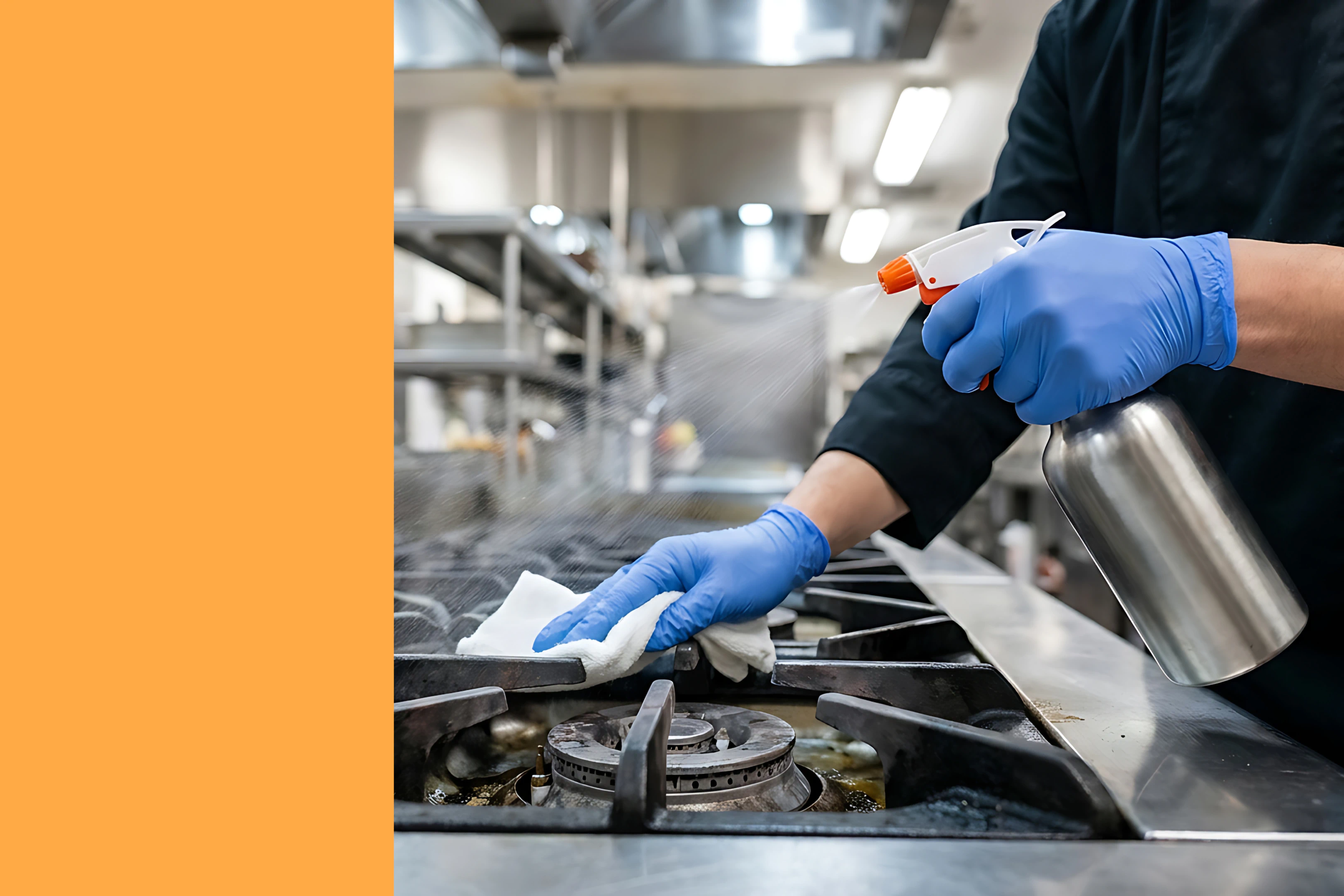
Restaurant patrons see a welcoming dining space, attentive staff, and good food. Behind the scenes is a complex equipment maintenance process that keeps your business both operational and compliant.
A thorough restaurant maintenance checklist creates a repeatable routine of inspections and proactive repairs for your staff to follow. It should reflect requirements across the FDA Food Code, NFPA 96, and OSHA standards, and help operators build a maintenance workflow that covers everything from daily maintenance tasks to preventing violations with governing agencies.
The resource below helps you build and customize a checklist that supports both preventive maintenance and ongoing compliance documentation.
Key takeaways
- Restaurant maintenance workflows must meet NFPA 96 requirements for exhaust systems, FDA Food Code standards for refrigeration units, and OSHA electrical safety standards, among other regulatory standards.
- Operators should define clear ownership for each maintenance task type. Kitchen staff typically handle daily maintenance tasks like cleaning and sanitation, while maintenance staff manage equipment repairs and compliance-driven inspections.
- Maintenance documentation is essential during health inspections. Use a computerized maintenance management system (CMMS) to store service records and keep audit-ready compliance evidence..
How to use this checklist
Customize for your facility
Start with the template we've included below, and adjust inspection frequencies based on equipment usage and local health department requirements. Quick-service operations typically inspect fryers and cooking equipment daily, while fine dining establishments may focus more on refrigeration and specialized preparation areas.
Add inspection items specific to your equipment, such as wood-fired ovens, specialized brewing systems, or outdoor seating infrastructure. Align fire suppression and plumbing checks with your jurisdiction's code requirements and permit schedules.
Use a CMMS
Digital maintenance management systems help restaurant operators manage inspection schedules and build audit trails for health inspections. Upload this checklist to a CMMS as the foundation for your inspection workflows. From there, you can automate work order assignments, send reminders for critical checks like fire suppression certifications, and store temperature logs and calibration records in one place.
Centralizing maintenance documentation makes it easier to prove compliance during health inspections. Maintaining ongoing equipment failure records also helps you spot recurring issues before they cause violations or service interruptions.


Restaurant maintenance checklist
Kitchen equipment and cooking systems
Refrigeration and cold storage
Ventilation and exhaust systems
Plumbing and warewashing
Fire and life safety
Dining areas and restrooms
Building systems and exterior
Documentation and compliance
This checklist is to be used only by those with appropriate training, expertise, and professional judgment. You are solely responsible for reviewing this checklist to ensure that it meets all professional standards and legal requirements, as well as your needs and intent.
How to document restaurant maintenance for health department inspections
From a health inspector's perspective, undocumented maintenance is the same as skipped maintenance. Completing the task matters, but so does the record proving it happened, when it happened, and who performed it.
Proper maintenance documentation captures:
- Date
- Technician's name
- Specific asset serviced
- Any corrective actions taken
A single missing record can trigger a violation that cascades across categories. A walk-in cooler with no compressor service history, for example, raises questions about food safety standards, temperature settings, and overall operational diligence — concerns that can signal non-compliance with both OSHA and the FDA Food Code.
The strongest audit defense is a timestamped, searchable maintenance history that inspectors can review on the spot.
Maintenance vs. cleaning: Task ownership in restaurants
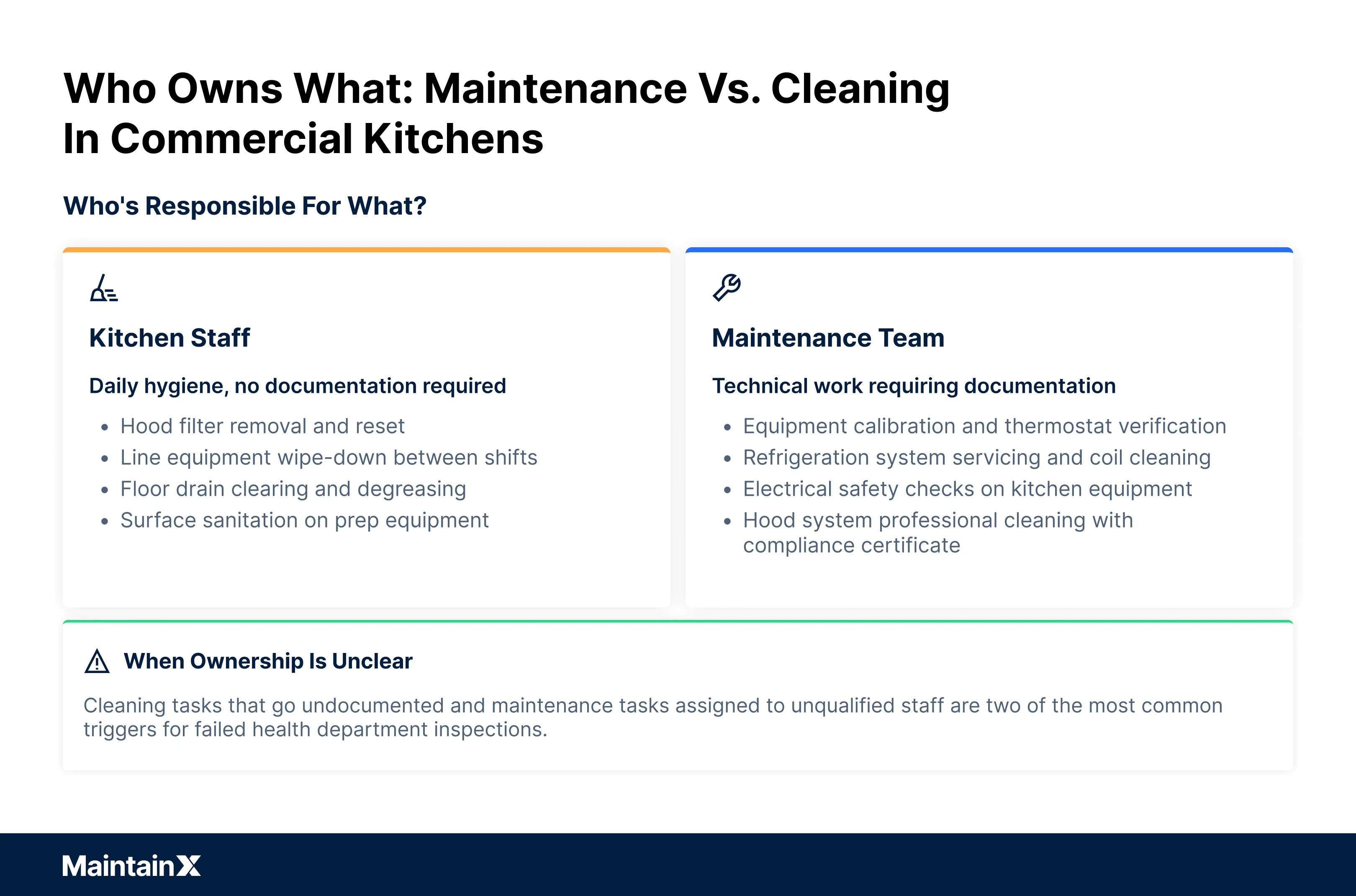
Cleaning and maintenance overlap constantly in restaurant operations, but there are certain maintenance procedures that should always be handed by specialized personnel. A line cook may wipe down a hood filter nightly, but replacing saturated baffle filters and scheduling professional duct cleaning under NFPA 96 is a maintenance responsibility. Here is a common split:
- Kitchen staff handle daily maintenance tasks like surface disinfection and dish machine operation, which fall under the FDA Food Code.
- Maintenance staff are responsible for preventive maintenance tasks like exhaust fan motor inspections, refrigerant checks, ice machine maintenance, and grease trap servicing, which touch requirements across OSHA, NFPA, and FDA standards.
If your staff is unclear about who owns which tasks, key maintenance items can fall through the cracks. The worst-case scenario is discovering these gaps during an inspection when you're already in violation.
Assign each task to a cleaning schedule or a maintenance schedule with a designated owner. A CMMS helps each staff member document completed tasks, creating a digital paper trail that proves the right person handled the right task at the right frequency.
Align schedules with inspection cycles using a CMMS
MaintainX helps operators map recurring work orders directly to inspection timelines. When you track fire suppression service on one calendar and refrigeration PM on another, tasks slip. MaintainX lets teams manage every compliance-driven task from a single platform.
Automated scheduling reduces the risk of a task missing its deadline, and timestamped digital records give you instant access to service history when an inspector arrives unannounced. Operators can build their maintenance program around regulatory reality rather than reacting to citations and equipment failures.
Book a tour and learn how MaintainX helps restaurants stay running at peak operation.
Restaurant maintenance checklist FAQs
What should a commercial kitchen maintenance checklist include?
A commercial kitchen maintenance checklist should cover all major systems and equipment across daily, weekly, monthly, and quarterly intervals:
- Daily maintenance tasks: Inspect cooking equipment, check refrigeration units for accurate temperature control, clear drain lines, and wipe down food prep surfaces to prevent bacterial growth and food debris buildup
- Weekly maintenance tasks: Inspect door seals on cold storage equipment, check grease traps, test fire suppression systems, and inspect electrical connections for signs of wear
- Monthly maintenance tasks: Clean condenser coils on refrigeration units to maintain cooling efficiency, deep clean grease traps, complete ice machine maintenance, and inspect HVAC systems and filters
- Quarterly maintenance tasks: Schedule professional inspection of hood systems, test gas lines, and review worn components for replacement
Consistent maintenance across these intervals protects food safety standards, reduces equipment downtime, and helps avoid a failed health inspection.
What are the required inspection frequencies for restaurant fire suppression systems?
NFPA 96 typically requires monthly hood and duct inspections, semi-annual certified system inspections, and annual full inspections by qualified technicians. High-volume operations may require quarterly or monthly full inspections. Fire code compliance requires documentation of every inspection.
Note: This is a general informational summary only and does not constitute legal, regulatory, or compliance advice. Consult a licensed inspector, qualified contractor, or legal counsel to determine the specific obligations applicable to your jurisdiction and equipment.
How do I create an effective preventive maintenance schedule for my restaurant?
Start with manufacturer guidelines for each piece of commercial kitchen equipment, then layer in regulatory requirements like monthly refrigeration checks and quarterly hood cleanings. Schedule daily maintenance tasks for food-contact surfaces, weekly checks for walk-in freezers, and monthly reviews of fire suppression systems and HVAC systems.
Assign clear ownership of all tasks across kitchen and maintenance staff to ensure nothing gets missed.
How much does restaurant equipment maintenance cost compared to emergency repairs?
Emergency repairs typically cost three to five times more than scheduled maintenance. A failed walk-in compressor, for example, can run $3,000 to $5,000 plus lost revenue from spoiled inventory and downtime, while preventive coil cleaning costs under $200. Consistent maintenance is one of the most reliable ways to reduce equipment downtime and avoid costly repairs.
What OSHA safety requirements apply to restaurant equipment maintenance?
OSHA CFR 1910 mandates lockout/tagout procedures for electrical equipment maintenance, machine guarding on slicers and mixers, and chemical safety protocols for approved cleaners. Ventilation systems must meet air quality standards, and slip-resistant surfaces require regular verification in wet areas. Document all maintenance training to demonstrate compliance.
Note: This is a general informational summary only and does not constitute legal, regulatory, or compliance advice. Consult a licensed inspector, qualified contractor, or legal counsel to determine the specific obligations applicable to your jurisdiction and equipment.
What maintenance records should restaurants keep for inspections and audits?
Maintain logs for fire suppression inspections, refrigeration temperature monitoring, hood cleaning certificates, and pest control visits. Keep these records for a minimum of three years, along with equipment service records, calibration dates, and staff training documentation. During unannounced health inspections, missing records equal compliance failures, even when staff performed the required maintenance.

The MaintainX team is made up of maintenance and manufacturing experts. They’re here to share industry knowledge, explain product features, and help workers get more done with MaintainX!

.webp)