

An effective oil and gas facility inspection checklist helps technicians review and track the operational status of every essential system. From there, with the help of a computerized maintenance management system (CMMS), maintenance teams can centrally log all findings, turn failures into action items, and take steps to restore safety, equipment operation, and compliance.
This guide and checklist template will help you build the appropriate inspection workflow for your facility, organize inspections by frequency, and route findings to corrective action for optimal repair efficiency.
Key takeaways
- In oil and gas facilities, individual inspection items often satisfy multiple regulatory obligations at once. Failures can constitute violations with more than one agency.
- Effective inspection programs treat equipment failures as decision points that trigger work orders or escalations, creating a clear path to resolution and compliance.
- Using a CMMS helps to create audit trails that can reduce the compliance blind spots that paper tracking is prone to.
How to use this checklist
Customize for your facility
Adapt this oil and gas inspection checklist based on your facility type, regulatory requirements, and equipment mix. For instance, onshore facilities may need additional leak detection, while offshore platforms require marine and helideck inspections.
Modify inspection item frequencies to match your API 653 tank schedules, API 510 vessel intervals, and jurisdictional requirements. Add site-specific items for high-pressure systems, sour gas handling, or specialized separation equipment.
Use a CMMS
A CMMS helps operators manage inspection volume with a defined and repeatable workflow. Automated scheduling ensures critical items like relief valve tests and cathodic protection checks don't slip past compliance windows. Mobile access lets users log findings, attach photos, and trigger work orders directly from remote locations for greater operational efficiency and ongoing accountability.


Oil and gas facility inspection checklist
Wellhead and well site
Process equipment and separators
Storage tanks and containment
Compressor and rotating equipment
Piping and pipeline systems
Electrical and instrumentation
Safety and emergency systems
Documentation and regulatory compliance
This checklist is to be used only by those with appropriate training, expertise, and professional judgment. You are solely responsible for reviewing this checklist to ensure that it meets all professional standards and legal requirements, as well as your needs and intent.
How to layer daily, weekly, and monthly inspection routines at remote sites
Effective preventive maintenance programs break inspections into frequency tiers:
- Daily rounds typically cover wellhead pressures, visible leaks, and emergency shutdown controls.
- Weekly routines expand to corrosion monitoring, valve exercising, and electrical enclosure checks.
- Monthly cycles address pressure relief device testing, tank integrity, and environmental sampling.
A layered inspection routine creates natural escalation points. For example, the daily visual check that flags early corrosion feeds directly into a weekly measurement task, which may trigger a monthly engineering review. Each layer builds on the last rather than repeating it.
Using a digital system to track and manage each layer of the inspection routine helps establish well-defined processes that ensure operational excellence and support compliance.
Turn inspection findings into tracked work orders
Tracking work orders digitally ties findings and resolutions together with timestamps and photo evidence for central, long-term recordkeeping. When an auditor asks about a deficiency six months later, the operator can share a complete record showing detection, assignment, repair, and verification in one connected thread.
In high-risk industries like oil and gas, inspection findings that sit in a filing cabinet protect no one. The real value of any check happens after a deficiency is found, when the crew decides what to do next. Thorough analysis of inspection findings can reveal underlying issues and operational trends that require corrective action, ensuring that the crew addresses every potential hazard in a timely manner.
Five inspection failures that trigger multiple regulatory violations simultaneously
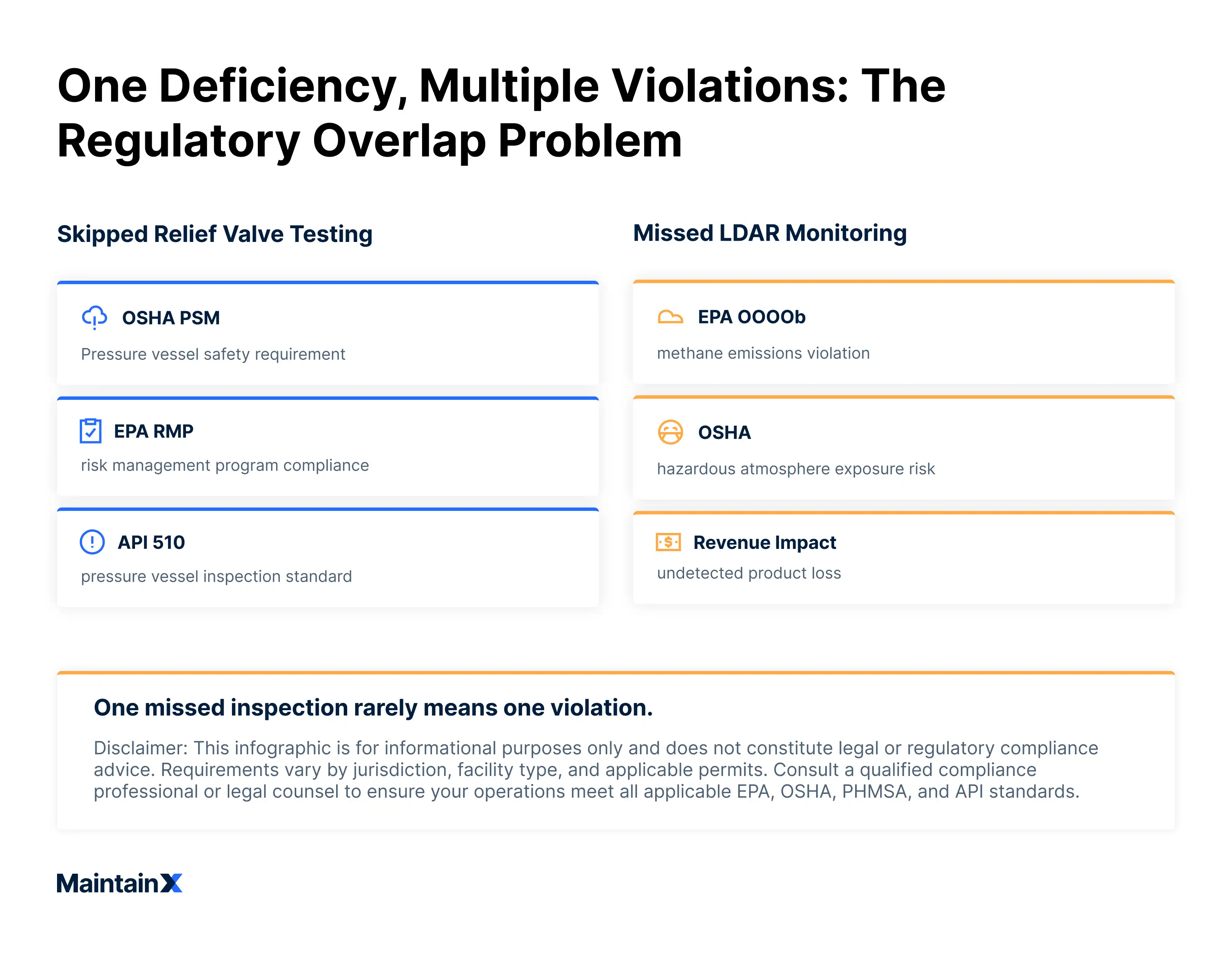
Some inspection failure types carry disproportionate regulatory weight because they sit at the intersection of several agencies’ jurisdictions. For instance, an equipment problem might pose a safety risk (an OSHA violation) and an environmental hazard (an EPA violation). You should urgently prioritize the resolution of such problems to avoid costly regulatory violations and ensure operational safety.
These five failures are some of the most important regulatory gaps to look out for:
- Skipping pressure relief valve testing can violate OSHA PSM, EPA RMP, and BSEE production safety rules at once.
- Failing to document a detected gas leak triggers EPA Method 21 violations alongside OSHA exposure limits and state air quality rules.
- Neglecting corrosion monitoring on pipelines crosses PHMSA integrity management and EPA spill prevention requirements.
- Missing emergency shutdown system checks violates both BSEE safety system rules and OSHA emergency action standards.
- Incomplete tank inspection records breach EPA SPCC plans while simultaneously creating OSHA confined space documentation gaps.
Crews should prioritize timely repairs and resolution for each of these issues to avoid the costly penalties associated with violations.
Note: This article is for informational purposes only and does not constitute legal, regulatory, or compliance advice. The regulatory references cited (including OSHA, EPA, PHMSA, and BSEE) are provided for general awareness only and may not reflect the most current rules, thresholds, or enforcement guidance.
Manage safety and compliance with MaintainX
Paper checklists at remote oil and gas sites can lead to disorganized or incomplete recordkeeping. A CMMS helps to remove that blind spot. With MaintainX, your team gains real-time visibility within a single, central system of record.
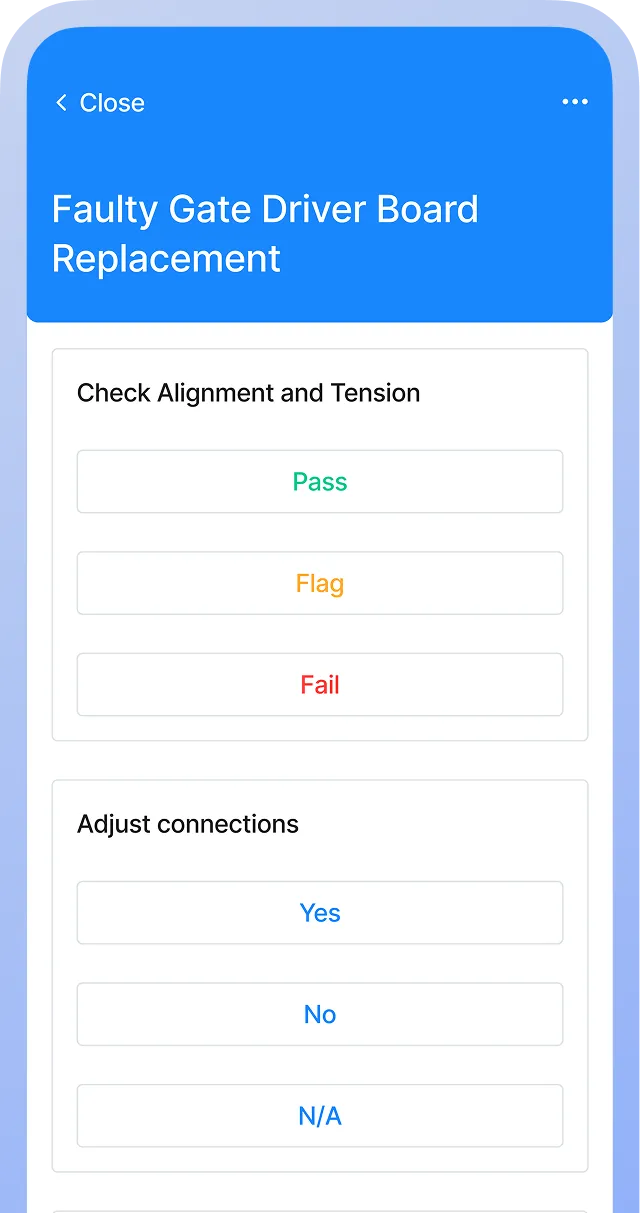
Digital inspection checklists on mobile devices let field crews complete rounds with photo evidence, GPS timestamps, and escalation logic. A failed check becomes a work order automatically, routed to the correct technician with the regulatory context attached.
Managers overseeing dozens of remote sites can see which inspections are complete, which findings are open, and which corrective actions are overdue, all from a single dashboard. They gain greater control, confidence, and oversight of their facilities.
Book a tour and learn how to shift your inspections from reactive paper audits to proactive digital tracking with Maintain X.
Oil and gas facility inspection checklist FAQs
What should be included in an oil and gas facility inspection checklist?
Your checklist should include wellhead pressure and valve integrity, separation equipment, storage tanks, pipeline corridors, safety systems, and emissions controls. Each inspection point should map to specific corrective actions when deficiencies are found, not just documentation requirements.
How often should oil and gas facilities be inspected?
Inspection frequency varies by system:
- Daily review of wellheads and separation equipment
- Weekly review of storage tanks and pipeline routes
- Monthly review of safety devices and emissions equipment
You should also conduct thorough annual assessments, such as emissions monitoring. Regulatory requirements and operational risk drive these intervals.
What are the main regulatory compliance requirements for oil and gas industry inspections?
Facilities must meet OSHA safety standards, EPA emissions and spill prevention rules, PHMSA pipeline integrity requirements, and BSEE offshore regulations. Individual inspection items often satisfy multiple agency requirements simultaneously, creating overlapping compliance obligations.
Note: This is a general informational summary only and does not constitute legal, regulatory, or compliance advice. Consult a licensed inspector, qualified contractor, or legal counsel to determine the specific obligations applicable to your jurisdiction and equipment.
What are the four main types of inspections conducted at oil and gas facilities?
The four main inspection types at oil and gas facilities are:
- Production equipment inspections, which verify wellhead and separation systems
- Safety inspections, which cover emergency shutdown and fire protection
- Environmental inspections, which monitor emissions and containment
- Integrity inspections, which assess pipelines and pressure vessels for corrosion and structural defects
How do you conduct a pipeline inspection as part of facility operations?
You should walk pipeline corridors to check for surface conditions, vegetation encroachment, and unauthorized activity. Inspect exposed pipe for corrosion, coating damage, and support integrity, and monitor cathodic protection readings and pressure gauges. Any abnormal findings trigger immediate leak response protocols.
What documentation must be maintained for oil and gas facility inspections?
Facilities should maintain inspection records, calibration certificates, corrective action logs, and regulatory notifications. Records must satisfy OSHA, EPA, and PHMSA retention requirements, and digital systems help to prevent the compliance gaps common at remote facilities where paper checklists create audit risks.

The MaintainX team is made up of maintenance and manufacturing experts. They’re here to share industry knowledge, explain product features, and help workers get more done with MaintainX!



.webp)