

A comprehensive mine safety inspection checklist helps operators identify and resolve issues before they become Mine Safety and Health Administration (MSHA) citations.
This guide includes a downloadable inspection checklist with best practices and safety protocols for metal and nonmetal mines. Use it as part of a comprehensive inspection-to-correction workflow that keeps findings from stalling between identification and resolution.
Key takeaways
- A structured inspection workflow tracks defects from identification through resolution to reduce both incident risk and regulatory exposure.
- MSHA can request inspection records within one business day, making consistent documentation an operational priority.
- A computerized maintenance management system (CMMS) can facilitate a rhythm of daily and weekly mine inspections while centralizing audit-ready recordkeeping.
How to use this checklist
Customize for your facility
Adapt this inspection checklist to match your mine type and operation. Surface mines should prioritize safety standards for haul roads, slope stability, and highwalls, while underground operations will need to incorporate ventilation, roof control, and atmospheric monitoring.
Consider your specific mineral-extraction process, equipment fleet, and state regulations beyond federal MSHA requirements. Add inspection items for site-specific hazards identified in your approved mine plan and ground control documentation.
Use a CMMS
Upload this checklist to a computerized maintenance management system (CMMS) to streamline inspections and maintain timestamped, accessible records that are always audit-ready.
A CMMS can automatically generate a work order and route inspection findings to qualified personnel. Teams can attach photos of hazards, track corrective actions until closure, and maintain training records alongside inspection data.


Mine safety inspection checklist
Surface operations and haul roads
Ground control and structural integrity
Ventilation and atmospheric monitoring
Mobile equipment and machinery
Electrical systems and power distribution
Emergency preparedness
Personal protective equipment
Documentation and compliance
This checklist is to be used only by those with appropriate training, expertise, and professional judgment. You are solely responsible for reviewing this checklist to ensure that it meets all professional standards and legal requirements, as well as your needs and intent.
MSHA regulatory compliance requirements by mine type
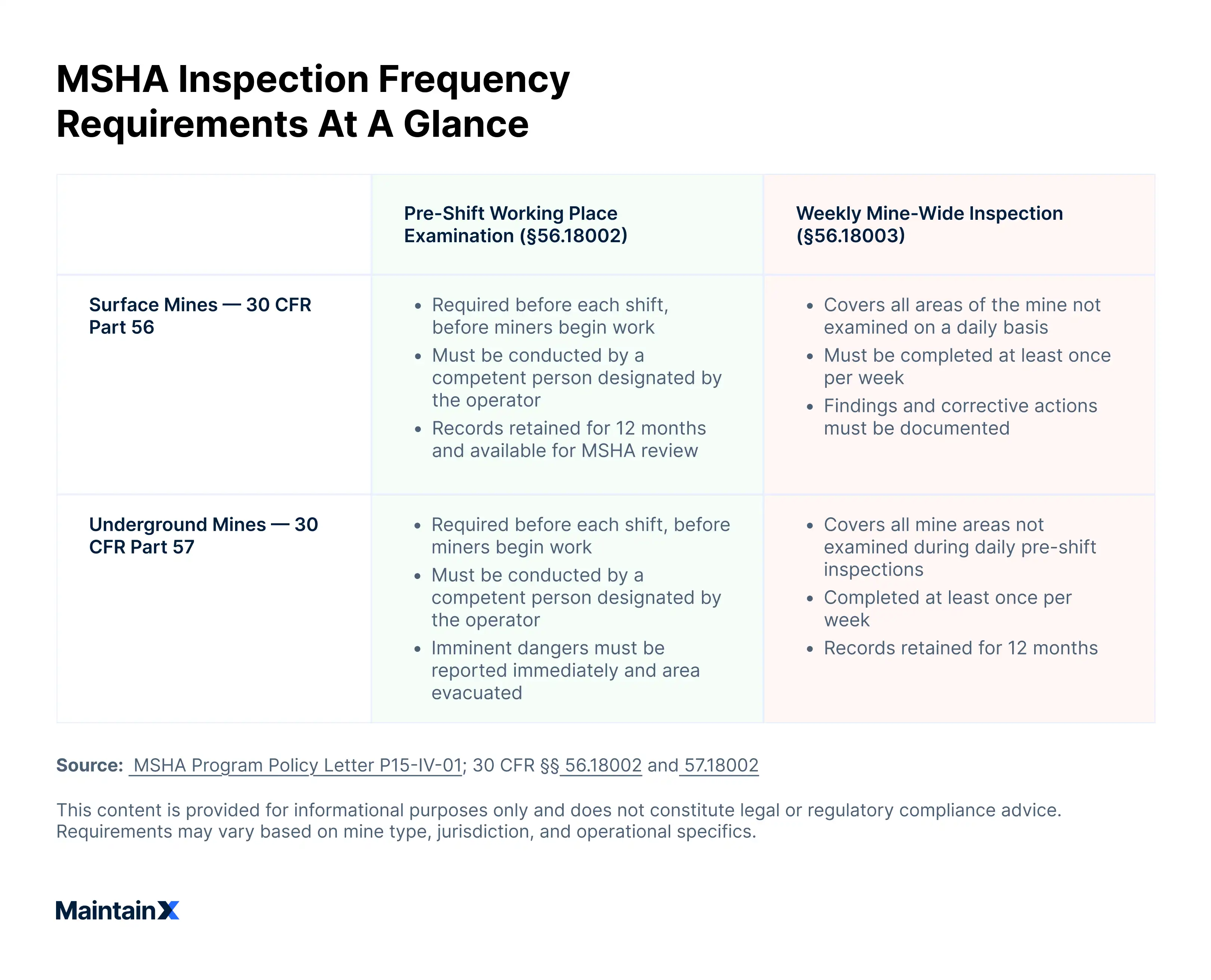
MSHA mandates different inspection cadences depending on mine classification.
Underground mines typically receive four complete inspections per year, while surface operations receive two. Coal and metal/nonmetal mines fall under separate CFR parts (30 CFR Part 75 and Part 56/57, respectively), each carrying distinct requirements for ventilation checks, ground control evaluations, and equipment examinations.
Note: This article is for informational purposes only and does not constitute legal, regulatory, or compliance advice. Be sure to consult a licensed inspector or legal counsel to determine the specific obligations applicable to your jurisdiction and operation.
Beyond federal inspections, operators run their own layered inspection cadence. Pre-shift examinations should happen before every shift. Weekly checks should cover broader hazard conditions. Quarterly and annual reviews should address structural and mechanical systems that degrade more slowly.
Each inspection layer feeds the next. A pre-shift finding that can’t be resolved immediately should escalate into the daily or weekly review cycle. Facilities that treat these layers as connected rather than independent tend to catch and resolve recurring issues before an MSHA inspector does, avoiding costly penalties.
Close the loop: From inspection finding to verified corrective action
Most compliance risks exist in the gap between identifying a deficiency and confirming the fix. If someone logs a finding without a clear owner, deadline, or verification step, the issue may sit unresolved long enough to become a citation or, worse, an incident.
Effective correction workflows typically follow a consistent pattern:
- Document the finding with photos and location
- Assign a responsible person immediately
- Set a priority-based deadline
- Require sign-off once work is complete.
That final verification step is often the most important. The first three steps lay the foundation, but a sign-off requirement in a central system of record ensures nothing gets lost.
This workflow also helps operators stay audit-ready over time. MSHA can request documentation within one business day, and mine operations that turn this workflow into a daily habit rather than treating it as audit prep tend to maintain cleaner records year-round.
When every finding has a traceable path to resolution, inspection readiness becomes a byproduct of normal operations rather than a separate effort.
MSHA citation patterns: Common mining equipment inspection violations
The most frequent MSHA violations include improper handling of combustible materials, inadequate guarding on mobile equipment, and poor ground control.
Ventilation deficiencies dominate underground coal citations, while slip-and-fall hazards and electrical issues are common on surface operations.
As we noted above, many citations trace back to known conditions that weren't corrected in time, which is why verifying completed work is critical. An inspector may find a deficiency that was logged in your records but left open, which creates a stronger case for negligence. Operations that can show a clear timeline from identification through assignment to verified correction are better positioned to avoid penalties and citations during post-inspection conferences.
Track mining safety, compliance and equipment inspections with a CMMS
MaintainX helps mining operators simplify and streamline mine safety inspections. Teams can log equipment defects at the point of inspection, attach photos, and automatically generate work orders that are routed to the right technician. Supervisors can see open defects across the entire fleet in one view rather than sifting through paper forms, so they can quickly identify and address issues.
This real-time visibility helps operators solve repeat problems. If the same defect appears on the same machine across multiple shifts, the pattern signals a deeper mechanical problem. Digital records help catch and address trends early, avoiding both unplanned downtime and the kind of recurring hazard MSHA inspectors flag during walkthroughs.
Stay audit-ready by default with digital recordkeeping in MaintainX. Book a tour today.
Mine safety inspection checklist FAQs
What do MSHA inspectors look for during a mine safety inspection?
MSHA inspectors examine ground control, ventilation systems, electrical equipment, and emergency preparedness. They also test atmospheric conditions, verify equipment guards, assess escape routes, and review examination records. Documentation quality often determines citation severity as much as physical conditions.
How often are mine safety inspections required under MSHA regulations?
A mine’s required inspection frequency depends on the type of mine. Underground coal mines require quarterly inspections, while surface operations need inspections twice yearly. These formal inspections are supplemental to daily pre-shift examinations and weekly certified person inspections that mines conduct internally.
What is the difference between working place examinations and formal MSHA inspections?
Working place examinations are operator-conducted checks performed before each shift to identify immediate hazards. Formal MSHA inspections are regulatory audits conducted by federal inspectors quarterly or semi-annually. While both require documentation, MSHA inspections can result in citations and penalties.
How can mine operators prepare for an MSHA inspection?
Maintain current examination books and hazard correction records since inspectors can request documentation immediately. Conduct regular internal audits using MSHA's perspective and standards. You should keep consistent daily records and address any outstanding items promptly, as inspectors notice patterns in delayed corrections across your documentation and can penalize operators accordingly.
What documentation must be maintained for mine safety inspections?
Mines must keep examination records, hazard correction logs, training certifications, and equipment maintenance histories. MSHA can demand these records within one business day, and any documentation gaps increase citation severity. Organized and centralized digital recordkeeping can help prevent these citations, so treat this documentation as essential.
What happens if violations are found during a mine safety inspection?
Inspectors issue citations that specify the violation, required correction timeline, and proposed penalty. Operators must document corrective actions and may face escalating penalties for repeat violations. Serious hazards can trigger immediate closure orders until conditions improve and MSHA verifies corrections were made.

The MaintainX team is made up of maintenance and manufacturing experts. They’re here to share industry knowledge, explain product features, and help workers get more done with MaintainX!





.webp)