

If your maintenance shutdown planning checklist front-loads preparation but skims over execution and restart, you leave the highest-risk phases of shutdown undocumented.
Instead, a plant shutdown checklist should apply equal rigor across all three stages of the shutdown process: pre-planning, the shutdown window itself, and systematic startup. Use this guide to build a maintenance shutdown planning checklist that helps your team manage safety hazards and found work, coordinate in real time, and bring equipment back online safely.
Key takeaways
- The most effective maintenance teams treat pre-planning, execution, and restart as equal parts of shutdown scope.
- Restart phases statistically present the highest failure risk; system-by-system verification is essential to prevent catastrophic failures that can erase completed work.
- A computerized maintenance management system (CMMS) helps teams track site shutdown tasks in a central system, evaluate risk, and manage budgets strategically from planning to restart.
How to use this checklist
Customize for your facility
Adapt this maintenance shutdown planning checklist to reflect your facility's process complexity, regulatory requirements, and equipment types. For instance, facilities with PSM-covered processes need stricter change control, while single-line production facilities face higher schedule risk than manufacturing plants with redundant systems.
Be sure to add industry-specific requirements like FDA validation for pharmaceutical sites or EPA Title V compliance for refineries. Additionally, adjust material lead times based on your supplier base and inventory strategy.
Use a CMMS
Upload this checklist to a CMMS to streamline digital shutdown management and centralize work orders, LOTO records, and permit documentation. Within a CMMS platform, teams can track critical-path completion in real time, automatically flag overdue tasks, and maintain auditable records for PSM compliance.
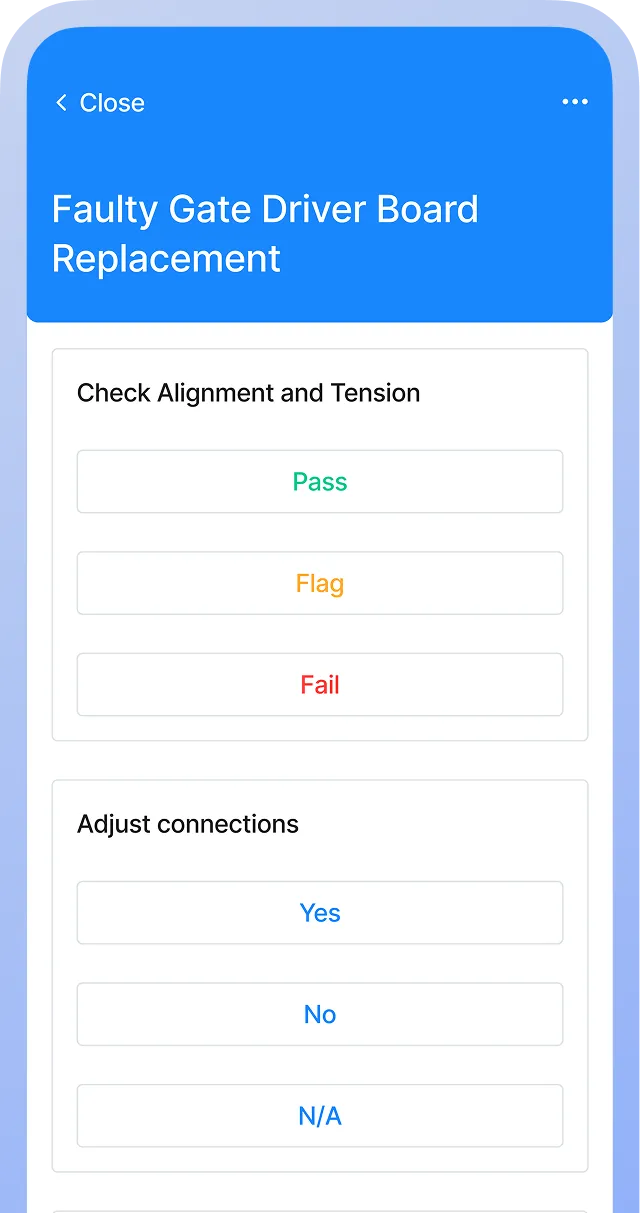
Mobile access lets field crews complete maintenance more efficiently and provide status updates on the floor. Historical data from previous turnarounds helps identify recurring issues and refine future planning for enhanced resource management.


Maintenance shutdown planning checklist
Pre-shutdown scope and planning
Safety and regulatory preparation
Materials and pre-shutdown readiness
Shutdown execution and daily coordination
Found work triage and scope control
Startup and commissioning
Post-shutdown validation
Documentation and compliance
This checklist is to be used only by those with appropriate training, expertise, and professional judgment. You are solely responsible for reviewing this checklist to ensure that it meets all professional standards and legal requirements, as well as your needs and intent.
How to manage issues found during plant shutdown
Plan shutdowns almost always reveal surprises. Facility maintenance teams may find a corroded pipe behind an access panel, a bearing showing early-stage wear, or a worn gasket that looked fine from the outside. This “found work” is one of the primary reasons shutdowns exist. The difference between a well-run turnaround and a chaotic one often comes down to how teams handle these discoveries.
Experienced shutdown managers build a triage process before the first wrench turns. Every found issue needs to be logged, assessed for safety impact, and scored against available labor, parts, and remaining schedule.
Some items earn immediate repair/replace approval, while others go into a backlog for the next window. Before the shutdown, establish a structured process to determine how those decisions will be made. A predefined authority matrix speeds up approvals and keeps the shutdown timeline from quietly ballooning based on found work.
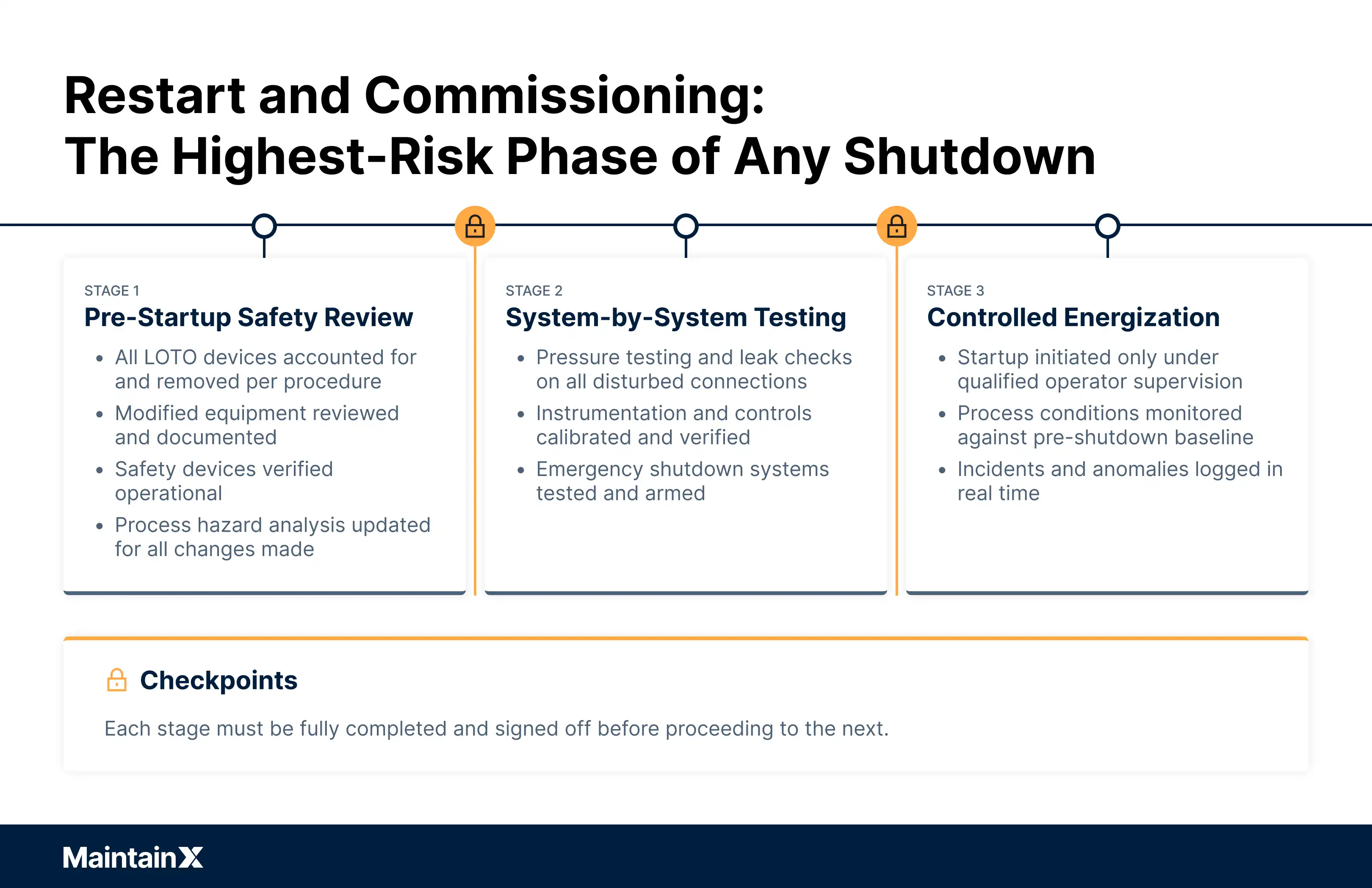
Restart and commissioning: The highest-risk phase
Most shutdown injuries and equipment failures happen during restart, not during the work itself. Systems that were drained, opened, and reassembled by multiple crews over several days now need to come back online in a controlled sequence. Rushing this phase is where turnarounds go wrong.
For effective return to normal operations, follow a stepwise approach:
- Verify each system independently before it interacts with connected processes
- Execute formal removal procedures for lockout/tagout clearances
- Confirm set points, valve positions, and alarm functionality before load increases
As you'll see in our plant shutdown checklist, the restart phase deserves its own dedicated section, rather than a single “restart equipment” line buried at the bottom of a document. Teams that treat commissioning with the same rigor as pre-shutdown planning consistently avoid the costly rework and safety incidents that plague the first 48 hours of resumed operations.
Post-shutdown validation confirms maintenance effectiveness
The days and weeks following restart reveal whether the turnaround actually solved the problems it targeted.
Post-shutdown validation typically involves monitoring vibration levels, temperature trends, pressure readings, and output quality against pre-shutdown baselines. For instance, if a pump rebuild was part of the scope, teams should track whether flow rates and energy consumption have returned to spec. If heat exchanger fouling drove the shutdown, thermal performance data will confirm that the cleaning held.
This follow-up period also answers questions and captures lessons for the next turnaround:
- Which time estimates proved accurate?
- Where did parts shortages cause delays?
- What found work repeated from previous shutdowns?
The unanticipated delays and found work of an ongoing shutdown can likely predict or inform future events. Documenting these patterns while they're fresh helps each team learn from the process, and helps plant managers plan more effective shutdowns in the future.
Maintenance shutdowns made easy with a CMMS
Shutdown success depends on detailed planning and real-time coordination across dozens of people, trades, and shifting priorities. But static spreadsheets and printed work orders can’t keep up when found work appears, schedules overrun, or crews hand off between shifts.
MaintainX gives teams a single live view of every work order, approval, and status change throughout the turnaround process. Technicians log findings from the field digitally, and supervisors can approve or defer found work instantly. Shift handoffs capture what’s done, what’s in progress, and what’s blocked, so teams partner smoothly without interrupting the maintenance process.
Move from static checklists and inspections to real-time coordination with MaintainX. Book a tour today.
Maintenance shutdown planning checklist FAQs
What is a maintenance shutdown, and how does it differ from regular maintenance activities?
A maintenance shutdown is a planned facility or equipment outage to perform major repairs, overhauls, or inspections that are impossible during operation. Unlike routine preventive maintenance performed on running systems, shutdowns concentrate intensive work into compressed windows, requiring coordinated resources and strict timeline discipline.
How far in advance should you start planning a maintenance shutdown?
Major shutdowns typically require six to 12 months of planning. Complex facilities need longer lead times for procurement, contractor coordination, and permit acquisition.
Shorter planning windows increase risks of material delays, resource conflicts, and overlooked scope that extends costly downtime.
What OSHA regulations/compliance requirements must be addressed during shutdown planning?
Shutdowns must address OSHA confined space and lockout/tagout regulations, environmental permits for emissions or waste handling, contractor insurance verification, and hot work authorizations. Industry-specific requirements like pressure vessel inspections or electrical arc flash standards add further requirements, depending on facility type and jurisdiction.
Note: This is a general informational summary only and does not constitute legal, regulatory, or compliance advice. Consult a licensed inspector, qualified contractor, or legal counsel to determine the specific obligations applicable to your jurisdiction and equipment.
What are the most common reasons maintenance shutdowns fail or exceed budget?
Poor handling of discovered work during equipment opening causes most overruns. Inadequate pre-shutdown inspection, overly optimistic scheduling, scope ambiguity, and weak coordination between trades can compound problems.
Facilities that lack structured triage processes for found conditions typically experience significant impacts to budget and timeline.
How do you ensure safety during a maintenance shutdown with multiple contractors on-site?
Daily coordination meetings, clear isolation verification protocols, and designated safety coordinators are the most important elements to prevent incidents in multi-contractor environments. You should also establish shift handoff procedures, maintain live permit boards, and enforce trade-specific work zones.
When managing overlapping high-risk activities, real-time communication trumps static safety plans.
What should be included in a post-shutdown review and documentation?
Capture actual-versus-planned durations, budget variances, discovered work categories, safety incidents, and contractor performance. Document lessons learned while details remain fresh, such as delay patterns, resource bottlenecks, and effective workarounds. Photos, inspection reports, and updated equipment records can inform future shutdown planning and support regulatory compliance.

The MaintainX team is made up of maintenance and manufacturing experts. They’re here to share industry knowledge, explain product features, and help workers get more done with MaintainX!


.webp)